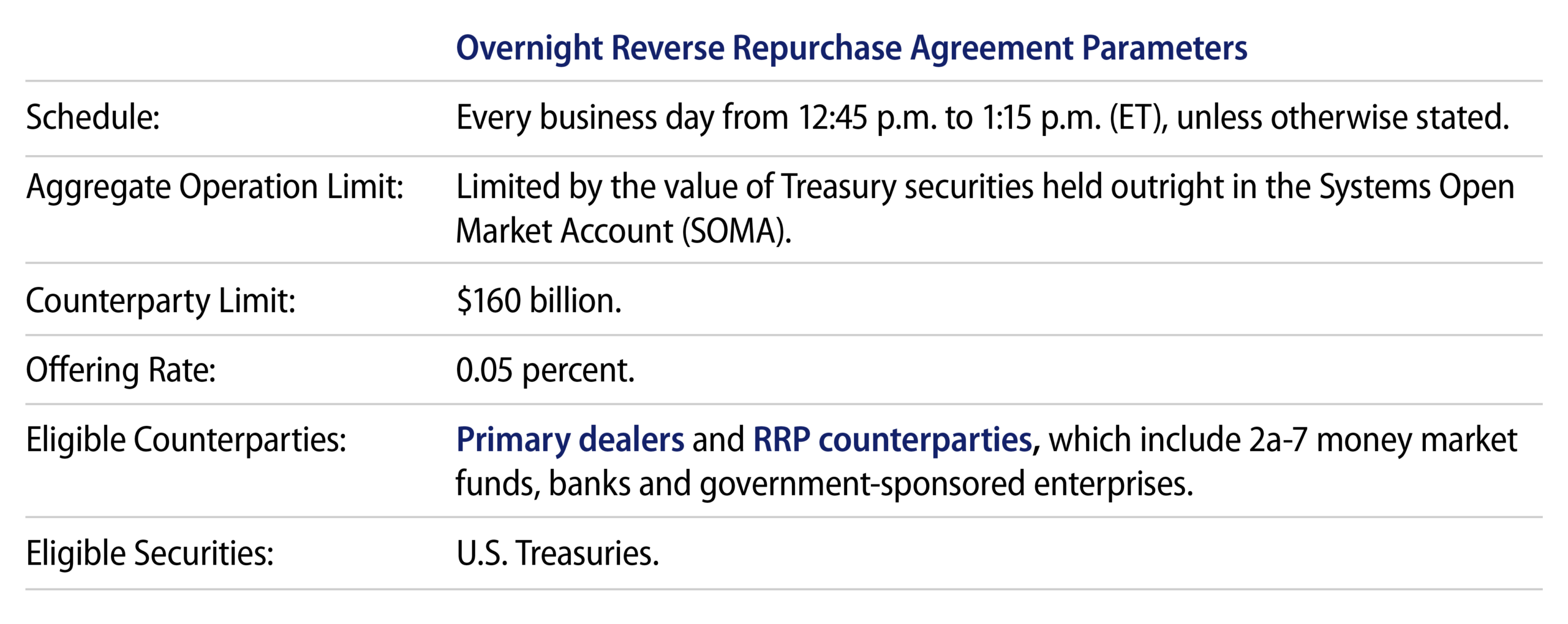

The Federal Reserve reverse repurchase agreement (RRP) has become a focal point in discussions about monetary policy and market liquidity in recent years. Once peaking at over $2 trillion, the RRP balance is now nearly zero, indicating that the Fed’s liquidity buffer has been significantly depleted. This reduction has critical implications for the Treasury General Account (TGA) and its ability to manage Treasury securities issuance without dipping into bank reserves. As the RRP balance dwindles, future Treasury securities issuance must rely more heavily on existing bank reserves, raising concerns about potential disruptions in the financial markets. The Federal Reserve now faces pressing decisions regarding the expansion of its balance sheet amidst the end of quantitative tightening, highlighting the intricate balance between maintaining liquidity and controlling interest rates.
The reverse repurchase agreement (RRP) mechanism employed by the Federal Reserve is vital for managing liquidity in the banking system. During its peak, the RRP served as a significant buffer, aiding in the absorption of new Treasury securities while ensuring that bank reserves remained stable. However, with the current RRP balance nearing zero, the consequences for future Treasury funding and bank reserve availability are becoming increasingly pronounced. These developments mark a pivotal moment for the Federal Reserve, as it contemplates its next moves in a landscape defined by a shift from quantitative tightening toward potentially reintroducing liquidity. Understanding this transition is crucial for grasping the broader implications for the economy and financial markets.
Understanding the Role of the Federal Reserve’s Reverse Repurchase Agreement
The Federal Reserve’s reverse repurchase agreement (RRP) plays a crucial role in maintaining stability within the financial markets. By allowing financial institutions to temporarily exchange Treasury securities for cash, the RRP helps the Fed manage liquidity in the banking system. As observed in recent months, the RRP balance has drastically fallen from its peak, highlighting the diminishing capacity of the Fed to provide liquidity to the market. This evolution not only illustrates the central bank’s tightening policies but also reflects broader economic shifts that could influence investment strategies and financial operations across various sectors.
With the RRP balance nearing zero, the implications for market liquidity are significant. As the liquidity buffer supplied by the RRP diminishes, banks may find it more challenging to navigate Treasury securities issuance and manage their reserves effectively. As a result, any future Treasury issuance will have a direct impact on bank reserves, potentially leading to increased volatility in interest rates. This situation emphasizes the importance of understanding the relationship between the Federal Reserve’s RRP operations and overall liquidity in capital markets.
Frequently Asked Questions
What is the significance of the Federal Reserve reverse repurchase agreement (RRP) balance in monetary policy?
The Federal Reserve reverse repurchase agreement (RRP) balance plays a crucial role in monetary policy by managing liquidity in the banking system. A high RRP balance can provide a liquidity buffer, which is essential for absorbing Treasury securities issuance and maintaining stable bank reserves. Recently, as the RRP balance fell to near zero, it indicated that this liquidity buffer has been exhausted, highlighting potential risks for future bank reserves.
How does the Federal Reserve reverse repurchase agreement impact bank reserves?
The Federal Reserve reverse repurchase agreement (RRP) impacts bank reserves significantly by allowing banks to park excess reserves in short-term agreements. When the RRP balance is high, it helps absorb Treasury securities issuance, which can prevent the depletion of bank reserves. However, with the recent decline in the RRP balance, future Treasury securities issuance will now consume bank reserves directly, increasing the risk of liquidity constraints.
What are the consequences of a falling Federal Reserve reverse repurchase agreement balance?
A falling Federal Reserve reverse repurchase agreement (RRP) balance signifies a dwindling liquidity buffer that previously helped manage the impacts of Treasury securities issuance. This decline means that any future issuances will directly affect bank reserves, potentially leading to increased volatility in financial markets, such as spikes in repo rates, unless the Fed intervenes by expanding its balance sheet.
How did the Federal Reserve reverse repurchase agreement help during the Treasury General Account (TGA) replenishment in 2023?
In 2023, the Federal Reserve reverse repurchase agreement (RRP) was instrumental during the Treasury General Account (TGA) replenishment by absorbing Treasury securities issuance. This helped cushion the impact on bank reserves, preventing significant liquidity drains. As the RRP balance provided a buffer, the market was able to operate more smoothly without compromising reserve levels.
What does the end of quantitative tightening (QT) mean for the Federal Reserve reverse repurchase agreement?
The end of quantitative tightening (QT) means that the Federal Reserve may shift from withdrawing liquidity to re-injecting it into the market. With the RRP balance at near zero, this transition suggests that the Fed may need to expand its balance sheet again to provide necessary liquidity, which could stabilize bank reserves and mitigate risks associated with rising interest rates in the repo market.
Will the decline of the Federal Reserve reverse repurchase agreement affect the cryptocurrency market?
Yes, the decline of the Federal Reserve reverse repurchase agreement (RRP) may have implications for the cryptocurrency market. As liquidity conditions improve with the cessation of quantitative tightening and the turn to net positive, the easing of financial conditions could lead to increased investment in cryptocurrencies, as the previous resistance in the market begins to fade.
| Key Points |
|---|
| The Federal Reserve’s reverse repurchase agreement (RRP) balance has decreased from over $2 trillion to nearly zero, indicating an exhausted liquidity buffer. |
| In 2023, the RRP was crucial in cushioning the Treasury General Account (TGA) replenishment by absorbing Treasury security issuance, preventing depletion of bank reserves. |
| With the RRP balance diminishing, there are concerns that future issuance of Treasury securities will directly deplete bank reserves. |
| The Federal Reserve now faces two options: allow reserves to decline, risking repo rate spikes, or expand the balance sheet to inject liquidity. |
| The recent circumstances suggest that the Fed may choose to re-inject liquidity, a shift from recent years of liquidity withdrawal. |
| The end of quantitative tightening and the reduction of the TGA have led to marginal liquidity turning net positive since early 2022, impacting the cryptocurrency market. |
Summary
The Federal Reserve reverse repurchase agreement is a crucial mechanism that has significantly influenced liquidity in the financial system. Recent insights reveal that the RRP balance has fallen to nearly zero, signifying the depletion of the liquidity buffer that was previously in place. As the Federal Reserve navigates this landscape, it faces critical decisions on how to manage reserve levels while mitigating potential disruptions in the repo market. The shift from withdrawing liquidity to potentially re-injecting it signals a transformative period ahead, especially considering the evolving dynamics in both traditional and cryptocurrency markets.
Related: More from DeFi & Stablecoins | Stablecoin Payments Focus Shifts to User Networks | Germany Launches Regulated Stablecoin Pegged to Swiss Franc