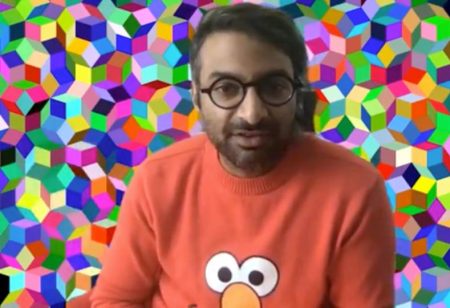


Opinion by: Kirill Avery, founder and CEO of Alien
AI-generated voices are already being used in ransom scams. Synthetic agents now trade, vote and interact on blockchain networks. In this environment, the greatest threat to crypto is no longer scalability or regulation; it is the collapse of trust.
As deepfakes, bots and synthetic agents saturate every corner of the internet and as scams increased by 1,400% in 2025, authenticity is becoming a scarce resource.
Scarcity produces markets. Every major technological shift has centered on what becomes hard to fake and costly to produce. In the industrial era, it was energy. In the internet era, it was attention. In the AI era, it is authenticity.
In the AI era, the crypto industry will stop competing on throughput and start competing on proof of humanity, and most existing identity and compliance models will collapse under synthetic users.
The great flood of the unreal
The internet was built to connect us through information; however, it now overwhelms us with imitation. Every day, new stories expose how generative models are collapsing the boundary between the real and the synthetic.
A mother in Arizona receives a ransom call: Her daughter’s voice pleads for help, matching her tone, cadence and even her breathing. But it isn’t real; the audio was stitched together by an AI model trained on a few seconds of public video. Across the country, a job seeker completes what seems like a normal interview, unaware that the “recruiter” asking questions is an automated agent collecting behavioral data for resale.
These aren’t edge cases. They mark the transition from the information economy to the imitation economy, an era where an abundance of data no longer guarantees truth. The internet once promised to democratize knowledge. Now, it demands we verify everything we see and hear. The problem isn’t that technology can fake reality; it’s that humans can no longer tell the difference.
Newsrooms fight algorithmic propaganda, financial systems battle synthetic users, and governance dissolves in digital fog. Reality itself is subject to replication without friction.
Realness as the new scarcity
When anything can be generated, creation ceases to be a constraint, and verification becomes the bottleneck, with authenticity acquiring economic weight. Proof that something, or someone, is real becomes an asset class.
Gold represented physical scarcity, and bandwidth represented informational scarcity. Authenticity represents epistemic scarcity. It underwrites the credibility of every domain: Social media requires real followers, finance requires Sybil resistance, and entertainment requires verifiable creators.
In “Nexus,” Yuval Noah Harari described a coming inversion in which artificial intelligence will not need money but will transact in reputation, credibility and identity. Machines will value proof over possession. What they demand is not currency but confirmation of trust, reliability and truth. Authenticity becomes the medium of exchange between humans and the system.
The invisible infrastructure of trust
Proof of what’s real is becoming part of the market itself. That means we need new infrastructure to support it.
Instead of relying only on things like fingerprints or face scans, we’ll need cryptographic proofs, decentralized identities and systems that can continuously verify trust and behavior.
Authenticity won’t be a one-time check; it will be something we demonstrate over time through our actions. Just as the last century built systems to measure creditworthiness, this one will measure realness. A “realness score” could become the new credit score of the AI era, with identity verified by protocols, authenticity built into platforms and markets rewarding those who prove they’re genuinely human.
This infrastructure will serve AI as secure sockets layer (SSL) once served e-commerce: unseen, indispensable and lucrative.
Verified or synthetic
The next social divide will not be rich versus poor but verified vs. synthetic. Verified humans will gain access to finance, governance and digital legitimacy. Unverified entities will operate in restricted zones, powerful but distrusted.
The moral issue is not verification itself but control. Surveillance models corrupt authenticity by owning it. Decentralized verification prevents ownership, separating proof from power. Identity then becomes the new passport, but only a neutral system can stamp it without subjugation.
The business of trust
For decades, the internet’s economy has been built on buying attention, not trust. Companies pour billions into ad networks chasing impressions and clicks that never convert. A brand might spend $1 million on online ads, only to later discover that half of those “views” came from bots, click farms or automated scraping tools that never had the capacity to buy, believe or belong.
Businesses already feel the cost of synthetic engagement, but they have no way to measure or verify authenticity at scale. In an AI-saturated internet, that problem becomes existential.
Trust — not reach — will determine value. The next generation of networks won’t sell eyeballs; they’ll sell verified human attention. Imagine a marketing system where advertisers pay only for provably real interactions, a verified consumer who actually watched, engaged or purchased. That is what authenticity infrastructure enables: an economy where truth itself becomes a performance metric.
Proof of being
Humanity has always outsourced trust to gods, states, banks and algorithms. That chain ends now. The next leap forward demands that proof originates not from institutions or code, but from the individual.
The true destination of AI is not to surpass humanity but to define where its edges end, to create a world where humans and machines operate under mutual proof, mutual respect and shared accountability.
In an era where imitation is infinite, authenticity is the last scarcity. And in the economy that follows, the most valuable currency will not be digital; it will be human realness itself.
Opinion by: Kirill Avery, founder and CEO of Alien.
This opinion article presents the author’s expert view, and it may not reflect the views of Cointelegraph.com. This content has undergone editorial review to ensure clarity and relevance. Cointelegraph remains committed to transparent reporting and upholding the highest standards of journalism. Readers are encouraged to conduct their own research before taking any actions related to the company.
Related: More from Regulation & Policy | Treasury Plans to Add Donald Trumps Signature to US Currency | Brazils finance minister delays divisive crypto tax plan