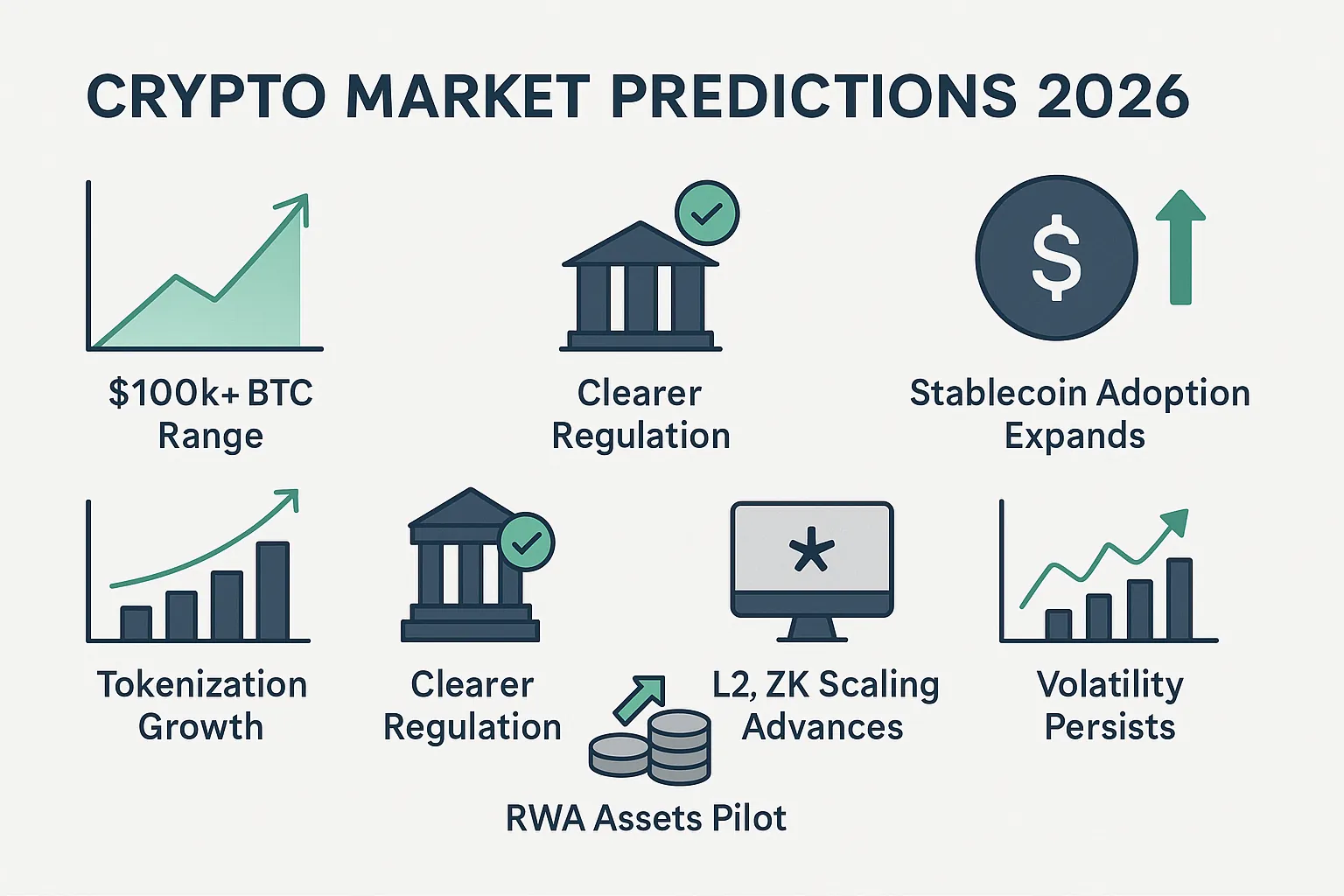

The crypto market 2026 is poised to be a watershed moment for the digital finance landscape, as industry leaders emphasize the need for robust financial infrastructure. Experts like André Casterman predict that the focus will move beyond just the adoption of cryptocurrency, shifting towards tangible frameworks that support the growth of digital assets. This transformation will see the rise of central bank digital currencies (CBDCs) and regulated stablecoins, promoting a new era of interoperability among various forms of digital currencies. With blockchain technology at the cornerstone of these innovations, financial institutions will begin to invest heavily in crypto trading and related services once legislative frameworks are solidified. As we approach 2026, the integration of these elements will redefine traditional banking practices, paving the way for a new financial ecosystem that prioritizes efficiency and regulation.
As we look ahead to the pivotal year of 2026 in the cryptocurrency sector, it’s evident that a significant evolution is underway in how digital currencies will function within the global economy. The focus is shifting towards developing essential frameworks that not only facilitate the exchange of assets but also enhance the overall infrastructure supporting them. With the anticipated introduction of various forms of digital money, including CBDCs and stablecoins, the landscape will see a blend of innovation and regulation. Additionally, the role of blockchain technology will expand, solidifying its importance in transaction protocols and security. This upcoming transformation signifies a movement towards a more integrated and compliant ecosystem for cryptocurrency, promising to support both institutional and individual adoption.
| Key Point | Details |
|---|---|
| Turning Point for Crypto Market | 2026 is expected to be a pivotal year for the crypto market with significant shifts in focus and infrastructure development. |
| Shift in Focus | The industry is moving from questioning the necessity of crypto to building new financial infrastructures. |
| Tokenization and Digital Assets | Transitioning from pilot phases to regulated deployment, indicating maturity in the market. |
| Central Bank Strategies | Worldwide central banks are adopting wholesale-first strategies for CBDCs and regulated stablecoins. |
| Legislative Support | New laws will promote institutional applications within the crypto space once regulations are clear. |
| Investment from Banks | Clear regulations will encourage banks to invest heavily in crypto trading and related ventures. |
| Interoperability of Digital Currencies | Different forms of digital currencies will coexist and work together, enhancing the ecosystem. |
| Blockchain as Alternative Infrastructure | Blockchain is set to become an alternative financial system, while traditional banks remain intermediaries. |
Summary
The crypto market in 2026 is anticipated to undergo a significant transformation as it embraces new regulatory frameworks and infrastructure developments. With the emphasis on building robust financial systems, the market is likely to see widespread implementation of digital assets and tokenization. This evolution indicates a shift towards greater institutional engagement and investment, fostering a more mature and integrated crypto marketplace.
The Role of Infrastructure in the Future of Crypto
As we look toward 2026, the construction of robust financial infrastructure will become paramount for the evolution of the cryptocurrency market. The industry will witness a pivotal shift from mere speculation to the functional and regulated use of digital assets. This transition will see entities like banks adapting their operations to accommodate blockchain technology and innovative financial solutions. With clear regulations expected to emerge, institutions will no longer hesitate to embrace cryptocurrency for various applications, including transaction banking and customer asset management.
Moreover, centralized frameworks like Central Bank Digital Currencies (CBDCs) and stablecoins will play an essential role in this transformation. As governments and financial institutions adopt this new digital landscape, the interoperability of various forms of digital currencies will be crucial. The emphasis on building a strong and reliable infrastructure will not only foster confidence among users but will also drive mainstream adoption. Investors can look forward to enhanced security, transparency, and efficiency in digital transactions, ushering in a new era for the crypto market.
The Future of Digital Assets: Transitioning to Mainstream
Digital assets, predominantly cryptocurrencies, are set to gain tremendous traction in 2026 as the market shifts away from skepticism towards legitimacy. Under the new regulated environment, financial institutions will begin to deploy digital assets on a much larger scale, moving beyond experimental pilot projects. This regulatory clarity will encourage banks to invest heavily in technology that integrates blockchain solutions, thereby facilitating the issuance and management of stablecoins and other forms of digital currency.
As a result, users will experience a seamless integration of digital assets into their daily financial dealings. This move toward mainstream adoption will be supported by robust infrastructure capable of supporting high transaction volumes while ensuring user safety. The maturation of the crypto market will lead to an ecosystem where digital assets coexist harmoniously with traditional fiat currencies, ultimately redefining financial interactions for consumers and businesses alike.
Central Bank Digital Currencies (CBDCs) and Their Impact
The impending deployment of Central Bank Digital Currencies (CBDCs) in 2026 will revolutionize the foundation of financial transactions. With central banks adopting a ‘wholesale-first’ approach, institutions will gain opportunities to utilize CBDCs in real-time transactions, significantly reducing processing times and costs. The infrastructure supporting CBDCs will also pave the way for enhanced regulatory compliance, giving both consumers and businesses confidence in the stability and security of digital transactions.
Furthermore, CBDCs will foster innovation in the banking sector, as financial institutions explore new products and services based on digital currency frameworks. By utilizing blockchain technology alongside CBDCs, banks can offer efficient cross-border payment solutions, streamline transaction settlements, and enhance transparency. This will not only enable banks to serve their customers better but also position them as leaders in the evolving landscape of digital finance.
Stablecoins: A Crucial Element in the Crypto Ecosystem
Stablecoins represent a critical element in the future of the crypto market as it aims for growth by 2026. Backed by reserves or pegged to fiat currency values, stablecoins like USDC are gaining traction among investors looking for security in volatile markets. The steady demand for these assets underscores their role not just as a medium of exchange but as an essential component of the broader financial ecosystem that relies on stability and trust.
In the transition towards a more regulated environment, stablecoins will likely benefit from formal acknowledgment and endorsement by regulators, increasing their legitimacy. This will incentivize traditional financial institutions to incorporate stablecoins into their standard operations, allowing for easier transactions and broader acceptance. The integrations of stablecoins into banking infrastructures will enhance their usability, thus driving the crypto market further towards mainstream financial integration.
Blockchain Technology: Redefining Financial Intermediaries
The integration of blockchain technology into the financial services landscape will redefine how intermediaries operate by 2026. As more businesses and financial institutions recognize the potential of automated smart contracts, we can expect a significant reduction in traditional intermediaries’ roles. Instead of cumbersome processes, blockchain will facilitate quicker and more straightforward transactions, improving the overall efficiency of financial markets.
Moreover, as blockchain technology develops, it will support various financial infrastructures, including rights management, asset tokenization, and even identity verification. This will empower users, providing them greater control over their digital assets and transactions. Enhanced transparency and immutability will promote trust and collaboration across all sectors, creating a more balanced ecosystem that benefits individuals and institutions alike.
Navigating the Regulatory Landscape for Cryptocurrencies
As we approach 2026, the regulatory landscape surrounding cryptocurrencies will undergo significant changes aimed at fostering growth while ensuring consumer protection. Clear and comprehensive legislation will provide the guidelines necessary for financial institutions to engage with cryptocurrencies responsibly. This governmental involvement will lay the groundwork for increased institutional investment, as firms will have a clear understanding of compliance requirements.
Additionally, regulations tailored for digital assets and cryptocurrencies will facilitate greater market trust. As the framework for controlled trading and holding of digital assets solidifies, market fluctuations will become less daunting for institutional investors. Ultimately, a structured regulatory environment will contribute to the cryptocurrency market’s overall maturation and stability, encouraging broader participation from retail and institutional investors alike.
Institutional Investor Confidence in Crypto
Investor confidence is critical for the cryptocurrency market to flourish and reach new heights by 2026. With more institutional players entering the space, driven by regulatory clarity and the burgeoning infrastructure for digital assets, the market can expect a significant influx of capital. Increased confidence will lead to a more stable market environment, encouraging more investment in blockchain technology and other innovative financial products.
Moreover, as institutional investors make significant strides in adopting cryptocurrencies for various applications, their influence will encourage traditional firms to explore digital assets. This shift will support the notion of cryptocurrencies as legitimate investment opportunities, propelling growth and adoption within diverse sectors. The expectation is that by 2026, institutional investors will play a major role in shaping the trajectory of the cryptocurrency market, fostering innovation and stability.
The Interoperability of Digital Currencies
Interoperability among different digital currencies will become a focal point as the crypto market evolves towards 2026. With multiple cryptocurrencies, including CBDCs and stablecoins emerging, the ability for these digital assets to communicate and transact with one another will be vital. As infrastructure improves, mechanisms that support seamless transactions across various platforms will help build a cohesive financial ecosystem.
The resulting interoperability can lead to enhanced user experience and broader acceptance of digital currencies. This advancement will grant users the ability to utilize their digital assets across different financial systems without friction, ultimately contributing to the maturity of the cryptocurrency market. The mechanics surrounding this interoperability will drive innovation in payment solutions, further embedding cryptocurrencies into everyday transactions.
Tokenization as a Core Financial Strategy
Tokenization is set to become a foundational strategy in the financial landscape by 2026, offering unprecedented opportunities for the crypto market. This process allows physical and digital assets to be represented on a blockchain, enhancing liquidity and accessibility for asset owners. Financial markets will experience a fundamental shift as tokenized assets provide investors with new avenues for diversification and participation in previously illiquid asset classes.
Incorporating tokenization into existing financial infrastructures will provide benefits such as fractional ownership, making it easier for a diverse range of investors to access high-value assets. This democratization of investment opportunities will help shape the future of finance, as asset-backed tokens become mainstream. As regulatory frameworks evolve, facilitating widespread adoption of tokenization, the crypto market will be poised for growth and innovation.
Frequently Asked Questions
What are the key trends expected in the crypto market in 2026?
In 2026, the crypto market is anticipated to focus on enhancing crypto infrastructure, facilitating smoother integration of digital assets, and promoting the use of Central Bank Digital Currencies (CBDCs) and stablecoins. This shift will likely drive the widespread adoption of blockchain technology and tokenization in various sectors.
How will the adoption of CBDCs impact the crypto market by 2026?
By 2026, CBDCs are expected to significantly influence the crypto market by establishing a regulated framework that encourages the use of digital assets. Central banks’ focus on a ‘wholesale-first’ strategy will provide crucial infrastructure for secure transactions and bolster confidence among institutional investors.
What role will stablecoins play in the crypto market in 2026?
Stablecoins will likely be central to the crypto market in 2026, as they provide a bridge between fiat currencies and digital assets. With increasing regulatory clarity, stablecoins such as USDC and RLUSD are expected to see widespread adoption in mainstream financial applications.
How will blockchain technology evolve in the crypto market by 2026?
In 2026, blockchain technology is expected to evolve as a foundational element of the new financial infrastructure. Its capabilities in ensuring transparency, security, and interoperability will drive the integration of various digital assets and facilitate innovative financial solutions.
What does the future of digital assets look like in the crypto market by 2026?
The future of digital assets in the crypto market by 2026 looks promising, with a shift towards regulated environments enabling greater institutional investment. Tokenization of real-world assets will move from pilot projects to full-scale implementations, driving broader acceptance and usage of digital currencies.
Why is 2026 considered a turning point for the crypto market?
2026 is considered a pivotal year for the crypto market due to the anticipated establishment of clear regulatory frameworks. This will foster institutional investment and facilitate the integration of various digital assets, transforming how financial transactions are conducted and enhancing overall market stability.
What infrastructure changes are expected in the crypto market by 2026?
By 2026, significant changes in crypto infrastructure are expected, driven by new regulations and the implementation of CBDCs. Banks and financial institutions will invest heavily in blockchain technology and digital currencies, leading to a more interconnected and efficient financial system.
Related: More from Market Analysis | WLFI Price Predicted: World Liberty Financial Proposes Governance Overhaul | XLM Bounces But Bears Control