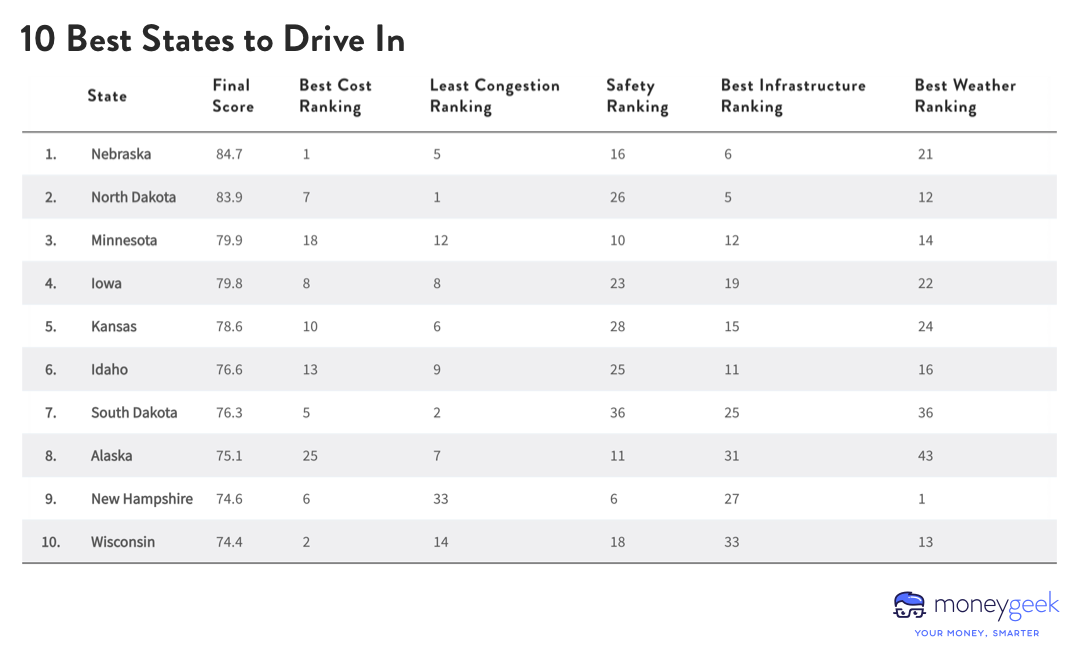

When it comes to the best states to drive in, several factors come into play, including driving conditions, cost of car ownership, and traffic safety. According to WalletHub, states that rank high in these areas typically offer lower congestion levels, making the driving experience more enjoyable and less stressful. For instance, Vermont has earned the top spot due to its impressive traffic safety record, characterized by a reduction in fatalities and minimal motor vehicle thefts. Moreover, the affordability of car-related expenses, including average gas prices and insurance premiums, plays a crucial role in enhancing drivers’ quality of life in these regions. Exploring the best states to drive in can help you find not only safe but also cost-effective environments for car ownership.
Exploring commendable regions for automobile travel reveals a fascinating landscape where driving conditions, safety, and affordability unite. The most favorable states for motorists are those that facilitate reduced congestion, thus alleviating the stress often associated with daily commutes. Factors such as low car ownership expenses and strong traffic safety measures bolster the driving experience, encouraging responsible vehicle use and maintenance. As we delve into the states that shine in these aspects, it becomes evident that the synergy between excellent infrastructure and reasonable costs significantly impacts drivers’ satisfaction. Join us as we uncover the top locations that cater to both the practical and enjoyable aspects of driving.
| Rank | State | Median Listing Price | Key Highlights |
|---|---|---|---|
| 1 | Vermont | $489,000 | Lowest car insurance rates, fewest vehicle thefts, reduced traffic fatalities. |
| 2 | Iowa | $269,450 | Above-average access to gas stations and repair shops, low vehicle theft rates. |
| 3 | Kansas | $280,945 | Second in road quality, low traffic congestion rate, manageable terrain. |
| 4 | Nebraska | $329,900 | Eighth for traffic conditions and infrastructure quality. |
| 5 | Indiana | $284,700 | Affordable car ownership with good infrastructure. |
| 6 | Florida | $425,000 | Strong car culture and excellent access to auto maintenance. |
| 7 | Alabama | $325,000 | Low rush-hour traffic congestion, affordable driving conditions. |
| 8 | Tennessee | $424,450 | Lowest car ownership and maintenance costs in the nation. |
| 9 | North Carolina | $399,900 | High seatbelt usage rate among drivers. |
| 10 | Minnesota | $367,000 | Low traffic fatality rates, good safety record. |
Summary
The best states to drive in are those that provide a mix of safety, affordability, and low traffic congestion. According to WalletHub’s evaluation, Vermont tops the list, thanks to its low rates of vehicle theft and fatal incidents, while Iowa and Kansas follow closely behind due to their excellent infrastructure and affordability. Drivers in these states can enjoy a smoother and less stressful driving experience, emphasizing the importance of living in states where driving conditions enhance overall quality of life.
Overview of the Best States to Drive In
When it comes to identifying the best states for driving, several factors come into play, including driving conditions, safety metrics, and automobile ownership costs. WalletHub’s comprehensive evaluation provides insights into how these elements coalesce to shape an optimal driving environment. States like Vermont, Iowa, and Kansas consistently rank higher due to their commitment to maintaining low traffic fatalities and providing affordable car ownership opportunities. Moreover, the assessment factors in vital criteria such as traffic safety and infrastructure quality, offering a well-rounded view of what constitutes an ideal driving locale.
According to the WalletHub study, driving conditions significantly influence the overall quality of life for residents. For example, the average American spent nearly 49 hours in traffic last year, emphasizing the importance of efficient infrastructure and low congestion levels. As such, states that prioritize vehicle access and roadway maintenance not only enhance traffic safety but also ensure that car ownership remains manageable and cost-effective. These aspects are critical as drivers increasingly seek locations that facilitate a stress-free commuting experience.
Driving Conditions and Safety Metrics
The best states to drive in are characterized by exceptional driving conditions, which are often measured by various safety metrics. For instance, Vermont has emerged as a standout leader due to its notable reduction in traffic fatalities and low rates of vehicle theft. Such metrics highlight a concerted effort toward ensuring safe driving environments, as local authorities implement programs aimed at reducing risky driving behavior and improving overall infrastructure. States with low traffic fatality rates tend to foster a culture of safety and responsibility among their drivers.
Iowa, ranking second in the WalletHub study, showcases an impressive array of safety metrics, including low motor vehicle theft rates and a strong commitment to traffic regulations. The state’s focus on traffic safety, coupled with affordable car insurance rates, presents a compelling case for prospective residents who prioritize safe driving conditions. Furthermore, Kansas follows closely, reflecting its commitment to maintaining high road quality, which is crucial for minimizing accidents and promoting safe travels across its expansive highway network.
Car Ownership Costs and Accessibility
Affordability plays an essential role in determining the best states for drivers, and this encompasses various car ownership costs, such as insurance premiums, maintenance expenses, and fuel prices. Vermont leads the charge with competitive rates that make car ownership accessible to the majority of its residents. With lower auto maintenance costs combined with a strong network of car dealerships and repair shops, Vermonters experience fewer financial burdens associated with vehicle upkeep.
Similarly, Iowa and Kansas offer attractive metrics that enhance car ownership affordability. Iowa ranks favorably with low gasoline prices and varied access to essential driving services, such as gas stations and repair shops. This accessibility not only benefits existing drivers but also attracts new residents seeking a reliable and cost-effective driving experience. The focus on keeping car ownership costs manageable is particularly vital for families and individuals navigating daily commutes and long-term transportation needs.
Traffic Safety and Congestion Levels
Traffic safety is a critical factor in assessing the best states to drive in, particularly when evaluating states with low congestion levels. According to the WalletHub rankings, Kansas excels in road quality and maintains a low rate of traffic congestion, allowing for smoother and safer driving experiences. By having fewer drivers on the road during peak hours, states like Kansas contribute to reduced stress for commuters and a lower risk of accidents, making it an ideal choice for drivers.
On the other hand, Alabama benefits from relatively light rush-hour traffic, placing it among the states with the lowest congestion rates. This translates to less time spent idling in traffic and a more enjoyable driving experience. The commitment to traffic safety also resonates in states like North Carolina, where high seatbelt usage rates reflect a culture of safety among drivers. Collectively, these aspects illustrate how low congestion and robust safety measures can elevate a state’s reputation as a top choice for driving.
Top-Honored States for Driving
Vermont, Iowa, and Kansas dominate the top three spots in the WalletHub rankings, embodying the qualities that define the best states to drive in. Vermont, with its low traffic fatality rates and robust vehicle access, sets the standard for commuter safety and affordability. Its commitment to reducing driving hazards and maintaining excellent road conditions makes it a premier state for drivers seeking reliability and security behind the wheel.
In contrast, Iowa and Kansas offer unique advantages that cater to a wide range of driver needs. While Iowa emphasizes affordable insurance rates and easy access to driving services, Kansas boasts exceptional road quality and low congestion rates. Both states prioritize traffic safety and effective infrastructure, contributing to their high standing in driving evaluations. The collective attributes present in these states make them highly attractive for anyone looking to enhance their driving experience.
Benefits of Driving in Low-Cost States
Choosing to drive in states with lower ownership costs greatly benefits drivers, as it alleviates the financial burdens often associated with vehicle maintenance and fuel expenses. For example, Tennessee stands out with the lowest car ownership and maintenance costs in the nation, making it an attractive option for cost-conscious drivers. Fewer expenses mean more disposable income for residents to allocate to other aspects of their lives, enhancing overall quality of life.
Additionally, states like Indiana and Minnesota also contribute positively to the cost-benefit ratio of driving. With affordable car insurance rates coupled with favorable traffic conditions, drivers in these states enjoy a more manageable and enjoyable driving experience. Furthermore, the emphasis on lower ownership costs fosters a sense of community among residents, as they can more easily connect and engage in local activities without the stress of exorbitant car expenditures.
Infrastructure Quality and Maintenance Standards
Infrastructure quality is paramount when determining the best states for driving, as well-maintained roads significantly contribute to safer driving conditions. WalletHub’s findings highlight states like Nebraska, which ranks eighth for its traffic conditions and infrastructure quality. Residents benefit from well-kept roadways that minimize vehicle wear and contribute to reduced accident rates, showcasing the importance of investing in infrastructure.
Moreover, effective maintenance standards help ensure that roads remain safe for all vehicles, particularly in states like Florida, where the strong car culture supports a demand for reliable road conditions. By maintaining high infrastructure quality, states can promote better traffic safety outcomes and enhanced driving experiences for all residents. A commitment to infrastructure not only supports local drivers but also attracts tourists and new residents seeking safe and reliable travel options.
The Impact of Residential Choices on Driving Experience
When evaluating the best states to drive in, residential choices significantly influence an individual’s driving experience. For those choosing to live in Vermont or Iowa, the benefits of lower traffic congestion and enhanced safety metrics become evident through daily commuting experiences. Residents in these states are often less likely to experience the stress and frustration that can accompany living in areas with heavy traffic.
Moreover, the decision to reside in states with favorable automobile ownership conditions ultimately shapes the overall satisfaction of drivers. People often gravitate towards locations that prioritize low car ownership costs and high safety ratings, which allow them to maximize their free time and enjoy smoother daily travels. As more individuals recognize the importance of selecting optimal driving environments, states that excel in these areas will continue to thrive and attract new residents.
Road Culture and Its Influence on Driving
The road culture significantly influences the overall driving experience, particularly in states renowned for their favorable driving conditions. In places like Alabama and Indiana, localized attitudes toward driving—such as adherence to traffic laws and community support for safe practices—influence the overall quality of life for residents. When the community embraces a culture of responsibility on the road, it reduces accident rates and fosters a more amicable driving environment.
Furthermore, states that prioritize traffic safety and accessibility exhibit a greater awareness of the impact of individual driver behavior on collective outcomes. With heightened emphasis on safe driving practices and a shared understanding of the importance of vehicle upkeep and maintenance, these states are better positioned to promote a positive driving culture. Consequently, this creates an environment where residents can enjoy their travels with confidence, knowing they are part of a community that values safety and responsibility.
Frequently Asked Questions
What are the best states to drive in based on driving conditions?
The best states to drive in, considering driving conditions, include Vermont, Iowa, and Kansas. These states have low traffic congestion, well-maintained roads, and high safety ratings, making for a more enjoyable driving experience.
Which states are known for low car ownership costs?
Vermont, Tennessee, and Florida are recognized for their low car ownership costs. They offer affordable gas prices, low insurance rates, and reasonable maintenance expenses, making them ideal for drivers looking to minimize expenses.
What characteristics define the safest states for drivers?
The safest states for drivers, such as Vermont and Iowa, are characterized by low traffic fatality rates, minimal vehicle thefts, and stringent safety measures. These factors contribute to a safer environment for all road users.
How does traffic safety vary across the best states to drive in?
Traffic safety varies significantly, with states like Vermont and Kansas leading in safe driving conditions due to low accident rates and effective traffic management strategies, making them some of the best states to drive in.
Which states experience low congestion and provide a smooth driving experience?
States like Kansas, Alabama, and Iowa are known for low congestion, with Kansas having the seventh-lowest traffic congestion rate. This results in shorter commute times and a more relaxed driving experience.
What makes Vermont the best state to drive in?
Vermont stands out as the best state to drive in due to its low traffic fatalities, minimal motor vehicle thefts, and affordable car ownership costs. These factors, combined with excellent driving conditions, contribute to a safe and enjoyable driving experience.
How do driving conditions influence car ownership in different states?
Driving conditions directly affect car ownership by impacting factors such as insurance costs, maintenance expenses, and the overall ease of driving. States with better roads and lower traffic congestion, like Iowa and Kansas, typically offer a more favorable car ownership experience.
Which states have the best traffic infrastructure for drivers?
Tennessee, Nebraska, and Kansas are recognized for their strong traffic infrastructure, providing well-maintained roads and efficient traffic management systems. This enhances the overall driving experience and safety for residents.
What are the economic benefits of driving in the best states to drive in?
Driving in the best states, such as Florida and Alabama, often leads to economic benefits like lower maintenance costs, affordable insurance, and better access to fuel and services, making car ownership more sustainable.
How important are safety ratings when evaluating the best states to drive in?
Safety ratings are crucial in evaluating the best states to drive in, as they reflect how well states manage road safety. High safety ratings, seen in states like Vermont and Indiana, indicate lower accident rates and provide peace of mind for drivers.
Related: More from Forex News | Shannon Sharpe Addresses ESPN Reunion Rumors with Stephen A. Smith | apoB Testing: A Superior Indicator of Heart Disease Risk?