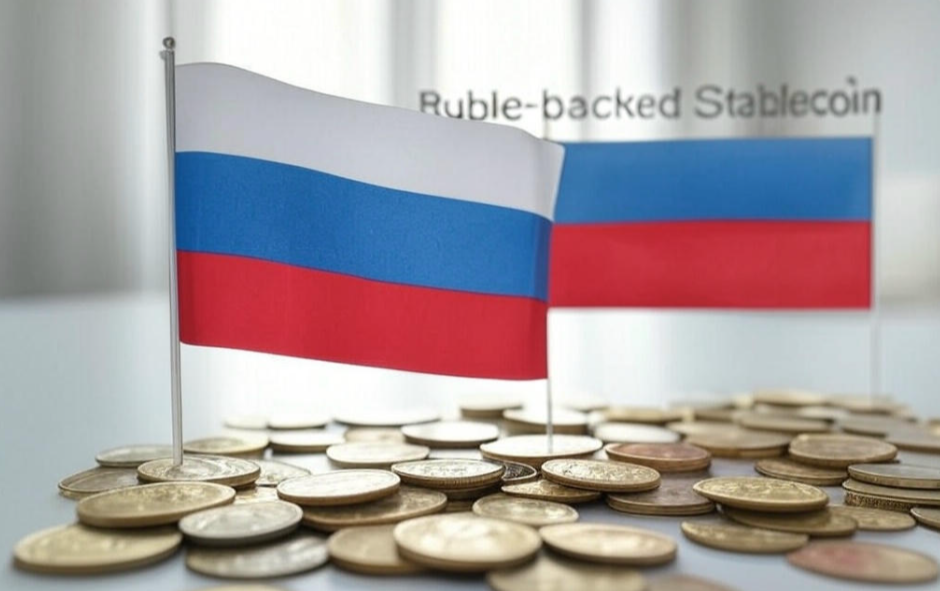

The emergence of a Russian ruble-backed stablecoin represents a significant shift in the financial landscape, especially in light of ongoing geopolitical tensions. This innovative currency, which has processed over $100 billion in on-chain transactions within just a year, has been tailored to operate within sanctioned financial networks, offering a unique solution to businesses seeking to navigate restrictive economic measures. According to blockchain analytics firm Elliptic, the A7A5 stablecoin not only facilitates transactions in the crypto markets but also minimizes the risks associated with asset freezes. As interest in non-dollar stablecoins rises, it is crucial to understand how such digital assets can support trade while avoiding traditional banking obstacles. This robust activity reinforces the role of stablecoins in enhancing financial sovereignty and adaptability amid evolving global sanctions.
The introduction of a stable digital currency linked to the Russian ruble has sparked interest across various sectors, particularly among those navigating complex financial climates. Referred to interchangeably as a Russian-backed stable asset, this currency has demonstrated its utility in bypassing punitive economic restrictions imposed by Western nations. As the A7A5 stablecoin gains traction, it becomes a vital instrument for businesses engaging with crypto ecosystems, illustrating the potential rise of alternative financial solutions. Furthermore, the response from centralized exchanges and their regulatory compliance highlights the challenges these non-dollar stablecoins face in the broader financial ecosystem. Understanding the implications of utilizing such stablecoins can provide insights into the future of international trade and finance.
| Key Points | Details |
|---|---|
| $100 Billion in Transactions | The A7A5 stablecoin processed over $100 billion in on-chain transactions within less than a year of its launch. |
| Purpose | Aimed to facilitate value movement for Russian businesses under Western sanctions, mitigating asset freeze risks. |
| Launch Impact | After its early 2025 launch, transaction volumes surged, reflecting a high demand for sanctioned trade facilitation. |
| Liquidity Changes | Post-August 2025 US sanctions, liquidity decreased sharply through USDT markets affecting transaction volumes. |
| Regulatory Actions | Uniswap blocklisted A7A5 in November 2025, contributing to a significant decline in trading activity. |
| EU Sanctions | The EU sanctioned A7A5 in October 2025, recognizing it as a means to circumvent financial restrictions. |
| Conclusion from Luminary | While it has the potential to facilitate trade, the A7A5’s growth is constrained by international sanctions and regulatory actions. |
Summary
The Russian ruble-backed stablecoin, A7A5, has emerged as a significant player in circumventing financial sanctions against Russia, processing over $100 billion in transactions in less than a year. However, despite its initial success, its functionality has been drastically impacted by subsequent international sanctions and regulatory restrictions, limiting its growth and liquidity in the crypto markets. It serves as a case study for the complexities and vulnerabilities of non-US dollar stablecoins in a sanctions-laden financial landscape.
The Rise of the Russian Ruble-Backed Stablecoin A7A5
In a groundbreaking report from blockchain analytics firm Elliptic, the rapid ascent of the A7A5 stablecoin—a Russian ruble-backed digital currency—has been underscored, showcasing transactions exceeding $100 billion within just a year. This rise highlights a strategic maneuver by Russian financial networks to cultivate an alternative channel for economic activities largely insulated from Western sanctions. The data reveals that this stablecoin has effectively facilitated transactions in the crypto markets, allowing entities in Russia to maneuver around traditional financial barriers.
Despite its initial success, the A7A5 faced subsequent challenges as regulatory scrutiny intensified. Following its launch in early 2025, the stablecoin demonstrated a vigorous adoption phase before experiencing a contraction correlating with heightened sanctions on Russian entities. This situation depicts the sensitive environment in which non-dollar stablecoins operate, and how quickly external factors can influence their market viability.
Frequently Asked Questions
What is the Russian ruble-backed stablecoin and how does it relate to sanctioned financial networks?
The Russian ruble-backed stablecoin, known as the A7A5 stablecoin, is designed to facilitate value movement within sanctioned financial networks, allowing businesses linked to Russia to operate despite Western financial sanctions. It has processed over $100 billion in on-chain transactions and serves as a bridge between rubles and other cryptocurrencies like USDT.
How does the A7A5 stablecoin function within the crypto markets?
The A7A5 stablecoin functions by enabling users to transact with minimal exposure to Western financial systems. After its launch in early 2025, it gained popularity among Russian entities for processing transactions, especially as a mechanism for converting rubles into non-dollar stablecoins like USDT, all while mitigating risks associated with asset freezes.
What were the regulatory impact and challenges faced by the A7A5 stablecoin?
Following the introduction of sanctions in August 2025, the A7A5 stablecoin faced significant operational challenges. USDT liquidity for A7A5 diminished, decreasing its usability in the crypto markets. Additionally, several exchanges blacklisted the A7A5, limiting its trading opportunities and user access.
Can the A7A5 stablecoin overcome the limitations imposed by Western sanctions?
The A7A5 stablecoin has demonstrated potential as a non-dollar stablecoin for facilitating transactions amid sanctions; however, its growth is constrained by ongoing enforcement actions and regulatory responses from exchanges and financial authorities globally. Its effectiveness as a tool for sanctioned trade may fluctuate based on external pressures.
How does blockchain analytics play a role in understanding the A7A5 stablecoin’s market activity?
Blockchain analytics firms like Elliptic provide insights into the A7A5 stablecoin’s market activity by tracking on-chain transactions. They highlight patterns and flows, revealing the scale of transactions, compliance issues, and the implications of sanctions on its operational capacity, ultimately shaping how the stablecoin is perceived in the crypto markets.
What does the growth of the A7A5 stablecoin signify for non-dollar stablecoins?
The growth of the A7A5 stablecoin highlights the increasing interest in non-dollar stablecoins as alternatives for circumventing financial restrictions. Its significant transaction volume indicates a demand for solutions that operate outside traditional financial systems, though experts note that structural limits exist which could hinder sustained growth.
What is the role of the A7A5 stablecoin in settled trades?
The A7A5 stablecoin is primarily used as a settlement tool within specific trading venues, especially exchanges in Kyrgyzstan. This indicates that, rather than being a widely adopted retail stablecoin, it serves a focused purpose of facilitating cross-border transactions and trade within constrained financial networks.
What recent developments have affected the A7A5 stablecoin’s performance?
Recent developments such as the formal EU sanctions on October 23, 2025, and the actions of decentralized exchanges like Uniswap to block A7A5 trading have significantly impacted its performance. These moves have decreased transaction volumes and liquidity, illustrating the ongoing challenges faced by this Russian ruble-backed stablecoin.
What insights did Elliptic provide regarding the A7A5 stablecoin’s transaction fees?
Elliptic’s analysis of the A7A5 stablecoin indicates that transaction fees were paid for all transfers, suggesting that every transaction on the platform provided some economic benefit to the parties involved, which is crucial for understanding its demand and functionality in the crypto markets.
How has the market reacted to the A7A5 stablecoin since its launch?
Since its launch in early 2025, the market adopted the A7A5 stablecoin with enthusiasm, quickly reaching transaction peaks of $1.5 billion. However, by mid-2025, its activity slowed significantly due to regulatory pressures and the tightening of liquidity from USDT, reflecting the volatile nature of crypto markets impacted by sanctions.
Related: More from DeFi & Stablecoins | Aixovia Burns 90,357,968 AIXDROP Tokens On-Chain Proof | Arthur Hayes Liquidates DeFi Tokens: A $3.48 Million Loss You Should See