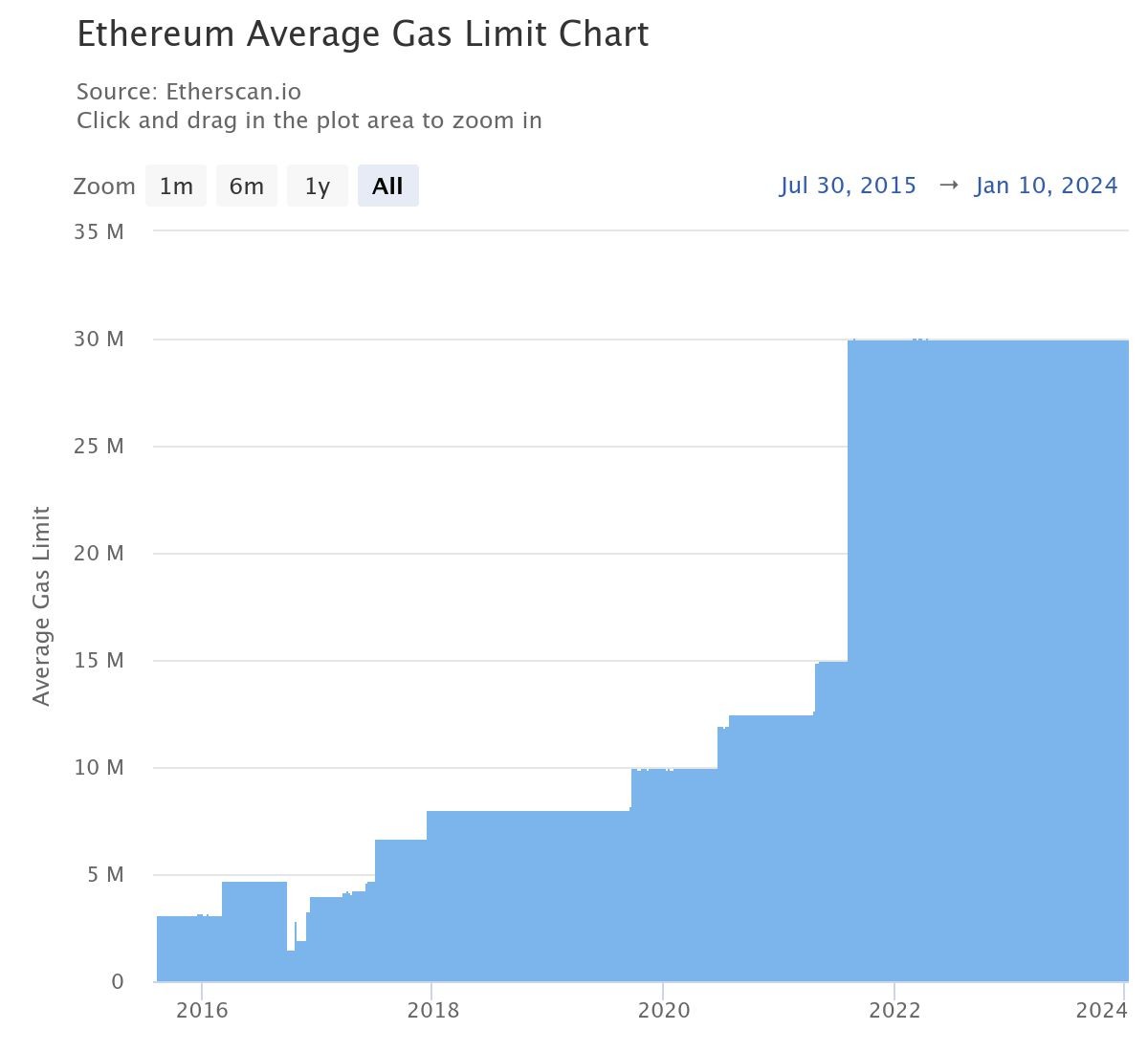

In a significant update for the Ethereum community, Vitalik Buterin recently announced plans for an Ethereum gas limit increase aimed at enhancing network performance by 2025. This pivotal change is set to augment the functionality of decentralized applications as well as improve node software, crucial for the Ethereum blockchain’s future. By addressing the gas limitations, Ethereum seeks to break through the performance milestones associated with zkEVM, ensuring the network can handle increasing demands. With these advancements, Ethereum is firmly on a mission to fulfill its vision of becoming the quintessential world computer, serving as the backbone for a freer internet. As the ecosystem evolves, these updates may soon redefine how we engage with and utilize blockchain technology in our daily lives.
As Ethereum gears up for its upcoming enhancements, the impending gas limit elevation represents a crucial step in the blockchain’s ongoing transformation. Known for empowering developers to build resilient decentralized applications, Ethereum is embracing innovations that will boost network efficiency while striving for greater user accessibility. These advancements are part of a broader strategy to make significant headway in zkEVM performance and tackle existing challenges within the ecosystem. The vision for 2025 and beyond encompasses achieving true decentralization across both the blockchain infrastructure and application layers. This bold initiative promises a more robust foundation for the applications of tomorrow, ensuring a trustworthy and censorship-resistant digital landscape.
Ethereum Gas Limit Increase for Enhanced Scalability
Vitalik Buterin’s recent announcement regarding the Ethereum gas limit increase has generated significant excitement among the blockchain community. By raising the gas limit and increasing the number of blobs in 2025, Ethereum aims to improve transaction efficiency and reduce congestion on the network. This increase is particularly important as Ethereum continues to evolve, making it a more attractive platform for decentralized applications (dApps) developers who require reliable and scalable infrastructure.
The implications of this gas limit increase extend beyond mere efficiency; it represents a crucial step toward achieving Ethereum’s ambitious goals. Enhanced scalability is essential for supporting larger and more complex dApps, enabling them to handle increased user demand without sacrificing performance. As Ethereum enhances its infrastructure, particularly through advancements in zkEVM performance, it is likely to attract a surge of developers and users seeking a robust platform for their innovative projects.
Advancements in zkEVM for Improved Performance
The zkEVM, or Zero-Knowledge Ethereum Virtual Machine, stands out as one of the most groundbreaking advancements within the Ethereum ecosystem. This technology enables confidential computation while retaining the public verifiability of the Ethereum blockchain, which is vital for decentralized applications. With the anticipated improvements in zkEVM performance, Ethereum aims to break through previous performance milestones that have hindered its scalability and usability in the market.
As the Ethereum blockchain adopts these technological advancements, it positions itself to challenge competitors in the realm of smart contracts and blockchain applications. The focus on zkEVM not only enhances speed and efficiency but also contributes significantly to Ethereum’s commitment to security and decentralization. Users can expect a more responsive and capable blockchain that upholds the principles of transparency and resilience, fundamental to its vision of a decentralized internet.
Vitalik Buterin’s Vision for Ethereum 2025
Vitalik Buterin’s vision for Ethereum in 2025 encompasses a transformative journey towards creating a more powerful and versatile blockchain. His recent statements reflect a commitment to ensuring that the Ethereum platform evolves to meet the demands of an increasingly digital world. The enhancements mentioned, including the gas limit increase and blob expansion, are critical components of the broader plan that aims to unify the ecosystem and empower decentralized applications.
Moreover, Buterin’s foresight includes fostering innovation among developers who seek to build applications that are immune to fraud and censorship. By focusing on decentralized technology’s inherent benefits, Ethereum seeks to create a reliable infrastructure that grows alongside its community. This collaborative effort seeks to mitigate the risks posed by reliance on central authorities, thus promoting a freer and more open internet.
Decentralized Applications: The Future of Internet Infrastructure
The development of decentralized applications (dApps) stands as a testament to Ethereum’s commitment to redefining internet infrastructure. These applications, built on the Ethereum blockchain, not only offer unprecedented security and transparency but also ensure that users retain control over their data and privacy. Buterin’s approach aims to encourage the development of platforms that are resistant to censorship, third-party interference, and fraud, thereby establishing trust among users.
As Ethereum advances toward a stage of large-scale usability, these dApps play a pivotal role in demonstrating the potential of blockchain technology. By enhancing the blockchain’s capabilities, Ethereum can support a wide range of applications, from finance to social media, which can thrive in a decentralized environment. The continued focus on decentralized applications is central to Ethereum’s strategy, assuring that the network can serve as a backbone for innovative projects that can outlast their creators.
The Promise of Ethereum Blockchain Advancements
Ethereum is at the forefront of significant blockchain advancements, all aimed at addressing the limitations of previous technologies. Through the upcoming enhancements including a gas limit increase and improvements to the zkEVM, the Ethereum network is set to achieve remarkable breakthroughs. These advancements are not just technical upgrades; they embody the ambition of creating a world computer that serves as the foundation for a decentralized future.
The commitment to evolving the Ethereum blockchain reflects a broader understanding of the challenges faced in achieving true decentralization. By focusing on both the blockchain and application layers, Ethereum aims to empower developers and users alike, showcasing an ecosystem where decentralized applications can flourish. This vision for Ethereum’s future emphasizes a commitment to innovation, security, and the potential for vast social impact.
Building a World Computer: Ethereum’s Ambitious Goals
Ethereum’s ambitious goal of becoming a ‘world computer’ is not just a theoretical concept but a guiding principle for its development strategy. This vision involves creating an accessible platform that enables anyone to build and deploy decentralized applications, effectively decentralizing the internet. Vitalik Buterin’s clear focus on scalability, exemplified by gas limit increases and zkEVM advancements, showcases the necessary steps being taken to turn this vision into reality.
Achieving this goal involves overcoming substantial challenges, primarily related to usability and decentralization at both the blockchain and application layers. Ethereum’s approach aims to ensure that users can engage with dApps that are not only innovative but also resilient against manipulation and central authority control. As such, Ethereum remains dedicated to fostering an ecosystem that upholds these ideals while driving the necessary technological advancements to support them.
Navigating the Challenges of Centralization
As Ethereum continues to grow and adapt, one of the significant challenges it faces is avoiding centralization. Even with powerful advancements like zkEVM and increased gas limits, the risk remains that certain entities may dominate the platform. Vitalik Buterin’s emphasis on true decentralization underscores the need for Ethereum’s infrastructure to remain open and accessible to all developers, ensuring that it does not become a playground for the few.
The Ethereum community understands that true decentralization involves not just technology but also active participation. By encouraging a diverse range of decentralized applications and fostering an engaged user base, Ethereum can mitigate the risks associated with centralization. This commitment to inclusivity and diversity will be crucial for maintaining the integrity of its ecosystem and fulfilling its long-term vision of a decentralized internet.
The Role of Ethereum in a Decentralized Future
Ethereum’s continued advancements position it as a critical player in the movement towards a decentralized future. The enhancements announced by Buterin, particularly the increase in gas limits and improvements to the zkEVM, serve as building blocks for creating a robust ecosystem of decentralized applications. These applications can redefine how users interact online, offering innovative solutions that prioritize security and freedom.
In the quest for a freer and more open internet, Ethereum’s role is paramount. By developing decentralized applications designed for everyday use, Ethereum stands to challenge the status quo of centralized platforms. This evolving landscape promises not only to enhance user experience but also to ensure that control remains in the hands of users rather than centralized entities. As Ethereum progresses toward 2025, its foundational goals remain clear: to empower individuals and encourage a more equitable digital environment.
Frequently Asked Questions
What are the implications of the Ethereum gas limit increase announced by Vitalik Buterin?
The Ethereum gas limit increase, as announced by Vitalik Buterin, is set to enhance the overall performance of the Ethereum blockchain. This adjustment aims to facilitate more efficient transactions and support decentralized applications (dApps), ultimately contributing to the goal of building a robust world computer. With advancements like zkEVM, the increased gas limit will allow nodes to handle higher transaction volumes, leading to improved scalability and usability of Ethereum-based services.
How will the Ethereum gas limit increase benefit decentralized applications?
Increasing the Ethereum gas limit will significantly benefit decentralized applications by improving their performance and efficiency. This change allows dApps to process transactions faster and at a lower cost, encouraging more users to engage with them. Improved gas limits, coupled with zkEVM performance enhancements, will make Ethereum’s infrastructure more appealing for developers, enabling them to create innovative solutions that are immune to fraud and censorship.
What role does zkEVM play in the Ethereum gas limit increase?
zkEVM plays a crucial role in the Ethereum gas limit increase as it enhances the network’s scalability and performance. By optimizing how transactions are processed and validated, zkEVM allows for a larger number of transactions to be included in each block, thus making the increased gas limit more effective. This technological advancement is essential for Ethereum’s goal of achieving high throughput while maintaining decentralization.
When can we expect the Ethereum gas limit increase and related advancements in 2025?
The Ethereum gas limit increase and related advancements, as outlined by Vitalik Buterin, are expected to roll out in 2025. This strategic plan includes improvements to node software and the integration of Blobs to optimize performance. As these upgrades are implemented, Ethereum aims to achieve its vision of becoming a more powerful blockchain that supports the development of decentralized applications with a focus on usability and decentralization.
What challenges does Ethereum face with the gas limit increase and future developments?
With the gas limit increase and future developments like zkEVM, Ethereum faces challenges in maintaining decentralization and usability while scaling its infrastructure. The objective is to serve as a world computer, which requires balancing performance enhancements with the principles of decentralization to ensure that applications remain resistant to censorship and third-party interference. Achieving this balance is critical for the continued evolution of the Ethereum blockchain.
What does the future hold for Ethereum’s blockchain advancements post-gas limit increase?
Post-gas limit increase, Ethereum’s blockchain advancements are expected to focus on improving scalability, enhancing decentralized application performance, and employing solutions like PeerDAS for better data availability. By 2025, with the integration of zkEVM and an increased gas limit, Ethereum aims to solidify its position as a foundational infrastructure for an open internet, fostering innovation while ensuring security and reliability in its decentralized ecosystem.
| Key Point | Details |
|---|---|
| Gas Limit Increase | Vitalik Buterin announced an increase in Ethereum’s gas limit and number of blobs in 2025. |
| Objective | To enhance node software quality and reach new performance milestones of zkEVM. |
| Future of Ethereum | Ethereum aims to become a more powerful blockchain through zkEVM and PeerDAS. |
| Challenges | Achieving the goal of a world computer that supports a freer and open internet. |
| Decentralization | Developing decentralized applications that are immune to fraud and censorship. |
| Scalability | The need for large-scale usability and true decentralization across the blockchain and application layers. |
Summary
The Ethereum gas limit increase is a significant step forward for the Ethereum network, as announced by Vitalik Buterin. This increase will not only improve node software but also facilitate Ethereum’s goal of serving as a foundational infrastructure in the evolving landscape of the internet. Through advancements like zkEVM and PeerDAS, Ethereum is poised to overcome substantial challenges as it works towards achieving decentralization and scalability necessary for its applications to thrive. Such advancements ensure that Ethereum remains resilient and functional, even amidst the rapid changes in the blockchain ecosystem.
Related: More from Ethereum News | World Liberty Financial Links Staking to Voting: USD1 Supply Exceeds $4.7B | Ethereum Transforms into High