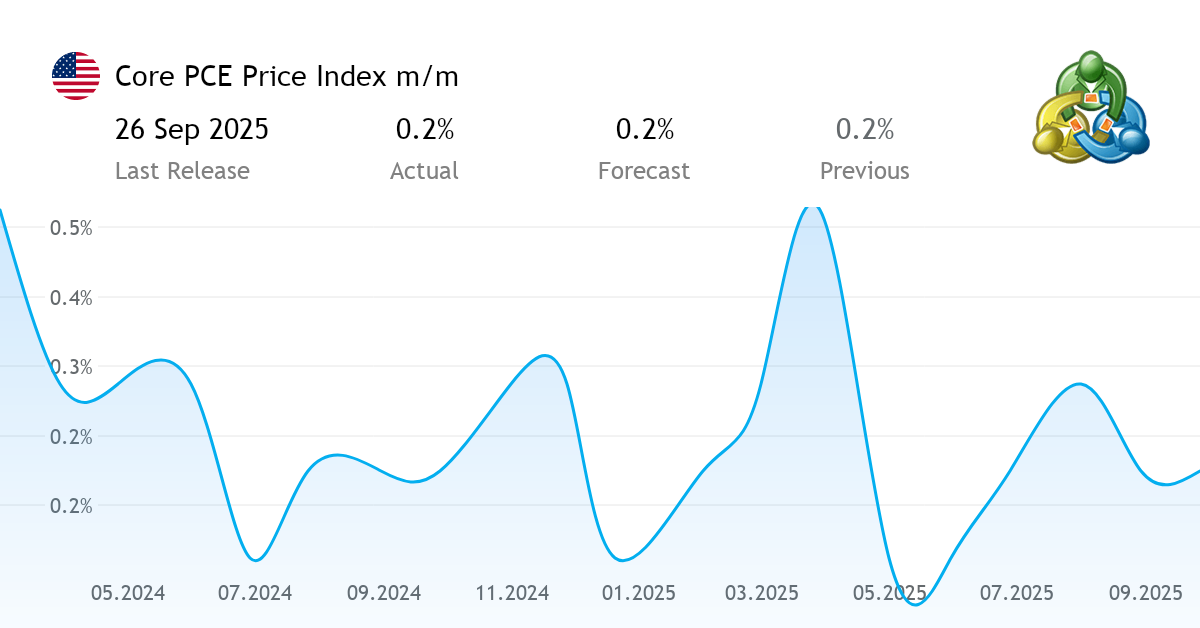

The PCE price index, a crucial measure of inflation in the United States, experienced a modest increase of 0.3% in September, aligning with analysts’ expectations. This monthly PCE increase not only reflects current economic conditions but also sets the backdrop for discussions around U.S. PCE inflation trends. Furthermore, the core PCE index—stripping out volatile food and energy prices—stood at an annual rate of 2.8%, slightly below the anticipated 2.9%. As investors and policymakers scrutinize September inflation data, the focus remains on how these figures will influence future monetary policy decisions. Understanding the PCE price index and its implications is vital for anyone tracking economic stability and growth in the U.S.
When analyzing economic indicators, the Personal Consumption Expenditures (PCE) metric holds significant relevance, especially in assessing inflationary trends. Often referred to as the PCE inflation gauge, this statistic provides insight into consumer spending patterns and price changes across a range of goods and services. In September, key figures related to the core PCE index demonstrated a nuanced picture of price stability, with implications for both short-term economic policies and long-term financial strategies. Determining the impact of these metrics, including the latest adjustment in the monthly PCE rates, helps stakeholders navigate the complex landscape of economic forecasting. Ultimately, interpreting the annual PCE rate and its variations is essential for understanding the broader implications on the U.S. economy.
Understanding the PCE Price Index and Its Importance
The Personal Consumption Expenditures (PCE) price index is a vital economic indicator that reflects changes in the price levels of goods and services consumed by households. In September, the U.S. PCE price index rose by 0.3%, which aligns perfectly with financial analysts’ expectations. This stability in the monthly PCE increase suggests that inflation may be under control, which is a welcome sign for consumers and policymakers alike. Monitoring the PCE price index provides insightful data about economic trends, consumer behavior, and purchasing power.
The PCE price index, particularly the core PCE index, excludes food and energy prices to present a clearer picture of long-term inflation trends. For September, the annual core PCE index registered at 2.8%, which is slightly below the anticipated figure of 2.9%. This divergence is critical as it highlights the underlying inflation rates and helps the Federal Reserve make informed decisions regarding interest rates and monetary policy. Understanding these metrics can assist investors and consumers in anticipating future economic conditions.
Analyzing the Monthly and Annual PCE Rates
Analyzing the monthly PCE increase of 0.3% indicates a steady progression in consumer prices, which can positively influence market expectations. While this increase aligns with prior trends, the annual PCE rate, calculated over a year, plays a crucial role in understanding overall inflation. The annual core PCE index, although lower than expected at 2.8%, remains a focal point for economic discussion, as it offers insights into the purchasing habits and inflationary impacts on household budgets. Both the monthly and annual figures are essential in framing the economic narrative.
Furthermore, the PCE inflation metrics, particularly in light of the September inflation data, demonstrate variations that economists analyze to predict future inflationary trends. The annual PCE rate serves as a benchmark to gauge economic health, affecting everything from wage negotiations to the setting of interest rates by the Federal Reserve. A thorough examination of these indexes reveals significant patterns that are pertinent for grasping the broader economic landscape.
The Role of the Core PCE Index in Economic Policy
The core PCE index is a significant tool for economists and policymakers as it provides a stable measure of inflation by filtering out the volatility of food and energy prices. With the core PCE index for September at 2.8%, slightly less than expected, it suggests a potentially cautious approach to policy adjustments by the Federal Reserve. Given that inflationary expectations contribute to consumer confidence, close monitoring of this index is crucial for crafting effective economic policies.
Moreover, the focus on core PCE allows analysts to derive insights beyond surface-level price changes, assessing the underlying economic conditions. A lower-than-expected core index can signal subdued demand, prompting necessary adjustments in fiscal and monetary strategies to stimulate growth. Thus, the core PCE index is not just a number; it is a reflection of economic stability or instability, making it essential for informed decision-making.
Implications of September Inflation Data on Financial Markets
The September inflation data, showing a PCE price index increase of 0.3%, has significant implications for financial markets. This growth rate aligns with expectations, fostering confidence among investors regarding the stability of consumer prices. When inflation is consistent and predictable, it allows investors to make more informed decisions regarding asset allocation, interest rate expectations, and overall market strategy.
Conversely, any unexpected shifts in inflation rates can lead to volatility in the markets. For instance, a lower core PCE index could provoke concerns regarding the pace of economic growth, prompting a re-evaluation of investment strategies. Understanding these dynamics is critical for market participants, as the implications of the September inflation data ripple through various asset classes and influence economic forecasts.
How Monthly PCE Increases Impact Consumer Spending
Monthly PCE increases directly impact consumer spending patterns. As the PCE price index rose by 0.3% in September, it reflects how consumer prices are evolving, which can influence household budgets and spending habits. When consumers perceive stable or decreasing prices, they are more likely to spend freely, fostering positive economic growth.
Additionally, if monthly increases in the PCE index become a trend, consumers may adjust their expectations of future price changes, potentially influencing their purchasing behavior. A stable monthly PCE increase can sustain consumer confidence, fueling economic activity, while fluctuations might lead to cautious spending and saving patterns. Ultimately, the relationship between PCE increases and consumer spending is pivotal in driving economic performance.
Interpreting the Annual PCE Rate for Future Predictions
The annual PCE rate serves as a pivotal indicator for economists and investors trying to forecast future economic conditions. With the core PCE index reflecting an annual rate of 2.8% in September, slightly below expectations, it sparks discussions about the future stability of inflation. Such measurements help inform monetary policy, guiding central banks in setting interest rates or implementing other measures to maintain economic equilibrium.
Furthermore, the annual PCE rate is scrutinized for its implications on wage growth and consumer purchasing power. For instance, if inflation remains above the central bank’s targets, it could necessitate actions to curb inflation by tightening monetary policy and causing ripples across various sectors. Therefore, interpreting these rates can significantly influence strategic decision-making in both government and private sectors.
Inflation Trends: Comparing Current Data with Historical Context
Understanding the current inflation trends, as indicated by the September data on the PCE price index, requires a contextual analysis with historical data. The 0.3% monthly increase may seem modest, yet when compared to historical inflation rates, it provides insight into shifts in the economic landscape. Historically, higher inflation rates have pressured central banks, prompting adjustments that can lead to fluctuating interest rates and economic uncertainty.
Moreover, contrasting current figures like the 2.8% annual core PCE index with past data allows economists to assess whether inflation is accelerating or stabilizing. These comparisons not only highlight long-term trends but also empower policymakers to manage expectations and mitigate adverse economic impacts effectively. By analyzing these patterns, stakeholders can better prepare for future uncertainties.
The Importance of Accurate Economic Indicators
Accurate economic indicators like the PCE price index are crucial for maintaining transparency and accountability in economic policy. The September figures, with a monthly increase of 0.3% and an annual core PCE index of 2.8%, affirm the reliability of the data used to guide monetary policy decisions. As these indicators influence investor confidence and spending behavior, their accuracy ensures that strategic decisions are based on sound economic principles.
Moreover, the credibility of economic data impacts public perception and expectations. When inflation indicators align closely with actual outcomes, it fosters trust in economic forecasting and policymaking. This trust is fundamental for maintaining economic stability, as it encourages consumer spending and investment, both of which are pivotal for sustainable economic growth.
Forecasting Future Trends Based on PCE Analysis
Forecasting future economic trends requires a nuanced understanding of the PCE price index and its implications. The September data shows a steady monthly increase of 0.3%, which might indicate stabilization in consumer prices, but economists often look beyond the surface. By analyzing trends in the core PCE index and gauging consumer sentiment, analysts can make educated predictions about future inflation and its economic ramifications.
Moreover, economic models that incorporate PCE data can provide projections for various sectors, influencing investment decisions and governmental fiscal strategies. As trends evolve, continuous monitoring of PCE metrics and their relationships to broader economic factors becomes vital for stakeholders aiming to navigate the uncertainty of financial markets effectively.
Frequently Asked Questions
What is the current US PCE inflation rate as of September 2023?
As of September 2023, the US PCE inflation rate stood at 0.3%, which met the market expectations and matched the previous month’s figure of 0.3%.
How does the core PCE index differ from the overall PCE price index?
The core PCE index excludes food and energy prices to provide a clearer view of underlying inflation trends. In September 2023, the annual core PCE price index was at 2.8%, slightly below the expected 2.9%.
What insights can be gained from the monthly PCE increase reported for September?
The monthly PCE increase of 0.3% in September 2023 aligns with analysts’ expectations, indicating stable inflation levels compared to previous periods.
What does the annual PCE rate tell us about inflation trends?
The annual PCE rate provides a broader view of inflation trends over the year. For September 2023, the annual core PCE price index was recorded at 2.8%, suggesting a modest rise in price levels compared to expectations.
How do September inflation data impact monetary policy decisions?
September inflation data, including the PCE price index increase of 0.3% and the annual core PCE rate of 2.8%, play a crucial role in shaping the U.S. Federal Reserve’s monetary policy and interest rate decisions.
| Key Point | Value |
|---|---|
| PCE Price Index Change (September 2023) | 0.3% |
| Expected Change (September 2023) | 0.30% |
| Previous Value (August 2023) | 0.3% |
| Annual Core PCE Price Index (September 2023) | 2.8% |
| Expected Annual Rate (September 2023) | 2.9% |
| Previous Annual Rate (August 2023) | 2.9% |
Summary
The PCE price index serves as an essential indicator of inflation in the U.S., and in September 2023, it experienced a 0.3% increase, aligning with market expectations. This consistency is notable as the annual core PCE price index stood at 2.8%, slightly below the anticipated 2.9%. Overall, these figures suggest continued stability in inflation trends, critical for economic policy and consumer spending.
Related: More from Market Analysis | Crypto Worries Over Iranian Oil Supply: Is It Overhyped? in Crypto Market | Insider Traders Profit $1.2M Before US Iran Strike in Crypto Market