
Bitcoin Miners May Help Reduce Your Power Bill — Provided Energy Grids Incorporate Them
In recent years, Bitcoin mining has been widely critiqued for its substantial energy consumption, raising concerns about its environmental impact. However, a less discussed aspect of Bitcoin miners is their potential to help reduce household power bills if integrated effectively into energy grids. This counterintuitive scenario depends largely on the flexibility of energy grid systems to allow Bitcoin miners to not only consume but also to potentially stabilize and support the grid.
Key Takeaways
The Basics of Bitcoin Mining
Bitcoin mining involves solving complex mathematical problems to record and secure transactions on the Bitcoin blockchain. This process requires sophisticated hardware that consumes a significant amount of electricity. As the price of Bitcoin has risen, so too has the interest in mining it, leading to an increase in the consumption of electrical power.
Energy Consumption and Criticism
Bitcoin mining is famously energy-intensive. The global Bitcoin network’s energy consumption rivals that of small countries, leading to an outcry from environmentalists and sustainable development advocates. However, there’s another side to the Bitcoin mining story that involves potential benefits to local power grids.
Dynamic Demand Response
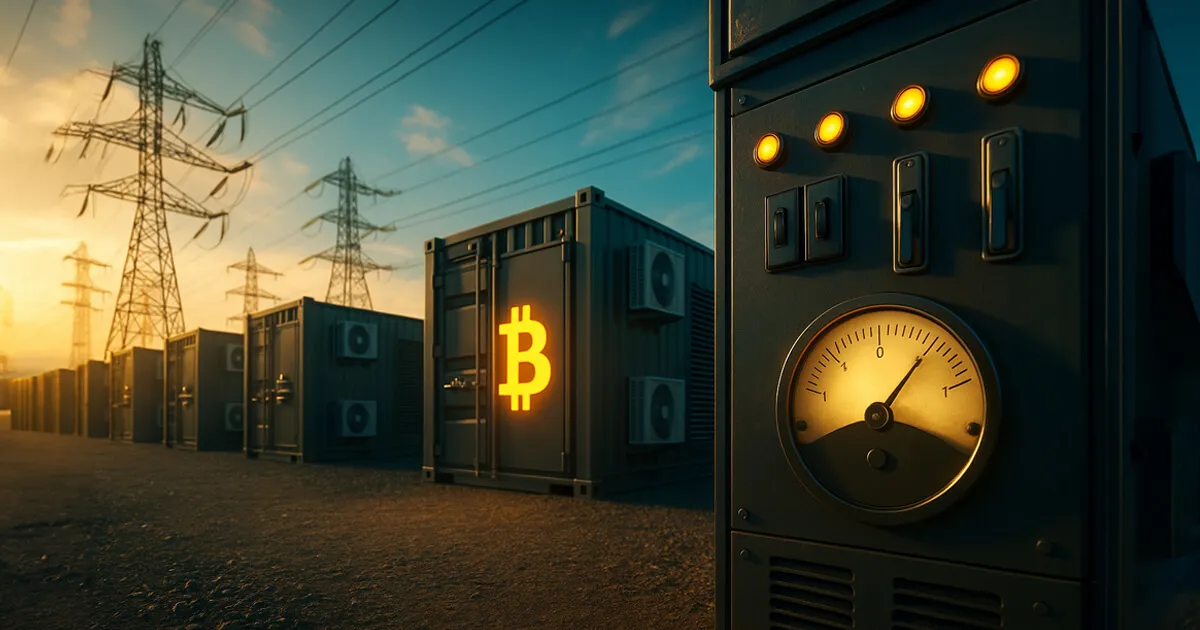
Bitcoin mining facilities can be designed to act as controllable loads within an energy grid. This means that their power consumption can be ramped up or down quickly based on grid demand. Miners can be shut off during peak demand times, alleviating stress on the grid, or ramped up when there is excess energy generation, such as during sunny or windy conditions that benefit renewable but variable power sources like solar and wind.
This flexibility can aid in balancing the grid, which not only secures a stable energy supply but can also reduce the need for investment in new power generation facilities. This balancing act can potentially lead to lower electricity costs for consumers if the reduced costs for grid maintenance and expansion are passed on to them.
Incentives and Regulatory Frameworks
To realize these potential benefits, regulatory frameworks need to evolve. Current regulations often do not allow or incentivize renewable energy projects or power consumers like Bitcoin miners to participate in energy markets as active players. There’s a need for policies that facilitate this kind of integration, recognizing large-scale miners as both consumers and potential stabilizers of the grid.
In regions like Texas, USA, which has a deregulated power market, Bitcoin miners have begun trials wherein they voluntarily reduce their electricity usage during demand peaks to alleviate the grid load. These practices, if adopted widely, could sponsor further integrative strategies and possibly result in financial incentives being offered by energy providers.
Technological Advances
The adoption of smart grid technologies can enhance the capability of integrating Bitcoin miners into the grid. Technologies like demand response systems, which automatically adjust the electricity consumption of connected systems based on real-time grid conditions, can optimize the interaction between miners and the grid. This makes the process more efficient and responsive to the grid’s needs.
Conclusion
Bitcoins miners, often seen purely as massive energy consumers, also hold the potential to play a pivotal role in the efficient management of energy distribution. By acting as adjustable loads within the grid, they can help to flatten out the spikes in energy demand and fill in the gaps when surplus energy is available. For consumers, this could mean more stable and potentially lower energy bills, improved integration of renewable energy sources, and a more resilient power grid.
The paradigm shift from viewing Bitcoin mining merely as an environmental drain to recognizing its potential utility in energy management represents a nuanced understanding of the intersection between technology and energy economics. As the regulatory and technology landscapes evolve, this potential can be harnessed, benefiting both the environment and consumers. Inviting Bitcoin miners to plug into the grid could be a game-changer, turning a notorious energy hog into a key player in the energy solution puzzle.
Related: More from Bitcoin News | M2 Money Supply Rises Again: Is BTC Bullish Gone? in Bitcoin | Bitcoin Futures Retreat Amid Iran Conflict Escalation