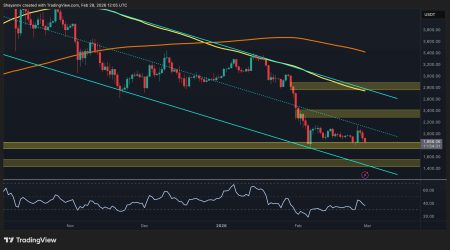



Can Ethereum Holders Help Price Break Month-Long Downtrend?
In the ever-volatile world of cryptocurrencies, Ethereum has often stood out as a leading indicator of the health of the digital asset market, second only to Bitcoin in terms of market capitalization and influence. Recently, Ethereum has faced a daunting month-long downtrend that has left investors and enthusiasts questioning the stability and future prospects of this popular cryptocurrency. With the market in such a state, a burning question emerges: Can Ethereum holders help drive a breakthrough in this price slump?

Key Takeaways
Understanding the Downtrend
Before diving into the potential roles of Ethereum holders, it is crucial to understand the factors contributing to the recent price declines. Several aspects are at play, including macroeconomic concerns such as inflation rates, changes in monetary policies by major central banks, and the general sentiment in the financial markets. Moreover, specific to the cryptocurrency industry, regulatory news, technological developments, and competitive dynamics also play significant roles.
Ethereum’s recent upgrade to Ethereum 2.0, transitioning from proof-of-work (PoW) to proof-of-stake (PoS), although fundamentally bullish, has brought with it uncertainties that may have influenced the short-term market sentiment.
Role of Ethereum Holders
Ethereum holders, particularly long-term investors, can influence the market dynamics through a variety of mechanisms. Here’s how they could potentially help stabilize and reverse the downtrend:
-
Holding and Reducing Selling Pressure: The basic economics of supply and demand dictate that prices fall when more people are selling than buying. Ethereum holders who believe in the asset’s long-term value could help by not selling off their holdings during these periods of volatility, thereby reducing the selling pressure.
-
Participation in Staking: With Ethereum 2.0, holders can participate in staking their ETH to support network security and operations. Staking reduces the circulating supply of ETH, potentially leading to an increase in price due to decreased available supply. This also incentivizes holding rather than selling, as participants earn rewards.
-
Reinforcement of Network Effects: The utility of Ethereum increases with more widespread use of its technology. Holders can contribute by engaging more with the ecosystem, using ETH for transactions, and participating in decentralized applications (dApps) on the Ethereum network. Increased usage can lead to higher demand for ETH.
-
Promoting Positive Sentiment: Sentiment plays a critical role in the crypto markets. Ethereum holders can influence market sentiment positively by sharing constructive developments and uses of Ethereum, countering the dominance of negative news that can lead to price falls.
- Institutional Influence: Larger institutional holders have significant sway over the market. Their investment decisions can signal confidence in Ethereum to broader, less informed masses. Their commitment to holding or increasing their Ethereum positions can have a considerable psychological effect on retail investors.
External Factors and Broad Market Forces
While Ethereum holders can play a part in potentially reversing a price downtrend, it is essential to recognize the influence of broader market forces and external parameters that individual holders cannot control. These include global economic events, regulatory updates, and technological advancements either within Ethereum or from competing blockchains.
Conclusion
As Ethereum continues to evolve, and the market adjusts to new norms post numerous upgrades, the power of collective holder behavior should not be underestimated. However, it is equally important to stay realistic about the extent of influence Ethereum holders have against the broader macroeconomic and regulatory backdrop. For Ethereum’s price to break out of its month-long downtrend, a combination of positive holder activity, favorable external conditions, and intrinsic technological advancements will be crucial. In the meanwhile, the holders could indeed bolster the floor, but reversing a trend would require a concerted effort aligned with favorable broader market conditions.