


XRP ETF inflows have recently captured the spotlight in the crypto market, showcasing a remarkable trend that could reshape institutional investment strategies. Over the past quarter, XRP has attracted approximately $756 million through its spot ETFs, reflecting a growing appetite among investors seeking exposure to this prominent crypto asset. Despite these substantial inflows, concerns linger regarding XRP’s centralization and price vulnerability, particularly as its value has decreased by around 20% during the same period. This juxtaposition of increasing institutional demand and declining prices raises critical questions about the evolving ownership structure of XRP and its broader implications for future crypto market tokens. As market dynamics shift, understanding the motivations behind XRP ETF inflows and the related risks becomes paramount for investors and analysts alike.

The recent surge in interest surrounding XRP exchange-traded funds marks a significant turning point in the landscape of institutional crypto investments. With an impressive total of $756 million in inflows since the launch of XRP’s ETFs, a wave of institutional capital appears to have flocked to this innovative asset class. However, the contrasting trend of XRP’s price vulnerability and increasing token centralization complicates the narrative, giving rise to vital discussions regarding the ownership distribution among large holders. This phenomenon suggests that while institutional investors are keenly interested in gaining exposure to XRP, the underlying dynamics—such as XRP’s ownership structure—are worth scrutinizing for their potential impact on market stability. Thus, as demand for these ETFs grows, the challenges of navigating XRP’s market framework continue to evolve, warranting attention from keen market observers.
XRP ETF Inflows: A Beacon of Institutional Interest
XRP has emerged as a frontrunner in the exchange-traded fund (ETF) market, boasting remarkable inflows of approximately $756 million in the first weeks following its launch. This surge in institutional investment underscores a growing confidence among investors in the viability of crypto market tokens, particularly in current volatility. Unlike traditional investments, the introduction of XRP ETFs provides a regulated pathway for institutional investors to gain exposure without the inherent challenges of direct crypto ownership. This demand is further intensified by the operational efficiencies these funds offer, which minimize risks associated with custody and exchange platforms.
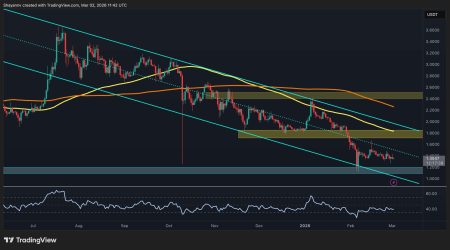
However, while these inflows are significant, they exist in stark contrast to XRP’s price performance, which has dipped by approximately 20% during the same period. The prevailing sentiment around XRP showcases a dual narrative; on one side, we have robust institutional allocations and demand through ETFs, while on the other side, market participants appear to be retreating amid price vulnerabilities. This divergence indicates a complex landscape where increased institutional interest does not immediately correlate with rising price metrics, necessitating a deeper analysis of ownership structures and market flows.
Understanding XRP Ownership Structure and Centralization Concerns
As XRP continues to lead in ETF inflows, concerns regarding its ownership structure and the risks of centralization are becoming increasingly pronounced. Recent blockchain analytics indicate a significant decrease in the number of large wallets, specifically ‘whale’ and ‘shark’ holders, which has decreased by 20.6% over recent weeks. This trend points toward a scenario where the asset’s distribution may be consolidating into fewer hands, raising alarms about liquidity and the potential for market manipulation.
A concentrated ownership structure could pose substantial risks to XRP’s price stability moving forward. With nearly half of the total supply controlled by a limited number of entities, heavy market volatility might ensue if these holders decide to liquidate their positions. Such an event could create a liquidity crunch, exacerbating price vulnerabilities and undermining confidence among retail investors. This growing centralization trend demands careful scrutiny as it may significantly impact how XRP is perceived within the broader crypto market ecosystem.
The Dichotomy of XRP’s ETF Success and Market Price Dynamics
Despite XRP’s success in attracting significant ETF inflows, its market price has remained sluggish, illustrating a clear dichotomy in market behavior. Investors are keen on the regulated entry that ETFs provide while remaining skeptical about XRP’s short-term price outlook. This sentiment highlights broader issues within the crypto markets, where macroeconomic factors and fear of price vulnerabilities dominate trading strategies, leading to a risk-off approach among traders.
This paradox poses essential questions regarding the sustainability of XRP’s ascent as an institutional favorite. If inflows continue to swell but do not result in price appreciation, it may prompt a reconsideration of how XRP and similar assets are evaluated in terms of long-term investment potential. Institutional investors must weigh their strategies not only on inflow metrics but also on price resilience to commit fully to XRP as a viable asset in their portfolios.
Institutional Crypto Investment: The Future of XRP?
The current landscape of institutional crypto investment reveals a shifting paradigm, with XRP at the forefront as a potential benchmark altcoin for institutional portfolios. The rise of XRP ETFs has captured the attention of major financial players, bolstered by Ripple’s initiatives to create a more robust ecosystem, including licensing expansions and new financial products. As the appetite for regulated crypto exposure grows, XRP could redefine investment strategies among institutional investors looking for alternative high-potential assets.
However, institutions must remain vigilant about the inherent risks in investing in cryptocurrencies. Trends such as token centralization and market volatility can influence the attractiveness of XRP, particularly as other altcoins, like Solana, gain traction with innovative use cases and growing ecosystems. Therefore, while institutional interest in XRP is heartening, only time will tell if XRP can maintain its prominence as a leading investment option in the ever-changing cryptocurrency landscape.
The Ripple Effect: Evaluating XRP Amidst Market Trends
Investigating XRP within current market conditions reveals the ongoing ‘Ripple effect’ of its ETF debut. The substantial inflows coming into XRP products affirm its appeal among institutional players searching for compliance and ease of entry into the evolving landscape of crypto market tokens. Yet, this success also raises important considerations about XRP’s long-term viability, particularly as it faces pressures from regulatory environments and competitive altcoins.
Additionally, as institutions buy into XRP, they must approach this investment with a comprehensive understanding of the factors influencing price performance, such as liquidity and ownership concentration. With fluctuations in the crypto market landscape, XRP’s position could either solidify as a cornerstone asset or face challenges that impede its growth trajectory. Hence, evaluating its potential amidst broader market trends is critical for investors.
XRP’s Price Vulnerability in an Evolving Economic Climate
XRP’s recent price vulnerabilities underscore how external economic factors and market dynamics can significantly impact its valuation. The contrast between surging ETF inflows and declining prices points to a tense balancing act between investor confidence and broader market sentiment. Analysts suggest that this vulnerability is partly due to large holders potentially cashing out—prompted by long-standing volatility—as external pressures mount.
Moreover, this scenario also reveals critical insights into XRP’s positioning in a climate characterized by macroeconomic uncertainties, such as tightening monetary policies and inflation worries, which may discourage risk-taking among investors. As XRP continues to attract institutional interest, understanding its price vulnerability will be essential for projecting future trends and enhancing engagement strategies among crypto stakeholders.
Challenges Faced by XRP in the Institutional Landscape
While XRP currently enjoys significant inflows from ETF products, it must navigate a series of challenges to solidify its position within the institutional investment landscape. Foremost among these are issues of regulatory scrutiny and competition from other emerging cryptocurrencies, including both established and newer tokens. The evolving regulations surrounding cryptocurrency could either enhance or derail XRP’s projected growth, impacting the perception of its scalability and long-term potential.
Additionally, as institutional investments become more selective, XRP and similar assets may find themselves competing for attention with alternatives that present less market risk and uncertainty. Analysts warn that while XRP’s ETF inflows are encouraging, sustained interest will depend on its ability to adapt to market demands and regulatory developments while maintaining robust risk management practices.
The Role of Market Sentiment in Driving XRP Demand
In the highly volatile world of cryptocurrencies, market sentiment plays a crucial role in shaping the demand for XRP and other assets. Though XRP’s recent inflows are largely driven by institutional interest, fluctuating public sentiment can significantly influence trading dynamics. Factors such as regulatory news, technological advancements, and market sentiment surrounding competitive assets directly impact investor behavior, creating a vibrant yet unpredictable landscape.
Market sentiment also influences perception among institutional investors, who often require a solid rationale to commit to riskier assets, particularly in uncertain economic climates. As such, XRP’s positioning hinges not only on solid transaction flows through ETFs but also on the broader narrative surrounding cryptocurrency acceptance within traditional finance. Understanding this interplay can be vital for investors and stakeholders as they navigate decision-making processes in an ever-changing market.
Future Outlook for XRP Amidst Centralization and Price Pressures
As XRP continues to draw significant ETF inflows, the future outlook remains complex amid ongoing concerns of centralization and price vulnerability. The presence of a concentrated ownership structure might attract scrutiny from regulatory bodies and could pose risks during price corrections. Investors must remain proactive in understanding how these dynamics could influence their holdings, especially if liquidity issues arise or market sentiment shifts.
Moreover, as XRP asserts its position within the crypto ETF realm, the need for a correct balance between institutional investment and risk management becomes clear. Future developments will likely hinge on Ripple’s ability to sustain momentum while addressing centralization risks, ensuring that it can bolster public confidence and navigate the intricacies of cryptocurrency investment. Only time will reveal whether XRP can capitalize on its initial success to establish itself as a lasting player in the evolving crypto landscape.
Frequently Asked Questions
What are the implications of XRP ETF inflows on the crypto market tokens?
The recent XRP ETF inflows signal strong institutional interest, indicating a shift in how crypto market tokens are being perceived. These inflows, which amount to approximately $756 million, showcase XRP’s compelling investment narrative against a backdrop of declining prices, suggesting that institutions are betting on XRP’s long-term potential despite short-term challenges.
How does XRP’s ownership structure affect its ETF inflows?
XRP’s ownership structure plays a crucial role in its ETF inflows. As the number of large wallets decreases, indicating potential centralization, institutional investors perceive XRP as a more stable asset, leading to increased ETF demand. This stability is attractive for institutions looking to invest in crypto while maintaining manageable risk.
What is the relationship between XRP price vulnerability and ETF inflows?
Despite strong XRP ETF inflows, the token’s price vulnerability remains a concern, as XRP has experienced a 20% drop in value amid these inflows. This juxtaposition indicates that while institutional demand via ETFs is robust, broader market conditions and selling pressures are affecting XRP’s price stability.
Are XRP ETF inflows a signal of increased institutional crypto investment?
Yes, XRP ETF inflows represent a significant uptick in institutional crypto investment. The ongoing demand for XRP ETFs indicates that institutional investors are increasingly recognizing the asset’s value, opting to access it through compliant vehicles that mitigate custody risks associated with direct token investments.
How does XRP centralization impact its ETF performance?
XRP centralization could potentially undermine its ETF performance as fewer large holders mean that significant price moves could be influenced by the decisions of a small group of entities. This centralization raises concerns about liquidity and volatility, factors that could limit the continued success of XRP ETFs in attracting new investments.
What trends are emerging with XRP’s ETF inflows compared to other cryptocurrencies?
XRP has outperformed other cryptocurrencies in terms of ETF inflows, contrasting sharply with outflows seen in Bitcoin and Ethereum ETFs. This trend indicates a growing interest in XRP as a potential benchmark asset within institutional portfolios, suggesting that it is beginning to carve out a unique position in the competitive crypto landscape.
What factors influence the growing XRP ETF inflows amid market uncertainty?
Growing XRP ETF inflows in a volatile market are influenced by the token’s operational efficiency and the appeal of regulated investment products. Institutions are drawn to XRP ETFs for their ability to offer a compliant investment avenue while also navigating the complex landscape marked by decreasing retail liquidity and macroeconomic challenges.
| Key Points | Details |
|---|---|
| XRP ETF Inflows | XRP spot ETFs have accumulated approximately $756 million over eleven sessions since November 13, indicating strong demand. |
| Price Performance | Despite high inflows, XRP’s price has decreased by about 20%, trading around $2.03 as of now. |
| Market Contrast | The contrast between strong inflows and falling prices signals institutional interest while existing holders may be reducing exposure. |
| Market Share | XRP’s ETF products hold about 0.6% of the total market cap, showcasing its dominant position amidst lower inflows for other altcoins. |
| Centralization Concerns | A decrease in large wallets holding XRP indicates growing centralization risks, which could affect market liquidity and future price movements. |
| Benchmarking Interest | XRP’s inflows are driving discussions about potential benchmarks for institutional portfolios, shifting focus from Bitcoin and Ethereum. |
| Regulatory Developments | Ripple’s licensing expansion and ecosystem developments contribute to the increased interest and potential for regulated participation. |
Summary
XRP ETF inflows are currently leading the crypto market, demonstrating substantial institutional interest despite a backdrop of declining prices. This scenario illustrates a complex landscape where significant inflows are not translating into price appreciation, raising concerns about token centralization and market vulnerabilities. The evolving ownership structure of XRP and its potential as a benchmark asset reflects a dynamic shift in institutional crypto investing, making it essential for market participants to monitor both inflow trends and price movements closely.
Related: More from Altcoin News | XRP Drops 10%, Ripple Tokens Future Uncertain in Altcoin | XRP News: AI Finds Critical Bug in Ripple Tokens in Altcoin