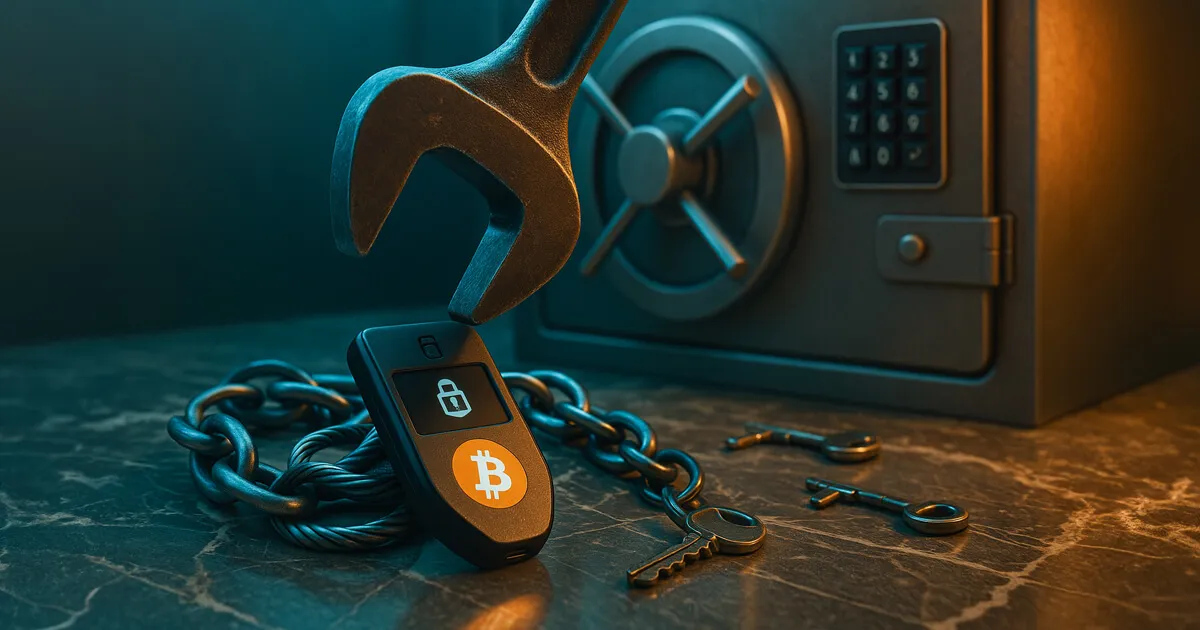

When the Wrench Comes for the Wallet: Why Bitcoin’s Biggest Believers Are Handing Over Their Keys
In the innovative landscape of cryptography and blockchain, where enthusiasts preach the gospel of decentralization and absolute control over one’s own financial assets, an intriguing trend is emerging. Some of Bitcoin’s most fervent believers, those who have advocated tirelessly for the cryptocurrency’s widespread adoption, are now opting to hand over their cryptographic keys to third-party services. This shift shines a light on a nascent conversation about the practical security concerns, convenience, and evolving definitions of trust within the crypto community.
Understanding the Paradox of Control
Bitcoin, born out of the 2008 financial crisis, was heralded as a means to transfer power from traditional institutions to the individual. Its decentralized nature meant that people wouldn’t need to rely on banks or governments to transact. However, the responsibility of securing these digital assets falls squarely on the individual owner. In the famous jargon of the crypto-world, “not your keys, not your coins,” the concept of self-custodianship commands that one must truly own their cryptographic keys to claim ownership over their Bitcoins.
But as the value of Bitcoin soared, so did the targets on its holders. The very act of maintaining uncompromised possession of one’s keys — and by extension, one’s wealth — became fraught with challenges. Stories abound of individuals losing millions due to misplaced keys, forgotten passwords, or hardware failures. Then, there are more sinister threats like hacking or physical theft, epitomized by the so-called “$5 wrench attack” — a crude yet effective strategy of forcing someone to transfer their Bitcoins using physical violence.
The Appeal of Third-party Custodians
In response to these risks, even the most hardcore Bitcoin purists are beginning to see the value in third-party custodial services. These services promise enhanced security, backups, and even insurance — luxuries not easily attainable when one opts for self-custody. Companies like Coinbase, Binance, and a slew of emerging crypto custodians are stepping up to offer fortified vaults for digital assets.
Primarily, these services mitigate the risk of theft and loss. By delegating the responsibility of safeguarding their cryptographic keys to specialists who are equipped with sophisticated security measures, individuals can offload the significant burden of staying abreast with security practices. Additionally, such services often come with user-friendly interfaces, making them appealing to those less technically inclined.
Revising the Narrative on Trust
This shift signifies a nuanced understanding of trust within the financial paradigm spawned by Bitcoin. While the original intent of Bitcoin was to obviate the need for trusted third parties, practical concerns are shaping a reality where trust is instead being reconfigured. Users are beginning to place trust in the security expertise of these companies rather than in the institutions of old.
However, this trend does not come without criticism. Purists argue that it undermines the very principles of Bitcoin’s creation — that is, to avoid the centralization and vulnerability inherent in the traditional banking system. Others worry about the re-emergence of single points of failure and potential regulatory overreach when third parties become involved.
The Road Ahead
As Bitcoin and other cryptocurrencies mature, their communities must navigate these competing ideals and realities. Holders are finding that as much as they champion the ethos of decentralization, the practical aspects of security and ease of use of custodial services are equally important.
The road ahead is likely to see the implementation of hybrid models, where users maintain some portion of their holdings in personal wallets for ideological reasons, while relying on custodians for the bulk of their wealth due to security concerns. The challenge will be to ensure that as custodians gain influence, they adhere to the philosophical foundations of blockchain and resist becoming akin to the very banks Bitcoin sought to replace.
In the end, as the landscape evolves, the decision to hold one’s keys or to hand them over is increasingly becoming one of personal preference, shaped by individual concerns and beliefs rather than a strict adherence to ideological purity. As the community continues to grow, the diversification of security strategies reflects the complex, varied needs of its members, keeping the spirit of innovation and self-determination very much alive.
Related: More from Bitcoin News | BTC Surges Above $71K Amidst Middle East Tensions in Bitcoin | Bitcoin ETF Inflows Fail to Boost Price: Analyst Explains Why