
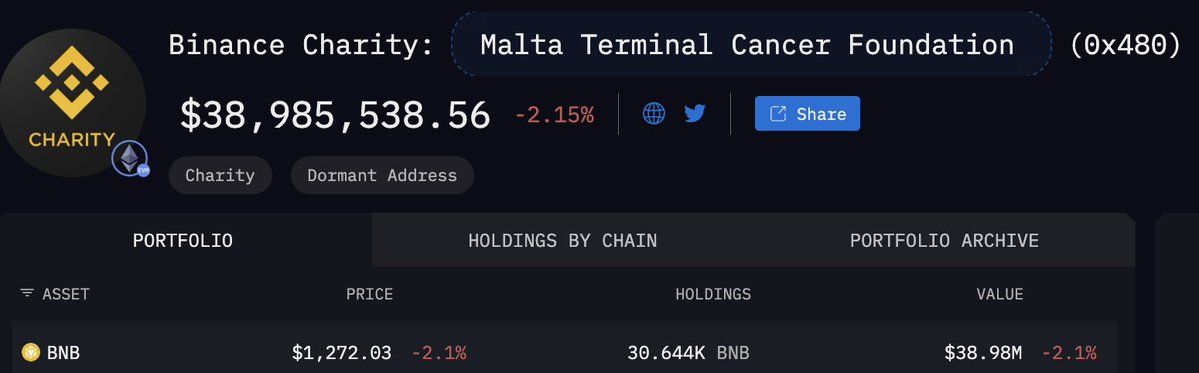

In 2018, Binance, one of the world’s leading cryptocurrency exchanges, made headlines by announcing a significant donation of 200,000 BNB tokens to the country of Malta. The donation was part of Binance’s broader strategy to support blockchain technology adoption and foster new innovations in the cryptocurrency space within the island nation, dubbed “Blockchain Island” due to its crypto-friendly policies.

Background of the Donation
The 200,000 BNB tokens, valued at approximately $40 million at the time, were intended to help the Maltese government implement various technological projects. Binance’s decision to make this donation coincided with their move to Malta, in response to the country’s progressive regulatory framework for cryptocurrency and blockchain technology. Malta’s Prime Minister at the time, Joseph Muscat, had actively encouraged blockchain companies to invest in the country, promising robust legal frameworks and comprehensive support.
Objective of the Donation
The primary aim of the donation was to facilitate the development and implementation of blockchain technology in public sector projects. This included projects related to education, healthcare, transportation, and the management of public records. Additionally, the funds were supposed to seed the creation of a vibrant blockchain ecosystem, aiding startups and encouraging innovations that could be integrated into existing infrastructures.
Utilization of the Funds
The specifics of how the funds have been utilized remain partly opaque. There have been a number of initiatives and announcements over the years that hint at the allocation of resources. For instance, soon after the donation, Malta announced the establishment of a Blockchain Scholarship Fund, which drew on funds from Binance to provide Maltese students with opportunities to pursue studies in blockchain and distributed ledger technology, both locally and abroad.
Furthermore, parts of the donation were allocated to the development of digital government initiatives, which included transforming various public sector services through blockchain technology, aiming to improve efficiency and reduce bureaucratic overhead.
Impact Today
As of the last updates, the impact of Binance’s donation on Malta’s blockchain ecosystem has been significant yet mixed. On the one hand, Malta has managed to position itself as a leader in regulatory measures for the cryptocurrency space, attracting other companies in the ecosystem. On the other hand, actual deployment of blockchain technologies in everyday applications has been slower than anticipated. The rapid evolution of the blockchain sector and adjustments in global and local economic conditions have also affected project implementations.
Critics argue that while the donation has helped in infrastructure and educational aspects, its effectiveness in solving practical, everyday governmental challenges has been less visible. There have also been concerns regarding transparency in how funds are allocated and results measured.
Future Prospects
The future of blockchain technology in Malta, energized by Binance’s significant donation, looks cautiously optimistic. With ongoing global interest in blockchain applications continuing to grow, Malta could potentially leverage its early adopter status to continue attracting investment and talent in this field. However, more clear and transparent reporting on the outcomes and progress of funded projects would likely boost public and investor confidence.
Drawing lessons from this large-scale philanthropic exercise, future initiatives might focus more on specific, measurable outcomes, ensuring that the generous donations serve as effective catalysts for technological and economic advancements.
In conclusion, the 200,000 BNB donated by Binance to Malta represented a landmark moment in crypto philanthropy. While it has certainly contributed to establishing a foundation for blockchain in Malta, the full realization of its benefits remains a work in progress, highlighting the complexities involved in applying emerging technologies to real-world scenarios.