


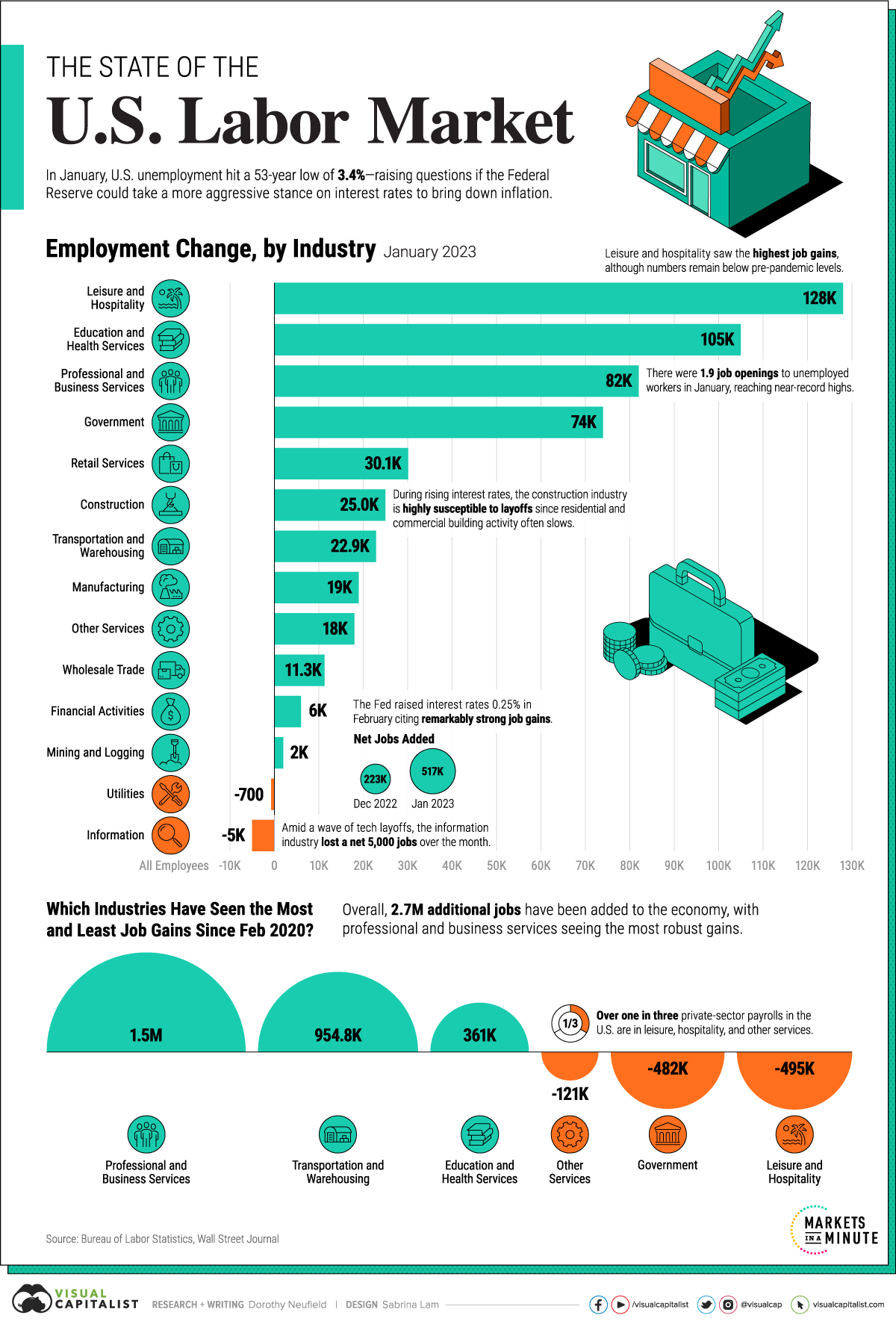

The U.S. labor market is experiencing notable shifts as recent employment claims and trends signal a complex landscape. With layoffs in 2023 remaining lower than anticipated, analysts are closely observing the fluctuations in job openings and the unemployment rate, which has lately hovered near four-year highs. The impending December nonfarms employment report will provide crucial insights, as expectations lean toward a modest increase in employment figures. Despite challenges posed by economic uncertainties and technological advancements, many employers seem reluctant to make significant staffing changes, contributing to a sense of “paralysis” within the market. As we navigate these developments, a comprehensive labor market analysis will be essential for understanding the future trajectory of employment opportunities across the nation.

In examining the current state of the workforce in the United States, we find ourselves confronted with a unique set of challenges and dynamics. As initial claims for jobless benefits rise slightly, the broader employment landscape reveals a cautious approach from companies regarding hiring and layoffs. The looming nonfarm payroll data for December is highly anticipated, with economists predicting a slight uptick in job creation, alongside a potential decrease in the jobless rate. Factors such as geopolitical uncertainties and technological disruptions are influencing corporate decision-making, leading to a relatively stable but hesitant employment environment. Analyzing these elements will be key to understanding the underlying forces at play and the overall health of the job market in the months to come.
Current State of the U.S. Labor Market
The U.S. labor market is currently facing a unique phase described as a “paralysis state,” where initial unemployment claims have slightly risen above expectations. This indicates a troubling yet not catastrophic shift in labor demand, leaving many economists concerned about future job opportunities. Despite numerous indicators pointing to a weakening labor market, the number of layoffs remains surprisingly low when juxtaposed with historical data, suggesting that both employees and employers are exhibiting caution during this uncertain economic period.
Factors contributing to this “paralysis state” include fear regarding looming tariff impacts and an ever-increasing reliance on artificial intelligence. Companies seem reluctant to invest in hiring new staff, fearing that they may be forced to make cuts in the near future. The industry awaits the December nonfarms employment report, which could shed light on employment trends and provide further insight into the short-term economic outlook.
Impact of Unemployment Claims on the Labor Market
Recent statistics reveal a modest uptick in initial employment claims, which raises a flag about the labor market’s overall health. While the unemployment rate is predicted to decrease slightly from 4.6% to 4.5%, these minor fluctuations do not alleviate concerns regarding long-term employment stability. Analysts emphasize that the relationship between unemployment claims and the economic environment should be closely monitored, especially with the backdrop of the ongoing trade discussions and potential policy changes.
The labor market analysis conducted around these claims indicates potential future challenges, particularly as economic factors may continue to evolve. For instance, seasonal adjustments during the holiday season significantly affect data accuracy, which can mislead stakeholders about actual labor market conditions. Understanding these complexities is essential for policymakers to devise proactive strategies that mitigate risks associated with rising claims.
Looking Ahead: December Nonfarms Employment Report
As anticipation builds for the upcoming December nonfarms employment report, experts are bracing for revealing insights that could reshape current economic narratives. Analysts expect a modest growth of 60,000 jobs last month, which could be a positive signal of recovery in certain sectors. However, this expected increase should be viewed with caution, especially given the backdrop of a historically high unemployment rate that has not been seen in over four years.
The significance of the December report cannot be overstated. It will not only highlight the immediate labor market trends but also serve as a barometer for future employment strategies. The potential decrease in the unemployment rate might offer a glimmer of hope, but the factors driving these numbers, such as governmental shutdowns and market demand, need careful consideration to anticipate effective measures to reinvigorate a potentially stagnating labor environment.
Analyzing Layoffs in 2023 and Their Effects
The landscape of layoffs in 2023 has attracted significant attention as companies grapple with economic uncertainty. While layoffs have been noted, the sheer volume has remained low compared to past economic downturns, indicating resilience within various industries. This trend raises questions about whether companies are preparing for economic adjustment or opting to maintain a steady workforce amid fluctuating demands.
The analysis of layoffs not only reveals the immediate impact on the labor market but also reflects broader economic sentiments. Employers seem cautious, with many choosing to avoid significant workforce reductions despite challenging conditions. This scenario speaks volumes about the current labor market context, where businesses prefer to navigate uncertainties rather than resorting to layoffs that might destabilize their operational capacity in the future.
Employment Claims: A Key Economic Indicator
Employment claims are one of the key indicators that economists use to gauge the health of the labor market. A rise in these claims often signals economic distress, leading to cautious spending and investment behaviors among consumers and businesses alike. The slight uptick in initial claims indicates growing uncertainty in the workforce, as many individuals are left grappling with job security in an ever-evolving market.
Monitoring employment claims is critical for anticipating labor market trends and potential policy interventions. Policymakers must take heed of these fluctuations, as they play a crucial role in shaping economic resilience and recovery strategies. They help determine whether interventions are necessary to bolster job creation or to provide safety nets for those affected by unemployment during this transitional period.
Understanding the Unemployment Rate Trends
The unemployment rate serves as a central benchmark for evaluating labor market health, providing insights into economic conditions and job accessibility. Recent trends suggest a decline from November’s peak of 4.6% to an anticipated 4.5%, a change that presents both promise and ongoing challenges for the workforce. However, the volatility surrounding this rate, particularly in response to external economic pressures, remains a point of concern for both analysts and job seekers alike.
Understanding the nuances of unemployment trends is vital for stakeholders invested in labor economics. Factors such as temporary government shutdowns can inflate rates temporarily, misleading discussions about genuine labor health. Furthermore, historical contexts remind us that shifts in the unemployment rate often correlate with broader economic cycles, emphasizing the need for continuous labor market analysis.
Delving Into the Seasonal Employment Patterns
The holiday season introduces unique challenges and opportunities within the labor market, notably impacting employment statistics due to seasonal hiring patterns. While businesses often ramp up hiring during this festive period, the subsequent adjustments made post-holiday can lead to fluctuating unemployment claims. This seasonality complicates accurate labor market analysis and makes it essential for stakeholders to interpret data considering these temporary shifts.
Employers must balance short-term hiring spikes with long-term staffing strategies, especially during uncertain economic periods. Understanding seasonal employment trends allows businesses to prepare effectively for fluctuations and ensures they are not caught off guard by subsequent adjustments in workforce size. By adapting to these seasonal patterns, companies can remain agile in responding to changing market demands.
The Future of Employment Amid AI Advancements
The rise of artificial intelligence (AI) presents both challenges and opportunities for the labor market, fundamentally changing how work is performed across various industries. Employers are becoming increasingly cautious in their hiring practices, as they navigate the implications of AI on workforce requirements and job security. The integration of AI into business practices raises essential questions regarding the future of work and what skills will be in demand moving forward.
In light of these advancements, labor market analysis demonstrates the need for upskilling and reskilling workers to remain relevant in a rapidly changing landscape. Employees must adapt to the evolving job roles that technology creates, while employers need to invest in training initiatives that foster resilience and adaptability among their staff. As both parties adjust to these changes, a collaborative approach addressing the intersection of technology and employment will be essential for sustaining growth and stability.
The Importance of Labor Market Analysis in Economic Planning
Labor market analysis is essential for effective economic planning and policy formulation. By examining trends in employment claims, the unemployment rate, and layoffs, economists can develop a comprehensive understanding of economic conditions. As policymakers prepare to make decisions about resource allocation and potential stimulus packages, insights gained from labor market data can guide their strategies to enhance job availability and stability.
Furthermore, ongoing labor market analysis helps identify sectors that may require immediate intervention or support. As economic conditions fluctuate, understanding the multifaceted nature of the labor market ensures that responses are targeted and relevant. This approach not only supports existing businesses in their hiring efforts but also fosters a more robust environment for job creation and sustainable economic growth.
Frequently Asked Questions
What does the current state of the U.S. labor market indicate about employment claims?
The current state of the U.S. labor market shows that initial unemployment claims have slightly risen, signaling ongoing weakness in labor demand. Although the number of claims is slightly below expectations, overall, layoffs remain low by historical standards.
How has the unemployment rate in the U.S. been affected recently?
Recently, the unemployment rate in the U.S. experienced an uptick due to various factors, including a significant 43-day federal government shutdown. As of last month, it is anticipated to decline from November’s 4.6% to 4.5%, reflecting a slight improvement in employment conditions.
What are the causes behind the ‘paralysis state’ in the U.S. labor market?
The ‘paralysis state’ in the U.S. labor market is primarily caused by employer hesitance to increase staffing in response to uncertainties related to tariffs and the rise of artificial intelligence. As a result, while layoffs have not surged, hiring remains subdued.
What should we expect from the upcoming December nonfarms employment report?
The December nonfarms employment report is expected to show an increase of approximately 60,000 jobs from the previous month. This report will be crucial in assessing the overall health and dynamics of the U.S. labor market.
How do layoffs in 2023 compare historically in the U.S. labor market?
In 2023, layoffs in the U.S. labor market have remained relatively low compared to historical averages, despite a modest rise in initial unemployment claims. This trend indicates a stable but cautious approach by employers in increasing their workforce.
| Key Points | Details |
|---|---|
| U.S. Labor Market Condition | Entered a “paralysis state” with initial unemployment claims slightly below expectations. |
| Recent Unemployment Claims | A modest rise in initial unemployment claims was observed last week. |
| Labor Demand | Continued weakness in labor demand was noted. |
| Layoff Trends | Layoffs remain relatively low compared to historical standards. |
| Employers’ Staffing Hesitation | Employers are hesitant to increase staffing due to uncertainties surrounding tariffs and AI. |
| Market Forecast | Focus on December nonfarm employment report; expected employment increase of 60,000. |
| Unemployment Rate | Expected to decline from 4.6% in November to 4.5%. |
| Impact of Government Shutdown | November’s unemployment rate was partially affected by a 43-day federal government shutdown. |
Summary
The U.S. labor market is currently experiencing a state of paralysis, characterized by a modest rise in unemployment claims and a hesitation among employers to increase staffing levels. Despite a backdrop of weak labor demand and ongoing uncertainties due to external factors, the number of layoffs has remained low in historical terms. As attention turns to upcoming employment reports, including the expected rise in nonfarm employment, a cautious outlook persists regarding the overall employment landscape. Looking ahead, the decline in the unemployment rate signals potential stabilization within the U.S. labor market.
Related: More from Market Analysis | Barclays Looks at Blockchain for Payments, Deposits | PayPal USD Powers New PYUSDx App