
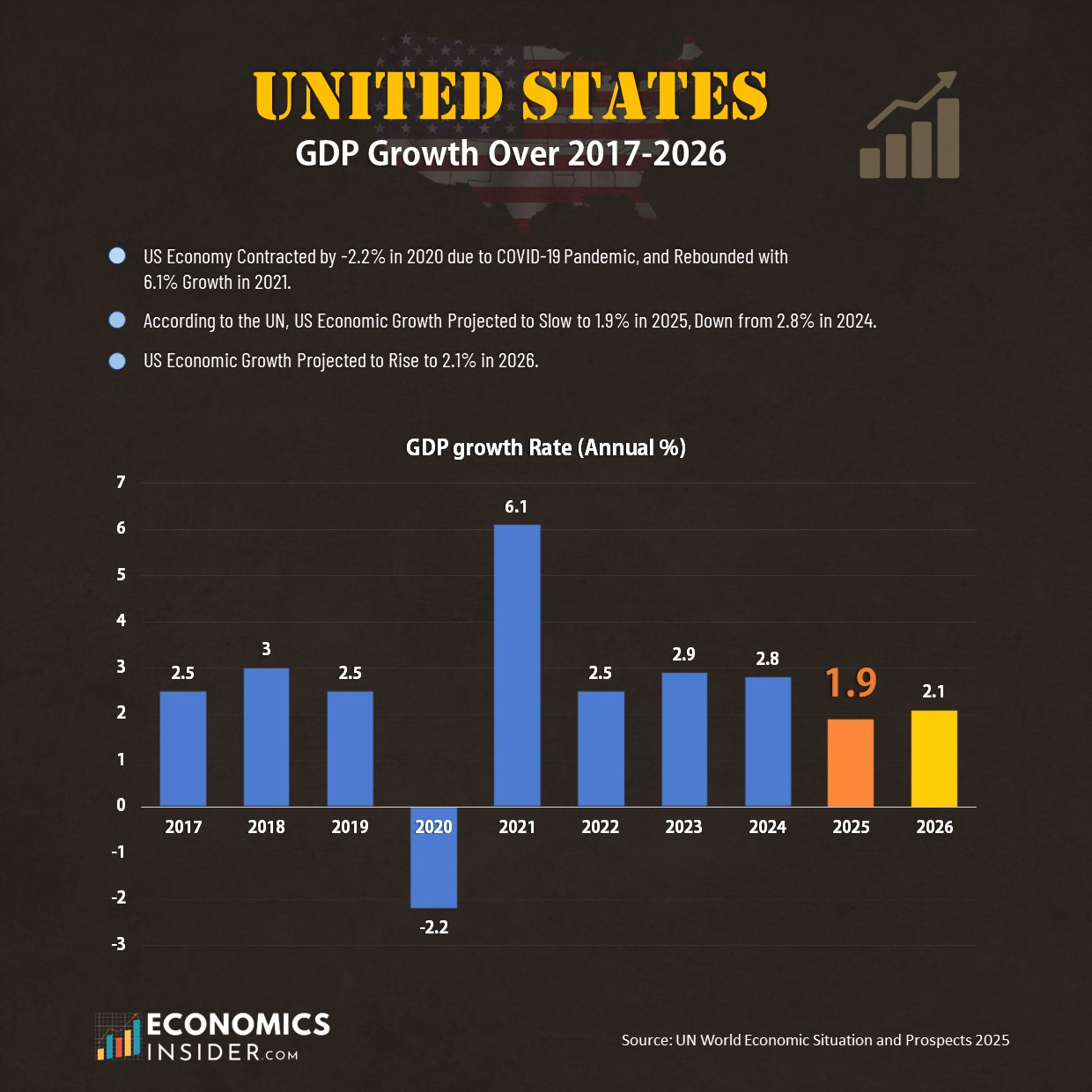

U.S. economy growth is projected to remain robust over the coming years, with economists forecasting a sustainable uptick fueled by key factors such as artificial intelligence investments and consumer spending trends. According to the latest U.S. GDP growth predictions, the economy is set to expand by 2.8% in 2026, with a slight moderation to 2.3% in 2027. The ongoing surge in investments across various sectors, complemented by favorable tax incentives, is expected to bolster this positive trajectory. Additionally, as inflation rate forecasts suggest a decline to 2.4%, the potential for Federal Reserve rate cuts may further stimulate economic activity. This optimistic outlook hinges on strong fundamentals, including a vigorous labor market and heightened productivity, positioning the U.S. for continued economic prosperity in the near future.

When discussing the trajectory of the American financial landscape, terms such as economic advancement and growth potential often surface. The projections indicate a thriving economic environment, spurred by advancements in technology and a shift in consumer habits. Key insights highlight anticipated increases in the U.S. gross domestic product, reflecting favorable conditions ahead. Observers are also monitoring trends in consumer behavior and inflationary benchmarks that could significantly influence this growth. As investment in pioneering sectors gains momentum, the horizon appears bright for the nation’s economic future.
| Key Points |
|---|
| The U.S. economy is projected to experience steady growth between 2026 and 2027 as per the Oxford Economic Institute. |
| Expected GDP growth: 2.8% in 2026 and 2.3% in 2027, following a strong growth of 4.4% in Q3 2025. |
| Growth factors include investments in artificial intelligence, tax incentives, and increased consumer spending among high-income groups. |
| Overall productivity in the U.S. is improving due to investments in both technology and non-tech sectors. |
| Inflation rate expected to slow to 2.4%, leading to potential rate cuts by the Federal Reserve next year. |
| Declining immigration and a slowdown in housing demand may help ease inflationary pressures further. |
| Despite strong economic fundamentals, the market remains sensitive to stock market fluctuations. |
Summary
The U.S. economy growth is forecasted to remain robust, driven by strategic investments and consumer dynamics. With anticipated GDP increases and a deceleration in inflation, the outlook for the U.S. economy from 2026 to 2027 seems promising. Factors such as advancements in technology and favorable tax policies are expected to bolster economic performance, creating a healthy environment for sustained growth.
U.S. Economy Growth Predictions for 2026-2027
The latest predictions suggest that the U.S. economy will experience steady growth rates of 2.8% in 2026 and 2.3% in 2027. Analysts from the Oxford Economic Institute attribute this growth to robust investments in artificial intelligence and supportive fiscal policies. As companies increase their capital allocations towards advanced technologies, particularly AI, the potential for increased productivity and efficiency rises exponentially. This transformative investment not only drives GDP growth but also enhances the competitive edge of the U.S. economy on a global scale.
In addition, consumer spending trends are expected to strengthen, especially among higher-income households due to tax incentives. As these consumers feel more financially secure, their willingness to spend will support further GDP growth. Furthermore, with the forecasted stable inflation rate of 2.4% by 2026, consumer confidence is likely to be bolstered, further fueling economic activity. This combination of spending and investment can create a positive feedback loop, supporting sustained growth even as challenges from inflationary pressures persist.
Impact of Artificial Intelligence Investment on Economic Growth
Investment in artificial intelligence is set to play a pivotal role in shaping the economic landscape for the next few years. As more businesses adopt AI technologies, we can anticipate significant boosts in efficiency and productivity across various sectors. This transition not only enhances performance but also leads to job creation in tech-focused industries. As the economy moves towards a more digitized and automated future, the contributions of AI will extend beyond direct investments, cascading through supply chains and fostering innovation.
Moreover, as AI continues to evolve and integrate into everyday business processes, its economic impact will be reflected in rising GDP figures. The infusion of technology into sectors traditionally relying on manual labor creates new opportunities for growth and elevates the overall market potential. The generation of data-driven insights allows for better decision-making, enabling companies to adapt swiftly to changing consumer demands, thereby driving further economic expansion.
Inflation Rate Forecast and Its Economic Consequences
The inflation rate forecast suggesting a deceleration to 2.4% presents an intriguing backdrop to the broader economic picture for the U.S. The anticipated stability in inflation can lead to favorable conditions for consumer spending and investment, as individuals and organizations face less uncertainty. Additionally, if the Federal Reserve decides to implement rate cuts in response to these developments, it may further stimulate economic growth by reducing borrowing costs and encouraging spending.
However, it is essential to maintain a cautious outlook. The decline in immigration and weakened housing demand inherently influence inflationary dynamics. Should these trends continue, they may contribute to a slower than anticipated recovery in certain sectors. Therefore, while the economic forecast appears promising, vigilance is required to navigate the complexities of inflation and ensure sustainable growth moving forward.
Consumer Spending Trends and Economic Stability
Consumer spending trends remain a critical component of the U.S. economy, reflecting consumer confidence and purchasing power. With the expected tax incentives set to reward high-income earners, there could be a marked increase in discretionary expenditures. This rise in consumer spending will likely provide a robust foundation for economic stability, sustaining demand across various industries and contributing to overall GDP growth.
Conversely, we must consider the broader implications of fluctuating income levels and spending habits. If economic conditions, like inflation or stock market volatility, diminish consumer confidence, spending may retract, which could stall anticipated GDP growth. Thus, ongoing analysis of consumer behaviors in tandem with economic forecasts is vital for understanding the future trajectory of the U.S. economy.
Economic Forecast for 2026 Amidst Global Changes
As we look towards 2026, the economic forecast presents a blend of hope and caution. While anticipated GDP growth driven by technology investments and favorable fiscal policies hints at a prosperous year, external factors such as global market conditions, geopolitical tensions, and environmental challenges can influence outcomes. The interconnectedness of the global economy means that shifts in other nations can ripple through U.S. markets, ultimately affecting domestic growth.
Additionally, the alignment of domestic policies with global economic trends will be crucial. Emphasizing sustainability and resilience will allow the U.S. to adapt better to both opportunities and challenges that arise in a rapidly changing world. The investment in renewable energy sources and advancements in technology will play pivotal roles in shaping the economic narrative as businesses pivot to meet both market demands and regulatory expectations.
The Role of the Federal Reserve in Economic Predictions
The Federal Reserve’s management of interest rates is of utmost importance in the context of economic predictions for 2026 and beyond. Expectations of potential rate cuts, particularly as inflation is projected to decrease, indicate a proactive approach to stimulate economic momentum. Such actions will likely influence borrowing costs for consumers and businesses, thereby affecting spending, investment, and overall economic activity.
Moreover, the Fed’s guidance on monetary policy will shape market sentiment and expectations. If the Federal Reserve maintains a stable stance on interest rates, it could foster consumer confidence and stability in consumer spending trends. However, any sudden shifts in policy to combat unforeseen economic shocks may create volatility, demonstrating the delicate balance the Fed must maintain in navigating economic uncertainties and supporting growth during pivotal times.
Long-term Investment Strategies in a Growing Economy
As the U.S. economy charts a path of growth, the importance of long-term investment strategies becomes paramount. Investors must consider diversifying portfolios to account for areas poised for expansion, particularly in technology and sustainable industries. As companies leverage advancements in artificial intelligence and steer efforts toward environmentally responsible practices, sectors that embrace innovation will likely yield considerable returns.
Furthermore, tracking consumer spending trends will become essential for investors seeking to identify emerging opportunities. As the economy grows, shifts in consumer preferences will create windows for investment in new business models and markets. By staying informed of economic forecasts and adaptive strategies, investors can position themselves favorably to capitalize on the upward trajectory of the U.S. economy.
Evaluating Stock Market Sensitivity Amid Economic Growth
The sensitivity of the stock market to economic performance remains a critical focus for analysts and investors alike. Despite the strong fundamentals driving U.S. economic growth, the stock market’s fluctuations can present challenges to achieving sustained prosperity. Factors such as changes in investor sentiment, geopolitical occurrences, or shifts in economic policy can lead to increased volatility, affecting both consumer confidence and spending.
As we move towards a more robust economic environment, understanding the interplay between stock markets and economic indicators will be essential. Investors must analyze patterns and potential risks associated with market volatility while also recognizing that robust economic growth could provide a foundation for resilient market performance. Adopting a nuanced approach to stock market investment, considering economic forecasts and consumer behavior, will be paramount in navigating these turbulent waters.
Navigating a Dynamic Economic Landscape
In navigating the dynamic economic landscape ahead, businesses must remain agile and adaptable to seize opportunities. The growth projections for the U.S. economy through 2026 highlight a need for innovation and responsiveness to consumer needs. By embracing technology and being open to restructuring business models, organizations can optimize their growth while aligning with the emerging consumer spending trends.
Furthermore, collaboration and strategic partnerships will play a significant role in achieving success. As economic conditions evolve, networking and forming alliances with other businesses can create synergies that enhance competitiveness. By maintaining a forward-thinking perspective and fostering collaboration, businesses can not only weather potential economic fluctuations but thrive in a prosperous U.S. economic environment.
Frequently Asked Questions
What are the U.S. GDP growth predictions for 2026 and 2027?
The U.S. GDP growth predictions indicate a rate of 2.8% in 2026, followed by a 2.3% growth rate in 2027. This steady growth is linked to factors such as increased investments in artificial intelligence and robust consumer spending.
How will consumer spending trends impact U.S. economy growth?
Consumer spending trends are crucial for U.S. economy growth, particularly as high-income groups continue to drive demand. As economic conditions improve and tax incentives boost disposable income, consumer spending is expected to remain strong, supporting overall GDP growth.
What role does artificial intelligence investment play in U.S. economy growth?
Investment in artificial intelligence significantly contributes to U.S. economy growth by enhancing productivity across various sectors. These technological advancements are expected to lead to improved economic performance, reflected in GDP growth rates of 2.8% in 2026.
What is the economic forecast for inflation rates in relation to U.S. growth?
The economic forecast suggests that the inflation rate will moderate to 2.4%, creating a favorable environment for U.S. economy growth. This decline may prompt the Federal Reserve to implement two rate cuts, further stimulating economic activity.
What factors are contributing to the steady U.S. economy growth from 2026 to 2027?
The steady U.S. economy growth from 2026 to 2027 is attributed to several factors, including rising investments in artificial intelligence, effective tax incentives, robust consumer spending from high-income households, and a stable inflation rate forecast.