


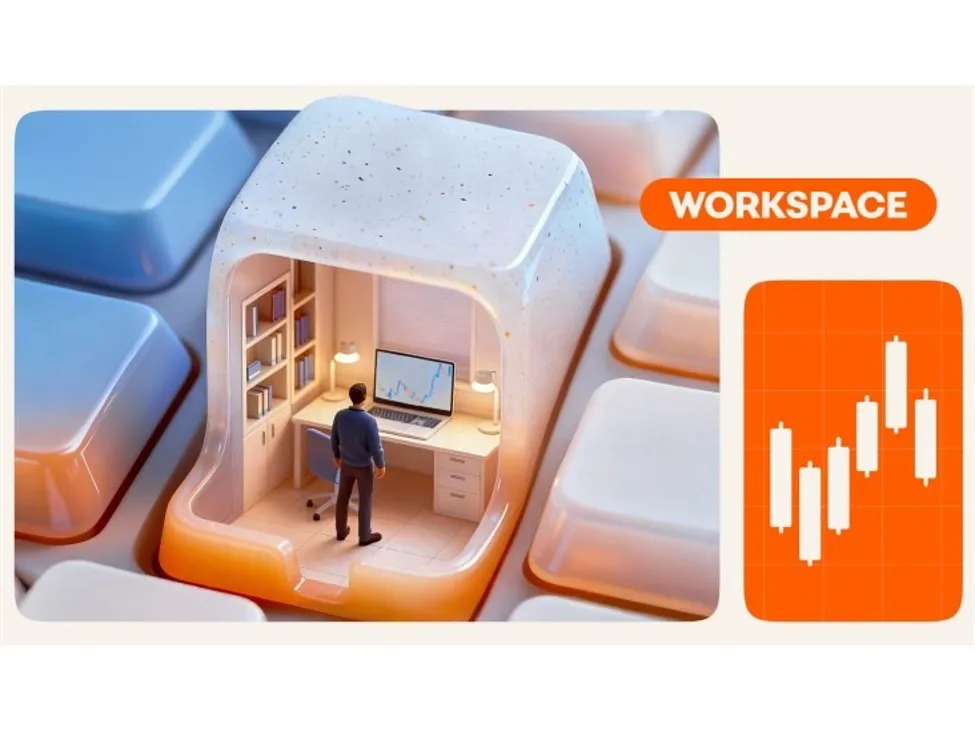

Traders Upgrade Desks as FX Volatility Persists: How to Build a Battle-Ready Workspace A sharper trading desk is becoming a quiet edge in a noisy market. With FX volatility cycling higher around data-heavy weeks and liquidity thinning during headline spikes, new analysis highlights how desk design—from multi-monitor command centers to minimalist rigs—can improve reaction time, focus and execution quality.

Why the trading desk matters for markets
Well-specified workspaces help traders process multiple streams—spot FX, futures, options, cash equities, yields and news—without missing price dislocations. A 2024 PLOS ONE study by Stroom, Eichholtz & Kok finds that better home workspace conditions meaningfully improve mental focus, aligning with traders’ need to maintain discipline during fast markets. Industry research also suggests multi-screen users make decisions significantly faster than single-screen users, a potential edge on macro releases when spreads widen and slippage risk increases. Drawing on 14 years of experience with retail traders, Octa outlines two proven approaches that fit most strategies and budgets.
Two blueprints that work
The high-tech citadel: maximum data visibility
Who it suits:
Intraday FX and index scalpers, macro event traders, multi-asset portfolio managers handling simultaneous flows.
Monitors
4–8 high-resolution screens (2K/4K) on adjustable arms in a curved arc. Dedicated panes for: – Live multi-asset charts and DOM/Level 2 – Low-latency news and squawk – Economic calendars/alerts – Execution terminals and risk dashboards Aim: instant cross-asset read without alt-tabbing.
Computer
High-performance desktop (e.g., Intel i7/Ryzen 7+), 32GB+ RAM, SSDs, and robust cooling. Dual GPUs for multi-4K output. Redundant storage enhances continuity during peak loads.
Ergonomics
Adjustable chair with lumbar/neck support and a sit-stand desk. Reduce eye/neck strain to stay sharp through long sessions.
Peripherals
Mechanical keyboard, high-precision mouse, programmable macro pad. UPS plus backup internet (4G/5G) to safeguard during outages and volatile prints.
Software
Pro-grade platforms with real-time data, automation, alerts, analytics and portfolio/risk tools integrated into a single workflow.
The minimalist hub: focused simplicity
Who it suits:
Swing traders, systematic testers, beginners honing process, travelers.
Monitors
One ultrawide or a laptop plus a single external display. Reduced visual noise sharpens focus on key signals.
Computer
Modern laptop or mid-range desktop runs charts and execution reliably; portability is a plus.
Ergonomics
A comfortable chair and clean desk are enough to support multi-hour sessions.
Peripherals
Standard keyboard/mouse, surge protection and simple backup power where possible.
Software
Broker-provided platforms with built-in charting and news to avoid subscription sprawl and keep learning curve shallow.
Cost vs. edge: match the desk to your strategy
– If your edge relies on split-second decisions across FX, rates and indices during high-impact data, the multi-screen, low-latency “citadel” is justified. – If your edge is signal quality, higher time frames and strict risk rules, a minimalist rig reduces distractions while preserving capital. – Neither setup guarantees P&L—but both reduce friction so traders can execute the plan. The optimal desk is the one that limits interruptions, protects health, and delivers consistent uptime when the market moves.
Practical playbook for high-impact FX sessions
- Uptime: Test UPS and backup internet; keep platforms logged in and two-factor ready.
- Data map: Pin the economic calendar, implied volatility, positioning and key cross-asset levels (DXY, UST 2s/10s, oil, gold, VIX).
- Latency discipline: Close non-essential apps; prioritize feeds and execution windows.
- Ergonomics: Set monitor height/brightness, use blue-light filters, and time breaks around session lulls.
- Risk preset: Predefine max loss, brackets and alerts to reduce decision fatigue during spikes.
Key points
- Workspace quality measurably supports focus and decision speed—crucial when FX spreads widen around macro data.
- High-tech setups maximize market visibility and reaction time; minimalist rigs cut noise and cost.
- Multi-screen users can make decisions faster than single-screen users, a potential edge for event-driven traders.
- UPS and backup broadband mitigate execution risk during outages and volatility surges.
- Pick hardware and software that fit your timeframe, asset mix and risk process—not the other way around.
FAQ
Do I need multiple monitors to trade forex effectively?
No. Multiple monitors help event-driven and multi-asset traders react faster, but a single ultrawide or laptop-plus-monitor setup is sufficient for swing or rules-based strategies if your process is tight.
What hardware matters most for low-latency execution?
A modern CPU, ample RAM (16–32GB+), SSD storage, and a stable GPU for multi-display output. Equally important: reliable internet with a failover (4G/5G) and a UPS to ride out brief power cuts.
How does ergonomics affect P&L?
Good posture, lighting and screen placement reduce fatigue and cognitive drift, helping you maintain discipline and reaction speed during volatile sessions.
Which software stack is best for FX traders?
For advanced users: real-time data, customizable alerts, analytics, and integrated risk/execution tools. For beginners: a broker platform with solid charting and news to minimize complexity and cost.
Is a high-end desk worth it for longer-term traders?
Not always. If you trade higher time frames with fewer decisions, a minimalist setup often delivers better focus and return on spend.
What’s the single most important upgrade?
Uptime. A UPS plus backup internet prevents missed fills during market-moving releases—a small investment with outsized risk-control benefits.
This article is for information only and not investment advice. Reporting by BPayNews.
Related: More from DeFi & Stablecoins | Stablecoin Payments Focus Shifts to User Networks | ETH Bounces Back: Why TradFi Favors ETH Rise in Stablecoin