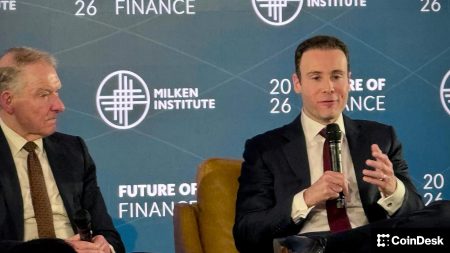


Tokenization in finance is revolutionizing the way we interact with assets and financial transactions, marking a significant transformation fueled by blockchain technology. With major players like BlackRock leading the charge, the ability to digitize assets opens new avenues for innovation in financial infrastructure. This emerging trend allows a variety of financial instruments—such as stocks, bonds, and real estate—to be represented as digital assets on secure, transparent ledgers. As Larry Fink, CEO of BlackRock, emphasizes, tokenization not only streamlines processes but also enhances security and speed, promising to reshape traditional investing. However, the journey towards a fully tokenized future involves navigating the complexities of crypto regulations and ensuring a balanced approach towards integration.

In the evolving landscape of modern finance, the concept of asset digitization is gaining traction, often referred to as “digital asset creation.” This innovative approach merges traditional financial elements with cutting-edge blockchain technology, enabling assets to reside on verifiable digital ledgers. The vision is to enhance market efficiency and transparency, as seen in the principles of BlackRock tokenization, which aim to redefine how we perceive and manage investments. With the rise of digital securities, the financial world is poised for a significant transformation, addressing the inefficiencies of past systems while adhering to emerging crypto regulations. As the integration progresses, the focus will remain on building a robust financial infrastructure that supports both conventional and digital assets.
The Future of Financial Infrastructure: Blockchain’s Impact
The financial landscape is poised for a revolutionary shift thanks to the advent of blockchain technology. BlackRock’s top executives, including CEO Larry Fink, have heralded this change as the most significant overhaul of financial infrastructure since the introduction of electronic messaging in the 1970s. By utilizing blockchain-based tokenization, assets can be securely recorded on digital ledgers, allowing for greater efficiency in trading and settling various forms of investments such as stocks, bonds, and real estate. This innovation promises to enhance transaction speed and security, moving beyond the limitations of traditional systems that have prevailed for decades.
Tokenization offers the ability to create verifiable digital records of asset ownership, which can be traded without the need for conventional intermediaries. This transformation of market infrastructure is not merely a theoretical model; it represents a practical evolution that could redefine how assets are transferred and settled in real-time. The potential implications for the financial industry are immense, aligning with BlackRock’s vision for the future of finance, where digital assets play a central role in investment strategies, thereby increasing liquidity and accessibility.
Understanding Tokenization in Finance
Tokenization in finance serves as a bridge to a new era of asset management and investment opportunities. By representing real-world assets as digital tokens on a blockchain, various types of investments—ranging from real estate to equities—can be fractionalized. This not only democratizes access for a wider range of investors but also allows for enhanced liquidity. As BlackRock’s executives note, tokenization has the power to “significantly expand the world of investable assets”, creating avenues for instant transaction settlement and reducing manual processes that often hinder operational efficiency.
Tokenization’s significance is further emphasized in the context of regulatory frameworks that govern financial markets. With the emergence of new crypto regulations, organizations such as BlackRock are navigating the changing landscape to integrate secure and compliant approaches to digital assets. For instance, as the World Federation of Exchanges has urged the SEC to curtail exemptions for crypto firms, the need for structured, well-regulated use cases of tokenized stocks becomes increasingly apparent. This highlights the critical balance between innovation and regulation as finance continues to evolve.
Navigating the Regulatory Landscape of Tokenization
The intersection of tokenization and regulation has emerged as a pivotal aspect of the financial evolution driven by blockchain technology. As regulatory bodies seek to establish frameworks that govern digital assets, the calls from traditional financial institutions highlight a demand for clarity and structure in this rapidly adapting landscape. Recent letters from stock exchanges to the SEC reflect concerns over potential risks posed by tokenized stocks and the necessity for strict compliance measures that ensure investor protection and market stability.
Industry experts, including Joshua Chu from the Hong Kong Web3 Association, echo these sentiments, noting that the transition to a tokenized economy isn’t instantaneous. Instead, it’s expected to unfold over several cycles, where first movers will establish carefully regulated use cases before broader adoption occurs. This thoughtful approach serves to mitigate risks tied to speculative trading while allowing innovation in blockchain and tokenization to prove its value in solving real-world financial challenges.
The Role of Major Players in Tokenization
Major players in the finance sector, such as Franklin Templeton, are actively advancing their initiatives in tokenization, recognizing its potential. By expanding platforms like the Benji Technology Platform to networks like Canton, Franklin Templeton is positioning itself at the forefront of the tokenized assets market. This integration not only enhances their ability to offer innovative financial products but also reflects a strategic move to cater to clients in a landscape where digital transformations are becoming essential.
Moreover, the launch of BlackRock’s USD Institutional Digital Liquidity Fund (BUIDL) demonstrates a commitment to leading in this new frontier. With initial figures showing substantial interest and investment, BlackRock underscores the growing significance of tokenization as a fundamental component of modern finance. This positions institutions to respond to the increased demand for tokenized financial solutions, further validating the potential of blockchain technology to reshape the asset management industry.
Growing Acceptance of Tokenized Assets
Despite its nascent stage, the acceptance of tokenized assets is witnessing a striking increase, marked by a 300% growth over the past 20 months. This rise reflects the growing interest and understanding of blockchain technology within the financial community. BlackRock’s executives draw parallels between today’s tokenization trajectory and the early internet days, suggesting that just as the internet transformed commerce, tokenization could revolutionize investment practices by making assets more accessible and tradeable.
Critically, the awareness of tokenization’s advantages, such as lowering costs by eliminating intermediaries, particularly in real estate transactions, is helping it gain traction. The implications are profound; as asset managers recognize the need to adapt to a tokenized world, they can capitalize on novel strategies to improve client offerings and operational efficiency. This shift is likely to influence the entire financial ecosystem, as more firms begin to explore and implement tokenization as a standard practice.
Tokenization’s Potential to Transform Investment Strategies
Tokenization is not just a technological upgrade; it’s a transformative approach that can significantly alter investment strategies across global markets. By allowing a greater number of assets to exist as digital tokens, investors can diversify their portfolios far beyond traditional offerings. This not only enhances liquidity but also opens doors to previously inaccessible investment opportunities, thereby promoting a more inclusive financial landscape. BlackRock’s assertive stance on tokenization positions it as a leader aiming to harness these benefits for its investment clientele.
Moreover, the capability of tokenization to facilitate rapid transaction settlements revolutionizes how investment firms operate. As Fink emphasizes, the need to tokenize all types of assets—especially those laden with multiple layers of intermediaries—could lead to lower transaction costs and increased affordability. This efficiency aligns well with emerging market needs, providing firms the chance to innovate their product lines while maintaining compliance with evolving regulations surrounding digital assets.
Real Estate: A Prime Example for Tokenization
Real estate represents a compelling use case for tokenization that encapsulates its potential to revolutionize investments. With traditional real estate investment often requiring significant capital and intermediaries, tokenization breaks down these barriers by allowing fractional ownership of properties. This democratization of real estate investing not only attracts a wider pool of investors but enhances liquidity in a typically illiquid market. BlackRock’s vision to tokenize real estate assets resonates strongly within this context, as it promises to mitigate costs and improve access.
As the technology matures, it’s anticipated that real estate will become one of the foremost sectors embracing tokenization. Innovations in blockchain could lead to streamlined transactions, where buyers and sellers interact with minimized red tape. The potential for instant settlement powered by blockchain technology means that real estate transactions could soon be executed much faster than current standards, showcasing the utility of tokenization in addressing long-standing inefficiencies in the market.
Anticipating the Future of Tokenization in Finance
Looking ahead, the future of tokenization in finance is both promising and uncertain. While BlackRock’s executives highlight the inevitability of blockchain technology shaping the next wave of financial services, the timeline for mass adoption remains unclear. Experts advise against rushing the integration of tokenization into every aspect of finance overnight; rather, they propose a phased approach where regulated use cases are tested and scaled gradually. This gradual transition allows the industry to manage risks effectively while exploring the benefits of digital asset ownership.
The evolution of crypto regulations will also factor significantly into how tokenization develops. As the financial ecosystem adapts, companies must stay vigilant to compliance mandates while leveraging technological innovations to enhance service delivery. The onus is on financial institutions to educate themselves and their clients about the benefits and risks associated with tokenization. With strategic foresight and comprehensive regulatory frameworks in place, tokenization could redefine not only how investments are made but how asset management is conceived moving forward.
Frequently Asked Questions
What is tokenization in finance and how does it relate to blockchain technology?
Tokenization in finance refers to the process of converting ownership of real-world assets, such as stocks, bonds, or real estate, into digital tokens recorded on a blockchain. This blockchain technology enhances security, enables faster transactions, and allows for efficient verification of ownership, removing the need for traditional intermediaries.
How is BlackRock contributing to the tokenization of financial assets?
BlackRock has been at the forefront of tokenization in finance, with executives like Larry Fink asserting that it marks a significant evolution in market infrastructure. Their agenda emphasizes the importance of tokenizing securities to allow for faster, more secure asset transactions and to expand the realm of investable assets.
What are the benefits of using tokenized digital assets in financial transactions?
Tokenized digital assets offer numerous benefits, including instant transaction settlement, reduced manual processing, and enhanced security through blockchain technology. They can simplify investment in a diverse range of assets while minimizing counterparty risks often associated with traditional financial systems.
What challenges does tokenization face in the current financial landscape?
Despite the potential of tokenization in finance, challenges remain, including regulatory clarity, integration with existing financial infrastructure, and the need for robust protocols to ensure security and compliance. The transition is expected to be gradual, with ongoing dialogue between traditional finance and digitized solutions like BlackRock’s initiatives.
How do crypto regulations impact the future of tokenization in finance?
Crypto regulations play a crucial role in shaping the future of tokenization. Regulatory frameworks can either facilitate or hinder the adoption of blockchain technology in financial markets. Clear regulations may provide a safer environment for investing in tokenized assets, while overly restrictive measures could stifle innovation.
What is the significance of the SEC’s involvement in regulating tokenized stocks?
The SEC’s involvement is significant because it helps maintain market integrity and investor protection in the rapidly evolving landscape of tokenized stocks. Recent calls from global exchanges for the SEC to limit exemptions for crypto firms reflect concerns over potential risks associated with rapidly integrating tokenization into traditional finance.
In what ways can tokenization address existing inefficiencies in financial systems?
Tokenization can streamline processes by reducing the need for manual reconciliation and settlement, thereby lowering costs and improving efficiency. By digitally representing assets, it can also enhance liquidity and access, particularly for hard-to-trade assets traditionally burdened with multiple intermediaries.
How does the growth of tokenized assets compare to traditional financial markets?
Tokenized financial assets are still a nascent market, accounting for a small part of global equity and bond markets. However, they have been growing rapidly, reflecting a trend similar to early internet adoption. BlackRock reports a growth of about 300% over the last 20 months, highlighting the increasing interest in tokenization as a future standard in finance.
What role does Franklin Templeton play in the tokenization of financial products?
Franklin Templeton is expanding its efforts in tokenization by integrating its proprietary Benji Technology Platform with the Canton Network, aiming to enhance the offering of tokenized funds. This move positions the asset manager to cater better to traditional clients in navigating the evolving landscape of tokenized financial products.
What does tokenization mean for the future of investing?
The future of investing is likely to be significantly impacted by tokenization, as it allows for the creation of new investment opportunities and enhances market accessibility. As industry leaders like BlackRock advocate for tokenization, we can expect a shift towards greater efficiency, inclusivity, and innovation in how financial assets are traded and owned.
| Key Points | Details |
|---|---|
| BlackRock’s Infrastructure Overhaul | BlackRock executives claim the financial system is set for a major transformation through blockchain-based tokenization. |
| Tokenization Explained | Tokenization allows assets like stocks and real estate to exist as digital records on ledgers, which can be traded without intermediaries. |
| Future of Market Infrastructure | Larry Fink emphasizes tokenization as the next generation for securities, enhancing speed and security in transaction settlements. |
| Broader Use Cases | Tokenization is seen as a way to expand investable assets and improve transaction efficiency, replacing outdated processes. |
| Regulatory Concerns | Stock exchanges urge the SEC to reconsider exemptions for crypto firms dealing with tokenized stocks due to potential risks. |
| Gradual Transition Anticipated | Experts believe that tokenization will evolve slowly over several cycles, rather than immediately revolutionizing finance. |
| Growing Adoption | Despite being small in market share, tokenized assets have grown approximately 300% in the last 20 months, signaling rapid evolution. |
| Real Estate Potential | Tokenization can lower costs and improve access in sectors like real estate by eliminating intermediaries. |
Summary
Tokenization in finance is poised on the brink of a transformative leap, with key players like BlackRock championing its potential to fundamentally change market infrastructure. As tokenization evolves, it promises not only to enhance transaction efficiency but also to expand available asset classes, driving innovation in finance across multiple sectors. By moving towards fully digital financial records and transactions, the industry is gradually navigating a future where traditional barriers are diminished, making investments more accessible to a broader range of participants.
Related: More from Regulation & Policy | Anthropic Founder Critiques Pentagons Choice as Unprecedented in Crypto Regulation | UK Gambling Regulator Examines Cryptocurrencies for Licensed Bettors in Crypto Regulation