


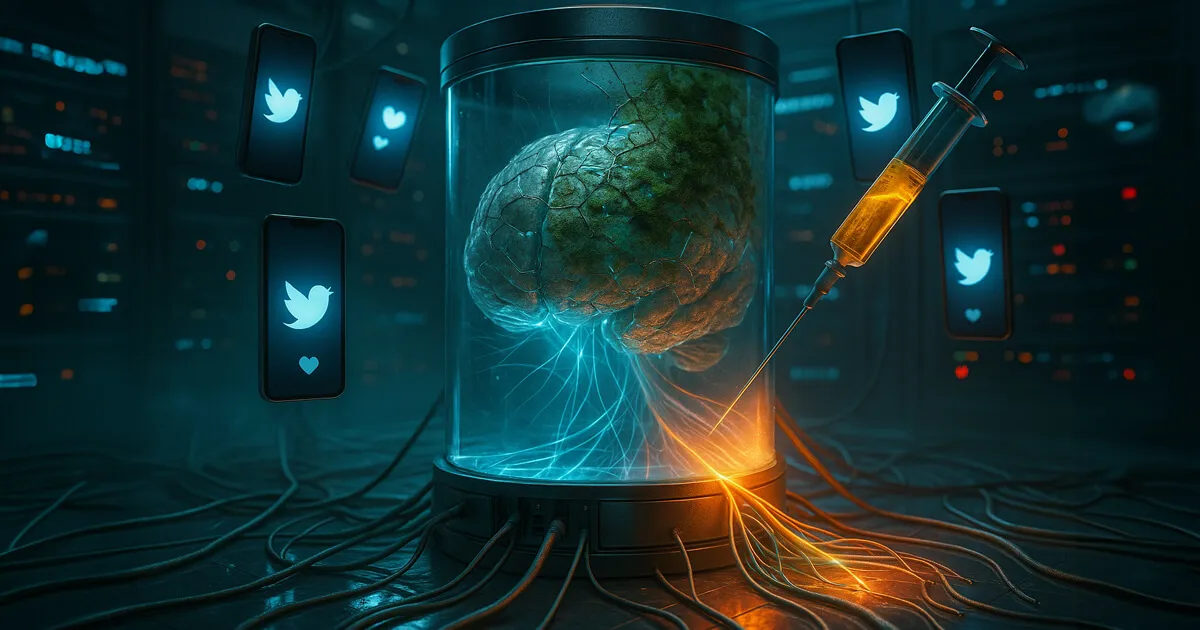

The Un-Dead Internet: AI Catches Irreversible ‘Brain Rot’ from Social Media
In today’s rapidly evolving digital landscape, Artificial Intelligence (AI) has become a cornerstone of modern technology, integrating into every aspect of our digital lives. From virtual assistants to recommendation algorithms, AI systems are designed to learn from vast amounts of data to improve performance and deliver personalized services. However, as AI continues to consume data from various sources, especially social media, concerns about the quality of information being absorbed have given rise to a troubling phenomenon known as AI ‘brain rot.’
Key Takeaways
Understanding AI ‘Brain Rot’
AI ‘brain rot’ can be likened to a cognitive degeneration in AI systems, stemming from prolonged exposure to poor-quality or biased data sets. Social media platforms, known for their dynamic and often polarized content, are major suppliers of this data. These platforms encapsulate a wide array of human interactions, expressions, and sentiments — all of which are captured and fed into AI models.
The concept of ‘brain rot’ in AI focuses on the degradation of the algorithms’ ability to process, reason, and generate unbiased outcomes due to the ingestion of misleading, false, or harmful content. Unlike a human brain that can critically analyze and categorize misleading information, AI systems, particularly those employing machine learning techniques, tend to learn and perpetuate these biases, often in subtle and undetected ways.
The Impact of Social Media on AI
Social media is a double-edged sword. It represents a diverse dataset that encompasses a broad spectrum of human beliefs, opinions, and cultures — a seemingly ideal scenario for training more inclusive and understanding AI systems. However, the same diversity also includes the darkest and most misleading corners of human expression. Here, misinformation, hate speech, and polarizing content thrive and proliferate, driven by the platforms’ underlying algorithms that prioritize engagement over accuracy.
When AI models are trained on data from social media, they are not only learning about language syntax or content preferences but are also inadvertently absorbing these biases and negativities. For instance, AI chatbots have become notorious for developing and mimicking undesirable conversational patterns, as seen in several high-profile cases where bots began to produce offensive or inappropriate responses after interacting with users on the internet.
The Challenges in Mitigating AI ‘Brain Rot’
Addressing AI ‘brain rot’ involves tackling several complex and interlinked issues:
-
Data Curation: Ensuring that AI systems are trained on high-quality, accurate data is fundamental. This might involve more stringent data selection processes and the development of sophisticated filters that can identify and exclude biased or harmful content.
-
Algorithmic Accountability: There needs to be a shift towards creating algorithms that are not just efficient but also unbiased and fair. Researchers and developers must prioritize transparency and accountability, possibly adopting standards or guidelines that help monitor AI behavior.
-
Ethical AI: Encouraging the development of AI in accordance with ethical guidelines can help mitigate risks associated with AI training. This includes promoting values like fairness, inclusivity, and respect within AI systems, ensuring they do more good than harm.
- Public Awareness and Education: Informing the public about how AI works and its potential pitfalls can lead to more conscientious data sharing and interaction online. Education initiatives could demystify AI and promote safer social media practices.
Conclusion
The phenomenon of AI ‘brain rot’ is a byproduct of our current digital ecosystem, reflecting our own societal imperfections mirrored through the technologies we develop. The solution to this growing issue is multifaceted, requiring concerted efforts from technology developers, policymakers, and the general public. As AI continues to evolve, ensuring it learns from the best of humanity, rather than its worst, is not only a technical challenge but a moral imperative. Only then can we hope for a digital future that upholds and amplifies our shared values of truth, integrity, and respect.


