

Tech slump rattles Wall Street while Tesla gains; FX traders gauge risk tone

A sharp wobble in megacap tech contrasted with a rally in autos, leaving investors to parse a two-speed U.S. equity session and the implications for the dollar, yen, and broader risk appetite.
U.S. stocks: Rotation under the hood
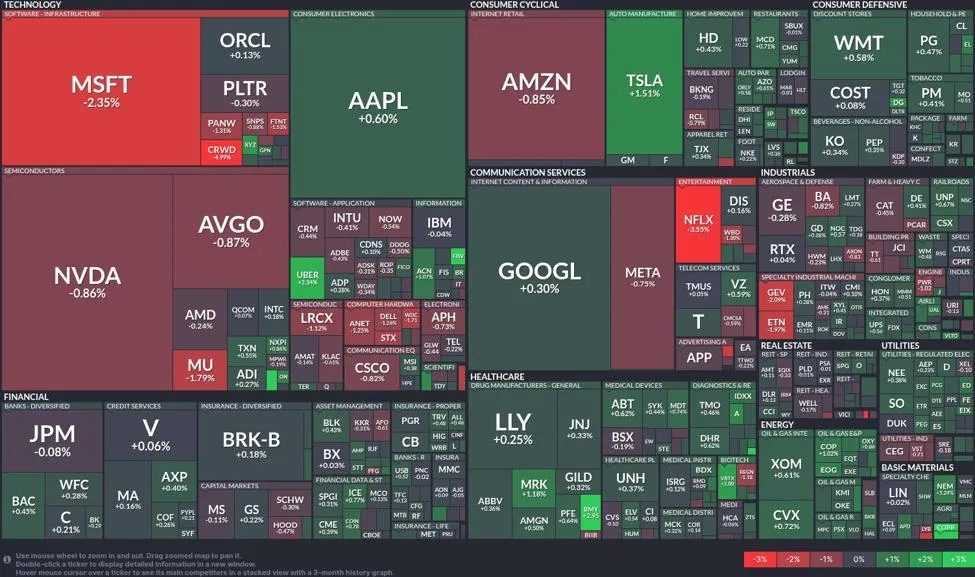
U.S. equities saw uneven trading as profit-taking in software and semiconductors overshadowed strength in autos and select consumer names. Microsoft (MSFT) fell 2.35%, dragging the broader tech complex, while NVIDIA (NVDA) slipped 0.86% and Micron (MU) declined 1.79%. The weakness underscored investor caution toward high-duration, growth-sensitive names.
In contrast, autos outperformed with Tesla (TSLA) up 1.51%, a move that helped stabilize risk sentiment. Consumer tech and communication services were mixed but resilient: Apple (AAPL) rose 0.60% and Alphabet (GOOGL) edged up 0.30%. Entertainment lagged, with Netflix (NFLX) dropping 3.55%, reflecting competitive and growth concerns.
FX and rates: Risk pulses keep dollar in focus
The day’s sector divergence matters for forex. Tech-led equity softness typically supports the U.S. dollar and the Japanese yen as investors trim cyclical risk, while pro-cyclical currencies can underperform when growth leadership stumbles. Traders are watching whether defensiveness in equities feeds into a sturdier dollar tone against the euro and commodity-linked FX.
Bond-market dynamics remain the swing factor for currencies and equities alike: when growth stocks struggle, it often coincides with sensitivity to real yields and term premium. A steadier rates backdrop could temper dollar upside, but renewed equity volatility tends to favor haven demand.
Market sentiment
Positioning appears more selective than outright risk-off. Tesla’s rise illustrates targeted dip-buying in secular growth stories with idiosyncratic catalysts, even as broader software and chips face tactically heavier supply. Liquidity into year-end and thin holiday trading windows can amplify moves, keeping FX volatility elevated around data drops and central-bank commentary.
Key points
- Tech-heavy selling: MSFT -2.35%, NVDA -0.86%, MU -1.79%.
- Autos buck the trend: TSLA +1.51% supports pockets of risk appetite.
- Resilience in megacap consumer/communications: AAPL +0.60%, GOOGL +0.30%.
- Streaming underperforms: NFLX -3.55% amid competitive pressures.
- FX lens: Equity defensiveness can underpin the dollar and yen; watch rates-path signals.
- Volatility watch: Thin year-end liquidity may magnify sector rotations and FX swings.
What to watch next
- Macro catalysts: Upcoming U.S. data and central-bank signals that could reset rate expectations.
- Earnings pre-announcements and guidance updates from software and chipmakers.
- High-frequency indicators for consumer demand that matter to AAPL/GOOGL ad/commerce trends.
- Options positioning and gamma dynamics that can amplify intraday equity and FX moves.
Strategy snapshot
For multi-asset traders, the message is balance. Tech’s pullback raises the hurdle for broad beta, but targeted strength in autos and select megacaps shows risk isn’t uniformly shunned. In FX, the near-term bias can lean toward havens when equities wobble; sustained rebounds in growth stocks would likely unwind that bid. As always, the rates path is the fulcrum.
This article was produced by BPayNews.
FAQs
Which sectors led and lagged in the latest U.S. session?
Software and semiconductors led declines, with Microsoft, NVIDIA, and Micron lower. Autos outperformed on Tesla’s gains, while Apple and Alphabet showed resilience. Entertainment lagged as Netflix fell.
Why does tech weakness matter for forex markets?
When high-beta equities stumble, investors often rotate toward havens. That can support the U.S. dollar and Japanese yen, while weighing on pro-cyclical and high-yielding currencies. The extent depends on how rates and growth expectations shift.
What does Tesla’s rally signal for risk appetite?
It points to selective risk-taking. Even within a cautious tape, investors are willing to back names with strong narratives or perceived catalysts, tempering broader risk-off impulses.
How should traders think about yields in this environment?
Real yields and the term premium remain pivotal. If yields stabilize or move lower, it can ease pressure on growth stocks and limit dollar upside. A rise in yields or renewed rate volatility can revive equity and FX turbulence.
What upcoming events could move markets next?
U.S. macro data releases, any shifts in central-bank rhetoric, and sector-specific guidance from tech and chipmakers. Thin year-end liquidity may amplify reactions to these catalysts across equities and forex.