



Headline: Tech Selloff Deepens as AI Leaders Slide and Investors Rotate to Value

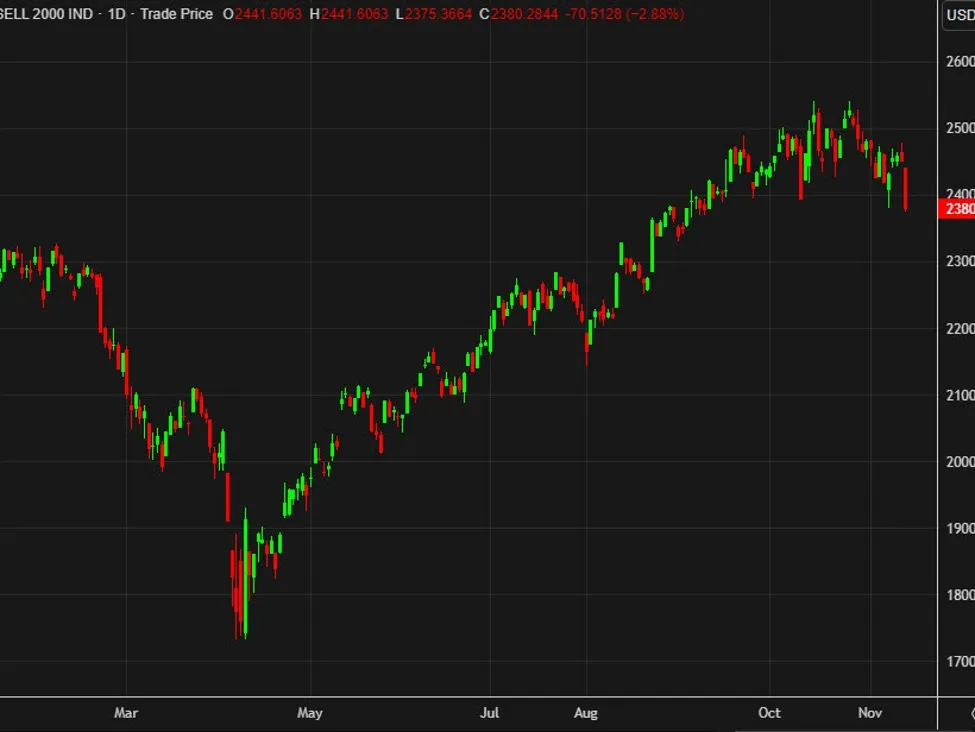
A wave of profit-taking hit U.S. equities, with technology and AI stocks leading a broad retreat as traders braced for a busy stretch of economic data. Risk appetite cooled across growth names, pushing the Nasdaq lower and lifting volatility as investors questioned elevated valuations.
High-growth and internet shares were among the hardest hit. Chegg, Etsy, Snap, and Robinhood slipped on the session, even as Robinhood remains up more than 200% year to date. E-commerce and social platforms including eBay, Bumble, Revolve, and Shutterstock fell roughly 3–4%. Heavier losses were seen in newly public and telehealth names, with Reddit down about 6%, Teladoc off roughly 5%, while Wayfair, Lyft, and MercadoLibre declined between 3% and 4%. AI bellwethers were under pressure as Nvidia led a pullback that dragged the S&P 500 lower by around 1.7% and pushed the Nasdaq down as much as 2% intraday.
The risk-off tone coincided with a rotation toward value and defensives as the market digested a flood of macro releases and policy commentary. Central bank officials flagged how geopolitical tensions, climate risks, and ongoing supply-chain strains are reshaping global trade, underscoring the need for clear monetary communication and coherent fiscal policy to anchor expectations. Against this backdrop, investors are reassessing sector positioning: healthcare continues to trade at a discount after lagging the S&P 500 by about 8%, though select names such as Jazz Pharmaceuticals and other specialty pharma players have benefited from recent double-digit estimate upgrades.
Key Points – Tech and AI stocks led a broad market pullback amid profit-taking and macro uncertainty. – Nasdaq fell as much as 2% intraday; the S&P 500 slid roughly 1.7%. – Robinhood retreated but remains up more than 200% year to date. – E-commerce and social names including eBay, Bumble, Revolve, and Shutterstock dropped 3–4%. – Reddit, Teladoc, Wayfair, Lyft, and MercadoLibre saw losses ranging from about 3% to 6%. – Policymakers highlighted global tensions and supply-chain risks; healthcare screens as a discounted laggard despite pockets of strength.