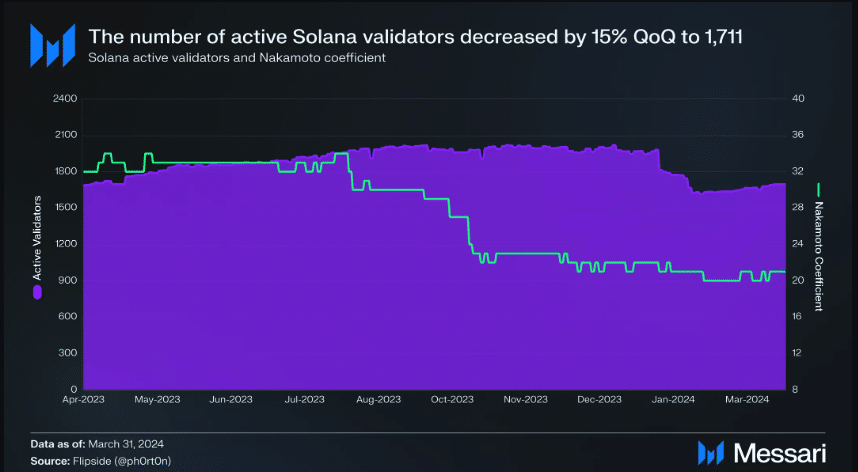

The decline of Solana validators over the past three years has raised critical questions about the future of the Solana network. A staggering drop from over 2,500 active nodes in 2023 to roughly 800 today, representing a decline of more than 68%, poses significant implications for blockchain decentralization. As validator nodes play a crucial role in securing the network and facilitating transactions, this contraction raises concerns about validator security and the overall health of the crypto market. Amid differing opinions, the community remains divided on whether this decline indicates a problematic trend or a necessary step toward a more reliable ecosystem. Understanding the nuances of this situation is vital for stakeholders invested in the stability and growth of the Solana network.
The recent downturn in the number of active validators on the Solana platform has ignited widespread discourse within the blockchain community. With validator nodes crucial for executing transactions and enforcing network integrity, their diminishing presence has prompted a re-evaluation of Solana’s decentralized architecture. Some industry observers argue that the current landscape, with around 800 functional nodes, signifies a more focused and effective group of validators. This perspective contrasts with concerns about what this reduced count means for validator security and the larger health of the cryptocurrency sector. As discussions evolve, the implications of such changes will be critical to the ongoing development and acceptance of the Solana ecosystem.
The Decline of Solana Validators: A Closer Look
In recent years, the Solana network has experienced a dramatic decline in the number of active validators, plummeting from over 2,500 to approximately 800. This sharp reduction of more than 68% raises crucial questions about the state of blockchain decentralization and the security of the network. Validators play a pivotal role in ensuring the integrity of the blockchain; they run validator nodes which are essential for signing blocks and maintaining the ecosystem’s overall security. The shrinkage of these nodes signals potential vulnerabilities that could be exploited if the remaining validator presence is not robust enough.
The reasons behind this decline are multifaceted, reflecting both market dynamics and technological challenges faced by node operators. Some community members argue that the current number of trusted validators might be more beneficial for the ecosystem than a larger pool dominated by less reliable participants often referred to as ‘sybil nodes’. They contend that a smaller, high-quality group of validators could enhance the effectiveness and efficiency of the Solana network, encouraging more meaningful contributions and reducing the likelihood of malicious activities.
Frequently Asked Questions
What are the main factors contributing to the decline of Solana validators?
The decline of Solana validators can be attributed to various factors, including economic pressures on operators, technical difficulties, and the exit of less reliable nodes often referred to as ‘sybil nodes’. While some in the community argue that having fewer but more reliable validators enhances decentralization, others point out that many departing validators were not sybils but operated due to legitimate challenges.
How does the decline in Solana validator nodes affect blockchain decentralization?
The decline in Solana validator nodes raises concerns about blockchain decentralization, as having fewer active nodes can lead to increased centralization risks. However, some believe that maintaining a smaller number of reliable validators may actually strengthen the network’s overall health and security. The true impact on decentralization will depend on the distribution and power of the remaining nodes.
What role do validator nodes play in the Solana network’s security?
Validator nodes play a critical role in the Solana network’s security by signing blocks and confirming transactions. With the decline of these nodes, it is essential that the remaining validators are robust and secure to ensure the integrity of the blockchain. The network’s security heavily relies on the reliability and decentralization of these validator nodes.
How has the crypto market influenced the number of Solana validators?
The crypto market’s volatility has significantly influenced the number of Solana validators, as many operators assess the economic viability of maintaining their nodes. Fluctuating profits and rising operational costs have led some validators to shut down, thus contributing to the decline in active validator nodes on the Solana network.
What measures are being taken to improve the situation of Solana validators?
To counter the decline in Solana validators, the Solana team is focused on reducing node operating costs and enhancing tool support for validators. These efforts aim to make it more economically feasible for operators to maintain their nodes, thus improving the sustainability and competitiveness of validator participation in the network.
Can the reduction of Solana validators lead to improved network quality?
Some community members argue that the reduction of Solana validators can lead to improved network quality, as it may remove ineffective nodes from the network. Fewer reliable validators could streamline operations and enhance overall performance. However, the effects of such a reduction should be evaluated based on the independence and distribution of the remaining validators.
What is the current status of Solana’s validator numbers?
As of December 2025, the number of active Solana validators has decreased from over 2,500 in 2023 to approximately 800, reflecting a decline of more than 68% over the past three years. This significant reduction underscores the ongoing challenges facing the network and the validators that support it.
| Key Point | Details |
|---|---|
| Decrease in Validators | The number of active Solana validators dropped from over 2,500 in 2023 to 800 in December 2025, a decline of more than 68%. |
| Role of Validators | Validators run nodes, participate in block signing, and maintain network security, making their numbers crucial for decentralization. |
| Community Perspectives | Some believe the decline is due to the removal of ‘sybil nodes’, suggesting that fewer but reliable validators can enhance the network. |
| Contrasting Views | Infrastructure teams argue that many validators left for economic or technical reasons, not because they were sybils, impacting decentralization differently. |
| Future Directions | Solana plans to reduce node operating costs and improve tool support to sustain validators on the network. |
Summary
The decline in Solana validators has raised critical discussions within the community. Solana validators decline not only reflects a significant reduction in the active network nodes but also sparks varied opinions on the overall health and decentralization of the network. While some view the loss as an opportunity to strengthen validator reliability, others point to economic factors leading to the exits. The future of Solana will hinge on addressing these concerns and fostering an environment conducive to the sustainability of its validators.
Related: More from Altcoin News | XRP News: AI Finds Critical Bug in Ripple Tokens in Altcoin | ETH, SOL, XRP Prices Drop Amid Nvidia Earnings Release