

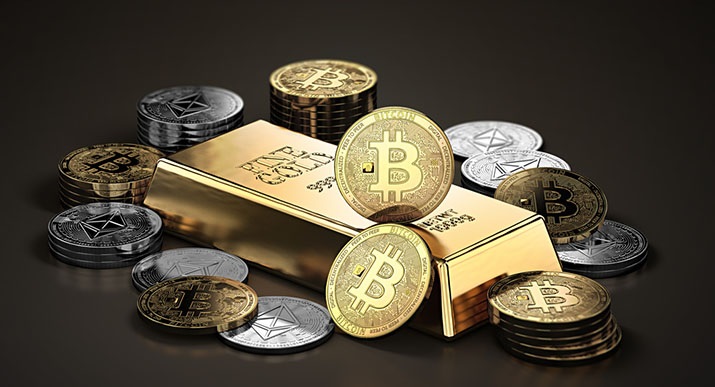

Scarcity in Bitcoin, gold, and silver has evolved into a multi-faceted concept that shapes how investors perceive value and make financial decisions. By 2026, this scarcity isn’t just about limited supply; it’s informed by narratives, market access, and evolving financial products. Bitcoin’s supply is capped at 21 million units, a feature that underlines its scarcity, which is further mediated by exchange-traded funds (ETFs) and derivatives that influence market perceptions. Conversely, gold’s scarcity is defined by trust and historical stability rather than pure mining output, while silver’s dual role as an industrial metal complicates its scarcity narrative. Understanding these dynamics, including the implications of the gold market analysis and silver investment trends, is crucial for navigating today’s financial landscape and compounded by a growing emphasis on financial products’ impact on asset valuation.

The concept of scarcity for Bitcoin, gold, and silver is central to grasping the unique characteristics of these assets in modern investing. In today’s economy, scarcity is not merely about the physical limitations of supply; it reflects how value is constructed through perceptions and market accessibility. Bitcoin’s algorithmically determined scarcity contrasts sharply with the nuances of gold’s reliance on institutional confidence and trust. Furthermore, silver occupies an interesting niche with its multifaceted usage in both investment and manufacturing, impacting its market dynamics. Analyzing financial instruments like ETFs and their relationship to scarcity allows investors to appreciate how these three assets interact within today’s intricate financial networks.
Understanding Scarcity in Bitcoin, Gold, and Silver
Scarcity has become a vital theme in distinguishing the value of Bitcoin, gold, and silver, particularly as we approach 2026. Unlike traditional definitions based solely on physical limits or production capabilities, modern scarcity encompasses constructs of trust, access, and market narratives. Bitcoin, for instance, is governed by an immutable algorithm ensuring a finite supply of 21 million coins, thus creating a predictable scarcity that appeals to investors. In contrast, gold’s perception of scarcity is shaped more by its longstanding history as a store of value rather than just its mining output, while silver’s dual role adds layers of complexity to its scarcity narrative.
In today’s financial landscape, the narratives surrounding these assets juggle perceptions of scarcity and their respective roles in investment portfolios. With Bitcoin’s price being influenced by the growth of ETFs and financial derivatives, its scarcity is perceived through the lens of financial products rather than simple supply. On the other hand, gold’s reputation as a dependable reserve is less about how much can be mined and more about its stability and trustworthiness amid economic volatility, reaffirming its place in the investment hierarchy. Silver, however, continues to navigate a unique path, where industrial demand often conflicts with its investment narrative, demonstrating that scarcity is not merely a function of availability but also of current demand dynamics.
The Revaluation of Scarcity Narratives in Financial Products
The phenomenon of financial products such as Exchange-Traded Funds (ETFs) is reshaping how investors interpret scarcity across Bitcoin, gold, and silver markets. In 2026, Bitcoin is often accessed through ETFs which simplify the ownership process, allowing investors to engage with this digital asset without needing to delve into its underlying technology. This financialization changes how investors view Bitcoin’s inherent scarcity, creating a secondary layer of perceived value based on market demand and accessibility rather than only on its capped supply of coins.
Conversely, gold and silver ETFs have had a similar impact, with their structure affecting perceptions of scarcity. While gold remains a critical hedge during market downturns, the introduction of paper gold allows broader market participation, which can dampen its scarcity narrative. For silver, the increased reliance on ETFs means that its price reflects not only current physical demand but also market speculation, leading to more volatility. As such, understanding these financial products is essential for any investor looking to navigate the new scarcity dynamics in 2026.
Silos of Scarcity: The Divergence of Bitcoin, Gold, and Silver
The silos of scarcity between Bitcoin, gold, and silver are becoming increasingly apparent as their respective roles evolve within the investment ecosystem. Bitcoin is often seen as a self-sovereign asset marked by its code-enforced scarcity, encouraging a new generation of investors who value autonomy over traditional banking systems. This creates an environment where Bitcoin operates as both a currency and a store of value, compelling investors to reassess what scarcity truly means in a digital context.
In contrast, gold’s established reputation and trust mean that its scarcity is judged through different criteria. Central banks and institutional investors often regard gold as a safety net during geopolitical tensions, leading to a perception of scarcity that stems from its historical role rather than its physical limits. Silver represents an interesting middle ground, where its industrial usage complicates traditional notions of scarcity. In 2026, silver investors must consider not just the investment side but also the implications of industrial demand, highlighting that scarcity can manifest in multifaceted ways depending on usage scenarios.
Liquidity and Portability: Key Factors in Modern Scarcity
In the assessment of scarcity for Bitcoin, gold, and silver, the concepts of liquidity and portability play crucial roles. Bitcoin’s architecture allows it to be moved quickly across various digital platforms with minimal resistance, which enhances its perception as a portable asset. The adoption of Bitcoin through ETFs further emphasizes its liquidity, making it easier for investors to access without needing the technical know-how of managing wallets or navigating exchanges. This ease of transaction significantly reshapes investors’ valuation of Bitcoin’s scarcity.
Gold, while traditionally seen as less portable due to the physicality of the asset, has seen innovation through financial products that allow it to be traded digitally, enhancing its liquidity. However, transport complications remain a concern for physical movements of gold. Silver shares a mix of challenges; while its smaller market cap means it is generally more volatile, its dual role creates distinct concerns. Thus, understanding how liquidity and ease of transfer impact the perception of scarcity is vital in today’s rapidly evolving marketplace.
Navigating the Impact of Derivatives on Asset Scarcity
The emergence of derivatives trading in Bitcoin, gold, and silver markets adds an intricate layer to asset scarcity. For Bitcoin, futures and options contracts allow traders to gain exposure to the asset’s price movements without owning the actual coins, creating an illusion of abundance even as the limited supply remains unchanged. This has led to more pronounced price fluctuations, highlighting how derivatives can decouple perceived scarcity from underlying asset fundamentals.
Similarly, in gold and silver markets, the volume of futures trading often far exceeds the actual physical supply, influencing how scarcity is communicated to investors. As economic conditions shift, the behavior of traders in these derivatives markets can lead to volatility that reflects speculative sentiment rather than genuine scarcity fears. In this way, understanding the impact of derivatives becomes essential for investors trying to navigate the investment landscape shaped by perception rather than concrete supply limits.
Understanding the Investment Trade-Offs of Scarcity vs. Certainty
As we venture deeper into the redefined narratives around scarcity, the investment trade-offs between certainty and perceived scarcity become essential. For Bitcoin, its predictable supply serves as reassurance; investors know exactly how many coins will ever be available. However, this certainty is offset by a lack of clarity regarding future regulations which could impact its acceptance and use. This push-and-pull creates a landscape where investment decisions are increasingly complex.
On the other hand, gold comes with a reliable status as a reserve currency, though its long-term mining costs can fluctuate unpredictably, introducing uncertainty. Silver finds itself in a unique situation, straddling both the certainty of intrinsic industrial value and the uncertainty of market sentiment influencing its investment appeal. As 2026 approaches, investment decisions will likely hinge on which asset best meets each investor’s criteria for scarcity and certainty in their portfolios.
The Role of Scarcity in Shaping Market Behavior
The perception of scarcity plays a crucial role in shaping market behavior for Bitcoin, gold, and silver. In 2026, as these assets become ever more intertwined with financial products and modern technology, their scarcity narratives dictate investment patterns and capital flows. Investors are increasingly evaluating how narratives affect their perception of each asset’s role, not solely based on supply but also through their contextual value propositions. For Bitcoin, scarcity is vigorously tied to its technological underpinnings, creating reason for excitement amid the possibility for growth and adoption.
Gold’s established trust as a store of value continues to provide assurance to investors, maintaining its relevance despite modern complexities within financial markets. Silver’s unique blend of industrial demand and investment potential signifies that its scarcity narrative is still evolving, as it negotiates between being an asset of choice and a commodity with practical applications. As these interactions unfold, they will continue to shape and redefine what scarcity means across different asset classes.
The Future of Scarcity: Insights into Investment Trends
Emerging trends in 2026 suggest a reevaluation of how we perceive and respond to asset scarcity in Bitcoin, gold, and silver markets. With the financial landscape rapidly changing, driven by technological advancements and shifts in consumer sentiment, investors are compelled to adapt their strategies accordingly. The rise of cryptocurrencies alongside traditional valuable metals has prompted a reassessment—how will scarcity be viewed when the landscape is vast and constantly evolving?
Investors looking ahead must be mindful of the ongoing dialogue between fear and enthusiasm regarding each asset’s scarcity narrative. The interplay between perceived rarity and the evolving financial mechanisms will dictate not only individual asset performance but also the broader outlines of financial strategies in the years to come. As market structures adapt, so too will the narratives surrounding scarcity that shape modern investment approaches.
Frequently Asked Questions
What is the significance of Bitcoin scarcity in 2026?
Bitcoin scarcity in 2026 is paramount, as it is defined not just by its capped supply of 21 million coins, but also by how financial products like ETFs reshape its market narrative. This shift increases accessibility and alters how scarcity is perceived, allowing investors to engage with Bitcoin as a financial instrument rather than just a digital asset.
How does gold market analysis inform our understanding of scarcity?
Gold market analysis has evolved to show that scarcity is less about physical mining limits and more about trust and stability. In 2026, gold’s scarcity is maintained through its perception as a reliable reserve asset, influenced heavily by central bank policies and market confidence, rather than straightforward supply constraints.
What are the current silver investment trends related to its scarcity?
Silver investment trends in 2026 highlight its unique scarcity model, influenced by both its industrial uses and investment demand. With industrial applications accounting for more than half of its consumption, silver’s scarcity reflects both its role as a monetary metal and an essential input in technology, leading to volatile pricing based on market demand.
How do financial products impact the scarcity of Bitcoin, gold, and silver?
Financial products like ETFs significantly impact the scarcity narratives of Bitcoin, gold, and silver by providing easier access to these assets. While they do not alter the inherent scarcity of these assets, they enable quicker market responses to sentiment and supply fluctuations, thus reframing how investors evaluate these scarce resources.
What role do ETFs play in the scarcity of Bitcoin, gold, and silver?
ETFs play a crucial role in the scarcity narratives of Bitcoin, gold, and silver by democratizing access to these investments. In 2026, Bitcoin ETFs facilitate wider participation in the crypto market, while gold and silver ETFs allow easier trading and investment strategies that reflect the underlying scarcity without altering it.
How is Bitcoin’s scarcity different from that of gold and silver?
Bitcoin’s scarcity is fundamentally driven by a predetermined issuance protocol, which is clearly outlined through its blockchain, unlike gold and silver whose scarcity can be influenced by external factors like mining output and market demand shifts. In 2026, Bitcoin’s scarcity is mediated through financial mechanisms, resulting in a distinct role in modern financial markets.
In what ways does scarcity in Bitcoin, gold, and silver manifest differently?
Scarcity in Bitcoin manifests through its fixed supply and programmable governance, gold’s scarcity is tied to trust and its perception as a safe haven asset, while silver’s scarcity reflects its dual role in industrial applications and monetary use. Each asset’s scarcity interacts dynamically with market structure and economic conditions in 2026.
Why is liquidity essential in assessing scarcity in Bitcoin, gold, and silver?
Liquidity is vital in assessing scarcity as it determines how easily an asset can be bought or sold without a significant impact on its price. For Bitcoin, high liquidity via derivatives and ETFs influences its market valuation, while for gold and silver, trading volumes can reflect timely access to physical and paper forms, aligning liquidity with perceived scarcity.
What are the implications of derivatives on the perceived scarcity of Bitcoin, gold, and silver?
Derivatives can distort the perception of scarcity in Bitcoin, gold, and silver by allowing investors to speculate on prices without holding the underlying assets. This often creates an impression of abundance, even though the actual supply remains limited, impacting how prices reflect true asset scarcity.
How should investors interpret the relationship between scarcity and certainty in 2026?
Investors in 2026 are increasingly distinguishing between scarcity and certainty. Bitcoin offers predictable supply but uncertain regulatory futures, while gold presents a stable legal framework but varying mining costs. Silver occupies a middle ground, reflecting the complex nature of scarcity in modern investment strategies.
| Key Point | Bitcoin | Gold | Silver |
|---|---|---|---|
| Scarcity Understanding | Fixed supply with financial instruments like ETFs influencing perception. | Less about mining output, more about trust and neutrality as a reserve asset. | Industrial use complicates scarcity, influencing price and availability. |
| Market Access | Access through ETPs changes investor engagement from direct to indirect. | Trust in gold-backed products dictates market dynamics and trading. | Subject to industrial demand and small market sensitivity creates volatility. |
| Liquidity Influence | Liquidity facilitated through derivatives trading and financial products. | Liquidity impacted by gold’s global role during economic uncertainty. | Subject to market speculation, where futures trading can exceed physical supply. |
Summary
Scarcity in Bitcoin, gold, and silver has evolved significantly, emphasizing not just limited supply but also market narratives and structures. As investors interact with these assets in 2026, they consider a broader spectrum including trust, liquidity, and industrial relevance. This redefined understanding of scarcity influences how each asset is perceived, traded, and valued, showcasing their unique roles in modern financial contexts.
Related: More from Bitcoin News | Stablecoin Strength Pressures Bitcoin Treasury | Analysts: No Evidence of Jane Street Bitcoin Manipulation, ETF Demand Soars