
Close Menu
Bpay News
    What's Hot

    Bitcoin Price Predictions: Will BTC Hold Against Market Pressures?

    2 days ago

    Bubblemaps NYC Token: Uncovering Mystery Behind 1 Million USD Extraction

    2 days ago

    Mt. Gox Hackers Shockingly Move 926 BTC to Mysterious Exchange

    2 days ago
    Facebook X (Twitter) Instagram
    Facebook X (Twitter) Instagram Pinterest Telegram RSS
    Bpay News
    • Latest News
    • Bitcoin
    • Forex News
    • Blockchain
    • CryptoCurrency
    • Defi
    • Ethereum
    • Learn
    • Trends
    Bpay News
    Home»Latest News»Quantum Threats to Bitcoin: The Partial Shield of SegWit Wallets
    #attachment_caption
    Latest News

    Quantum Threats to Bitcoin: The Partial Shield of SegWit Wallets

    Bpay NewsBy Bpay News2 months agoUpdated:November 11, 20253 Mins Read
    Share
    Facebook Twitter LinkedIn Pinterest Email

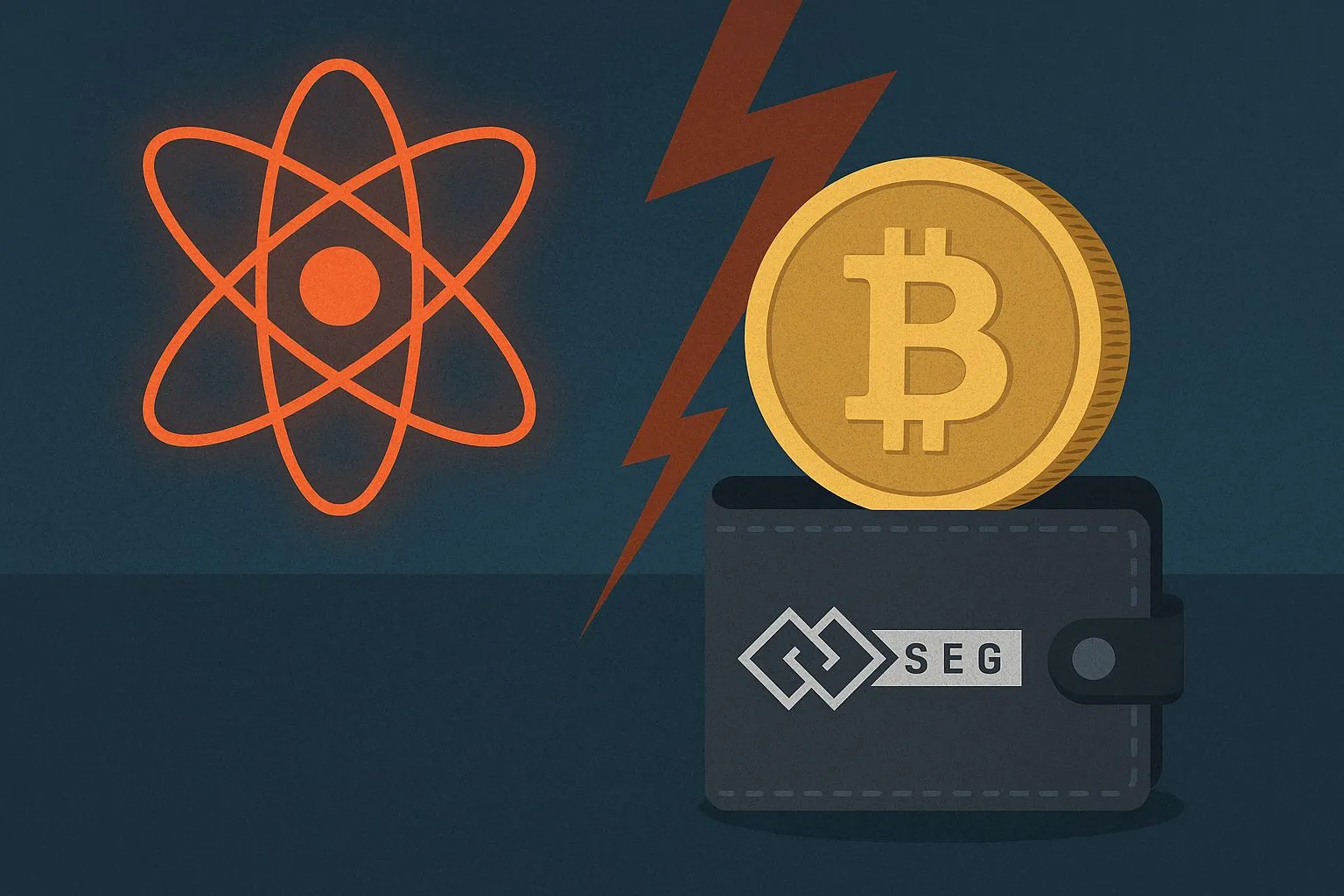
    Bitcoin Faces Quantum Risk: Why SegWit Wallets May Offer Limited Protection

    In the ever-evolving world of cryptocurrencies, Bitcoin has stood as a pioneering force, initiating a wave of innovations and a new understanding of digital monetary systems. However, as technology advances, new challenges arise. One significant threat to Bitcoin, and potentially all blockchains, is quantum computing. Recent discussions suggest that although Segregated Witness (SegWit) wallets were a significant improvement in the scalability and efficiency of Bitcoin, they might only offer limited protection against the sophisticated capabilities of quantum computers.

    Aixovia Sponsored Banner

    Understanding the Quantum Threat to Bitcoin

    Quantum computers operate radically different from traditional computers by using quantum bits (qubits). These qubits can exist in multiple states simultaneously, unlike binary bits, which are either 0 or 1. This ability allows quantum machines to solve complex calculations at unprecedented speeds, potentially decrypting many of today’s cryptographic techniques.

    Bitcoin, like many other cryptocurrencies, relies on cryptographic algorithms for security, specifically the Elliptic Curve Digital Signature Algorithm (ECDSA). The security of ECDSA is based on the difficulty of solving certain mathematical problems with classical computers. However, quantum computers could solve these problems much more quickly, rendering ECDSA vulnerable.

    SegWit Wallets and Their Limits

    Introduced in 2017 as a soft fork of the Bitcoin protocol, Segregated Witness (SegWit) was primarily aimed at solving the scalability issues plaguing Bitcoin at the time. By changing the way data was stored in Bitcoin blocks, SegWit effectively increased the block size limit and improved the speed of transactions. An unintended benefit was enhanced security for transactions, especially concerning malleability attacks.

    However, while SegWit did improve certain security aspects, it did not specifically address the looming quantum threat. SegWit wallets still use ECDSA for signatures, and thus, inherit the same vulnerabilities to quantum attacks as non-SegWit wallets. Once a quantum computer reaches sufficient capability, it could theoretically decode private keys from public addresses, posing a risk to any funds held in these wallets.

    What’s Next for Bitcoin Security?

    The quantum threat to Bitcoin highlights a broader issue within the crypto space: the need for quantum-resistant cryptographic algorithms. Researchers and developers are exploring several potential solutions, such as lattice-based cryptography, hash-based signatures, and multivariate cryptographic algorithms, which are believed to be more resistant to quantum attacks.

    One promising approach is using so-called “Quantum Resistant Ledgers” (QRL). These platforms are being designed from the ground up with quantum resistance in mind, utilizing post-quantum cryptographic methods that are currently under development.

    Conclusion

    While Bitcoin remains a robust and secure digital currency, the advent of quantum computing necessitates proactive adaptations in its cryptographic foundations. Although SegWit wallets brought advancements in scalability and minor security enhancements, they are not the ultimate answer to quantum threats. The Bitcoin community and its developers must continue to monitor advancements in quantum computing and be prepared to upgrade cryptographic measures when necessary. The future of Bitcoin, in the face of quantum computing, will depend on its ability to adapt and evolve continuously.

    As the quantum era approaches, maintaining the balance between advancement and security becomes critical for the survival and relevance of cryptocurrencies like Bitcoin. Potential quantum risks require not just reactionary measures but a foresighted approach in integrating quantum-resistant features into the very fabric of digital currency infrastructures.

    Bitcoin Partial pQuantum SegWit Shield threats wallets
    Share. Facebook Twitter Pinterest LinkedIn Tumblr Telegram Email
    Previous ArticleSofter labour market boosts odds of BOE rate cut
    Next Article ECBs Elderson says inflation risks are balanced

    Related Posts

    Latest News 2 days ago12 Mins Read

    Bitcoin Price Predictions: Will BTC Hold Against Market Pressures?

    2 days ago
    Latest News 2 days ago12 Mins Read

    Bubblemaps NYC Token: Uncovering Mystery Behind 1 Million USD Extraction

    2 days ago
    Latest News 2 days ago11 Mins Read

    Mt. Gox Hackers Shockingly Move 926 BTC to Mysterious Exchange

    2 days ago
    Add A Comment
    Leave A Reply Cancel Reply

    Recent Post

    • Bitcoin Price Predictions: Will BTC Hold Against Market Pressures?2 days ago
    • Bubblemaps NYC Token: Uncovering Mystery Behind 1 Million USD Extraction2 days ago
    • Mt. Gox Hackers Shockingly Move 926 BTC to Mysterious Exchange2 days ago
    • CFTC Innovation Committee: A New Era for Crypto and AI Regulation2 days ago
    • U.S. Stocks Gain Significantly While Cryptocurrency Sector Soars2 days ago
    • Binance Alpha Balance Points: What Booster Earn Tokens Mean for You2 days ago
    • Cryptocurrency Regulation: What SEC Chairman Paul Atkins’ Statement Means2 days ago
    • Rick Rieder Explains Why the Federal Reserve Must Remain Independent2 days ago
    • Bitcoin Seizure Venezuela: What SEC Chair Paul Atkins Predicts2 days ago
    • Bitcoin-Backed Securities: Discover the Hidden Risks Revealed by Fitch2 days ago
    • Bitmine ETH Staking Surges by 154,000 – What’s Behind This Jump?2 days ago
    • Germany NATO Greenland Mission: What This Means for Europe’s Future2 days ago
    • Delcy Rodriguez Venezuela: A Bold Response to Trump’s Claim2 days ago
    • Meta Cuts Investment in Metaverse: What’s Happening in 2026?2 days ago
    • Iran Nuclear Proposal: Is Diplomatic Engagement the Next Step?2 days ago
    • Ethereum Price Collapse: A Hidden Risk to $800 Billion in Assets2 days ago
    • U.S. Response to Iran: Is Diplomacy the Only Solution?2 days ago
    • Bitmine Ether Holdings Reach 4.1M: What This Means for the Market2 days ago
    • Venezuela Bitcoin Seizure: SEC Chair’s Curiosity Sparks Debate2 days ago
    • BTC Price Analysis: What Caused the Recent Drop Below 91,000 USDT?2 days ago
    Email
    The form has been submitted successfully!
    There has been some error while submitting the form. Please verify all form fields again.

    Subscribe

    Categories
    • Bitcoin
    • Cryptocurrency
    • Forex News
    • Latest News
    • Learn
    Crypto
    • Sitemap
    • Google News
    • Bitcoin
    • Ethereum
    • Ripple
    • Solana
    • Tron
    • XRP
    • Trump
    • BNB
    • Dogecoin
    • USDC
    • BlackRock
    • USDT
    FOREX
    • EURUSD
    • GBPUSD
    • DUSD
    • ATUSDT
    • AUDUSD
    • AXSUSD
    • JupUSD
    • KDAUSDT
    • PYUSD

    Archives

    • January 2026
    • December 2025
    • November 2025
    • October 2025
    • September 2025
    • August 2025
    © 2026 Powered by BPAY NEWS.
    • Home
    • About
    • Privacy Policy
    • Terms of Use

    Type above and press Enter to search. Press Esc to cancel.