
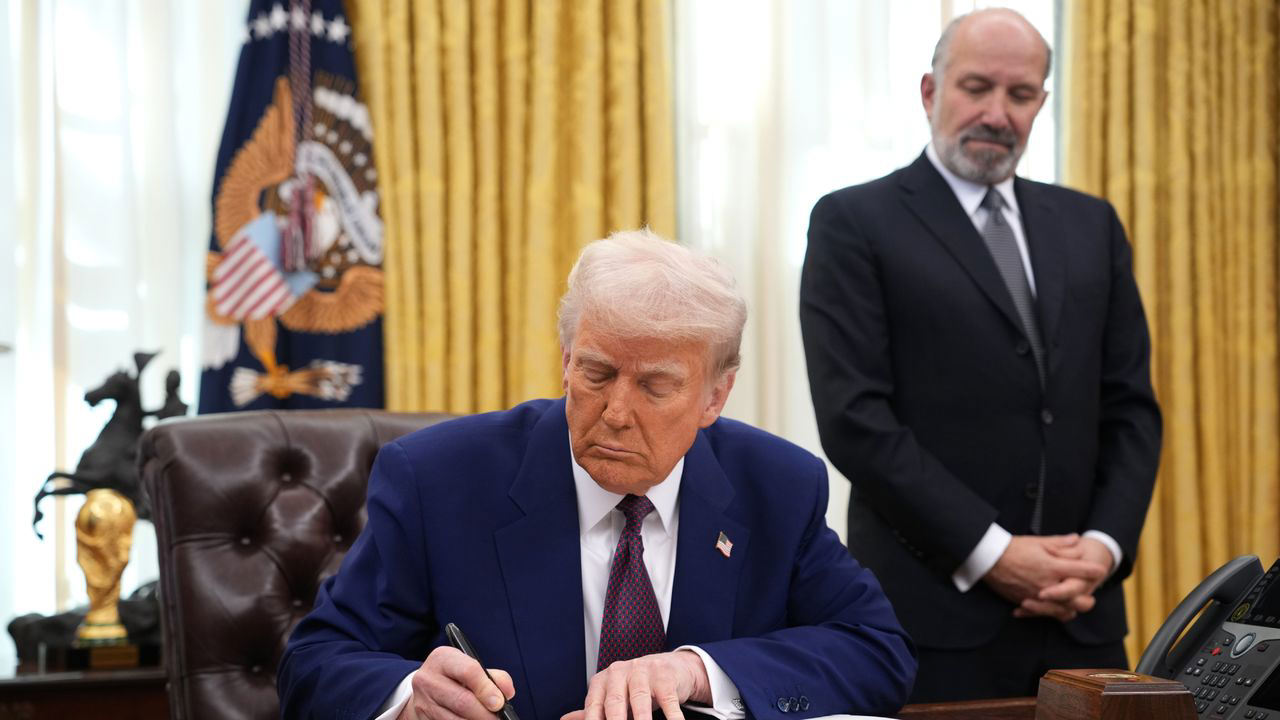

President Trump’s AI Rule is set to reshape the landscape of artificial intelligence regulations in the United States. This significant policy initiative, announced by Hassett from the National Economic Council, aims to establish a clear and simplified guideline for AI companies, making it easier for them to navigate the complex regulatory environment. By consolidating the requirements into a single rule, the Trump AI policies promise to not only foster innovation but also ensure compliance with federal standards. The economic council’s AI rule represents a proactive approach to managing the rapidly evolving field of artificial intelligence while supporting American businesses. This development is particularly crucial as AI continues to play a transformative role in various sectors of the economy, and clarity in regulations will empower companies to innovate responsibly.
The recent directives from President Trump regarding artificial intelligence oversight highlight the administration’s commitment to establishing a cohesive framework for tech innovation. In this new paradigm, businesses engaged in AI development will benefit from streamlined guidelines that enhance compliance and operational efficiency. The overarching goal of these regulations is to support American innovation while maintaining robust safety and ethical standards. As emphasized by Hassett’s statements, the move to consolidate rules reflects a strategic vision for the future of technology governance, ensuring that AI companies can thrive without the burden of conflicting regulations. Such advancements are imperative as we navigate an era where smart technologies are becoming integral to the economy.
Understanding President Trump’s AI Rule
President Trump’s AI Rule aims to streamline the regulatory framework surrounding artificial intelligence technologies. This single directive is designed to establish a uniform set of guidelines that AI companies must follow, which could greatly enhance compliance and transparency across the industry. With the rapid growth of AI and its integration into various sectors, having clear regulations is essential for ensuring safety, privacy, and ethical standards in AI development and deployment.
Moreover, the goal of this rule is not just to benefit corporations but also to safeguard American consumers. By clarifying existing regulations, companies can focus more on innovation rather than navigating a convoluted regulatory landscape. The Economic Council’s endorsement of this policy indicates a strategic move to position the United States as a leader in responsible AI, balancing regulation with the competitive forces of technology.
The Importance of AI Companies Guidelines
AI companies guidelines play a critical role in shaping the future of artificial intelligence. These guidelines are designed to ensure that companies operate within a framework that promotes ethical practices and innovation. As AI technologies evolve, the need for comprehensive guidelines becomes increasingly important to address challenges such as data privacy, algorithmic bias, and accountability. Having a clear set of regulations creates a foundation upon which businesses can innovate responsibly.
Furthermore, these AI companies guidelines enable stakeholders to understand the expectations regarding compliance and operational standards. With clearer regulations, organizations are better equipped to align their technological advancements with societal values and legal requirements. This proactive approach helps prevent potential misuses of AI and fosters public trust, which is crucial for the sector’s long-term growth and acceptance.
Hassett’s Insights on Trump’s AI Policies
Hassett, in his recent statements, emphasized the significance of President Trump’s AI policies in fostering a more robust economic landscape for technology firms. He believes that the unified rule will eliminate confusion among companies that may previously have had to decipher multiple conflicting regulations. This policy is perceived as a significant step forward in creating an environment conducive to innovation while ensuring regulatory compliance.
The insights provided by Hassett underline the administration’s strategic focus on artificial intelligence as a cornerstone of economic development. By introducing clear policies, the government aims to attract not only domestic but also international investments in the AI sector. This approach aligns with the broader goal of the Economic Council to enhance the United States’ global leadership in technology and innovation.
An Overview of Artificial Intelligence Regulations
Artificial intelligence regulations are vital to managing the ethical implications and operational risks associated with AI technologies. These regulations provide a framework for addressing issues such as data security, privacy, and algorithmic transparency. As AI continues to permeate various aspects of life, policymakers must develop regulations that balance innovation with the protection of public interest.
The introduction of comprehensive artificial intelligence regulations not only guides companies in the development of their technologies but also reassures the public regarding safety and ethical use. This ongoing dialogue between lawmakers and AI companies is critical for fostering an ecosystem where innovation can thrive without compromising societal values. A well-regulated AI landscape ensures that both advancements and ethical considerations are prioritized.
Economic Council’s AI Rule Explained
The Economic Council’s AI rule, rooted in President Trump’s policies, aims to simplify the regulatory environment for artificial intelligence applications. By consolidating regulations into a single rule, the Economic Council intends to streamline compliance for AI companies, making it easier to navigate federal requirements while still promoting innovation. This initiative reflects a growing understanding of the complexities surrounding AI technology and the need for clear guidelines.
Furthermore, the Economic Council’s focus on a single AI rule demonstrates a commitment to creating a coherent framework that all stakeholders can understand easily. This transparency in the regulatory process is essential for fostering collaboration between the government and businesses, paving the way for a more predictable environment that encourages investment in AI research and development.
Hassett’s AI Statement on Compliance
Hassett’s AI statement highlighting compliance reflects an evolving understanding of the regulatory landscape in the AI sector. By proposing a clear rule for AI companies, he emphasizes the importance of compliance not just for legal reasons but as a strategic advantage that can enhance a company’s credibility and marketability. This perspective sees compliance as a pathway to trust-building with consumers, clients, and stakeholders.
Moreover, the implications of Hassett’s statement resonate with AI firms looking to integrate ethical considerations into their business models. Clear compliance guidelines allow companies to operationalize ethical principles, thereby bolstering their reputation in a competitive market. This alignment between compliance, ethics, and AI development positions businesses favorably in the eyes of both consumers and regulators.
Impact of Trump’s Policies on AI Innovation
The impact of President Trump’s policies on AI innovation is significant, as they set the stage for a more predictable and supportive regulatory framework. By implementing a single rule on artificial intelligence, these policies are expected to encourage companies to invest in advanced AI technologies without the fear of navigating a fragmented regulatory environment. This, in turn, can lead to accelerated innovation and more effective technological solutions across industries.
Additionally, Trump’s approach to AI regulations underscores the importance of economic growth tied to technological advancement. As companies gain clarity on what constitutes compliant AI practices, they are likely to be more willing to experiment and push the boundaries of innovation, potentially leading to breakthroughs that can reshape entire sectors. This strategy further emphasizes the role of clear policies in driving competitive advantages for American firms in the global market.
Navigating AI Regulations in the U.S.
Navigating AI regulations in the U.S. can be daunting for companies entering the market, especially with the rapid evolution of technology. However, with President Trump’s AI rule now in place, there is hope for a more straightforward process. By centralizing regulations, the rule offers a singular reference point that can simplify compliance efforts for AI enterprises, ultimately streamlining their operations and minimizing legal risks.
As AI technologies continue to develop, understanding and adhering to these regulations will remain crucial for companies aiming to assure stakeholders of their commitment to ethical practices. With each new advancement in AI capabilities, the importance of having a solid regulatory framework increases, ensuring that innovation does not come at the expense of accountability and public trust.
The Future of AI under Trump’s Regulation
The future of AI under Trump’s regulation promises a balanced approach that promotes innovation while ensuring ethical standards. With a singular set of rules to guide AI companies, the administration appears committed to fostering an environment where technological advancement can flourish alongside essential safeguards for consumers. This outlook positions the U.S. as a potential leader in ethical AI development and application.
Looking ahead, the implications of these regulations will play a significant role in shaping the trajectory of AI innovation. As companies adapt to the framework, the opportunity for collaboration with regulatory bodies increases, allowing for an adaptive approach to the ever-changing landscape of artificial intelligence. This strategic interaction between industry and government could yield significant advancements that benefit society at large.
Frequently Asked Questions
What is President Trump’s AI Rule and its significance for AI companies?
President Trump’s AI Rule is a regulatory framework established by the National Economic Council aimed at clarifying the guidelines for artificial intelligence in the United States. This single rule is designed to simplify compliance for AI companies, ensuring that they operate under one consistent set of regulations rather than a patchwork of different rules.
How does the economic council AI rule impact the artificial intelligence industry?
The economic council AI rule, as outlined by President Trump’s administration, impacts the artificial intelligence industry by providing a clear and unified set of guidelines for AI companies. This regulation aims to foster innovation and growth while ensuring safety and accountability in the deployment of AI technologies.
What are the main objectives of Trump AI policies regarding AI regulations?
The main objectives of Trump AI policies regarding AI regulations include simplifying compliance for businesses, promoting technological advancement, and ensuring that American AI companies have a clear understanding of their legal responsibilities. The focus is on creating a supportive environment for growth while balancing the need for regulation.
What insights did Hassett share about the single rule on artificial intelligence?
Hassett stated that President Trump’s single rule on artificial intelligence is intended to help AI companies clarify the content of the regulations. He emphasized that this rule will provide American companies with a straightforward framework, eliminating confusion and facilitating adherence to the established guidelines.
How will the new AI companies guidelines affect compliance costs?
The new AI companies guidelines under President Trump’s AI Rule are expected to reduce compliance costs for businesses. By consolidating regulations into a single framework, AI companies can streamline their processes and allocate resources more effectively, potentially leading to cost savings and increased efficiency.
What changes should AI companies expect from Trump’s AI Rule implementation?
AI companies should expect greater clarity and consistency in the regulatory environment following the implementation of Trump’s AI Rule. This single rule aims to standardize regulations, making it easier for companies to navigate compliance requirements while fostering an innovative landscape for artificial intelligence development.
Are there any criticisms of President Trump’s AI Rule from within the AI community?
Some members of the AI community have raised concerns about President Trump’s AI Rule, particularly regarding its potential to limit more proactive regulations that address ethical issues in AI. Critics argue that while clarity is beneficial, the regulations need to evolve continuously to address emerging challenges associated with artificial intelligence.
What role does the National Economic Council play in enforcing Trump’s AI policies?
The National Economic Council plays a critical role in formulating and enforcing Trump’s AI policies by overseeing the implementation of the artificial intelligence regulations. They provide guidance to AI companies, ensuring that the single rule is effectively communicated and adhered to across the industry.
| Topic | Details |
|---|---|
| Base Content | Hassett discusses President Trump’s single rule on artificial intelligence, which aims to help AI companies understand regulations clearly. |
| Date and Source | December 8, 2025, Odaily Planet Daily |
| Authority | Statement from Hassett, Director of the National Economic Council, White House. |
| Implications | American AI companies will operate under a single set of rules, consolidating regulatory clarity. |
Summary
President Trump’s AI Rule is designed to streamline the regulatory framework governing artificial intelligence companies. By establishing one comprehensive rule, it enables AI firms to navigate their operational landscape with greater clarity and consistency. This approach not only simplifies compliance but also fosters innovation within the sector. In essence, the rule reflects an understanding of the fast-paced technological environment, ensuring that U.S. companies remain competitive while adhering to a unified regulatory standard.
Related: More from Regulation & Policy | UK Gambling Regulator Examines Cryptocurrencies for Licensed Bettors in Crypto Regulation | Blocks Retreat Signals Broader Payments Shifts


