


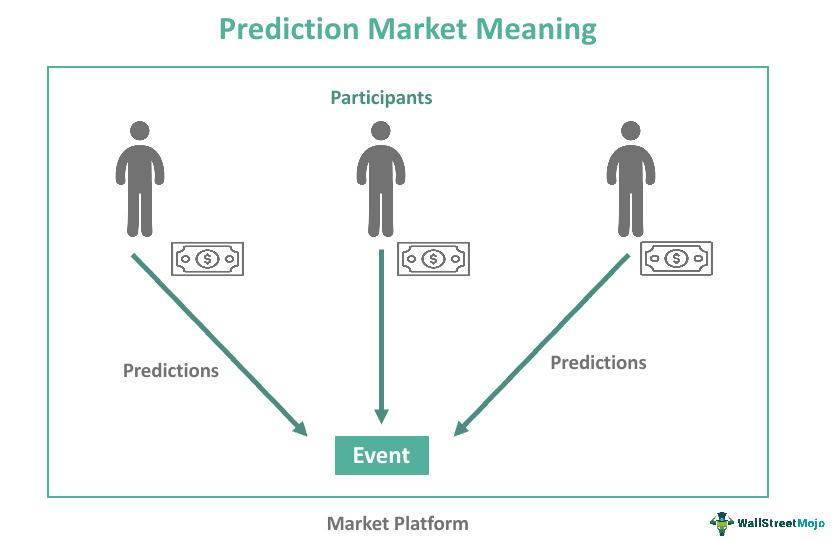

Prediction markets are revolutionizing how we gauge future events by allowing participants to buy and sell predictions on outcomes, creating a dynamic platform that generates real-time probabilities. Recent developments, such as the partnership between Polymarket and Dow Jones, signify a notable shift as these markets are increasingly recognized as valuable crypto data products. As interest surges, Kalshi has reported impressive trading volume, potentially achieving $100 billion in annual transactions, showcasing the robustness of these platforms. However, they are not without controversy, as ongoing insider trading perceptions and methodological disputes continue to challenge their credibility. Despite these challenges, the blending of traditional finance with prediction markets highlights their emerging role in modern information dissemination, promising to reshape the landscape of financial forecasting.

Markets for forecasting future outcomes, often referred to as prediction exchanges or outcome markets, are gaining traction in both consumer and institutional spheres. By enabling traders to place bets on events ranging from political elections to sports outcomes, these platforms turn speculation into a quantifiable asset class. The support of significant players in the financial sector, such as Dow Jones and ICE, indicates a growing acceptance of these markets as legitimate tools for information aggregation and decision-making. Despite their potential, these exchanges are navigating a complex environment filled with regulatory scrutiny and public skepticism regarding insider trading practices. As they continue to evolve, the conversation surrounding the legitimacy and utility of prediction markets will only intensify.
Understanding Prediction Markets
Prediction markets are trading platforms that forecast outcomes by leveraging collective intelligence, similar to a betting exchange. They allow participants to buy and sell shares on the anticipated probability of future events, converting subjective opinions into quantifiable metrics. The significance of prediction markets lies in their potential to provide real-time insights into public sentiment and expert consensus, a feature that has drawn considerable interest from institutional investors.
The recent partnership of Dow Jones with Polymarket underscores a growing recognition of prediction markets as legitimate financial data products. This collaboration facilitates the distribution of prediction probabilities across major financial news platforms such as The Wall Street Journal and Barron’s, enhancing their acceptance within the financial community. However, even as their legitimacy grows, prediction markets face scrutiny regarding insider trading perceptions and methodological transparency.
Frequently Asked Questions
What are prediction markets and how do they relate to Polymarket?
Prediction markets are platforms where individuals can trade on the outcome of future events, allowing participants to profit from their insights. Polymarket is one of the leading prediction markets, offering a space for users to buy and sell contracts based on the likelihood of specific events occurring.
How has the Dow Jones partnership impacted the credibility of prediction markets?
The partnership between Dow Jones and Polymarket enhances the credibility of prediction markets by integrating probability data into established financial publications like The Wall Street Journal and MarketWatch, thus presenting prediction markets as legitimate financial data products.
What is Kalshi, and how does its trading volume inform prediction markets?
Kalshi is a regulated exchange for prediction markets, allowing users to speculate on the outcomes of various events. Kalshi recently reported achieving a $100 billion in annualized trading volume, indicating strong interest and participation in prediction markets, which bolsters the view of these platforms as significant players in financial markets.
What are the perceptions around insider trading in prediction markets?
The perception of insider trading in prediction markets arises from instances where traders profit from non-public information. This concern underlines the need for regulatory frameworks to ensure fairness and integrity, particularly for platforms like Polymarket and Kalshi.
How do crypto data products intersect with prediction markets?
Crypto data products are becoming intertwined with prediction markets as platforms like Polymarket utilize blockchain technology to enhance transparency and trust. This relationship helps position prediction markets more prominently in the evolving landscape of financial data, particularly within the crypto space.
What are the recurring challenges faced by prediction markets like Polymarket?
Prediction markets like Polymarket frequently encounter challenges such as definitional ambiguities, oracle disputes, and issues related to information asymmetry, which raise questions about market integrity and the reliability of outcomes.
What distinguishes Kalshi from other prediction markets?
Kalshi differentiates itself with its regulatory framework, being overseen by the CFTC, which allows it to forge partnerships with mainstream media and brokerages without the compliance issues that other platforms, such as Polymarket, face.
| Key Points | |||||||
|---|---|---|---|---|---|---|---|
| Prediction markets allow insiders to profit from leaks. | Dow Jones partnered with Polymarket to distribute prediction data across major financial outlets. | Prediction markets are in a controversial phase with methodological disputes, oracle issues, and insider trading perceptions. | Institutions view prediction markets as a valuable data source, not necessarily endorsing their integrity. | Recurring controversies include definitional ambiguity, oracle disputes, and information asymmetry. | Prediction markets are becoming institutionalized through regulated data distribution and consumer access. | The competition between regulated and unregulated venues will shape the future of prediction markets. | Potential 2026 scenarios include further integration into financial systems or increased regulatory backlash. |
Summary
Prediction markets are emerging as a significant financial tool, recently legitimized by partnerships with established institutions like Dow Jones. This transformation highlights their dual nature: while gaining acceptance as reliable data sources, they still grapple with ongoing controversies that threaten their integrity. As prediction markets continue to evolve, their integration into mainstream finance suggests a future where they are treated less as speculative venues and more as legitimate components of financial analysis.
Related: More from Market Analysis | Barclays Looks at Blockchain for Payments, Deposits | PayPal USD Powers New PYUSDx App