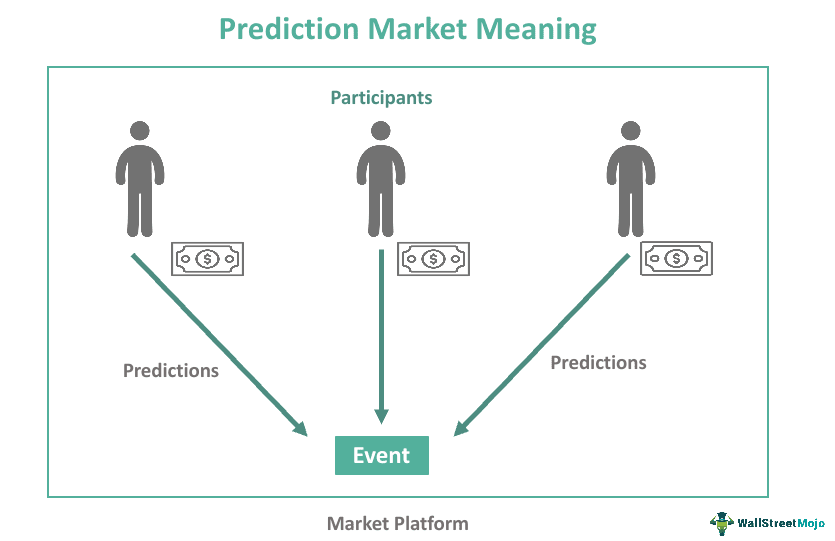

Prediction markets, a unique form of trading that forecasts future events based on collective intelligence, are gaining attention for their intriguing blend of speculation and strategy. Unlike traditional stock markets, these platforms allow users to place bets on outcomes, creating a trading structure fueled by the insights of professional traders. While many participants emulate sports betting behaviors by falling for compelling narratives or emotional biases, it’s often the seasoned traders who achieve remarkable accuracy and profitability. Their expertise lies in utilizing effective betting strategies, which involve assessing market dynamics and leveraging information advantages to price probabilities accurately. As we look toward 2026, understanding the intricacies of prediction markets can offer valuable insights into market trends and opportunities for both seasoned and new investors alike.
Alternative forecasting platforms, often referred to as event markets or outcome markets, provide unique insights into future happenings by harnessing the wisdom of the crowd. These systems thrive on the input of collective intelligence, allowing participants to wager on various potential outcomes much like traditional betting formats. However, it’s crucial to recognize that while casual users may engage with emotional narratives, it is the highly skilled professional traders who typically drive market accuracy and profitability. Through strategic trading frameworks and effective risk management practices, they exploit nuances within these markets to realize consistent returns. As the landscape of predictive trading shifts, particularly with regulatory developments, understanding these alternative mechanisms will be essential for anyone looking to navigate this evolving field.
Understanding Prediction Markets in 2026
Prediction markets are emerging as a fascinating financial tool, combining the principles of betting with market forecasting. As per the findings of the 10x Research series, the evolution of these markets reveals a growing trend towards integrating professional trading strategies. By 2026, we can expect not only an increase in participation from retail investors but also more structured regulations that will enable them to unlock the full potential of prediction markets. However, it’s crucial to understand how these markets operate and the dynamics that favor professional traders over amateur participants.
The rise of prediction markets as a reliable forecasting mechanism underscores the importance of collective intelligence in price formation. Yet, data indicates that market accuracy largely hinges on the insights of a select group of seasoned traders who demonstrate a deep understanding of various influencing factors. By focusing on structured trading strategies and behavioral economics, we can better comprehend how the market evolves and the implications this holds for both amateurs and professionals.
The Role of Collective Intelligence in Market Predictions
Collective intelligence is often heralded as the cornerstone of prediction markets, allowing participants to collaborate and aggregate knowledge to predict outcomes effectively. However, the reality revealed by 10x Research reflects a more nuanced picture. Most casual users act similarly to traditional sports bettors, swayed by narratives or emotional biases rather than sound analytical strategies. This divergence raises questions about the true efficacy of collective insights when not backed by professional analytical frameworks.
In this context, understanding the mechanics that drive prediction markets becomes critical. Professional traders leverage their unique market insights, use sophisticated betting strategies, and apply risk management techniques to ensure greater market accuracy. The insights derived from a seasoned professional’s approach often yield higher returns compared to those of average bettors, highlighting that while collective input can shape markets, it is the informed strategies that ultimately drive profitability.
Professionals vs. Amateurs: A Trading Landscape
The disparity between professional traders and average market participants speaks volumes about the trading landscape within prediction markets. Professional traders usually maintain structured trading strategies that systematically yield returns, as they navigate through complex variables such as information asymmetry and order flow. The 10x Research series clearly underscores that a handful of these professionals capture significant advantages in early market phases, exploiting pricing discrepancies and operational inefficiencies.
On the other hand, amateur participants often engage in prediction markets with a mindset akin to recreational betting, where decisions may be driven by emotion rather than sound analysis. This behavioral dynamic can lead to less optimal choices and a propensity for poor risk management, contrasting sharply with the systematic approaches adopted by professional traders. Understanding this difference and learning from professional strategies could significantly enhance the performance of amateur participants in prediction markets.
Trading Structures: Navigating the Market Dynamics
The structural intricacies of prediction markets are pivotal to understanding how they function. As outlined in the 10x Research series, the market structure is evolving with rising liquidity, clearer regulations, and faster participation from institutional and retail investors. These aspects form the backbone of trading activities and influence the broader outcomes of market accuracy. Here, the design of the trading structure, which includes order types, market rules, and participant incentives, plays an essential role in attracting serious traders with information advantages.
Navigating these trading structures effectively is crucial for traders looking to achieve systematic returns. By comprehending how to maneuver through varying depths of liquidity and exploiting emerging trading opportunities, both professionals and amateurs can develop improved strategies. The anticipation of heightened participation and resulting improvements in market mechanics can propel prediction markets into a new era of profitability and growth.
Risk Management and Hedging Strategies
Effective risk management is a cornerstone of successful trading in prediction markets. The professionals highlighted in the 10x Research report skillfully utilize hedging strategies that protect their investments while enabling them to capitalize on profitable opportunities. This involves maintaining a portfolio that can withstand volatility and shifts in market sentiment. As prediction markets continue to mature, understanding the nuances of risk management becomes increasingly vital for traders who wish to achieve sustainable results.
For amateur traders, learning about hedging and sophisticated risk management techniques can provide a competitive edge. Engaging in practices such as diversifying bets or employing market instruments to offset potential losses can dramatically enhance risk performance. Consequently, traders who understand these mechanisms are better equipped to make informed decisions that align with their investment goals, further solidifying the importance of structured trading strategies in achieving success.
Market Accuracy: The Trade-off Between Information and Emotion
Market accuracy is determined not only by the amount of data available but also by the quality of the judgment applied to that data. The insights from 10x Research indicate that while collective input is valuable, it is often overshadowed by emotional decision-making exhibited by most participants. Thus, achieving a higher degree of market accuracy necessitates a focus on analytical decision-making rather than purely basing choices on narratives or emotional attachments. This disconnect highlights a gap that can be exploited by professional traders who utilize data-driven analysis.
By prioritizing objective data analysis over subjective perceptions, traders can forecast outcomes with greater precision. Techniques including data mining, statistical analysis, and machine learning can bolster market predictions significantly, challenging the traditional views on collective wisdom in prediction markets. Ultimately, this reveals that while collective intelligence contributes to market formation, the actionable insights gleaned from rigorous analysis are what drive market accuracy in an increasingly complex trading environment.
Emerging Trends in Prediction Markets
As we move toward 2026, several emerging trends are reshaping the landscape of prediction markets. The influx of retail traders, coupled with enhanced technologies and clearer regulations, is poised to foster a more competitive environment. The research by 10x highlights the remarkable growth in liquidity, prompting new participants to enter the fray. Such developments not only promise increased market activity but also introduce opportunities for innovation in trading frameworks.
In addition to growing participation, the advent of better analytics tools enables both professional and amateur traders to leverage data more effectively. These tools allow for faster decision-making and clearer insights into prevailing market conditions. As more sophisticated trading strategies become accessible, we’re likely to see a shift towards enhanced market accuracy, driven by the amalgamation of diverse trading inputs and a more informed user base. Understanding these trends and adapting to them will be crucial for anyone looking to navigate the evolving landscape of prediction markets.
The Future of Prediction Markets: Insights and Innovations
Looking toward the future, the potential for prediction markets appears boundless, especially as institutions become more involved in this space. The 10x Research series emphasizes the importance of innovation in trading frameworks, which could redefine how traders interact with markets and access information. By embracing advancements in technology and analytics, traders can prepare for an era where prediction markets are not just niche opportunities but mainstream financial instruments offering profound insights into various sectors.
Moreover, as prediction markets continue to integrate with other financial models and systems, the convergence of different analytical approaches could yield breakthrough innovations. The focus on collective intelligence will remain, but as professional traders refine their methodologies, the tools and strategies like automated betting and machine learning are likely to become mainstream. This future landscape promises to enhance market efficiency and accuracy, ushering in a new generation of traders better equipped to tackle challenges in prediction markets.
Actionable Insights for Aspiring Traders
For individuals eager to enter the world of prediction markets, establishing a foundation based on actionable insights gleaned from seasoned traders is essential. As indicated in the 10x Research series, adopting proven strategies can provide critical advantages over less structured approaches. Whether it’s through attending relevant workshops, accessing specialized analytics tools, or learning risk management techniques, aspiring traders can significantly enhance their understanding and capability in making informed trading decisions.
Furthermore, studying market trends, iterating based on practical experiences, and actively participating in prediction markets can cultivate a stronger sense of market dynamics. Engaging with the community and leveraging shared knowledge can foster collective intelligence, ultimately leading to better decision-making outcomes. As we advance, novice traders can capitalize on a wealth of resources to cultivate their trading acumen, preparing them for participated success in the evolving prediction markets.
Frequently Asked Questions
What are prediction markets and how do they utilize collective intelligence?
Prediction markets are trading platforms where participants buy and sell shares based on the expected outcomes of future events. They harness collective intelligence by aggregating diverse opinions from many participants, leading to predictions that reflect the group’s collective belief. However, studies show that the actual accuracy and profitability of these markets are often influenced more by a select group of professional traders who leverage their information advantage than by the collective insights of the public.
How do professional traders influence the accuracy of prediction markets?
Professional traders play a vital role in prediction markets by bringing expertise and information advantages that enhance market accuracy. They systematically analyze probabilities, hedge risks, and exploit order flow imbalances. This professional involvement is crucial as it often leads to more accurate predictions compared to the general public, whose betting strategies may be more emotionally driven and narrative-focused.
What trading strategies can be derived from prediction markets?
Trading strategies in prediction markets can include pricing probabilities based on thorough analysis, hedging against potential losses, and exploiting imbalances in order flow. Professional traders develop these strategies to achieve stable returns, compared to typical bettors who may lean toward long-odds bets and emotional narratives. Understanding these strategies is essential for realizing profitable opportunities as the markets evolve.
What are some common pitfalls for casual investors in prediction markets?
Casual investors in prediction markets often fall into the trap of making decisions based on narratives, emotions, and desires for long-odds bets, rather than sound trading practices. This behavior contrasts sharply with the methods employed by professional traders who rely on analytical strategies and systematic approaches. By failing to recognize these dynamics, casual investors can miss out on effective trading opportunities.
How do trading structures in prediction markets affect participant behavior?
The trading structures in prediction markets affect participant behavior by setting the stage for liquidity and regulatory dynamics. As markets grow and attract more institutional and retail investors, the initial advantages often go to entities that understand these structures best—typically professional traders. Analyzing these structures is crucial for participants to adapt their betting strategies effectively and capitalize on predicted outcomes.
What is the significance of the 2026 prediction market expansion for new traders?
The anticipated expansion of prediction markets in 2026 presents a significant opportunity for new traders. Understanding the core mechanisms, trading structures, and emerging trends in this evolving landscape is crucial now. As liquidity deepens, simple arbitrage opportunities may vanish, making it essential for traders to develop informed strategies ahead of time.
How does market accuracy factor into successful prediction market trading?
Market accuracy is a critical factor in successful prediction market trading, as it determines the reliability of the outcomes predicted. To enhance accuracy, professional traders often apply analytical techniques to understand probabilities and risks better than casual participants. As the market evolves, maintaining an awareness of accuracy dynamics can help traders refine their strategies and improve their betting outcomes.
What upcoming trends should traders watch in prediction markets?
Traders should watch for trends such as increased institutional participation, faster regulatory changes, and improved liquidity in prediction markets. Additionally, the behaviors of professional traders in these markets will likely shift as new technologies and analytical tools become available, potentially influencing the overall accuracy and profitability of predictions.
| Key Points | |
|---|---|
| Prediction Markets vs. Collective Intelligence | Accuracy stems from professional traders, not the general public. |
| User Behavior | Most users act like sports bettors, focusing on narratives and emotional swings. |
| Professional Traders’ Approach | They achieve systematic returns through pricing probabilities, hedging, and exploiting market imbalances. |
| Market Dynamics | Early advantages captured by informed entities; structural changes noted in liquidity and regulations. |
| Future of Prediction Markets | As prediction markets grow, understanding their structure is vital before simple strategies fade. |
Summary
Prediction markets are gaining traction as they showcase interesting dynamics among traders. The findings from 10x Research highlight that while these markets tout collective intelligence, the accuracy largely lies within a select group of professional traders. As the landscape of prediction markets evolves, particularly with the anticipated expansion in 2026, it is essential for participants to grasp the mechanisms at play. This understanding could be crucial in capitalizing on opportunities before the market becomes saturated and straightforward arbitrage strategies disappear.
Related: More from Market Analysis | Earnings season is wrapping up with a mixed bag of results across | Polymarket Bet Fails to Catch Insider Traders