


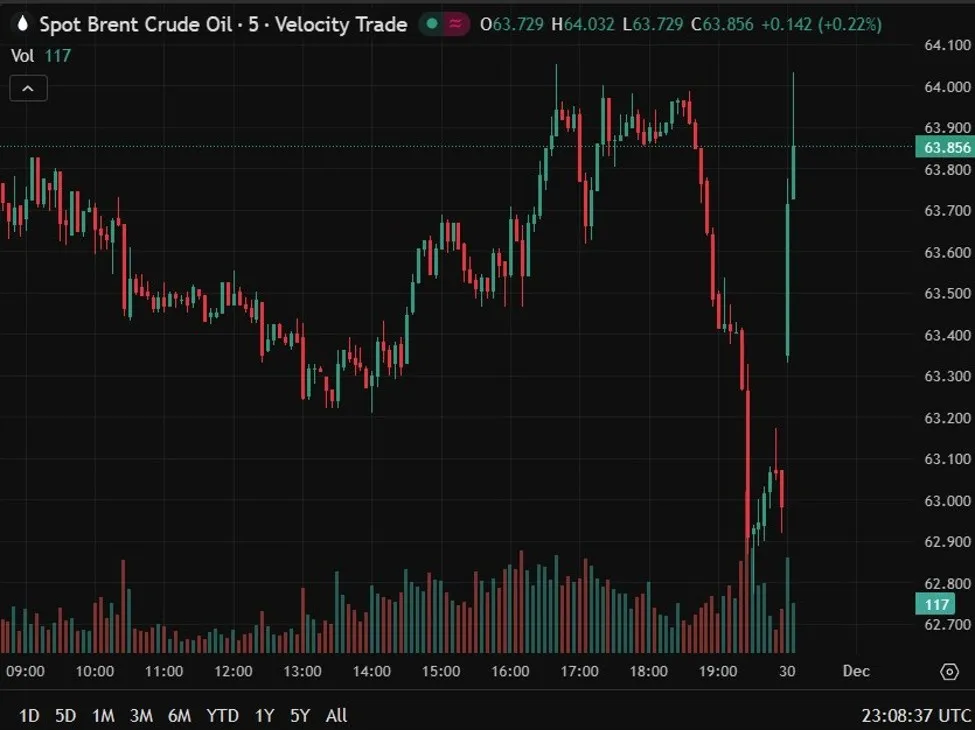

OPEC+ freezes 2026 output quotas and clears path for new capacity baselines from 2027 OPEC+ kept its group-wide production targets unchanged for 2026 and agreed on a long-sought process to verify each member’s maximum output, a pivotal step that will determine how quotas are set from 2027 and could shift barrels among key producers.

What OPEC+ decided and why it matters
The oil alliance, which supplies roughly half the world’s crude, left its existing curbs in place, preserving about
3.24 million barrels per day (bpd)
of cuts — just under
3% of global demand
. A core group of eight producers also reached a preliminary accord to
extend their pause on planned output increases through Q1 2026
, signaling caution about restoring supply too quickly after they had already returned roughly
2.9 million bpd
to the market since April 2025. The decisions steady the supply outlook into next year and keep the onus on demand trends, geopolitics and non-OPEC+ growth to drive prices. For traders, the message is continuity: no immediate flood of crude, and a framework taking shape that could reallocate future quotas in line with verifiable capacity.
Capacity overhaul aims to reset baselines from 2027
Ministers approved a long-delayed mechanism to assess members’ maximum sustainable output — a technical but consequential move for how future quotas will be divided starting in 2027. The process is designed to reduce friction between countries whose capacity paths have diverged: – The
UAE
, which has invested heavily to expand capability, seeks a higher baseline to reflect new capacity. – Several
African producers
, facing structural declines and outages in recent years, have resisted moves that would lower their reference levels. – Tensions over baselines contributed to
Angola’s exit in 2024
. A credible audit of capacity could improve cohesion and visibility, but it may also reshuffle market share within the group. Execution, transparency and external confidence in the assessments will be key.
Market lens: what this means for crude, FX and risk assets
OPEC+ opting for stability should support a floor under prices into 2026, especially with inventories not excessively bloated and the physical market still showing periods of tightness. While the decision doesn’t point to an immediate rally, it likely sustains a mild backwardation in the curve and limits downside unless global growth softens materially or non-OPEC+ supply surprises to the upside. –
FX:
Petrocurrencies (NOK, CAD) may find support on steady crude, while oil-importer currencies in Asia could face marginal headwinds if energy costs hold firm. The U.S. dollar’s path will remain more tied to yields and policy expectations than to oil alone. –
Rates and inflation:
A floor under oil complicates disinflation efforts at the margin. If crude grinds higher on geopolitics or demand resilience, front-end rates could stay sticky. –
Equities:
Energy majors and services could benefit from stable price decks and capital discipline, while energy-intensive sectors may see cost pressures if crude drifts higher. BPayNews’ takeaway: the pact preserves price stability and extends supply optionality into 2026, while the 2027 capacity reset could be the bigger swing factor for medium-term balances.
Geopolitics: Russia-Ukraine peace effort looms over balances
The meeting unfolded as Washington pushes to broker a Russia-Ukraine peace deal — a wildcard for oil. A breakthrough could, over time, ease sanctions pressure and incrementally normalize flows of Russian crude. Conversely, failed talks or tighter restrictions would sustain the geopolitical risk premium and keep the market vigilant on compliance and rerouting costs.
Key takeaways
- 2026 quotas unchanged: OPEC+ maintained its group-wide targets, keeping 3.24 mbpd of cuts in place.
- Pause extended: Eight producers agreed in principle to extend their freeze on supply hikes through Q1 2026.
- 2.9 mbpd returned since April 2025: The subgroup has already slowed the pace of returning barrels after significant unwinding.
- Capacity audit approved: A new mechanism will benchmark each member’s maximum output to determine 2027 quotas.
- Potential quota reshuffle: The UAE seeks a higher baseline; several African members push back after years of capacity erosion. Angola departed in 2024.
- Macro backdrop: Decision supports price stability, with implications for petrocurrencies, inflation dynamics and energy equities.
- Geopolitical wildcard: Any Russia-Ukraine peace deal or escalation could materially alter supply trajectories.
Outlook
With policy anchored and a capacity audit underway, the near-term gridlock in supply policy should temper volatility. Focus shifts to global demand into 2026, U.S. shale responsiveness, and the mechanics of the 2027 baseline reset. Traders will watch curves for signals of tightening and monitor compliance, differentials and shipping flows for early signs of shift.
FAQ
What exactly did OPEC+ decide for 2026?
OPEC+ kept its collective production quotas steady for 2026, preserving about 3.24 million bpd of existing cuts. Additionally, a subset of eight members agreed in principle to extend their pause on planned output increases through the first quarter of 2026.
What is the new capacity assessment and why is it important?
The group approved a mechanism to verify each country’s maximum sustainable production capacity. Those audited figures will underpin how quotas are allocated from 2027 onward, potentially shifting market share between members with rising capacity and those facing declines.
How many barrels has OPEC+ returned to the market since 2025?
A subgroup of eight producers has returned roughly 2.9 million bpd since April 2025, but they have slowed the pace of restoring supply and will keep a pause on further hikes through Q1 2026.
How could this affect oil prices and inflation?
By holding quotas steady and extending the pause, OPEC+ supports a floor under crude prices, which can keep inflation pressures from fading too quickly. The price impact will still hinge on global growth, inventories and geopolitical developments.
What role could a Russia-Ukraine peace deal play?
A durable peace could eventually ease sanctions-related frictions and normalize some Russian flows, increasing effective supply. Failure or renewed escalation would likely maintain or raise the geopolitical risk premium, tightening balances.
Related: More from Market Analysis | Related Box Test | Crypto Worries Over Iranian Oil Supply: Is It Overhyped? in Crypto Market