


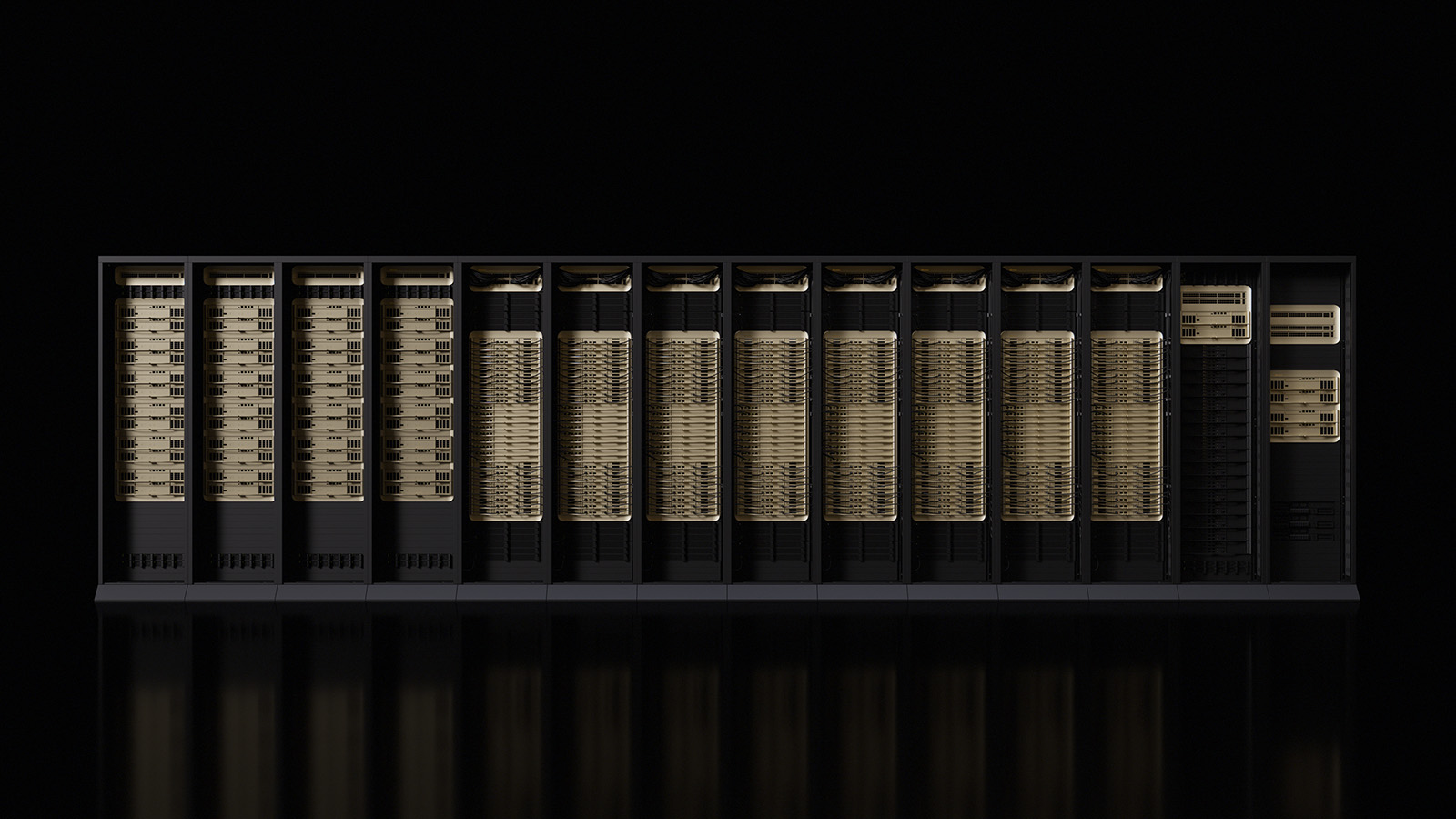

Nvidia Vera Rubin is reshaping the landscape of AI computing architecture with its official launch at CES 2026, offering unprecedented computing efficiency for training and deploying AI models. Composed of six co-designed chips dedicated to enhancing performance, Vera Rubin stands as a major contender against decentralized GPU networks like Render, which depend on underused computational power. As these advancements roll out, the potential to lower AI costs poses a threat to cryptocurrency foundations that rely on limited compute resources. Nvidia’s commitment to enhancing efficiency in hyperscale data centers could disrupt existing economic models in the blockchain space, prompting a reevaluation of strategies among GPU-sharing platforms. This new era of innovative architecture promises to unlock a flurry of new workloads while maintaining competitive pricing in a rapidly evolving market.

The introduction of Nvidia Vera Rubin signifies a pivotal moment in advanced computing technology, particularly in the realm of artificial intelligence and its associated infrastructures. With a sophisticated architecture tailored to maximizing computing capabilities, this development challenges the traditional paradigm upheld by decentralized networks. These networks, often built on the premise of shared computing power, must now navigate a changing environment where enhanced efficiency is driving demand in hyperscale settings. As businesses and developers increasingly seek flexible computing solutions, platforms like Render are prompted to rethink their operational models in order to remain relevant. Ultimately, the emergence of Nvidia’s latest innovation symbolizes a shift that could redefine the landscape of both AI and decentralized computing solutions.
Introduction to Nvidia’s Vera Rubin Architecture
Nvidia’s Vera Rubin architecture, officially launched at CES 2026, represents a significant advancement in AI computing architecture. This innovative system is designed to optimize the efficiency of training and running AI models, featuring six co-designed chips that enhance the capabilities of data centers. By embracing the legacy of Vera Rubin, a pioneering astronomer, Nvidia aims to revolutionize the landscape of AI and computational efficiency.
The introduction of Rubin aligns with the growing demand for more efficient processing solutions, especially as global data consumption continues to escalate. As AI applications become ubiquitous across industries, the architectural advancements of Nvidia’s Vera Rubin are poised to play a crucial role in meeting the increasing computational demands while reducing operational costs.
Impact on Decentralized GPU Networks
The launch of Nvidia’s Vera Rubin poses a unique challenge to decentralized GPU networks like Render. These networks thrive on the principle of utilizing scarce and underused computing power. With Rubin enhancing computing efficiency, the potential for supply exceed demand threatens to disrupt the economic models of decentralized projects reliant on high GPU utilization. As the cost to operate data centers decreases, the pressure mounts on decentralized networks to maintain relevance in a rapidly evolving market.
Historically, improvements in computing efficiency have sparked demand rather than reduced it. However, as Nvidia’s Vera Rubin focuses predominantly on hyperscale data centers, smaller decentralized networks face the dilemma of competing for limited short-term workloads. This scenario suggests that despite the advanced capabilities of Rubin, opportunities may still arise for networks like Render to capitalize on flexibility and accessibility in providing computational power.
Leveraging Efficiency in Hyperscale Data Centers
Hyperscale data centers are where Nvidia’s Vera Rubin architecture is expected to shine, as its efficiency gains concentrate within these large-scale computing environments. These centers can increase processing capabilities while managing operational costs more effectively than smaller decentralized networks. Consequently, they are likely to attract a predominant share of AI workloads due to their robust infrastructure and reliability, further underscoring the need for decentralized networks to carve out their niche in this demanding market.
As the landscape of data processing evolves with advancements like Rubin, hyperscalers are positioned to secure multi-year commitments from clients. This development allows them to provide predictable performance and tight synchronization, critical factors for enterprises engaging in AI and high-performance computing tasks. Decentralized networks must adapt to this shift by emphasizing their ability to handle short-lived jobs while addressing the needs of users seeking flexibility and cost-effectiveness in their computing solutions.
Opportunities Amidst GPU Scarcity
Despite the efficiency improvements introduced by Nvidia’s Vera Rubin, the reality of GPU scarcity persists due to limited access to key components like high-bandwidth memory (HBM). This ongoing scarcity offers a unique opportunity for decentralized networks like Render, Akash, and Golem to thrive. As major HBM producers like SK Hynix and Micron report sold-out capacities through 2026, smaller networks can position themselves as flexible alternatives for companies unable to secure long-term contracts.
In tight supply conditions, decentralized networks can cater to companies looking for immediate access to computing resources without the commitment of traditional cloud services. This capacity to pivot quickly and effectively serves as a strength for decentralized networks, especially in providing solutions for workloads that require on-demand capability — a stark contrast to the longer-term strategies of hyperscale providers.
The J Curve of Computing Demand
The phenomenon known as the ‘Jevons Paradox’ illustrates how advancements in efficiency can actually lead to increased consumption of resources rather than a decline. As Nvidia’s Vera Rubin makes AI computing more accessible and affordable, one can expect a surge in demand for various workloads that leverage these enhancements. This pattern has been historically observed, and it suggests that while the architecture reduces costs, it will simultaneously enable new applications and drive existing users to expand their computing tasks.
As more businesses and developers discover the advantages of cost-efficient computing, the overall demand for data processing capabilities is likely to rise. Projects like Render, Akash, and Golem must tap into this growing trend by highlighting their unique offerings and capabilities, ensuring they capture a portion of the market that thrives on flexibility and short-term availability amidst rising supply.
The Future of Decentralized Computing
In a future where AI and computational requirements are constantly evolving, decentralized networks will need to innovate to stay relevant. With Nvidia’s Vera Rubin architecture challenging traditional paradigms around efficiency and cost, it is essential for networks like Render to redefine their value propositions. These decentralized networks can focus on their inherent strengths, being agile and adaptable, which can attract users seeking solutions tailored to their immediate needs.
The competitive landscape will likely hinge on how well decentralized networks can leverage their collaborative nature to meet demand for underutilized resources in a world increasingly dominated by hyperscale operations. By offering distinct services that fill the gaps left by larger players, these networks can ensure their survival and continued growth even as AI technology advances.
Navigating the Cryptocurrency Landscape
As Nvidia’s Vera Rubin architecture reshapes the computing landscape, cryptocurrency projects, particularly those built around decentralized GPU networks, must adapt accordingly. Investors are closely watching the performance of tokens like Render, Akash, and Golem amidst these changes. The cryptocurrency market, which recently surged for tokens like Render and Akash, reflects an underlying belief in the continued importance of decentralized networks even as efficiencies increase.
The ability of these networks to sustain new workloads or adapt to shifting demands can significantly impact their market performance. The cryptocurrency sector thrives on innovation and competition, and the success of decentralized GPU models will rely on their ability to evolve in line with the shifting technological narrative defined by major players like Nvidia.
Competing with Hyperscalers
As enterprises increasingly lean towards hyperscale models influenced by Nvidia’s Vera Rubin, decentralized GPU networks must find ways to compete more effectively. Hyperscalers are engineered for reliability and performance over extended periods, creating challenges for smaller networks that aim to provide ad-hoc services. The competition lies not just in resources but also in brand trust and service quality.
To thrive in this competitive environment, decentralized networks must capitalize on opportunities for providing unique offerings that hyperscalers cannot, such as integrating blockchain technology for enhanced transparency and security. By emphasizing these aspects, networks can differentiate themselves and cultivate a niche market even while the traditional computing landscape shifts.
Potential Future Trends in AI and Computing
Looking ahead, it’s clear that the direction of AI computing will be heavily influenced by advancements like Nvidia’s Vera Rubin. The trend towards latency and efficiency will likely guide future innovations not only in architecture but also in applications within AI and other computational fields. As companies strive to harness more efficient systems, there may arise new applications that require rapid scaling of resources.
Decentralized networks can position themselves to seize these emerging trends by being adaptable and responsive. Their unique structural advantages allow them to meet the demand for scalable resources efficiently, which may be paramount as enterprises increasingly adopt AI solutions across various domains.
Final Thoughts on Nvidia’s Impact on AI
In conclusion, Nvidia’s Vera Rubin architecture symbolizes a pivotal moment for the AI landscape, integrating significant advancements in computing efficiency and cost reduction. As the demand for AI capabilities grows, the architecture captures the potential of hyperscale data centers and sets a precedent for future developments in the industry.
However, the continued existence of decentralized networks like Render, Akash, and Golem reflects the dynamic nature of technological advances, where competition drives innovation. The intersection of Nvidia’s developments with the decentralized model promises to shape an exciting future, ripe with opportunity for projects that can respond to shifting needs for computing power.
Frequently Asked Questions
What is Nvidia Vera Rubin and how does it impact AI computing architecture?
Nvidia Vera Rubin is a new AI computing architecture designed to enhance the efficiency of training and executing AI models. Launched at CES 2026, it features six co-designed chips that improve computing efficiency significantly, potentially lowering AI costs and impacting decentralized GPU networks by intensifying competition for computing power.
How does Nvidia Vera Rubin challenge decentralized GPU networks like Render?
Nvidia Vera Rubin challenges decentralized GPU networks such as Render by enhancing the computing efficiency in hyperscale data centers, creating cheaper alternatives for AI workloads. This could undermine the economic models of decentralized networks that rely on scarce computing resources.
What implications does Nvidia Vera Rubin have for cryptocurrency projects utilizing GPU resources?
The launch of Nvidia Vera Rubin suggests that improvements in computing efficiency may lead to increased demand for AI applications, potentially undermining cryptocurrency projects like Render, Akash, and Golem that depend on decentralized GPU networks for underutilized computing power.
In what ways can Nvidia Vera Rubin affect the demand for Render cryptocurrency?
As Nvidia Vera Rubin increases computing efficiency within hyperscale data centers, it may lead to a reduced dependency on decentralized networks for AI computations, which in turn might impact the demand for Render cryptocurrency as it competes against these enhanced infrastructures.
What role do hyperscale data centers play in the context of Nvidia Vera Rubin?
Hyperscale data centers play a pivotal role by leveraging the advancements introduced by Nvidia Vera Rubin. They are positioned to dominate AI workloads due to their efficiency and capacity, creating a competitive environment where decentralized GPU networks like Render must adapt to offer flexible workload solutions.
What market opportunities could arise for decentralized GPU networks after the introduction of Nvidia Vera Rubin?
Despite the challenges posed by Nvidia Vera Rubin, decentralized GPU networks could find opportunities by focusing on short-term jobs and flexible workloads that cannot secure long-term contracts within hyperscale infrastructures, allowing them to cater to emerging computing demands.
How does Nvidia Vera Rubin relate to the ongoing GPU scarcity?
Nvidia Vera Rubin enhances computing efficiency but operates in a market constrained by GPU scarcity. High-bandwidth memory shortages and production limitations mean that while AI capacities expand, the overall availability of GPUs remains limited, elevating the role of decentralized networks to fill gaps.
What impact does Nvidia Vera Rubin have on the balance between centralized and decentralized computing?
Nvidia Vera Rubin’s efficiency improvements may push centralized hyperscale data centers to dominate AI tasks; however, decentralized GPU networks can still thrive by serving flexible, short-term computing needs, maintaining a balance between centralized and decentralized solutions in the computing landscape.
| Key Point | Details |
|---|---|
| Nvidia Vera Rubin Launch | Officially launched at CES 2026, it enhances efficiency in AI model training and execution. |
| Architecture Design | Consists of six co-designed chips named after astronomer Vera Rubin, now in full production. |
| Impact on Decentralized Networks | Challenges networks like Render, Akash, and Golem by reducing the costs of AI computation. |
| Market Response | Despite challenges, crypto tokens like Render and Akash have seen significant price gains recently. |
| Efficiency and Demand | Improved computing efficiency usually increases demand, unlocking new workloads rather than decreasing resource needs. |
| Jevons Paradox | As computing costs fall, demand often rises, contradicting the expected decrease in resource needs. |
| GPU Supply Constraints | High-bandwidth memory (HBM) is in short supply, affecting GPU production into 2026. |
Summary
Nvidia’s Vera Rubin represents a pivotal advancement in AI computing capabilities, signaling both a challenge and an opportunity within the tech landscape. As Nvidia Vera Rubin reshapes the efficiency of hyperscale data centers, the decentralized networks like Render, Akash, and Golem may find their niche by adapting to the changing demands of short-term workloads and flexible computing access. With the combination of enhanced capabilities and ongoing GPU scarcity, these decentralized networks are positioned to thrive amidst the expanding AI market.