


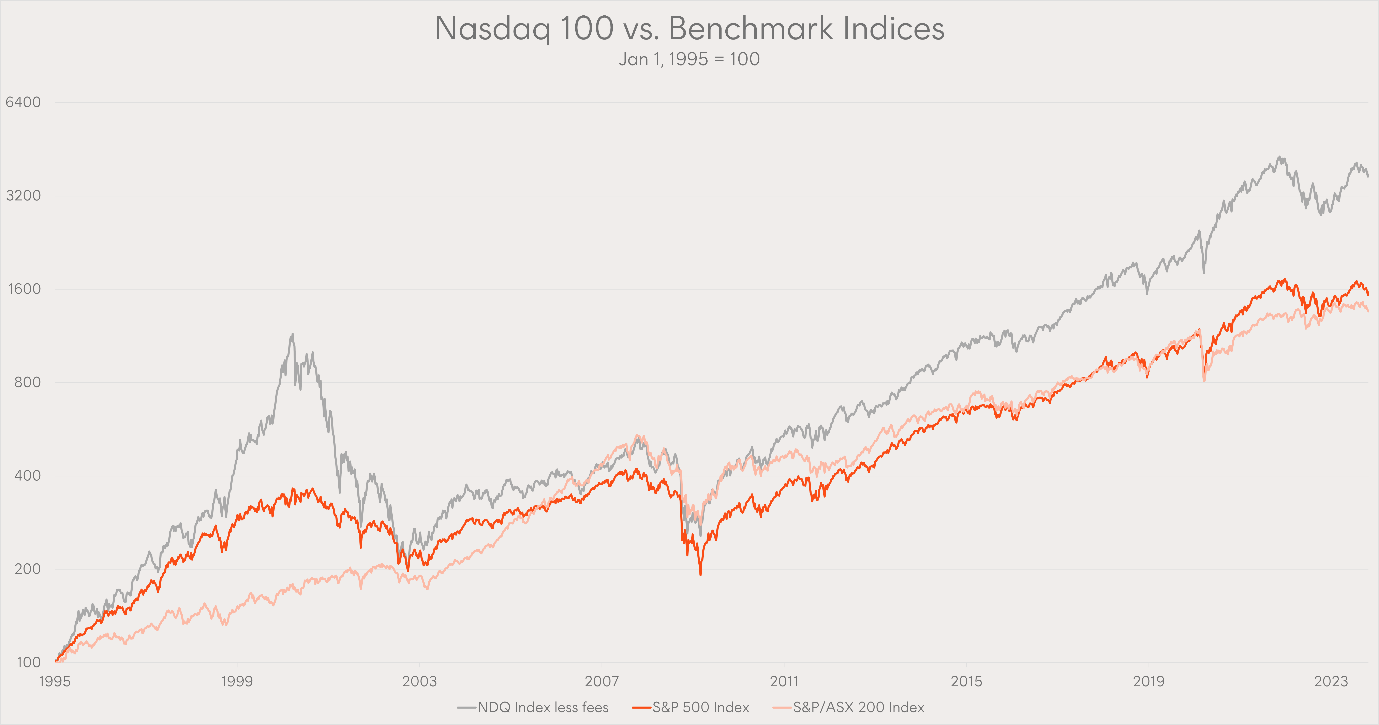

The Nasdaq 100 index, a prominent benchmark for technology and growth-oriented companies, has recently shown signs of lagging compared to the Russell 2000 index, which is reaching new heights. This shift indicates a clear trend of capital flows moving towards small and mid-cap stocks, as investors display an expanding risk appetite. As market sentiment evolves, speculative assets like BTC and ETH are expected to capture the attention of traders looking to capitalize on potential gains. Such dynamics within the market signal a pivotal moment for both institutional and retail investors. Understanding the implications of these indexes and their performance could be crucial for making informed investment decisions.

The Nasdaq 100 index, often viewed as a barometer for technology stocks, is experiencing a period of underperformance in contrast to the Russell 2000 index, which encompasses a broader range of smaller-cap companies. With funds increasingly gravitating towards smaller enterprises, the current market landscape is a reflection of shifting investor preferences and an appetite for higher risk. Concurrently, cryptocurrencies like BTC and ETH are poised to capture significant capital inflows, making them attractive options for those pursuing aggressive investment strategies. As the market adjusts, the interplay between these indexes and the overall risk environment becomes essential for understanding future trends. Recognizing these factors will empower investors to navigate the complexities of today’s market dynamics.
Understanding the Nasdaq 100 Index’s Current Performance
The Nasdaq 100 index, known for its heavy allocation towards technology and growth-oriented stocks, is currently experiencing underperformance compared to its counterpart, the Russell 2000 index. Analysts are observing a shift in investor sentiment, where risk appetite appears to be expanding as evidenced by capital flowing towards small and mid-cap stocks. This trend indicates that investors are increasingly favoring diversified portfolios that include riskier assets, potentially in anticipation of future economic growth.
Recent market movements suggest that while the Nasdaq 100 index has historically been a front-runner, it may be losing some of its luster. The Russell 2000 index, which focuses on small-cap companies, is making remarkable gains, reflecting a robust performance for sectors that thrive in an expanding economy. This divergence could signal a significant transition for investors, as capital inflows may seek more aggressive growth opportunities found within capital markets.
Analyzing the Rise of the Russell 2000 Index
The Russell 2000 index has been hitting new highs lately, showcasing the strength and resiliency of small and mid-cap stocks. This shift highlights the growing investor confidence in the economic recovery and suggests that market participants are willing to embrace higher risk profiles. As capital flows into these smaller companies, which tend to be more vulnerable to market fluctuations, investors are betting on their potential for explosive growth.
With its focus on domestic companies, the Russell 2000 index has become a barometer for economic strength, especially as larger stocks in the Nasdaq 100 index falter. The increase in small-cap stocks often correlates with increased consumer spending and investment in local businesses. Market analysts suggest that this trend reflects an expanding risk appetite among investors who are eager to capitalize on the potential for higher returns offered by the small-cap sector.
The Impact of Capital Inflows on Market Dynamics
Capital inflows play a vital role in shaping market dynamics, particularly as investors look to benefit from the current favorable economic conditions. As capital starts to flow into small and mid-cap stocks, investors are signaling a shift in strategy, driven by an increasing risk appetite. This influx not only energizes sectors represented in the Russell 2000 index but also reflects a broader trend of diversification within investment portfolios.
Moreover, as funds navigate the interplay between risk and return, they are increasingly attracted to the high-beta nature of assets like BTC and ETH. These cryptocurrencies have shown resilience in the face of market volatility, drawing in capital as investors seek alternative avenues for growth. The converging interest in both equities, particularly small-caps, and high-risk assets like digital currencies underscores the ongoing evolution of investor behavior in response to broader economic indicators.
Exploring Investor Sentiment on High-Beta Assets
Investor sentiment around high-beta assets, such as Bitcoin (BTC) and Ethereum (ETH), reveals a nuanced understanding of risk appetite in today’s market. As institutional and retail investors alike embrace volatility, these cryptocurrencies have become compelling additions to investment strategies focused on maximizing returns through high-risk profiles. The recent surge in interest for BTC and ETH can often be linked to broader capital inflows into the market, indicating that investors are not only looking for safety but are also willing to capitalize on trends.
This growing enthusiasm for high-beta assets highlights a fundamental shift in investment strategies, with many traders now prioritizing potential upside over traditional safeguards. As the Nasdaq 100 index lags behind, the emphasis on high-growth options like cryptocurrencies may be seen as a strategic pivot towards maximizing capital gains, even amidst economic uncertainties. Investors are increasingly aware that BTC and ETH serve as high-risk, high-reward instruments that complement a well-rounded portfolio, particularly when paired with growth-focused assets from indexes like the Russell 2000.
The Role of Small and Mid-Cap Stocks in Economic Recovery
Small and mid-cap stocks are often considered the backbone of economic recovery, as they routinely demonstrate sensitivity to shifts in consumer sentiment and business investment. As major indices like the Nasdaq 100 index face challenges in keeping pace with market changes, the Russell 2000 index serves as a crucial indicator of thriving sectors poised for growth. Investors are turning their attention to these segments, suggesting that the market recognizes the potential for explosive growth coming from small-cap companies.
The capital inflows into small and mid-cap stocks signal a robust recovery phase, as these companies are better equipped to adapt to evolving market conditions. This adaptability is essential in environments seeking diversification away from traditional large-cap growth indices. With an increased risk appetite, investors are invested in small and mid-cap companies, anticipating heightened returns as these markets flourish and contribute to the overall economic landscape.
Navigating Market Shifts Post-COVID
The COVID-19 pandemic has profoundly reshaped market dynamics, leading to significant changes in investment strategies. As market participants recalibrate their portfolios in response to liquidity, the performance of the Nasdaq 100 index has often come under scrutiny. The shift towards the Russell 2000 index and the appetite for smaller stocks reflects a broader evolution in how risk is perceived in light of economic recovery prospects.
In this post-COVID landscape, investors are now more inclined towards sectors that promise quicker rebounds, such as small-cap stocks in the Russell 2000 index. The increased capital inflows indicate a resurgent confidence that prompts a pivot away from traditional large-cap growth stocks represented in the Nasdaq 100 index. As the market recalibrates, the emphasis on smaller companies suggests a strategic forward-looking approach as confidence in economic resilience builds.
Cryptocurrency as a High-Risk Investment Option
The growing interest in cryptocurrencies, like Bitcoin and Ethereum, has captivated investors looking for high-risk, high-reward investment opportunities. The volatility inherent in these digital assets often attracts capital inflows during periods of heightened risk appetite, reinforcing their prominence among equities and traditional asset classes. As investors seek alternative pathways for capital growth, cryptocurrencies have emerged as key players in this evolving market landscape.
As the Nasdaq 100 index continues to face challenges, the dynamics involving high-beta assets underscore the diversification strategies investors are progressively adopting. BTC and ETH exhibit potential correlated movements with small-cap sectors, further solidifying their role within broader investment strategies. This interconnection positions cryptocurrency as not just a speculative venture, but as a significant component in modern portfolio allocation.
Capital Rotation: From Large Caps to Small Caps
The phenomenon of capital rotation in financial markets is essential for understanding current trends. With the Nasdaq 100 index lagging, many investors are reallocating funds towards small and mid-cap stocks, encouraged by the consistent performance of the Russell 2000 index. This shift showcases how market forces dictate investment decisions as investors seek to balance portfolios in response to changing economic climates.
Investors demonstrate a keen awareness of market cycles, where capital flows from large-cap to small-cap stocks can reflect an optimistic outlook on economic growth. As risk appetites expand, capital rotation suggests that market participants are positioning themselves in anticipation of greater returns associated with small and mid-cap equities, which have historically outperformed during economic recoveries. In doing so, investors embrace a strategic allocation aimed at mitigating risks while tapping into growth opportunities.
Emerging Trends in Risk Appetite During Market Recoveries
Emerging trends in risk appetite during market recoveries reveal a landscape where investors are reevaluating their strategies. The current performance disparity between the Nasdaq 100 index and the Russell 2000 index signifies a broader acceptance of risk in exchange for higher potential returns. As markets recover, the gradual shift to small and mid-cap stocks underscores a desire to capture growth in sectors that can capitalize on economic improvements.
This growing willingness to embrace risk is also reflected in the increased capital inflows towards high-beta assets such as cryptocurrencies. The pivot towards BTC and ETH demonstrates that as investor confidence rises, so too does the appetite for assets classified as high-risk, high-reward. Consequently, as capital flows redirect from traditional safe havens to emerging opportunities, the financial landscape continues to evolve, unlocking new frontiers for savvy investors.
Frequently Asked Questions
What factors are currently affecting the Nasdaq 100 index compared to the Russell 2000 index?
The Nasdaq 100 index is currently experiencing lagging performance relative to the Russell 2000 index, which has been hitting new highs. This divergence is largely due to a shift in investor focus towards small and mid-cap stocks, indicating increased risk appetite. Capital inflows are favoring these segments, suggesting a market rotation that may further influence the performance of the Nasdaq 100.
How does investor risk appetite impact the Nasdaq 100 index?
Investor risk appetite significantly impacts the Nasdaq 100 index as it reflects how willing investors are to take on riskier investments. When the appetite is high, capital inflows often lead to strong performance in indexes like the Nasdaq 100. However, current trends show a preference for small and mid-cap stocks, as seen with the Russell 2000 index, which indicates a measured risk approach that leaves the Nasdaq 100 lagging.
Are cryptocurrencies like BTC and ETH influencing the Nasdaq 100 index?
Yes, cryptocurrencies such as BTC and ETH, which are considered high-beta risk assets, can influence the Nasdaq 100 index. As funds rotate towards these digital assets, they are often seen as part of broader capital inflows that can affect market dynamics. The current market environment shows an increasing risk appetite, suggesting that movements in BTC and ETH may also impact investor sentiment towards the Nasdaq 100.
What are the implications of capital inflows on the Nasdaq 100 index?
Capital inflows generally lead to upward pressure on the Nasdaq 100 index as more money enters the market, boosting stock prices. However, recent trends indicate that capital is being redirected towards small and mid-cap stocks within the Russell 2000 index. This shift can create headwinds for the Nasdaq 100, particularly if the focus remains on companies with lower capitalizations.
Why is the Russell 2000 index outperforming the Nasdaq 100 index right now?
The Russell 2000 index is outperforming the Nasdaq 100 index due to a clear rotation of investor interest towards small and mid-cap stocks. This may be driven by a burgeoning risk appetite, as investors seek higher growth potential in smaller companies amidst a backdrop of ongoing capital inflows, which are currently favoring these stocks over the larger tech-heavy corporations represented in the Nasdaq 100.
| Key Point | Details |
|---|---|
| Insider Whale Statement | Garrett Jin posted insights on the X platform about market trends. |
| Nasdaq 100 Index Performance | Currently lagging behind other indices, indicating weaker performance. |
| Russell 2000 Index Performance | Continuing to reach new highs, attracting investor interest. |
| Funds Rotation | Funds are rotating into small and mid-cap stocks. |
| Investor Sentiment | Indicates an expanding risk appetite among investors. |
| Targets for Capital Inflows | BTC and ETH are considered the next targets for investment. |
Summary
The Nasdaq 100 index currently faces challenges as it lags behind its counterparts, particularly the Russell 2000 index, which is witnessing ongoing highs. This trend suggests a significant shift where investors are favoring small and mid-cap stocks, signifying an increased risk appetite in the market. As this rotation occurs, high-beta assets like Bitcoin (BTC) and Ethereum (ETH) are poised to capture the next wave of capital inflows, making them attractive investment options in the evolving market landscape.
Related: More from Market Analysis | PayPal USD Powers New PYUSDx App | Pantera and Franklin Test Sentient AI Agent