

Rupee on edge as RBI seen cutting rates; policymakers prioritize orderly FX over defending levels

Traders are braced for the Reserve Bank of India’s policy decision at 04:30 GMT (23:30 ET), with markets leaning toward a rate cut as the rupee hovers near record lows and officials signal greater tolerance for currency weakness to conserve reserves.
Decision preview: growth support versus FX stability
India’s backdrop—firm growth, easing headline inflation, and elevated geopolitical risks—has tilted expectations toward a modest policy easing to safeguard momentum. The RBI’s recent stance suggests a shift away from defending any single USD/INR level, focusing instead on curbing disorderly moves and speculative pressure, according to people familiar with the central bank’s thinking cited in media reports. That approach implies a wider trading band but steadier liquidity management.
External pressures keep depreciation bias intact
Portfolio outflows, softer foreign direct investment and slower trade receipts have tightened hard-currency supply just as India’s oil import bill remains elevated. Foreign investors are estimated to have sold about $17 billion of Indian equities year-to-date, while uncertainty around India–US trade dynamics and index-inclusion prospects has tempered fresh inflows. Even with US yields easing, relief for the rupee may be limited unless the global backdrop turns decisively more risk-on.
Market snapshot
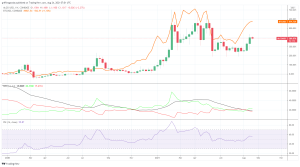
- USD/INR is among Asia’s weakest performers in 2025, down roughly 5.5% year-to-date.
- The pair briefly tested 89.89 on Thursday amid chatter of RBI dollar sales and a softer greenback.
- RBI is seen prioritizing smooth FX conditions over defending a line in the sand.
- Foreign investors have pulled about $17 billion from Indian equities this year; FDI and offshore fundraising have slowed.
- Rupee weakness has diluted foreign-currency returns even as MSCI India is up about 7% year-to-date.
FX strategy: smoothing, not shielding
By leaning toward volatility control rather than a fixed defense, the RBI preserves firepower for true stress episodes. That can reduce near-term intervention risk but leaves USD/INR sensitive to daily flow imbalances, the non-deliverable forwards (NDF) curve, and oil price swings. Traders are watching for any tweaks to liquidity tools, forward-book activity, or guidance on external balances.
What to watch in the policy
– Forward guidance on inflation and growth projections and how they shape the policy path into 2026.
– Any language on FX market functioning, reserve use, and intervention cadence.
– Liquidity operations and bond-market signaling, which can influence term premia and bank funding costs.
– Sensitivity to global conditions: US Treasury yields, oil prices, and regional risk appetite.
Trading implications
– A rate cut with a flexible-FX message could leave USD/INR biased to probe the 90.00 handle, especially if oil stays firm and outflows persist.
– A surprise pause paired with a stronger FX-stability signal could trigger a knee-jerk rupee bounce, but sustainability hinges on flows.
– Options markets may retain a volatility premium into the announcement; corporates are likely to favor layered hedges and partial option cover to manage gap risk.
FAQ
When is the RBI decision and what’s expected?
The policy outcome is due at 04:30 GMT (23:30 ET). Markets broadly expect a rate cut to support growth, alongside messaging that emphasizes orderly FX conditions rather than a hard defense of any USD/INR level.
Why is the rupee under pressure?
Net equity outflows, softer FDI and trade receipts, and elevated oil import costs have tightened dollar supply. Uncertainty around India–US trade relations and index-inclusion timelines has also curbed appetite for fresh inflows.
Will the RBI defend a specific USD/INR level?
Recent signaling suggests the RBI aims to smooth volatility and prevent disorderly moves, not defend a fixed line. That approach conserves reserves for stress episodes but allows the currency to reflect fundamentals.
What would a rate cut mean for USD/INR?
A cut typically eases carry support for the rupee and can nudge USD/INR higher, especially if global risk sentiment is fragile. Any dovish surprise from the Fed or a durable drop in US yields could offset some of that pressure.
How should traders and corporates manage FX risk now?
Consider staggered hedges and selective options to navigate potential post-decision gaps. Watch RBI liquidity signals, the NDF basis, and oil prices—key drivers of near-term rupee direction. For equity investors, rupee weakness can erode foreign-currency returns even when local indices rise, a factor BPayNews will continue to monitor.