
SoftBank’s Son in talks on Trump-branded AI manufacturing parks across U.S., putting USD/JPY flows in focus

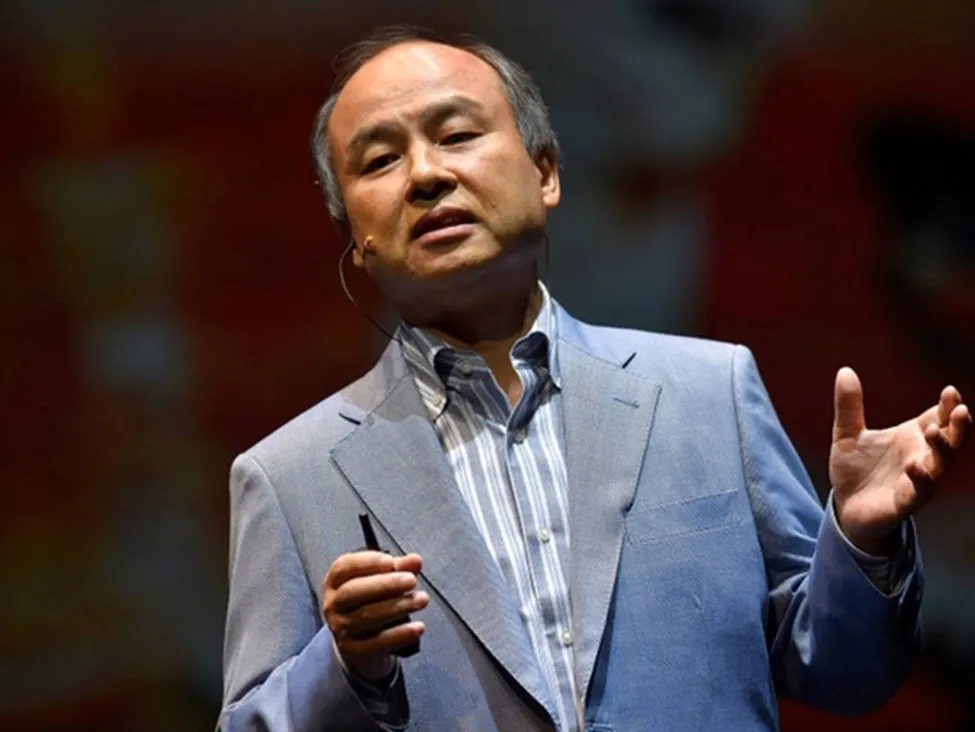
SoftBank founder Masayoshi Son is working with the White House and the U.S. Commerce Department on a sweeping plan to build Trump-branded technology manufacturing parks on federal land, a potential multi-hundred-billion-dollar industrial push that could start channeling funds as early as 2026, according to people familiar with the discussions.
Why this matters for markets
The plan would target core AI infrastructure—fiber-optic networks, data-center hardware and eventually AI chips—leveraging Japanese engineering expertise while leaving ultimate ownership with the U.S. federal government. For FX and rates traders, any large-scale, Japan-to-U.S. capital deployment could influence USD/JPY via fund flows and hedging demand, while re-wiring parts of the global semiconductor and infrastructure supply chain.
What’s being proposed
– The evolving framework envisions a network of factory clusters built largely on federal land.
– Funding would be drawn from money pledged by the Japanese government under a recent trade agreement, with Japanese tech firms providing engineering and manufacturing know-how.
– The facilities would produce high-priority components for AI infrastructure, with a roadmap that extends to AI chip manufacturing.
– President Trump has endorsed the concept in principle, people familiar said. The Wall Street Journal first reported the talks.
At a glance
- Son’s plan could mobilize “hundreds of billions” into U.S.-based tech manufacturing parks.
- Funding may begin flowing in 2026, contingent on final approvals and program design.
- Japanese technical leadership; U.S. federal government would ultimately own the facilities.
- Targets include fiber-optic cable, data-center equipment, and eventual AI chips.
- Potential implications for USD/JPY, U.S. yields, Japanese equities, and the global AI supply chain.
FX, rates and equity implications
– USD/JPY: Large outward flows from Japan to finance U.S. capex typically support the dollar. However, corporate hedging (e.g., selling USD forward) could temper spot gains. The balance will hinge on project structuring and hedging tenor. BOJ normalization remains the wild card: any sustained rise in JGB yields would narrow rate differentials, lending medium-term support to the yen despite near-term outward FDI pressure.
– U.S. Treasuries: A long-dated, government-linked industrial buildout could encourage issuance and public-private partnerships, potentially nudging term premia higher. At the same time, if Japanese official or quasi-official entities increase USD asset accumulation as part of funding mechanics, that could cushion long-end volatility.
– Equities: U.S. industrials tied to data-center buildouts (power, HVAC, optical components) may benefit from capex visibility. In Japan, supplier ecosystems—optics, advanced materials, semiconductor equipment—could see order pipelines firm. SoftBank sentiment may improve on the perception of strategic leverage in AI infrastructure, though execution risk is material.
– Semiconductors: A move to localize AI chip capacity in the U.S. would complement the CHIPS Act, diversify supply away from Asia-centric nodes, and potentially compress delivery timelines for hyperscalers—though workforce, power availability and permitting remain critical bottlenecks.
Policy and macro context
The proposal dovetails with Washington’s industrial policy to onshore strategic technologies, while reinforcing U.S.-Japan security and economic ties. If realized, it could mark one of the most ambitious bilateral industrial efforts in decades, blending public land, foreign funding, and domestic ownership. For global investors, the signal is clear: AI infrastructure is shifting from a purely private capex story to a state-backed strategic build—an evolution that BPayNews has flagged as supportive for long-cycle capital goods.
Timeline and risks
Funding could begin in 2026, but the timeline depends on interagency approvals, appropriations mechanics, environmental reviews, and procurement design. Execution risks include cost inflation for power and construction, supply of skilled labor, and potential legal or political challenges associated with branding, land use and governance.
FAQ
What exactly is being proposed?
A network of U.S.-based technology manufacturing parks, reportedly with Trump branding, focused on AI infrastructure components such as fiber-optic cable, data-center hardware and, in later phases, AI chips. The parks would be built largely on federal land.
Who would fund and operate the parks?
Funding would draw on money pledged by the Japanese government under a recent trade agreement. Japanese technology companies would bring engineering and manufacturing know-how. Ownership of the completed facilities would ultimately rest with the U.S. federal government.
When could capital start flowing?
As early as 2026, subject to final approvals, program design, and permitting.
How could this affect USD/JPY?
Net outward investment from Japan into U.S. projects tends to support the dollar. However, corporate hedges may offset some spot moves. BOJ policy and U.S.-Japan rate differentials will remain decisive drivers over the medium term.
Which sectors stand to benefit?
Optical components, advanced materials, semiconductor equipment, power and thermal management for data centers, and construction-engineering services. U.S. industrials tied to AI infrastructure and select Japanese suppliers could see stronger order visibility.
Is this plan finalized?
No. It is an evolving proposal. People familiar with the talks say President Trump has endorsed it in principle, but details on governance, funding mechanics and site selection are still being worked out.
How does this fit with U.S. industrial policy?
It complements existing efforts to onshore strategic technologies, including the CHIPS Act, by adding a bilateral funding channel and federal land usage to accelerate large-scale AI infrastructure manufacturing within the U.S.