
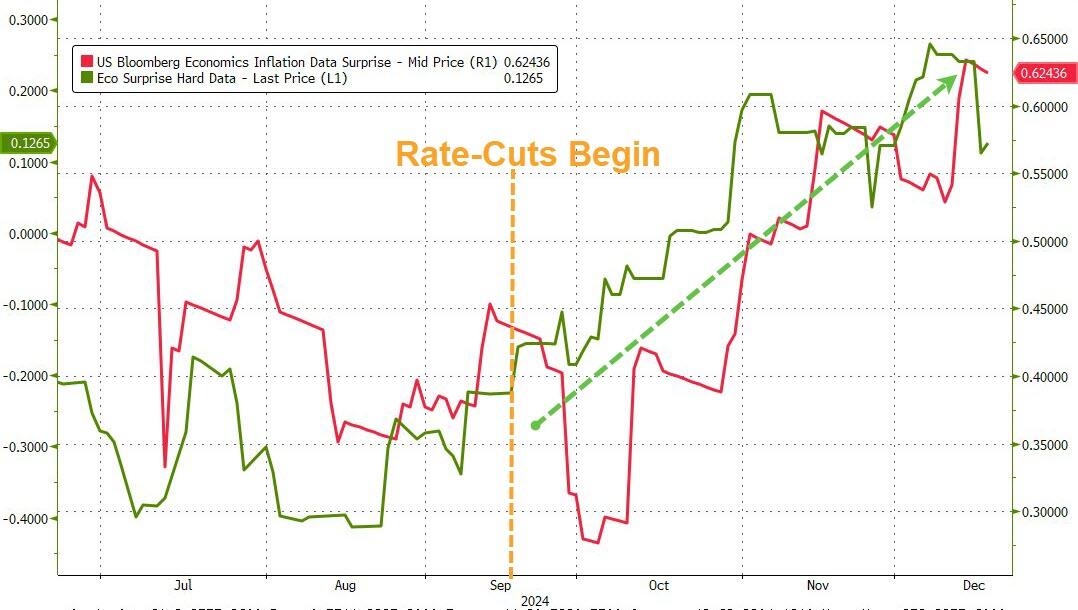

In the current climate of economic uncertainty, the concept of a hawkish rate cut is gaining traction as experts debate the Federal Reserve’s strategies. Lael Brainard, the former Vice Chair of the Fed, asserts that a hawkish rate cut could be a necessary maneuver in light of disappointing employment data and the relentless pressure of inflation. With the Federal Reserve’s upcoming rate decision looming, Brainard suggests that without complete government data, insights from alternative sources may guide policymakers. She emphasizes the urgency of addressing inflation, pointing out that this remains a primary concern for American households. As the Fed aims to refine its approach to inflation reduction while monitoring economic indicators, the implications of a hawkish rate cut could shape the financial landscape significantly in the coming months.
As discussions surrounding interest rate adjustments heat up, many analysts are exploring the necessity and potential impact of an assertive approach to rate reductions. The forthcoming Federal Open Market Committee meeting is pivotal, especially as insights from figures like Lael Brainard indicate a preference for decisive action in response to recent employment trends. In navigating these economic waters, the importance of reviewing diverse economic data cannot be overstated, as it may illuminate paths towards stabilizing inflation rates. Given the prevailing challenges posed by job market conditions, stakeholders are increasingly focused on how the Fed’s decisions will influence overall economic health. The dialogue around this proactive stance on rate cuts, often framed within a hawkish context, reflects a broader strategy aimed at ensuring lasting financial stability.
The Implications of a Hawkish Rate Cut
A hawkish rate cut indicates a nuanced approach by the Federal Reserve to balance inflation control with labor market stability. Former Vice Chair Lael Brainard emphasizes the need for a strategic cut that curbs rising prices while signaling the Fed’s commitment to employment growth. Analysts expect this approach to potentially bolster consumer confidence, leading to increased spending despite the inflation concerns that have plagued the economy. By employing a hawkish stance, the Fed could navigate through turbulent economic waters, ensuring that any interest rate reductions do not spiral into worsening job losses.
Moreover, Brainard’s perspective highlights the importance of leaning on alternative employment data, as traditional government reports may not capture the current landscape accurately. The reliance on non-federal sources like ADP signifies a proactive strategy to understand job market dynamics amidst a backdrop of incomplete government data. This hawkish rate cut strategy aims to strike a balance between encouraging economic activity and maintaining inflation targets, essential for long-term economic health.
The Role of Employment Data in Rate Decisions
Employment data plays a crucial role in shaping decisions made by the Federal Reserve regarding interest rates. Lael Brainard advocates for the integration of alternative employment metrics, such as those released by ADP and Revelio Labs, into the Fed’s considerations. This inclusion is particularly relevant given the discrepancies often found in government labor statistics which may lag behind real-time economic developments. By evaluating a wider array of job market insights, the Federal Reserve can make more informed rate decisions that respond more accurately to current conditions.
In light of trends indicating a decline in U.S. jobs, the importance of trustworthy and timely employment data cannot be overstated. Accurate assessments guide the Fed in determining whether to implement a hawkish rate cut, which would aim to stabilize the job market while keeping inflation targets in check. As inflation continues to be a pressing issue for Americans, the Fed’s actions based on comprehensive employment insights can have profound effects on economic sentiment and performance.
Inflation Reduction Strategies by the Federal Reserve
The Federal Reserve’s ongoing battle against inflation is greatly influenced by its rate decisions, with the goal of reducing inflation levels to a target of 2%. Lael Brainard’s hawkish rate cut proposition reflects this commitment and highlights the Fed’s strategy in responding to economic challenges. By implementing a rate cut while maintaining a firm stance on inflation reduction, the Fed aims to provide stimulus to the economy, without allowing price growth to spiral out of control. This dual approach is vital for fostering sustainable economic growth and stability.
In an environment where inflation remains a concerning issue for consumers, the Fed’s actions will be closely monitored. The implications of such a hawkish rate cut extend beyond immediate economic relief, potentially paving the way for future policy adjustments. This strategy is intended not only to impact short-term economic conditions but also to restore long-term price stability and confidence in the economy, which ultimately promotes health across various sectors.
Lael Brainard’s Influence on Federal Reserve Rate Policies
As a former Vice Chair, Lael Brainard has had a significant impact on the Federal Reserve’s discourse surrounding monetary policy. Her advocacy for hawkish rate cuts signals a potential shift in how the Fed addresses inflation and employment challenges. Brainard’s insights into economic conditions, particularly her emphasis on integrating non-government data sources, showcases her proactive approach in navigating rate decisions amidst uncertainty. This influence on the Federal Reserve’s policies underlines the importance of diverse perspectives in economic governance.
The ability to recognize trends in employment data and its implications for inflation allows decision-makers like Brainard to construct policies that are responsive to real-world conditions. Her supportive stance towards a hawkish rate cut exemplifies a willingness to take bold steps in an attempt to stabilize the economy. As the Federal Reserve continues to confront evolving economic landscapes, insights from leaders like Brainard will be crucial for effective monetary policy.
The FOMC Meeting’s Significance in Economic Forecasting
The upcoming FOMC meeting is critical for determining the direction of U.S. monetary policy. With inflation concerns prevalent, the meeting will likely address the potential implications of a hawkish rate cut put forth by figures such as Lael Brainard. The outcomes of this meeting are closely watched by market analysts and economic stakeholders, who seek clarity on how the Federal Reserve plans to approach interest rates in the context of labor market performance. This meeting represents an opportunity to recalibrate strategies in response to ongoing economic challenges.
A hawkish rate cut decision at the FOMC meeting could signify the Fed’s readiness to intervene in an increasingly fragile job market while keeping inflation under control. As the discussions unfold, stakeholders will assess the rationale behind any adjustments to the rate structure and how these changes might influence consumer spending, investment strategies, and overall economic momentum. The insights gained from this vital meeting can shape the economic landscape, informing future policy adaptations.
Economic Data’s Influence on Rate Decisions
Accurate economic data is fundamental for the Federal Reserve when assessing appropriate interest rates. The potential hawkish rate cut proposed by Lael Brainard hinges on an accurate interpretation of diverse data, including employment figures from sources outside of traditional government reporting. With economic indicators constantly evolving, there is a critical need for the Fed to adopt a broad perspective, incorporating various data sets to ensure that its decisions are substantiated by the latest information. This comprehensive approach allows for a more nuanced understanding of market conditions.
As inflation continues to be a pressing concern, the relationship between economic data and the Fed’s rate decisions cannot be understated. Real-time data from non-governmental organizations might reveal insights into job market trends that may not yet be reflected in official reports. This correlation underscores the importance of agile responses to emerging economic conditions, which are vital for maintaining equilibrium between inflation control and employment stability.
Challenges in Interpreting Incomplete Government Data
One of the significant challenges facing the Federal Reserve during rate decision discussions is navigating incomplete government data. Former Fed Vice Chair Lael Brainard highlights this issue, expressing her inclination to seek out alternative employment data as a more reliable measure of economic health. This approach illustrates a proactive effort to mitigate the risks of relying solely on potentially outdated governmental statistics, especially when considering the hawkish rate cut she proposes.
In a rapidly changing economic environment, the implications of basing policy decisions on incomplete data can be profound. The reliance on supplementary employment information from sources like ADP is essential to understanding the realities of job losses and economic contraction. This awareness allows the Fed to craft a monetary policy that appropriately addresses both inflation and employment challenges, ensuring a balanced approach in turbulent times.
Navigating Economic Uncertainty with Strategic Rate Cuts
In times of economic uncertainty, the Federal Reserve faces the challenge of devising rate cuts that stabilize the economy without exacerbating inflation. Lael Brainard’s advocacy for a hawkish rate cut represents an attempt to balance these competing priorities effectively. By providing fiscal stimulus through reduced interest rates while keeping an eye on inflation targets, the Fed is positioned to promote economic resilience in the face of adverse conditions. This strategy can help mitigate potential shocks to the labor market while encouraging consumer spending.
The successful navigation of such economic turbulence relies on well-informed decision-making, influenced by timely and relevant data. As the Fed considers introducing a hawkish rate cut, it becomes imperative to closely monitor employment data and inflation metrics. Strategic rate cuts are not merely reactive measures; they are integral to fostering a sustainable economic environment, promoting confidence among consumers and investors alike during unpredictable times.
The Future of Federal Reserve Policy Amid Inflationary Pressures
Looking ahead, the Federal Reserve’s policy framework must adapt to ongoing inflationary pressures while preserving job growth. The hawkish rate cut proposed by Lael Brainard embodies a forward-thinking approach, acknowledging the interconnected nature of inflation and employment in formulating monetary policy. A commitment to a deliberate reduction of inflation to 2% within a specified timeframe signals a disciplined strategy that prioritizes long-term stability over short-term fixes.
As stakeholders assess the Fed’s approach, they will observe how this hawkish strategy translates into broader economic outcomes. The intertwined challenges of combating inflation and ensuring robust job growth demand nuanced policies that account for real-time economic conditions. Adopting a dual focus on inflation control and employment data will be pivotal for the Fed’s continued effectiveness and credibility in guiding the economy through uncertain times.
Frequently Asked Questions
What is a hawkish rate cut and how does it relate to the Federal Reserve’s rate decision?
A hawkish rate cut refers to a situation where the Federal Reserve reduces interest rates while maintaining a strong commitment to controlling inflation. This approach, advocated by figures like Lael Brainard, balances the need for economic stimulus with the reassurance that inflation targets will not be compromised.
How does Lael Brainard’s perspective influence the hawkish rate cut discussion?
Lael Brainard’s insights are crucial in the discussion of hawkish rate cuts as she emphasizes the importance of employing employment data from non-government sources to inform rate decisions. Her viewpoint suggests that even in the absence of complete government data, a hawkish rate cut could counteract potential job losses while targeting inflation reduction.
What role does inflation reduction play in the decision for a hawkish rate cut?
Inflation reduction is central to the concept of a hawkish rate cut. It involves lowering rates to support economic growth without triggering excessive inflation. The Federal Reserve, as highlighted by officials like Lael Brainard, views maintaining a 2% inflation target as essential, thus guiding their rate decisions closely connected to employment data and economic indicators.
Why might the Federal Reserve opt for a hawkish rate cut at this time?
The Federal Reserve may consider a hawkish rate cut in response to fluctuating employment data and inflation concerns. As pointed out by former Vice Chair Lael Brainard, reducing rates could help prevent a downward economic spiral while ensuring that the Fed remains committed to its long-term inflation targets.
What indicators are important for assessing the need for a hawkish rate cut?
Key indicators for evaluating the need for a hawkish rate cut include employment data, inflation rates, and economic forecasts. Former Fed Vice Chair Lael Brainard has highlighted the use of reliable non-government employment statistics and inflation trends as pivotal to making informed rate decisions.
How does employment data impact decisions regarding hawkish rate cuts by the Federal Reserve?
Employment data is critical in guiding Federal Reserve decisions on hawkish rate cuts, as it reflects economic health. When employment declines, as shown by non-government sources, it can prompt the Fed to lower rates to stimulate growth, while still adhering to their mandate of controlling inflation rates, a balancing act that former Chair Lael Brainard emphasizes.
What are the potential outcomes of implementing a hawkish rate cut?
Implementing a hawkish rate cut can lead to short-term economic stimulation by lowering borrowing costs, which may boost consumer spending and investment. However, it reinforces the Fed’s commitment to controlling inflation, ensuring the economy does not overheat in the long run, as noted by leaders like Lael Brainard.
| Key Point | Details |
|---|---|
| FOMC Meeting | The Federal Reserve is preparing for its upcoming FOMC meeting. |
| Lael Brainard’s Position | Former Fed Vice Chair Lael Brainard supports a hawkish rate cut if she were part of the rate decision. |
| Use of Non-Government Data | Brainard suggests relying on employment data from sources like ADP and Revelio Labs due to incomplete government data. |
| Concerns About Layoffs | The Federal Reserve aims to avoid a downward economic spiral that could lead to increased layoffs. |
| Inflation Goals | Brainard emphasizes the need to control inflation, targeting a reduction to 2% in the next two years. |
| Conclusion | The focus remains on managing inflation while considering job market dynamics. |
Summary
A hawkish rate cut is crucial in the current economic climate where inflation remains a significant concern for Americans. As articulated by former Fed Vice Chair Lael Brainard, the reliance on alternative employment data and the commitment to lowering inflation while potentially reducing rates could stabilize the economy without risking higher unemployment. The path forward involves balancing these challenges to achieve a healthier economic status.
Related: More from Market Analysis | Earnings season is wrapping up with a mixed bag of results across | Polymarket Bet Fails to Catch Insider Traders

