


Ethereum’s transaction volume has surged dramatically, reaching a staggering 2.2 million daily transactions as reported by Odaily Planet Daily. This remarkable achievement indicates a robust resurgence in Layer 1 network usage, as more users engage with the Ethereum mainnet. With average transaction fees falling to just $0.17, the platform is becoming more accessible, encouraging even greater participation. Furthermore, the recent Pectra and Fusaka upgrades have played essential roles in enhancing Ethereum’s infrastructure, contributing to this increase in activity. Developers are increasingly leveraging Ethereum’s smart contracts, reflected in the historical high of 8.7 million newly deployed contracts, showcasing the potential and efficiency of the evolving network.

Ethereum’s rising daily activity highlights a significant milestone, with a remarkable volume of transactions occurring on its primary blockchain layer. This tremendous increase in engagement suggests a healthy revival of interest in Ethereum, supported by advancements in its network capabilities and improvements in transaction costs. As Ethereum continues to evolve, the influence of its recent enhancements, including the L1 network upgrades, cannot be overstated. Moreover, as users increasingly discover the benefits of utilizing Ethereum’s smart contracts, the landscape of decentralized applications becomes even more promising. The interplay of various dynamics such as lower Ethereum fees and innovative upgrades further solidifies Ethereum as a leading force in the blockchain ecosystem.
Ethereum’s Record Daily Transaction Volume
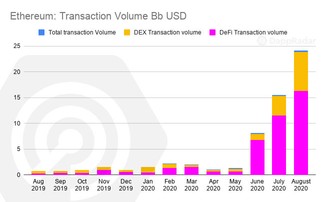
Ethereum has reached a remarkable milestone with its daily transaction volume hitting 2.2 million transactions. This surge in activity showcases the increasing interest from users returning to the Layer 1 main chain. The significant uptick in transaction volumes indicates not just a rebound in user engagement but also a robust demand for Ethereum’s capabilities as a preferred platform for decentralized applications. As the ecosystem continues to grow, this impressive record underlines Ethereum’s tenacity as a leading smart contract platform.
Moreover, with the average transaction fee remarkably lowered to approximately $0.17, Ethereum proves its efficiency in handling increased transaction loads while making it financially feasible for users. The drop from previous high fees, exceeding $200 in mid-2022, exemplifies the effectiveness of recent protocol optimizations. As a result, Ethereum’s infrastructure is becoming increasingly accessible, paving the way for a broader adoption of DeFi and decentralized applications that rely heavily on Ethereum’s smart contracts.
Impact of Ethereum Upgrades on Network Efficiency
In the context of Ethereum’s transaction dynamics, two significant upgrades, Pectra and Fusaka, played a pivotal role in enhancing network efficiency. The Pectra upgrade instituted in May fortified validator mechanisms and introduced advanced staking features, making the network more robust. Similarly, the Fusaka upgrade that took place in December raised the gas limit significantly, which not only enhances processing capabilities but also increases data throughput on the network. Such upgrades are crucial as they allow Ethereum to accommodate a higher volume of transactions without compromising performance.
These continuous improvements in the Ethereum blockchain demonstrate a clear commitment to scalability, potentially serving as a settlement layer for various blockchain applications. As the average transaction fees continue to decline, developers are incentivized to create and deploy more smart contracts on Ethereum. This symbiotic relationship between network performance and developer activity will likely propel Ethereum further toward its goal of becoming the foundational layer for decentralized finance and applications.
The Role of Smart Contracts in Ethereum’s Growth
Smart contracts are integral to Ethereum’s functionality, driving its growth and adoption. With a staggering 8.7 million newly created and deployed smart contracts in Q4 2025 alone, the platform not only demonstrates its versatility but also its reliability as a base for innovative applications. These contracts enable developers to create decentralized applications that function autonomously, without the need for centralized control. This ability to code complex agreements directly on the blockchain has redefined transactional processes across various industries.
As the transaction volume climbs and transaction costs decrease, more developers are likely to leverage Ethereum’s smart contracts. This could open doors to an array of innovative solutions ranging from decentralized finance protocols to digital asset management systems. The efficiency gains through ongoing upgrades and reduced fees can further catalyze the development of technologically cutting-edge applications, fostering a rich ecosystem where innovation can thrive.
Analyzing Ethereum Fees in Relation to Transaction Volume
The interplay between transaction volume and Ethereum fees captures a significant narrative within the Ethereum ecosystem. With the average fee plummeting to just $0.17, it has become increasingly enticing for users to engage with the network at an unprecedented scale—reflected in the recent record of 2.2 million daily transactions. This correlation suggests that as Ethereum becomes more economical to use, user participation naturally rises, promoting an active and vibrant community.
Moreover, the reduction in transaction fees is a critical factor promoting user trust and encouraging experimentation with Ethereum’s ecosystem. As users no longer face prohibitive costs, many are more likely to explore decentralized finance options or engage with novel decentralized applications (dApps). This phenomenon can significantly contribute to the growing adoption of Ethereum and its ecosystem, which is vital for fostering long-term viability in the competitive landscape dominated by various blockchain networks.
Future Trends in Ethereum’s Layer 1 Network Usage
The resurgence of Layer 1 network usage is evident as Ethereum experiences unprecedented activity, evidenced by the soaring transaction volume. Analysts project that if this trend continues, we might witness Ethereum stepping into a golden age of blockchain utilization. As developers find ease and lower costs to run their dApps, Layer 1 could see further enhancements, making it a primary choice for developers who aim for robustness and reliability in their projects.
In the growing landscape of blockchain technology, Ethereum’s adaptability is critical. The effective integration of recent upgrades, reducing latency, and fees will likely empower Ethereum to capitalize on its position as a go-to platform for innovative solutions. With potential scaling solutions being explored, Ethereum’s future may not just revolve around maintaining high transaction volumes but also enhancing user experiences across the decentralized ecosystem.
The Significance of Ethereum’s Performance Metrics
Ethereum’s performance metrics, particularly daily transaction volumes and fees, play a crucial role in determining its competitiveness within the marketplace. The impressive daily transaction volume of 2.2 million reflects a thriving user base indicating confidence and utility in the Ethereum network. This foundational growth not only signifies the practical value of Ethereum but also casts it as a dependable layer for business and individual use alike.
Understanding these performance indicators is vital for stakeholders as they navigate the decentralized landscape. Lower fees, coupled with high transaction volumes, pressurize other blockchain networks to innovate accordingly. Ethereum’s ability to attract users by optimizing these metrics will define its sustainability in the evolving crypto ecosystem and cement its place in the history of cryptocurrencies.
Smart Contracts: The Future of Decentralized Applications on Ethereum
With the unprecedented rise in the deployment of smart contracts numbered in the millions, Ethereum is paving the way for the future of decentralized applications (dApps). Smart contracts empower developers to execute agreements autonomously without needing a mediating party, thus ensuring transparency and security. The record-high deployment rate of smart contracts is indicative of confidence in Ethereum’s architecture and its ability to handle extensive application frameworks.
The growth of smart contracts on Ethereum not only enhances its functionality but also diversifies usage scenarios across numerous sectors ranging from finance to supply chain management. This evolution in usage patterns reinforces Ethereum’s brand as the go-to platform for pioneering technological solutions in the digital age. The momentum surrounding smart contracts will likely fuel further innovations and integrations into various business practices.
Ethereum’s Ecosystem and User Engagement
The Ethereum ecosystem is increasingly becoming a hub for user engagement with its impressive transaction rates evidenced by the recent 2.2 million transactions in a single day. Such surges indicate users are finding genuine value in the diverse applications the platform supports. As the ecosystem expands with active participation from individuals and businesses, it creates a network effect that enhances overall ecosystem vitality and user experience.
As Ethereum continues to evolve, community-driven initiatives will play a critical role in shaping its future. The ability to craft and fine-tune user experiences can significantly impact how new users interact with the platform. Thus, cultivating a strong, engaged community is paramount for maintaining and growing the blockchain’s ecosystem in a competitive landscape.
Exploring the Advantages of Pectra and Fusaka Upgrades
The Pectra and Fusaka upgrades represent critical milestones in Ethereum’s evolution, bringing significant enhancements that bolster its capacity for transaction processing and scalability. By increasing the gas limit and enhancing validator mechanisms, these upgrades allow for smoother transaction flows while improving the overall user-experience. For new users entering the Ethereum ecosystem, these improvements reduce barriers to entry associated with excessive fees, thereby encouraging broader participation.
Moreover, these enhancements not only optimize network usage but also make long-term sustainable growth feasible by preparing for future scaling solutions like rollups or sharding. As Ethereum solidifies its infrastructure with ongoing technological advancements, it paves the way for substantial developments in decentralized finance and beyond, enhancing Ethereum’s role as a leading protocol in the crypto landscape.
Frequently Asked Questions
What is impacting Ethereum’s daily transaction volume recently?
Ethereum’s daily transaction volume has seen a significant surge, recently hitting a record of 2.2 million transactions. This increase can be attributed to major upgrades, like the Pectra and Fusaka upgrades, which enhanced network efficiency and scalability, making Layer 1 transactions more attractive to users.
How have Ethereum transaction fees changed with increased daily transactions?
Despite the record daily transaction volume of 2.2 million, Ethereum fees have remarkably decreased to an average of just $0.17. This is a stark contrast to the previous high of over $200 per transaction in May 2022, showcasing how ongoing upgrades are improving the Ethereum network’s cost-effectiveness.
What role do Ethereum smart contracts play in transaction volume?
Ethereum smart contracts are crucial in driving transaction volume, as each deployed contract often leads to multiple transactions on the network. With the number of created smart contracts reaching a historical high of 8.7 million, their usage significantly contributes to Ethereum’s robust daily transaction volume.
Why is Ethereum experiencing increased L1 network usage?
Ethereum is experiencing heightened L1 network usage due to its recent upgrades, specifically the Pectra and Fusaka upgrades, which improve scalability and efficiency. As more users return to the mainnet for transactions, the daily volume reflects this trend, reinforcing Ethereum’s status as a leading smart contract platform.
What are the benefits of the Fusaka upgrade for Ethereum users?
The Fusaka upgrade has benefitted Ethereum users by significantly increasing the network’s gas limit from 45 million to 60 million. This enhancement facilitates more transactions and reduces congestion, contributing to a lower average transaction fee and a smoother overall user experience on the Ethereum network.
How does the Ethereum transaction volume compare to previous years?
The current Ethereum transaction volume hitting 2.2 million transactions per day marks a notable increase compared to previous years. This rise signals a recovering interest in the platform, with users increasingly opting for L1 transactions after a period of higher fees and lower usage.
| Key Point | Details |
|---|---|
| Ethereum’s L1 Daily Transaction Volume | 2.2 million transactions recorded on December 30, 2025. |
| Average Transaction Fee | Approximately $0.17, a significant decrease from over $200 in May 2022. |
| Network Upgrades | Pectra upgrade improved validator and staking features; Fusaka upgrade increased gas limit and enhanced scalability. |
| Smart Contracts Creation | 8.7 million new smart contracts created in Q4 2025, indicating increased developer activity. |
Summary
Ethereum transaction volume has reached a staggering 2.2 million transactions per day, highlighting the growing popularity and usability of the Ethereum network. This surge comes on the heels of significant network upgrades and a marked decrease in transaction fees, showcasing Ethereum’s evolving infrastructure. As developers increasingly favor Ethereum as a settlement layer, the platform stands to continue attracting users and encouraging innovative smart contract development.
Related: More from Ethereum News | World Liberty Financial Links Staking to Voting: USD1 Supply Exceeds $4.7B | Ethereum Transforms into High