
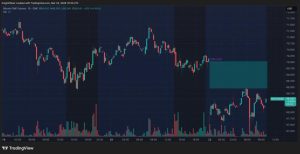



The recent Ethereum price drop has left many investors questioning the stability of the crypto market, especially as the price fell below the crucial $3,000 mark. Despite this downturn, significant ETH accumulation has been noted among crypto whales and institutional investors, who are seizing the opportunity to buy at lower prices. As we delve deeper into Ethereum market analysis, conflicting signals emerge, suggesting a possible decline to as low as $2,700. These movements have raised eyebrows among analysts, particularly when paired with Ethereum price predictions pointing to increased volatility ahead. In light of ETH support levels and the current market sentiment, investors are left weighing their options amid the turbulence of the cryptocurrency landscape.

In the wake of the recent downturn in Ethereum’s valuation, many are examining the underlying trends contributing to this significant price adjustment. The sudden dip in ETH mirrors broader market concerns, yet it has also prompted a surge in acquisitions by prominent investors, often referred to as crypto whales. This complex interplay between accumulation and speculative trading is central to understanding the dynamics at play within the Ethereum ecosystem. Analysts are focusing on various factors, such as potential ETH price stabilizations and support thresholds, while considering predictions that hint at further fluctuations. Ultimately, this situation encapsulates the ongoing challenge for both new and seasoned traders navigating the unpredictable waters of cryptocurrency investments.
| Market | Price | 24h Change |
|---|---|---|
| BCH | $594.59 | (0.89%) |
| LINK | $12.54 | (2.02%) |
| ETH | $3,027 | (2.20%) |
| DOGE | $0.1273 | (1.21%) |
| BTC | $90,104 | (1.19%) |
| ADA | $0.3662 | (2.23%) |
| XLM | $0.2153 | (1.30%) |
| ZEC | $356.66 | (1.43%) |
| HYPE | $22.06 | (3.63%) |
| SOL | $130.26 | (2.54%) |
| XMR | $529.80 | (5.15%) |
| BNB | $892.13 | (1.69%) |
| XRP | $1.95 | (2.86%) |
| TRX | $0.3001 | (0.93%) |
Summary
The recent Ethereum price drop raises concerns as whales and institutional investors absorb over $130 million in Ether during the dip. However, the risk of a further decline to $2,700 looms, indicating market volatility. With market data pointing to bearish indicators and forced sell-offs, investors are urged to monitor ETH closely amidst fluctuating confidence levels.
Ethereum Price Drop: An Opportunity for Accumulation
The recent Ethereum price drop has sparked a significant wave of accumulation among major holders. With ETH falling below the $3,000 threshold, many institutional investors and crypto whales have seized this moment as a lucrative buying opportunity. Data indicates that over $130 million worth of Ether was purchased during this dip, highlighting a strong belief among these investors that the current price presents a favorable entry point. Accumulation patterns among whales often predict future price movements, suggesting that the current downturn could be a setup for a bullish reversal in the longer term.
However, while the influx of large purchases is encouraging, risk factors remain. Analysts are monitoring the possibility of further declines, with some forecasting a potential drop to the $2,700 mark. This projection is supported by market sentiment and technical indicators, which suggest that a bearish continuation may occur if critical support levels do not hold. The juxtaposition of ETH’s recent accumulation against the looming threat of additional drops creates a complex environment for traders, fueling debates about the sustainability of price recovery amidst increasing volatility.
ETH Support Levels: Key to Market Stability
Understanding ETH support levels is crucial for navigating the current market conditions. Following the recent plunge below $3,000, the primary support level to watch is around $2,700, where buying pressure from whales may emerge again. Historically, these levels serve as a foundation that can either facilitate a reversal in price or signal a deeper decline. If the support at $2,700 is tested and holds firm, it could instill confidence among retail traders, creating a potential buildup for future gains.
Conversely, if ETH breaks below the $2,700 support, it could trigger panic selling among investors, prompting a cascading effect further down the price chart. Important liquidity zones are being identified around $2,620, which could act as further support or resistance in the event of a downturn. Monitoring these critical levels not only helps traders make informed decisions but also provides insight into the market’s overall health and direction.
Ethereum Market Analysis: Current Trends and Predictions
Recent Ethereum market analysis reveals a cautionary sentiment among traders and investors as the price continues to hover in a precarious position. Following the significant ETH price drop, many are scrutinizing market indicators for signs of potential recovery or further decline. The accumulation by ETH whales is an encouraging sign, but the market is still fraught with uncertainty due to external factors and potential sell-side pressure from institutional withdrawals. This duality creates a complex landscape where predictions are rife with ambiguity.
Moreover, as Ethereum continues to evolve in its ecosystem—with advances in DeFi and staking mechanisms—the price performance is increasingly tied to broader market dynamics. Analysts are forecasting a range of scenarios, suggesting either a bounce back to previous highs if accumulation persists, or a deeper retracement should pessimism outweigh buying sentiment. This market analysis is crucial not only for short-term traders but also for long-term holders who need to reassess their positions in light of emerging trends.
Market Sentiment: Crypto Whales vs. Retail Investors
The dynamic between crypto whales and retail investors is a focal point in understanding the current ETH landscape. Recent reports indicate a growing disparity between these two groups, particularly evident in the decline of retail sentiment as whale accumulation ramps up. With whales increasing their positions while retail traders cling to long positions, the market reflects a contrasting attitude where larger players often dictate price movements—especially during volatile periods.
This divergence can lead to heightened volatility, as whale transactions tend to result in substantial price fluctuations that can catch retail investors off guard. Understanding this relationship is vital for traders, as shifts in whale behavior could forecast impending price changes, urging retail investors to react. As this tug-of-war continues, keeping an eye on whale activities provides essential context for those navigating the unpredictable nature of the Ethereum market.
ETH Price Prediction: Navigating the Post-Dip Landscape
Looking ahead, ETH price predictions are operating in a heightened atmosphere of uncertainty yet laden with potential. Following the $130 million accumulation by whales during the recent dip, many analysts are optimistic about a rebound, suggesting that Ethereum could reclaim its footing above $3,000. This scenario hinges significantly on the ongoing market reactions and whether support levels can hold against bearish pressures.
However, caution remains paramount, as technical indicators suggest a potential test of lower support zones. The ability to sustain momentum above critical thresholds will play a pivotal role in determining near-term price trajectories. As the market wrestles with both bullish optimism and bearish caution, accurate price predictions will depend heavily on the interplay between accumulation trends and market sentiment.
Ethereum’s Resilience Amid Market Corrections
Despite the recent Ethereum price drop, the network has demonstrated remarkable resilience, largely bolstered by the ongoing accumulation of Ether by institutional entities and whales. This resilience highlights the confidence that larger players have in Ethereum’s long-term potential, even in the face of short-term corrections and market pressures. As these investors continue to position themselves during dips, it showcases a belief in the robust fundamentals of the Ethereum blockchain.
Nevertheless, the risk of further corrections remains, particularly as market liquidity becomes constrained amidst increasing sell pressures from certain investors. Staying informed about these fluctuations and understanding the underlying mechanisms driving buy/sell decisions is crucial for anyone looking to invest in Ethereum long term. This resilience in the face of adversity highlights the necessity for a strategic approach to trading, especially during turbulent times in the crypto market.
The Role of ETFs in Ethereum’s Future Growth
Exchange-traded funds (ETFs) could play a significant role in Ethereum’s future growth, particularly as regulatory frameworks evolve. The absorption of the recent price dip by whales indicates an underlying belief in the sustained demand for Ether, which could be amplified through the introduction of investment vehicles like ETFs. Such products would allow retail investors to gain exposure to Ethereum without the complexities of direct ownership, potentially leading to increased capital inflows into the asset.
However, the approval of ETH-based ETFs will depend on regulatory clarity around cryptocurrencies as a whole. If regulators embrace these investment vehicles, Ethereum could experience significant price appreciation as institutional adoption increases. Investors should monitor developments in the ETF landscape closely, as these changes could greatly influence Ethereum’s market dynamics and overall valuation moving forward.
Analyzing Potential Market Volatility Post-Dip
As Ethereum continues to navigate the aftermath of its recent price drop, analysts are increasingly focused on potential market volatility stemming from both whale activities and retail behavior. The balance of power appears to be shifting towards larger holders, who have responded to the dip with aggressive accumulation. This trend suggests that significant price movements could continue, driven by these dominant players evaluating their positions amidst an uncertain market backdrop.
Simultaneously, the emotional responses of retail investors, many of whom remain in long positions despite the market dip, could exacerbate volatility. If large holders decide to liquidate significant portions of their holdings, it could lead to a cascade of sell-offs among retail traders, further impacting the price of Ethereum. Understanding these dynamics is essential for all market participants looking to strategize effectively in a landscape marked by rapid shifts.
Strategies for Navigating the Ethereum Market
To effectively navigate the Ethereum market amid current fluctuations, investors should employ a multi-faceted strategy that combines technical analysis with an understanding of market sentiment. Monitoring key support and resistance levels, such as the $2,700 threshold, allows traders to make informed decisions about their positions. Additionally, staying alert to whale activity can provide insights into market movements, helping to anticipate potential volatility.
Furthermore, long-term investors should consider diversifying their portfolios to mitigate risks associated with market corrections. Assessing the broader macroeconomic climate and regulatory developments affecting cryptocurrencies will also be advantageous. By maintaining a balanced and informed approach, investors can enhance their chances of weathering the storm of unpredictability while positioning themselves for future growth in the Ethereum market.
Frequently Asked Questions
What caused the recent Ethereum price drop and implications for ETH accumulation?
The recent Ethereum price drop below $3,000 was influenced by significant market corrections, including a notable 7.83% decline on Tuesday. This created a buying opportunity for ETH accumulation among institutional investors and crypto whales, who collectively purchased over $130 million in Ether during the dip.
How are crypto whales responding to the Ethereum price drop?
Crypto whales have shown resilience in the face of the Ethereum price drop, with many increasing their holdings. Reports indicate substantial accumulation activities, including purchases like Trend Research acquiring 24,555 ETH for approximately $75.5 million, demonstrating confidence among large holders despite market volatility.
What does the Ethereum market analysis indicate for future price predictions after the price drop?
The Ethereum market analysis suggests that while there is significant whale accumulation post-price drop, technical indicators hint at further downside pressure. Predictions indicate the possibility of ETH testing support levels around $2,718 and $2,620, especially after closing below crucial price points.
Are there signs of recovery for Ethereum after the price drop?
Although the Ethereum price dip raised concerns, the influx of ETH accumulation from whales might signal potential recovery signals. However, volatility remains a factor, and the current data suggests a cautious outlook with mixed indicators affecting ETH price predictions.
What impact does Ethereum’s price drop have on investor sentiment regarding ETH support levels?
The Ethereum price drop has influenced investor sentiment, leading to increased focus on ETH support levels. With a recent close below $3,000 and pressure from liquidated leveraged positions, the market is carefully assessing how ETH will perform near established support levels, with a keen eye on potential reversals.
Related: More from Ethereum News | Ethereum Network Transactions Hit New Record: What It Means for You | 30,000 ETH Withdrawn: What It Means for Binance and Ethereum
