
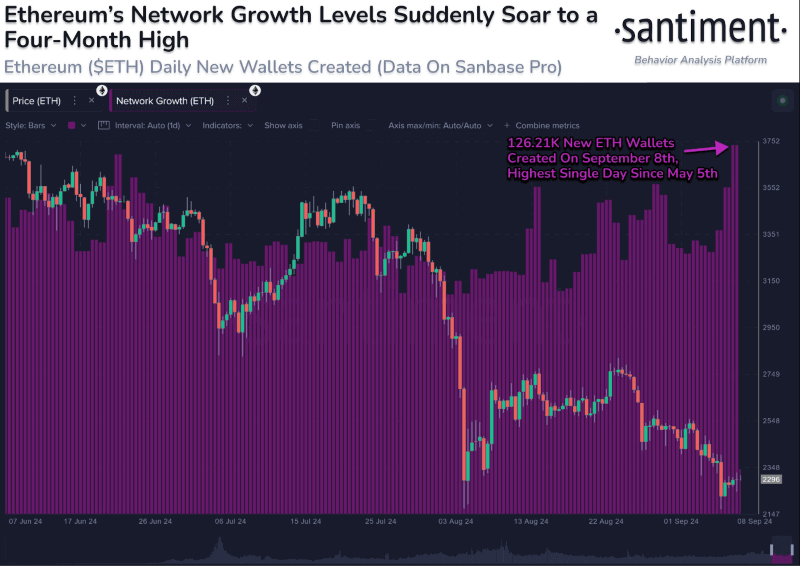

The Ethereum network is currently witnessing unprecedented growth, marked by an extraordinary surge in daily transactions and user engagement. Over the past week alone, the Ethereum mainnet processed a staggering 2.9 million transactions, setting a new record that highlights a substantial return of user activity within the ecosystem. This Ethereum network growth has been complemented by a rapid increase in daily active addresses, soaring from approximately 0.6 million to 1.3 million in just a short time, despite transaction fees remaining remarkably low between $0.10 and $0.20. In stark contrast to the exorbitant fees of $50 to $200 witnessed during the NFT boom, this shift signifies a notable step towards increased economic accessibility for users. However, experts caution that this surge could be influenced by malicious activities, including Ethereum address poisoning strategies aimed at exploiting the network.

With the Ethereum blockchain experiencing a remarkable escalation in activity, there is a heightened focus on how this decentralized platform is evolving. Many enthusiasts have noted the recent uptick in Ethereum protocol upgrades and their impacts, fueling discussions about the increase in network utilization rates. The enhancing protocols, aimed to bolster scalability, have provided a more favorable environment for Ethereum user adoption while keeping transaction fees low. Additionally, some analysts are raising concerns about the authenticity of this activity, pointing towards an alarming trend of Ethereum address poisoning schemes that threaten genuine transactions. As the Ethereum ecosystem matures, it is essential to distinguish between real user engagement and opportunistic behaviors that might skew the perceived growth of this dynamic network.
| Metric | Details |
|---|---|
| Daily Transactions | 2.9 million transactions in a week, an all-time high. |
| Active Addresses | 1.3 million daily active addresses, up from 0.6 million. |
| Transaction Fees | Average fees remain low, around $0.10 to $0.20. |
| Major Upgrades | Three protocol upgrades enhancing scalability introduced in 2025-2026. |
| Concerns about Growth | Security threats from address poisoning tactics exploiting low fees. |
| Value of Network Activity | Declining Metcalfe Ratio; significant activity does not correspond to real value. |
| Scam Dynamics | Malicious activities inflate transaction metrics, harming user trust. |
Summary
Ethereum network growth is witnessing unprecedented spikes, indicating a complex landscape of both positive advancements and concerning manipulations. While the rise in transactions and active addresses suggests revitalized user interest, underlying issues like address poisoning scams pose significant risks. Developers have made remarkable strides with protocol upgrades that enhance capacity and reduce transaction fees, which traditionally hindered adoption. However, the associated increase in malicious activities has created a duplicitous facade of network vigor, potentially harming real user trust and long-term growth.
Understanding the Surge in Ethereum Network Growth
The Ethereum network is witnessing unprecedented growth, with daily transactions reaching an all-time high as user engagement surges. This remarkable spike in network activity is indicative of a potentially booming market as evidenced by the latest statistics. Processing a staggering 2.9 million transactions in a single week, Ethereum has transitioned from lower levels of user engagement to a flourishing environment of active participation. This impressive volume is driven largely by an influx of daily active addresses, which have surged to approximately 1.3 million from about 0.6 million just a short while ago. Such activity illustrates the network’s revitalization and the soaring interest in its vast capabilities.
However, it’s critical to analyze the nature of this growth. While the metrics reveal a bustling network filled with transactions, experts are warning about potential misinterpretations. The sudden rise in Ethereum activity may not solely stem from organic user adoption but rather from strategic maneuvers by malicious entities capitalizing on these changes. As transaction costs have plummeted to historical lows, these bad actors have adeptly exploited the new environment, indicating that ongoing scrutiny is essential to discern genuine user activity from harmful exploitation.
The Economic Impacts of Ethereum Transaction Fees
One of the most significant advancements in the Ethereum network’s recent growth has been the stabilization of transaction fees. Previously, users had to contend with exorbitant fees, often ranging from $50 to $200 during peak usage. However, the recent trend indicates that average transaction costs have plummeted to between $0.10 and $0.20, making Ethereum much more accessible to everyday users. This dramatic reduction in costs allows a wider audience to engage with the network, paving the way for retail users to participate in Ethereum-based applications, from decentralized finance (DeFi) platforms to non-fungible tokens (NFTs). As transaction fees stabilize, Ethereum is regaining its status as an economically viable option for a broader user base.
Yet, while low fees create avenues for legitimate user transactions, they also beckon an influx of malicious activities that introduce potential risks for the Ethereum ecosystem. The fundamental shift in transaction costs enables a spike in address poisoning attacks, where malicious users aim to deceive others into sending funds to fraudulent addresses. This duality of low transaction costs presents both an opportunity for growth and a challenge in maintaining network integrity, compelling stakeholders to ensure protective measures are in place to preserve user trust.
Exploring Ethereum Protocol Upgrades
Recent protocol upgrades have been catalysts for Ethereum’s growth and increased network efficiency. The combination of these advancements marks a shift toward a more scalable, user-friendly environment. Three notable upgrades, including the pivotal ‘Pectra’ enhancement in May 2025, expanded the blob capacity significantly, thereby doubling the expected throughput of transactions. Subsequently, the ‘Fusaka’ upgrade in December introduced Peer Data Availability Sampling (PeerDAS), which allows validators to efficiently verify blockchain data without heavy bandwidth requirements. Lastly, the Blob Parameter-Only (BPO) fork in January 2026 further refined the network’s capabilities, raising overall standard capacities, and enhancing energy efficiency across the board.
These upgrades represent a comprehensive strategy to maintain Ethereum’s decentralization and security while addressing long-standing scalability issues. By systematically enhancing its protocol, Ethereum aims to attract developers and users alike, ensuring a robust infrastructure for applications that rely on rapid transaction times and low costs. This impacts overall user adoption, making Ethereum a more competitive platform in a rapidly evolving digital ecosystem.
The Role of User Adoption in Ethereum’s Growth
In analyzing Ethereum’s current growth trends, it is crucial to acknowledge the impact of user adoption as a driving force. As more users engage with different Ethereum applications and networks, the cumulative activity contributes significantly to the overall transaction volumes. In the past few months, the sharp increase in active addresses has been a positive sign indicating burgeoning interest among individuals and businesses alike. This movement aligns with the broader trend in cryptocurrency adoption, where individuals are increasingly turning to decentralized platforms for various needs, from finance to art.
However, while user growth appears promising, metrics indicate that the value added by this surge may not be sustainable. Ethereum’s Adoption Score, currently at its lowest historical level, suggests discrepancies between user activity and actual market valuation. Despite witnessing increased on-chain activities, stakeholders should remain vigilant about the integrity of this growth and its long-term viability as adoption efforts continue to evolve across the ecosystem.
Address Poisoning: A Growing Concern in Ethereum Transactions
Amidst the impressive network growth, a rising phenomenon of address poisoning calls into question the legitimacy of certain user activities. This malicious practice leverages low transaction fees to create addresses that mimic legitimate user wallets, tricking victims into sending funds to the wrong place. Researchers highlight the alarming scale of these attacks, exemplified by individuals creating hundreds of thousands of poisoned addresses targeting unsuspecting users within a short span. The methods employed in these campaigns exploit new entry points in Ethereum’s user base and draw attention to the vulnerabilities that accompany increased activity.
The consequences of address poisoning are severe, with victims incurring substantial losses despite the apparent growth in transaction volumes. While the Ethereum network processes millions of transactions daily, the underlying mechanics of these interactions are often concealing a darker reality. Researchers challenge the perception that Ethereum’s growing metrics uniformly signify positive developments within the ecosystem, indicating a pressing need for increased security measures and user awareness to safeguard against potential losses.
The Evolution of Ethereum’s Crypto Ecosystem
The evolution of Ethereum demonstrates a complex interplay of technological advancements and market dynamics. With the introduction of upgrades tailored to enhance scalability and reduce costs, Ethereum is not only expanding its capacity but is also paving the way for greater innovation within its ecosystem. These developments are a response to user demands for more efficient systems and are shaping the future of decentralized finance, asset management, and digital identity verification. As Ethereum becomes a more attractive network for developers and enterprises, we can expect new applications to emerge, each contributing to the broader cryptocurrency market.
Ultimately, the narrative surrounding Ethereum growth is multifaceted. While vibrant metrics highlight a booming transaction environment, the underlying activities raise crucial questions about value creation and user experiences. The transition toward a more optimized Ethereum network is indeed encouraging for stakeholders; however, ensuring that these advancements translate into sustainable growth will require ongoing efforts and vigilance from the community.
Examining the Impact of Ethereum’s Economic Environment
Ethereum’s current economic environment plays a pivotal role in shaping its network growth and user engagement. The sustained attention on transaction efficiency, coupled with lower fees, has created favorable conditions for fostering diverse applications on the platform. From emerging DeFi projects to innovative NFT marketplaces, the economic landscape is rapidly encouraging new entrants, paving the way for more users to engage with Ethereum’s myriad offerings. These changes indicate a significant shift toward a more inclusive environment, especially for retail users who were previously deterred by high transaction costs.
Nonetheless, it is essential to recognize the challenges posed by the current economic dynamics. The same low fees that facilitate access can also lead to unprecedented levels of malicious behavior, distorting the true picture of user adoption. As the Ethereum network evolves, the economic ramifications must be managed carefully to ensure the safety and integrity of users, creating a balance between growth and security in a volatile market.
Addressing the Concerns of User Security on Ethereum
User security remains a top priority as Ethereum continues to grow. With the rising number of transactions and active addresses, the potential for scams such as address poisoning escalates, creating an urgent need for enhanced security measures. Developers and security experts are dedicated to ensuring that user interactions on the network remain safe and, consequently, that the user base continues to trust the technology. Initiatives aimed at educating users about phishing attempts and scam tactics can significantly bolster public awareness and reduce the impact of deceptive practices.
Moreover, as Ethereum continues to adapt and evolve, it is imperative that security mechanisms are integrated into the network’s fabric. Innovations in smart contract auditing and monitoring tools can play a crucial role in preserving the network’s integrity while facilitating growth. The adoption of rigorous security protocols will build confidence among users, fostering a sustainable ecosystem that can thrive despite the challenges posed by malicious activities.
The Future Prospects of Ethereum and Its Community
As Ethereum enters a new chapter characterized by significant user growth and groundbreaking protocol upgrades, the future seems promising yet challenging. The rapid expansion of the network’s capabilities and diverse user base indicates a willingness to embrace the technology for various applications. However, as the ecosystem flourishes, community engagement becomes pivotal in shaping the narrative of the network. Through transparency and open communication channels, stakeholders can ensure that users are informed and equipped to navigate this evolving landscape.
Ultimately, the path forward for Ethereum will involve navigating a complex terrain marked by both opportunity and risk. By fostering a culture of innovation while remaining vigilant against threats, Ethereum’s community can harness the full potential of its growth. As the network matures, ongoing collaboration among developers, users, and security experts will be essential in cementing Ethereum’s position as a foundational pillar of the decentralized future.
Frequently Asked Questions
What are the recent factors contributing to the Ethereum network growth?
The recent Ethereum network growth can be attributed to upgraded protocol features that increased throughput, decreased transaction fees, and a significant rise in user activity, which saw 2.9 million transactions in a single week. These upgrades have facilitated ease of access, allowing more users to engage with the platform.
How has Ethereum user adoption impacted transaction fees recently?
Despite the surge in Ethereum user adoption, transaction fees have remained low, typically between $0.10 and $0.20, contrasting sharply with previous highs during the NFT boom. This economic accessibility has encouraged more users to participate in the Ethereum network, contributing to its recent growth.
What is address poisoning, and how is it affecting Ethereum network growth?
Address poisoning is a malicious tactic where scammers create counterfeit addresses that resemble legitimate user addresses to deceive victims. This fraudulent activity has surged alongside the Ethereum network growth due to lower transaction fees, leading to inflated metrics while posing risks to genuine users.
What role do Ethereum protocol upgrades play in recent network activity?
Recent Ethereum protocol upgrades, such as ‘Pectra’, ‘Fusaka’, and ‘BPO’, have significantly improved the network’s capacity and efficiency. These upgrades have reduced transaction costs and enabled higher throughput, thus fostering an environment conducive to Ethereum network growth and user re-engagement.
Is the Ethereum activity surge reflective of genuine user demand?
While the Ethereum activity surge suggests heightened user engagement, analysis indicates that much of this growth results from strategic address poisoning scams rather than organic user demand. Security insights reveal that a large portion of new addresses and transactions are linked to these deceptive practices.
What implications does the Ethereum growth trend have for the crypto market?
The Ethereum growth trend implies a potential revitalization of crypto market activity; however, the disproportionate rise in malicious activities suggests that this boom may not be sustainable. The increase in transactions and addresses does not necessarily correlate with real economic value, raising concerns about market integrity.
How is the decline in Ethereum’s Metcalfe Ratio related to its network growth?
The decline in Ethereum’s Metcalfe Ratio, which compares market capitalization to the number of active users, indicates that while network growth in terms of transactions and addresses is high, the actual market value tied to these activities is diminishing, pointing to a disconnection between user engagement and economic value.
What are the potential risks associated with the current Ethereum user adoption surge?
The current Ethereum user adoption surge is prone to risks mainly from increased scam activities, like address poisoning, which exploit the low transaction fees and misleading metrics. This poses significant financial threats to users unaware of the tactics employed by malicious actors amidst the network’s growth.
How is Ethereum ensuring long-term scalability amid its current growth?
Ethereum is ensuring long-term scalability through systematic protocol upgrades that enhance network throughput while maintaining decentralization. These efforts have effectively lowered transaction fees and increased user participation, crucial for sustainable growth in the evolving crypto landscape.
Why are average transaction fees on the Ethereum network currently low despite high demand?
The average transaction fees on the Ethereum network remain low due to recent upgrades and increased transaction capacity, which have reduced costs significantly. This economic shift promotes broader access and encourages increased user transactions, fueling the current network growth.
Related: More from Ethereum News | Ethereum Network Transactions Hit New Record: What It Means for You | 30,000 ETH Withdrawn: What It Means for Binance and Ethereum