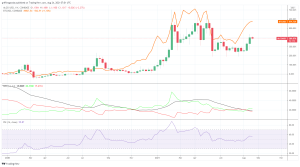


The Ethereum Fusaka upgrade marks a significant milestone in the evolution of the Ethereum network, transforming how fees are managed and how resources are allocated. This upgrade introduces a crucial ‘floor mechanism’ for blob fees as outlined in EIP-7918, which escalates the previously negligible 1 wei fee structure to ensure real network costs are reflected in transaction pricing. As a result, the blob base fee has experienced an astounding spike of 15 million times, creating a more efficient economic model for users and nodes alike. Additionally, with the inclusion of blob fees in the ETH burn mechanism, projections indicate a potential increase in ETH burn rates, possibly reaching up to eight times more as Layer 2 (L2) transaction volume increases. Coupled with advancements like PeerDAS technology, the Ethereum Fusaka upgrade promises to enhance blob storage capacity, driving the network towards a more sustainable and scalable future.

The recent ETH infrastructure update, known as the Ethereum Fusaka upgrade, is revolutionizing the transaction dynamics within the blockchain ecosystem. By implementing an innovative approach to blob fees and introducing the EIP-7918 proposal, this upgrade ensures that users are paying for the actual resources they consume. The adjustment also stabilizes blob traffic and enhances L2 capabilities, ultimately improving overall network performance. Moreover, the integration of the ETH burn mechanism into this upgrade suggests a transformative effect on Ethereum’s supply, potentially leading to substantial reductions in circulating ETH over time. With the introduction of PeerDAS technology, the upgrade brings forth enhanced storage capabilities for blobs, paving the way for a new era of blockchain efficiency.
Understanding the Ethereum Fusaka Upgrade and Its Impact
The Ethereum Fusaka upgrade has introduced significant changes to how blob fees are structured on the network. One of the most noteworthy updates is the implementation of the blob fee floor mechanism, as outlined in EIP-7918. Prior to this upgrade, blob fees were negligibly low, often at 1 wei, leaving nodes with minimal returns for their operations. This situation created an imbalance where the expenses associated with KZG validation exceeded the earnings from blob fees. Following the Fusaka upgrade, blob fees are now tracked as being at least 1/15.258 of the L1 execution base fee, bringing them more in line with actual resource consumption. This restructuring is crucial as it ensures that fees are reflective of network demands, enabling a more sustainable ecosystem for all participants.
Moreover, with a structured blob fee mechanism in place, Ethereum’s underlying infrastructure is expected to gain more stability. This change directly addresses the rampant congestion issues caused by free usage of Layer 2 (L2) networks. As prices fluctuate according to the new policy, users will begin to more judiciously utilize blob resources, adjusting their consumption based on economic incentives. The Fusaka upgrade thus embodies a pivotal shift in the Ethereum blockchain’s approach to resource allocation, ensuring a more balanced and efficient operating environment.
Additionally, the incorporation of PeerDAS technology within the Fusaka upgrade epitomizes Ethereum’s commitment to enhancing the network’s capabilities. PeerDAS is designed to boost blob storage capacity, accommodating the increased demand driven by the new fee structures. By enabling more efficient data handling, this technology ensures that nodes can effectively manage the new blob fees without compromising on performance. This technological advancement not only improves the user experience on Ethereum but also plays a vital role in future-proofing the platform against increasing transaction volumes.
As the Ethereum network evolves, the implications of the Fusaka upgrade will be closely observed. The adjustments made to blob fees and the integration of PeerDAS technology signify a forward-thinking approach, setting a precedent for how fees can be dynamically structured in accordance with network usage. In the long run, these changes are essential in fostering a sustainable blockchain environment that benefits all stakeholders.
Blob Fees and the ETH Burn Mechanism
One remarkable outcome of the Ethereum Fusaka upgrade is the integration of blob fees into the ETH burn mechanism. With an emphasis on sustainability, this new model is projected to lead to significant reductions in ETH circulation. Initial estimates suggest that the introduction of the new blob fees could result in an eightfold increase in ETH burned over the next few years. By 2026, these fees could contribute to burning up to 30-50% of the total ETH supply, depending significantly on the evolving landscape of L2 transaction volume. This strategic move is part of a broader effort to enhance the value of the Ethereum network by decreasing the total supply, which theoretically should boost the token’s value.
The burn mechanism associated with blob fees underlines Ethereum’s shifting paradigm towards deflationary economics. As more fees are diverted into burns rather than being reintroduced into circulation, holders of ETH may experience benefits in terms of scarcity, increasing demand and potentially raising market prices. The linkage of blob fees to the ETH burn mechanism serves as a clear incentive for active participation in the network, as users recognize the dual advantage of utilizing the network while also contributing to a reduction in supply.
Furthermore, integrating the burn mechanism with blob fees represents a sophisticated development in Ethereum’s economic model. By establishing a clear correlation between network usage and token supply impact, it encourages developers and users to think strategically about their engagement with the Ethereum ecosystem. It’s anticipated that as Layer 2 transaction activity rises, so too will the correlation with ETH burn, leading to a more robust network economy. These synergistic effects underscore the importance of adaptive economic strategies within decentralized networks, ensuring longevity and value for stakeholders.
As the community begins to grasp the full implications of the ETH burn mechanism, driven largely by the newly structured blob fees, the Ethereum economic model may continue to inspire other blockchain projects. The innovative approach taken with the Fusaka upgrade positions Ethereum as a leader in navigating the complexities of blockchain economics, potentially paving the way for future enhancements in fee structures and network resource management.
The Role of EIP-7918 in Shaping Ethereum’s Future
EIP-7918 plays a crucial role in reshaping Ethereum’s fee structure through its incorporation into the Fusaka upgrade. This Ethereum Improvement Proposal introduces the vital concept of a blob fee floor, empowering the network to stabilize fees reflective of actual resource usage. EIP-7918 aims to eliminate the inconsistencies of prior fee models, allowing Ethereum to evolve from a free-for-all model into a more sustainable and economically viable framework. This pivotal change not only protects the interests of network validators but also reassures users that they are contributing to a system that values and conserves resources appropriately.
As a result of EIP-7918, the Ethereum network is likely to see an increased reliability and trust among participants. With fees now reflecting real costs, users might become more engaged, knowing that their transactions are more effectively processed and validated. This shift cultivates an environment where all users can operate with certainty and clarity concerning the economic implications of their activities, ultimately resulting in a healthier and more efficient network.
Moreover, the foresight within EIP-7918 focuses on addressing long-term scalability challenges. By anchoring blob fees to Layer 1 execution base fees, it promotes a more automatic adjustment of costs in response to network congestion and resource availability. This dynamic pricing strategy is not only likely to enhance performance but also prepares Ethereum to handle projected increases in L2 transaction volume robustly.
The essence of EIP-7918 extends beyond merely fixing administrative issues; it highlights the necessity of evolving blockchain economics in a decentralized network. As the Ethereum infrastructure matures through upgrades like Fusaka and the execution of proposals such as EIP-7918, the network becomes increasingly adaptable to the evolving requirements of its community and technological advancements, ensuring its competitive edge in the blockchain space.
PeerDAS Technology: Enhancing Efficiency in Blob Storage
The introduction of PeerDAS technology in the Ethereum Fusaka upgrade marks a revolutionary step in how blob storage is managed within the network. By leveraging PeerDAS, Ethereum can significantly enhance its blob storage capacity, which is crucial as the demand for storage grows in line with the rise of decentralized applications (dApps) and various operations utilizing blob fees. This technology allows for a more efficient management of existing storage resources, ensuring that the Ethereum network can support an increasingly demanding user base without experiencing degradation in performance or significantly raising costs for users.
With the enhanced storage capabilities facilitated by PeerDAS, Ethereum aims to mitigate potential bandwidth and storage bottlenecks, pivotal in maintaining its reputation as a leading smart contract platform. This advancement in blob storage represents Ethereum’s commitment to addressing the challenges that arise with increasing transactions and user activity on Layer 2, where blob fees play a vital role. The efficient utilization of PeerDAS technology thus not only benefits Ethereum’s current network efficiency but also sets a solid foundation for its future scalability and adaptability.
Additionally, the synergy between PeerDAS technology and the restructuring of blob fees illustrates Ethereum’s strategic outlook in promoting a healthy ecosystem for its users. As more transactions occur and the use of blob fees surges, ensuring that storage and management capabilities can keep pace is critical. This interplay of technology enhances the capability of nodes to manage increasing workloads, ultimately fostering a more resilient network. PeerDAS stands out not just as a mere technical upgrade but as a fundamental component of Ethereum’s holistic strategy to build a sustainable and efficient blockchain, addressing the needs of both users and developers participating in this dynamic landscape.
The Future of Ethereum with Layer 2 and Blob Fee Structures
The restructuring of blob fees post-Fusaka upgrade indicates a significant shift in Ethereum’s strategy toward Layer 2 solutions. As more users and developers turn to Layer 2 for lower transaction costs and increased efficiency, the governance of blob fees becomes more critical. With the base fees now anchored to the L1 execution base fee, adjustments can be made to accommodate the fluctuations in Layer 2 transaction volume. As the ecosystem matures, this model is expected to provide a robust framework for handling spikes in demand while maintaining fair pricing for all participants.
This forward-thinking approach encourages developers to build and innovate on Layer 2, as they can rely on a more balanced and responsive fee structure to support their projects. Moreover, as Ethereum continues to develop its Layer 2 solutions, the enhancements brought about by the Fusaka upgrade will likely attract more decentralized applications to the platform, reinforcing Ethereum’s position as a leading player in the blockchain space.
Looking ahead, as Ethereum solidifies its structures concerning blob fees and Layer 2 solutions, further enhancements can be anticipated. The strategic incorporation of both EIP-7918 and PeerDAS technology under the Fusaka upgrade signals Ethereum’s intent to create not just a responsive fee structure but to also fortify its storage capabilities fundamentally. This proactive approach will likely lead to increased developer confidence and user participation, ensuring the Ethereum network’s longevity and relevance in an ever-evolving digital landscape. Furthermore, the anticipated growth in Layer 2 transaction volume due to these optimizations will only amplify the positive impacts of the upgrades, spearheading Ethereum into its next phase of growth.
Frequently Asked Questions
What is the Ethereum Fusaka upgrade and how does it affect blob fees?
The Ethereum Fusaka upgrade introduced significant changes, including a new blob fee ‘floor mechanism’ due to EIP-7918. This mechanism raised blob fees dramatically, ensuring they reflect network costs by setting a minimum at 1/15.258 of the L1 execution base fee. This mitigates the previous model where fees were almost negligible, thus encouraging fair resource allocation.
How does EIP-7918 impact the blob fee mechanism post-Ethereum Fusaka upgrade?
EIP-7918, part of the Ethereum Fusaka upgrade, implements a mandatory minimum blob fee. This change enables the fees to accurately mirror the underlying network costs, preventing abuse of low fees that previously limited the benefits for nodes involved in KZG validation. Thus, prices are now more aligned with actual resource consumption.
What is the ETH burn mechanism and how does it relate to blob fees after the Ethereum Fusaka upgrade?
The ETH burn mechanism, enhanced by the Ethereum Fusaka upgrade, now includes blob fees. This adjustment predicts a potential increase in ETH being burned, with estimates suggesting blob fees could contribute up to 30-50% of the total burn by 2026, depending on L2 transaction volume growth.
How does PeerDAS technology improve blob storage capacity in the Ethereum Fusaka upgrade?
The Ethereum Fusaka upgrade leverages PeerDAS technology to enhance blob storage capacity significantly. As blob fees increase and are managed more effectively through EIP-7918, this allows for improved handling of increased data loads, contributing to better performance and scalability of the Ethereum network.
What are the implications of increased L2 transaction volume following the Ethereum Fusaka upgrade?
Following the Ethereum Fusaka upgrade, increased L2 transaction volume is expected to amplify blob fee revenues, which are now intrinsically linked to the ETH burn mechanism. This growth in transaction activity could lead to further ETH burns, as blob fees and L2 utilization rise, potentially stabilizing network traffic and enhancing overall efficiency.
| Key Point | Description |
|---|---|
| Skyrocketing Blob Base Fee | The blob base fee increased by 15 million times after the Ethereum Fusaka upgrade. |
| Introduction of Floor Mechanism | EIP-7918 introduced a ‘floor mechanism’ for blob fees, ensuring they cannot go below a newly set minimum. |
| Previous Blob Fee Limitations | Before the upgrade, blob fees were stuck at 1 wei, providing minimal returns for nodes. |
| Anchoring to L1 Execution Fee | Blob fee must now be at least 1/15.258 of the L1 execution base fee, linking it to network costs. |
| Impact on Pricing and Traffic | The new design ensures blob prices reflect actual resource usage and adjusts blob traffic through price fluctuations. |
| Enhanced Storage with PeerDAS | PeerDAS technology improves blob storage capacity significantly. |
| Integration with ETH Burn Mechanism | Blob fees are now part of the ETH burn mechanism, potentially leading to a much higher ETH burn rate. |
| Future Projections | By 2026, blob fees could contribute 30-50% of total ETH burn based on L2 transaction growth. |
Summary
The Ethereum Fusaka upgrade marks a pivotal moment for the Ethereum network, introducing significant changes to the blob fee structure. With the blob base fee soaring due to the new ‘floor mechanism’ set by EIP-7918, fees will no longer linger at the nearly nonexistent 1 wei. By anchoring blob fees to the L1 execution fee, Ethereum ensures accurate pricing reflective of real network costs, while also managing blob traffic to prevent congestion. This upgrade not only enhances blob storage through advancements like PeerDAS but also integrates blob fees into the ETH burn mechanism, promising a more efficient and sustainable blockchain environment.