


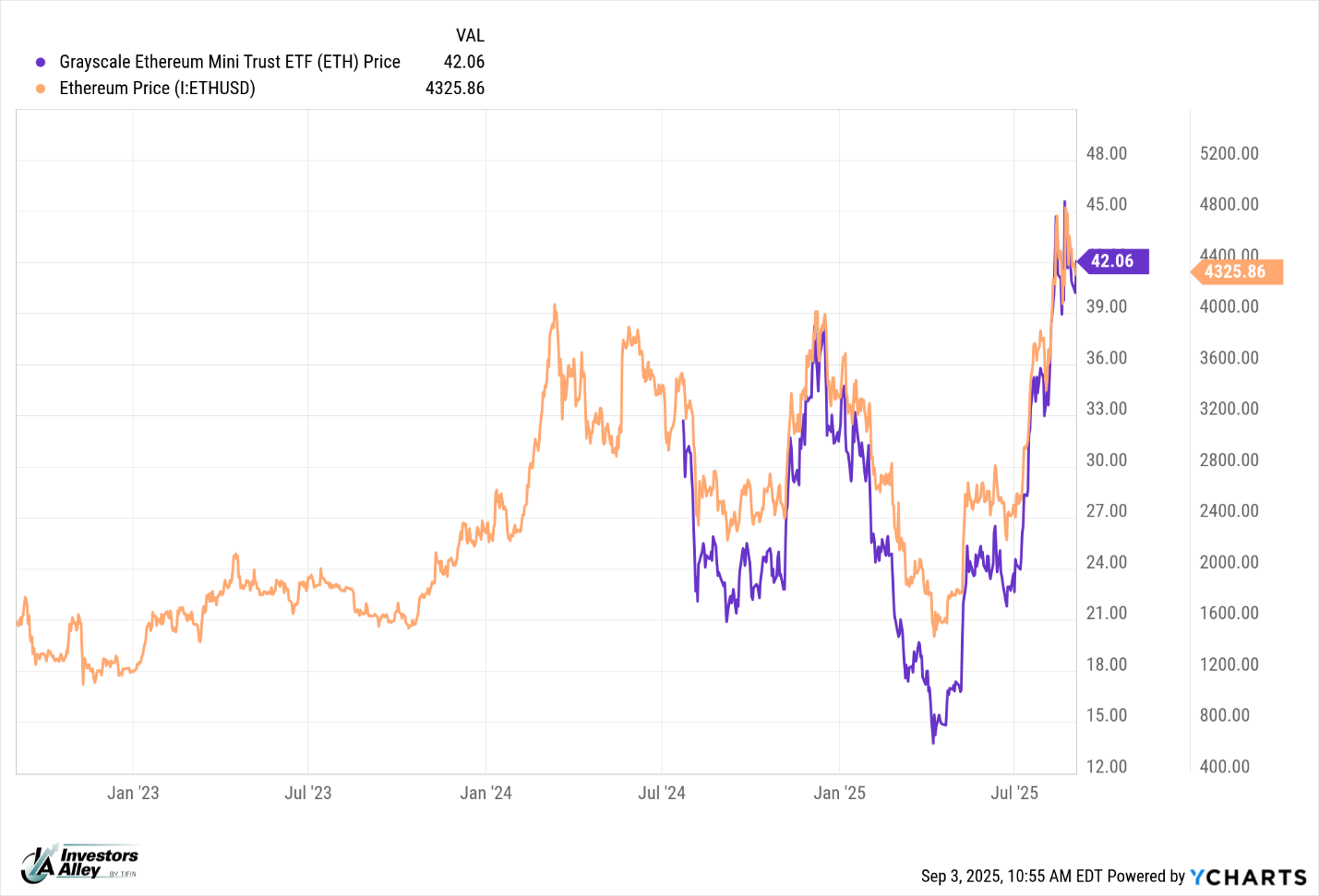

Ethereum ETFs yield has emerged as a pivotal aspect of the cryptocurrency landscape, marking a significant milestone in how investors view and engage with Ethereum assets. With the launch of the Grayscale Ethereum Staking ETF, the concept of receiving staking rewards directly as cash payouts has caught the attention of many, transforming the investment dynamics in the Ethereum market. This innovative approach not only highlights the potential for Ethereum staking rewards to serve as a consistent income stream but also invites institutional investors to consider crypto ETF distribution as a viable alternative to traditional income-generating assets. As the competition heats up among issuers, the focus will shift towards how each fund packages and delivers these returns, ultimately impacting the perceived value of investing in Ethereum. This evolution positions Ethereum not just as a speculative asset but as a serious contender for those seeking attractive yields in diversified portfolios.

The landscape of Ethereum-related investments is undergoing a remarkable transformation, particularly through the rise of Ethereum exchange-traded funds (ETFs) that prioritize yield generation. Known popularly as staking rewards, these returns are now being incorporated into ETF distributions, showcasing a blend of traditional finance and innovative blockchain technology. The introduction of such products, including the Grayscale Ethereum Staking ETF, allows investors to directly benefit from Ethereum’s underlying staking mechanics, shifting perceptions about digital currency investments. As market participants increasingly recognize the potential for regular income through Ethereum-focused ETFs, the narrative surrounding cryptocurrency investments is becoming more nuanced and appealing. By redefining the role of Ethereum within investment portfolios, this trend reinforces the growing legitimacy and attractiveness of crypto assets in mainstream financial strategies.
The Emergence of Ethereum ETFs and Yield Dynamics
The recent surge in interest surrounding Ethereum ETFs has given rise to a ‘yield war’ among issuers, particularly highlighted by Grayscale’s innovation with its Ethereum Staking ETF (ETHE). Grayscale’s efforts to convert Ethereum staking rewards into a tangible cash payout of approximately $0.083 per share has redefined how investors perceive yields in crypto assets. The transformation of staking rewards into cash dividends not only represents a significant shift in the investment strategy for Ethereum but also influences the broader crypto market. By making yields visible and actionable, Ethereum ETFs could begin to attract a wider array of institutional and retail investors, further legitimizing Ethereum as an investment vehicle beyond its speculative nature.
The introduction of such cash distributions impacts investor confidence and reshapes expectations around Ethereum’s performance in the financial markets. Investors are used to dividend payouts from traditional assets, and applying this framework to cryptocurrency through ETFs creates an intuitive understanding of Ethereum’s value proposition. As more funds adopt similar models, it’s expected that competition will lead to a refinement of best practices and greater transparency in how these staking rewards are calculated and distributed, ultimately contributing to Ethereum’s market stability.
Understanding Ethereum Staking Rewards
Ethereum’s staking rewards have always been a critical aspect of the network’s functionality, yet for many investors, these rewards have remained an abstract concept. The implementation of staking rewards within an ETF framework, as demonstrated by Grayscale, enables a more accessible representation of these rewards as income. The shift from a theoretical understanding of yield to a real cash payout could potentially attract a broader audience to Ethereum investments who may have previously shied away due to perceived complexities and risks associated with direct staking.
Moreover, the way these staking rewards are marketed influences how prospective investors view Ethereum as a viable asset class. Instead of merely being seen as a volatile digital asset, Ethereum can be positioned as an income-generating investment opportunity that offers both growth potential and regular returns. This dual narrative can significantly enhance Ethereum’s appeal in diversified investment portfolios, catering to investors who prioritize reliability and income, similar to traditional equities and bonds.
The Impact of Crypto ETF Distribution on Investor Behavior
The distribution structure of ETFs that incorporate Ethereum staking rewards signifies a significant shift in how investors approach digital assets. Traditionally, investors might have seen cryptocurrencies solely as vehicles for speculative growth; now, with the promise of cash payouts, their perspective is shifting towards treating these assets with the same diligence they apply to stock dividends. This change encourages meticulous analysis of yield and return metrics in the crypto space, similar to how investors evaluate traditional financial products, thereby attracting a more risk-averse segment of the investment community.
As Ethereum ETFs begin to establish themselves with regular payouts, investors will naturally start comparing these products against each other based on net yield and operational transparency. This competitive landscape compels issuers to delineate their staking yield distributions clearly, ensuring that investors understand not only the amount received but also the mechanisms underlying the yield calculations. Such clarity will be crucial in building trust, particularly among institutional investors who are cautious about the perceived risks associated with cryptocurrencies.
Institutional Perspectives on Ethereum as an Income Asset
The evolving narrative around Ethereum, particularly through the lens of institutional investment, emphasizes its dual role as both a technological platform and an income-generating asset. By integrating staking rewards into a recognized ETF format, institutional investors can harness Ethereum’s capabilities while concurrently benefiting from its income potential. No longer merely viewed as a speculative digital asset, Ethereum’s staking rewards can help fulfill portfolio diversification strategies that institutional investors often aim for.
Furthermore, this shift fosters a renewed dialogue about Ethereum’s place in traditional finance. As more investment vehicles adopt structures that highlight the yield aspect, it encourages a broader acceptance and analysis of Ethereum’s stable underlying value proposition. This could potentially recalibrate investment models, leading to more robust allocations toward Ethereum, reflecting its growth narrative intertwined with a reliable return generation mechanism.
Navigating the Complexities of Staking in ETFs
Understanding how staking yield operates within an ETF context is critical for investors. Unlike traditional fixed-income products, Ethereum staking yields are influenced by numerous factors, including network conditions and overall staking volume. This variability adds a layer of complexity that investors must grasp to make informed decisions about their holdings within these newly structured products. Innovations by issuers like Grayscale that transform yield into predictable payouts can enhance investor confidence, yet the inherent unpredictability of staking rewards means that investors must remain vigilant and proactive.
The implementation of best practices in accounting and the transparent disclosure of staking operations will become pivotal as this sector develops. Investors will look for assurances that the stated returns are accurate and attributable to actual staking activities rather than artificially inflated figures. Therefore, companies need to ensure robust management practices to prevent risks associated with network validators and service providers, potentially affecting the reliability of the payouts.
Future Outlook: Competitive Dynamics Among Ethereum ETFs
The momentum generated by Grayscale’s Ethereum Staking ETF has initiated competitive dynamics among issuers in the crypto ETF space. As more companies like 21Shares enter the market with staking rewards offerings, the criteria for evaluating these products will increasingly include yield performance and distribution effectiveness. Investors will become more discerning, seeking not just potential capital appreciation but also clarity around net yields and the criteria used to calculate them, placing pressure on issuers to improve transparency and operational efficiency.
As the yield returns become a focal point, issuers will need to navigate not only the technical aspects of staking but also the regulatory landscape surrounding cryptocurrency assets. The recent IRS safe harbor regarding staking could embolden many issuers to explore this avenue more aggressively, opening the door to innovative investment products that appeal strongly to institutional and conservative investors. The real winners in this emerging yield race will be those who can provide a compelling narrative around net yield, transparency, and reliability.
Shaping the Future of Ethereum in Institutional Portfolios
The entry of Ethereum ETFs into mainstream investment portfolios signifies a pivotal moment for Ethereum’s integration into institutional strategies. Investors will benefit from exposure to Ethereum that combines its traditional growth narrative with an emerging yield narrative, providing a more balanced view of its utility and value. The incorporation of staking rewards into familiar financial frameworks means that institutions can consider Ethereum not solely for its price potential but as a fundamental component of their income generation strategies.
This dual perspective has the potential to reshape how Ethereum is packaged and perceived. As more ETFs begin to distribute staking income, the community may see a greater alignment between Ethereum’s technological achievements and its economic benefits, further legitimizing its status as a core holding among institutional investors. The outcome will also depend on how well these ETFs are managed and how effectively they communicated their value proposition to potential investors.
The Role of Regulatory Clarity in Ethereum ETFs
Regulatory clarity plays a vital role in facilitating the growth of Ethereum ETFs and the associated yield. The recent IRS guidance allows for more defined parameters around staking in trust-like structures, alleviating some of the uncertainties that have historically encumbered institutional investments. This progressive stance by regulators could catalyze a wave of innovation among crypto funds, leading to more sophisticated and compliant product offerings, which will attract institutional players looking for security in their investment vehicles.
Moreover, as Ethereum staking becomes more integrated into regulated products, this clarity could create a virtuous cycle of adoption where increasing investor confidence encourages further regulatory support and product development. Players in the market will face heightened scrutiny regarding custodial practices and the treatment of staking yields, emphasizing the necessity for transparency and robust governance that meets regulatory expectations.
Building Investor Confidence Through Structured Ethereum Products
As Ethereum staking yield becomes a prominent feature of ETF products, fostering investor confidence will be paramount for issuers. Clear communication regarding the complexities of staking, the potential for variable yields, and the mechanisms governing payouts will help investors develop a realistic understanding of what to expect. By demystifying the processes and ensuring transparent reporting, ETFs can better position themselves within the competitive landscape.
Moreover, issuing regular reports and updates concerning staking performance will provide investors with the insights they need to navigate their investment strategies effectively. This level of transparency can not only enhance investor confidence but also potentially spur greater interest from those who have been reluctant to engage with cryptocurrency assets. Ultimately, a structured approach to managing Ethereum ETFs and their yield dynamics will help establish credibility and long-term growth within the emerging crypto investment space.
Frequently Asked Questions
What influence do Ethereum ETFs yield have on investor perceptions of cryptocurrency?
Ethereum ETFs yield significantly impacts how investors perceive cryptocurrency. The introduction of the Grayscale Ethereum Staking ETF, which distributes staking rewards, helps frame Ethereum not only as a volatile asset but also as one that offers steady returns. This shift in perception can promote greater acceptance of Ethereum in traditional investment portfolios.
How does the Grayscale Ethereum Staking ETF’s yield distribution work?
The Grayscale Ethereum Staking ETF transforms Ethereum staking rewards into cash payouts for investors. By selling the rewards generated from its ETH holdings, the ETF distributes the proceeds on a defined schedule, allowing investors to recognize yields as income returns, mirroring traditional investment payouts.
Are Ethereum staking rewards reflected in the yield of Ethereum ETFs?
Yes, Ethereum staking rewards are reflected in the yield of Ethereum ETFs like Grayscale’s ETHE. The ETF converts staking rewards into cash and distributes them to shareholders, providing a tangible yield that investors can track and anticipate, thereby enhancing the attractiveness of Ethereum as an investment.
What are the benefits of ETFs that include Ethereum staking yield?
ETFs that incorporate Ethereum staking yield offer several benefits: they provide a clear income stream, standardize the representation of Ethereum’s value in portfolios, and enhance investor accessibility and understanding of crypto investments. This product innovation demystifies staking and can attract a wider array of institutional investors.
How do Ethereum ETF distributions compare to traditional dividend payments?
While Ethereum ETF distributions do not technically qualify as dividends, they serve a similar purpose from an investor’s perspective. The cash payouts from staking rewards are perceived as income, akin to traditional dividends, allowing investors to view their Ethereum holdings as generating consistent returns, despite the underlying mechanics differing.
What should investors consider regarding net yield from Ethereum ETFs yield?
Investors should assess net yield from Ethereum ETFs carefully, understanding the difference between gross staking rewards and the amount distributed after operational costs. Transparency in how these figures are calculated is essential for making informed investment decisions in the competitive landscape of Ethereum ETFs.
What impact does the ‘yield war’ among Ethereum ETFs have on investment decisions?
The ‘yield war’ among Ethereum ETFs compels issuers to enhance their offerings, leading investors to evaluate funds based on yield, transparency, and distribution frequency. As more funds emerge with competitive staking rewards, the decision-making process will increasingly revolve around net yields and overall management of the ETF.
Could the IRS safe harbor for staking influence Ethereum ETF yields in the future?
Yes, the IRS safe harbor allows certain trusts to stake digital assets without losing grantor status, alleviating concerns for Ethereum ETF issuers. This regulatory clarity could encourage more funds to incorporate staking into their offerings, potentially increasing yields and broadening the appeal of investing in Ethereum.
| Key Points |
|---|
| Ethereum ETFs are entering a ‘yield war’ encouraging issuers to provide cash payouts. |
| Grayscale launched the first Ethereum Staking ETF (ETHE) that finances payouts from staking rewards. |
| The ETF structure allows Ethereum yield to be recognized as income by investors. |
| The payout is a pivotal shift in how Ethereum appeal is marketed, merging tech and asset perspectives. |
| Other issuers like 21Shares have started announcing staking rewards distributions. |
Summary
Ethereum ETFs yield is significantly shaping the investment landscape by providing structured cash payouts from staking rewards, marking a key turning point for Ethereum investors. This innovative approach not only enhances the perception of Ethereum within traditional portfolios but also creates competitive dynamics among ETF issuers. As investment standards evolve, understanding and comparing Ethereum ETFs will now incorporate evaluation metrics typically associated with income-generating assets. The implications of this yield race are profound, establishing Ethereum not only as a high-risk bet on technology adoption but also as a viable source of income, thereby reshaping investor engagement and market strategies.
Related: More from Ethereum News | Google Cloud, MoneyGram Join New Privacy Network Bank Initiative | Ethereum Network Transactions Hit New Record: What It Means for You