


The Ethereum blockchain trilemma has become a central topic of discussion in the crypto community, particularly with the advancements highlighted by co-founder Vitalik Buterin. In a recent statement, Buterin revealed that Ethereum has the potential to address this challenge through the implementation of PeerDAS and ZK-EVM innovations. These significant Ethereum upgrades promise to enhance the decentralized network’s capabilities, bringing scalability and security to the forefront. With PeerDAS managing larger data volumes while ZK-EVMs ensure efficient operation, Buterin believes the trilemma is effectively being resolved in real-time. This marks a pivotal moment in Ethereum’s evolution, transitioning it into a more robust and user-friendly blockchain architecture.

When exploring the intricacies of Ethereum’s evolution, we encounter the complex concept of the blockchain trifecta involving decentralization, security, and scalability. Vitalik Buterin, a key figure in this space, emphasizes the importance of new methodologies like PeerDAS and Zero-Knowledge Ethereum Virtual Machines (ZK-EVMs) in overcoming these hurdles. The enhancements brought about by these upgrades are expected to transform Ethereum into a powerful and resilient decentralized ecosystem. As the network continues to evolve, the pathway toward resolving long-standing challenges in blockchain technology becomes clearer, paving the way for a brighter future. By addressing the inherent limitations of prior systems, Ethereum aims to set a new standard for blockchain development.
Understanding the Blockchain Trilemma
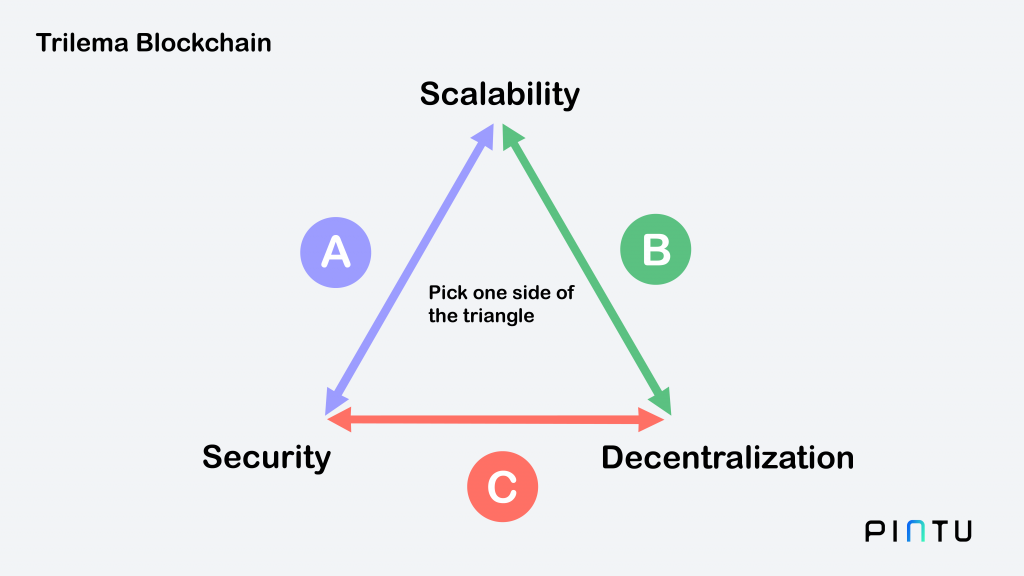
The blockchain trilemma is a fundamental challenge faced by blockchain developers: how to achieve a balance among decentralization, security, and scalability. Vitalik Buterin, the co-founder of Ethereum, has been vocal about addressing this issue through innovative upgrades that enhance the Ethereum network. Many blockchain platforms, including Bitcoin, have historically struggled to prioritize all three aspects effectively, often leading to compromises—such as Bitcoin’s highly decentralized yet slow and less scalable infrastructure.
Ethereum’s approach offers a potential solution to the trilemma with its upcoming technologies like PeerDAS and ZK-EVMs. These innovations aim to significantly boost Ethereum’s efficiency while maintaining its decentralized nature. The transformative potential of these upgrades is exemplified by Buterin’s confidence in achieving a practical resolution to the trilemma, which could place Ethereum at the forefront of decentralized finance and blockchain technology.
Vitalik Buterin and Ethereum’s Evolution
Vitalik Buterin has dedicated a decade of his life to the advancement of Ethereum. His recent announcement regarding the successful navigation of the blockchain trilemma is grounded in substantial research and development, as well as ongoing enhancements that promise to shift Ethereum into a more powerful decentralized network. Through wide-ranging shifts—like the early implementation of PeerDAS and the anticipated roll-out of ZK-EVMs—Ethereum’s trajectory illustrates its core philosophy of continuous improvement.
Buterin’s insights reflect a forward-thinking approach to overcoming scalability hurdles without sacrificing security or decentralization. Each upgrade represents a significant leap towards fulfilling Ethereum’s mission, as he noted the importance of addressing data availability issues, underscoring how this challenge has evolved since his initial focus on it in 2017. The commitment to ongoing updates and improvements showcases Ethereum’s responsiveness to market demands and technological advancements.
PeerDAS: A Catalyst for Ethereum’s Scalability
Peer Data Availability Sampling (PeerDAS) is a recent upgrading mechanism embedded in Ethereum’s infrastructure designed to enhance scalability significantly. Introduced with the Fusaka upgrade, PeerDAS allows Ethereum to handle greater data loads efficiently, thereby increasing the network’s overall throughput. This is particularly crucial as decentralized applications (dApps) on Ethereum continue to grow in popularity and complexity, resulting in elevated demands for network efficacy and speed.
The implementation of PeerDAS underlies Buterin’s confidence in overcoming the blockchain trilemma, demonstrating that Ethereum is investing heavily in balancing decentralization and scalability. More users can access the network, and developers can deploy high-demand applications without sacrificing performance. As Ethereum aims to solidify its place as a leading decentralized network, PeerDAS represents a milestone in its evolution, creating pathways for future improvements.
The Role of ZK-EVMs in Ethereum’s Future
Zero-Knowledge Ethereum Virtual Machines (ZK-EVMs) symbolize an advanced leap for Ethereum, allowing for a blend of existing Ethereum Virtual Machine (EVM) functionalities with cutting-edge zero-knowledge proofs. These virtual machines not only increase transaction privacy and security but also enhance speeds, paving the way for a more efficient decentralized network. With part of the network expected to integrate ZK-EVMs by 2026, the timeline indicates a solid commitment to refining the Ethereum protocol.
Despite being in the alpha stage, ZK-EVMs promise to be a game-changer for the Ethereum ecosystem by allowing developers to craft more robust and secure dApps. Buterin’s vision for widespread adoption over the next four years aligns with the long-term goals of Ethereum, creating a robust framework for developers while also addressing challenges posed by scalability and security. The integration of ZK-EVM technology will be pivotal in the ongoing effort to resolve the trilemma.
Future Improvements and Expectations for Ethereum
As Ethereum gears up for upcoming upgrades within its roadmap, there are several expectations that developers and users can look forward to between 2026 and 2030. These improvements are set to include significant gas repricings and adjustments that will enhance the feasibility of higher gas limits while ensuring the security of transactions. Buterin states that these alterations will not only optimize the network’s performance but will also present opportunities for users to operate ZK-EVM nodes—a critical step toward achieving a more decentralized network.
The planned advancements demonstrate a strategic vision that takes into account both current challenges and future demands. By continually iterating and iterating upon existing systems, Ethereum aims to not just catch up with existing blockchain technology but to establish a definitive lead in decentralized finance. The next few years will be crucial for validating Buterin’s proposition of resolving the blockchain trilemma and will likely redefine how decentralized networks function globally.
Decentralized Networks: The Future of Blockchain
The concept of decentralized networks is pivotal to the philosophy of blockchain technology. They promise individuals to regain control of their data while ensuring transparency and trust through distributed ledger technology. As Ethereum explores new avenues with PeerDAS and ZK-EVMs, it reinforces the significancy of decentralization—as opposed to traditional centralized systems—while enhancing security and promoting scalability for users and developers alike.
Buterin’s assertion that a decentralized, powerful network can emerge from these upgrades resonates strongly with the growing dissatisfaction with centralized systems in today’s digital landscape. The evolution of Ethereum serves as a beacon for other blockchain projects attempting to navigate their unique challenges. By demonstrating that decentralization can indeed coexist with robust capabilities, Ethereum may inspire a new era of innovation in the blockchain space.
Historical Context of Data Availability Issues
The concern around data availability has been a subject of scrutiny since the inception of blockchain technology. Vitalik Buterin himself identified these issues back in April 2017, marking the beginning of a journey toward systematic solutions. The historical context outlines not just a technical challenge but reveals deeper implications on how blockchain can function as a secure and decentralized network. The Ethereum community has continuously sought ways to innovate while remaining responsive to emerging challenges.
Today, with PeerDAS being employed and ZK-EVMs on the horizon, it’s evident that solutions are being materialized, reflecting an evolution of thought and practice in the blockchain space. By addressing data availability, Ethereum aims to put its historical challenges behind while forging a path toward a more scalable future. The iterations made in addressing these issues can serve as valuable case studies for upcoming blockchain projects aiming to overcome similar hurdles.
The Impact of Ethereum Upgrades on Decentralized Applications
As Ethereum progresses through its numerous upgrades, the implications for decentralized applications (dApps) become ever more profound. By utilizing technologies like PeerDAS and ZK-EVMs, developers can create dApps that operate with enhanced efficiency, privacy, and reduced costs for users. The upgrades signify a shift in how developers can approach application building—all while fostering a secure and decentralized ecosystem.
DApps are inherently reliant on the underlying blockchain infrastructure, and Ethereum’s advancements position it as a robust platform among its competitors. By refining scalability without sacrificing decentralization, Ethereum continues to attract developers searching for an optimal environment to create innovative solutions. The future of dApps on Ethereum looks promising as these upgrades are implemented, ensuring that developers can innovate without the trade-offs typically associated with blockchain technology.
Comparative Analysis with Bitcoin and Other Blockchains
In juxtaposing Ethereum with Bitcoin, one can observe stark differences in their approaches towards achieving decentralization, security, and scalability. Bitcoin, while focusing on decentralization and security, faces limitations regarding transaction speed and scalability, making it less attractive for complex applications. In contrast, Ethereum’s advancements through upgrades like PeerDAS and ZK-EVMs aim to shift the paradigm, addressing scalability head-on while maintaining a decentralized structure.
This nuanced understanding of blockchain capabilities sets Ethereum apart from Bitcoin and other networks struggling with the trilemma. By actively pursuing solutions that target these three dimensions, Ethereum enhances its viability as a multifunctional blockchain, accommodating the growing needs of users and developers alike. As the Ethereum network continues to evolve, it will likely attract more projects and applications, solidifying its position at the forefront of the blockchain revolution.
Frequently Asked Questions
What is the Ethereum blockchain trilemma as described by Vitalik Buterin?
The Ethereum blockchain trilemma, articulated by co-founder Vitalik Buterin, refers to the challenge of achieving a balance between decentralization, security, and scalability in a blockchain network. While many blockchains tend to prioritize one or two of these aspects, Buterin suggests that advancements such as PeerDAS and ZK-EVMs are paving the way for Ethereum to address this trilemma effectively.
How does PeerDAS contribute to solving the Ethereum blockchain trilemma?
PeerDAS, introduced in the Fusaka upgrade, enhances Ethereum’s scalability by allowing the network to handle significantly more data. This advancement supports decentralization while maintaining security, thus tackling one leg of the Ethereum blockchain trilemma.
What role do ZK-EVMs play in the Ethereum blockchain trilemma?
ZK-EVMs, or Zero-Knowledge Ethereum Virtual Machines, aim to improve the transaction speed and capacity on the Ethereum network without compromising security. Vitalik Buterin emphasizes that once fully integrated, ZK-EVMs will help achieve a more scalable and efficient decentralized network, further addressing the Ethereum blockchain trilemma.
When can we expect the full implementation of ZK-EVMs on Ethereum?
According to Vitalik Buterin, ZK-EVMs are anticipated to be fully operational within the next four years, with parts of the network expected to utilize them by 2026. This rollout is crucial for officially resolving the Ethereum blockchain trilemma.
Why is safety still a concern despite advancements in Ethereum’s upgrades?
While Ethereum’s PeerDAS and ZK-EVM upgrades significantly improve scalability and network efficiency, safety remains a priority as ZK-EVMs are still in their alpha stage. Vitalik Buterin highlights the need for further security enhancements before fully realizing the potential of these technologies in resolving the Ethereum blockchain trilemma.
How does Ethereum’s approach to the blockchain trilemma compare to Bitcoin’s?
Vitalik Buterin contrasts Ethereum’s strategy, which leverages technologies like PeerDAS and ZK-EVMs to address the blockchain trilemma, with Bitcoin’s design. Bitcoin is primarily focused on decentralization and security, but struggles with scalability, illustrating how different networks tackle the challenges of the blockchain trilemma in divergent ways.
| Key Point | Description |
|---|---|
| Blockchain Trilemma | The challenge of achieving decentralization, security, and scalability simultaneously in a blockchain network. |
| Vitalik Buterin’s Claims | Buterin asserts that Ethereum has ‘solved’ the trilemma using PeerDAS and ZK-EVMs, marking a significant upgrade to the network. |
| Peer Data Availability Sampling (PeerDAS) | Introduced in the Fusaka upgrade, this scalability improvement allows Ethereum to handle more data effectively. |
| Zero-Knowledge Ethereum Virtual Machines (ZK-EVMs) | These are virtual machines that support ZK proofs and are compatible with the existing Ethereum virtual machine, enhancing performance. |
| Timeline for Implementation | ZK-EVMs are expected to be fully operational by 2026, with significant upgrades increasing gas limits and ensuring network safety from 2026-2030. |
| Decentralized Consensus and High Bandwidth | As per Buterin, the combination of PeerDAS and ZK-EVMs enables Ethereum to achieve decentralized consensus and high bandwidth. |
| Historical Context | Buterin highlighted the 10-year effort to address data availability, starting from his initial post in April 2017. |
| Comparison to Bitcoin | Buterin cites Bitcoin as a blockchain that favors decentralization and security at the expense of scalability. |
Summary
The Ethereum blockchain trilemma, which involves balancing decentralization, security, and scalability, has been a significant concern for developers and users alike. Vitalik Buterin’s recent insights suggest that Ethereum is on the verge of overcoming this challenge through innovative technologies like PeerDAS and ZK-EVMs. As these tools enhance the network’s capabilities, Ethereum may soon become a more robust and efficient decentralized ecosystem, fulfilling its long-term goal of resolving the trilemma.