
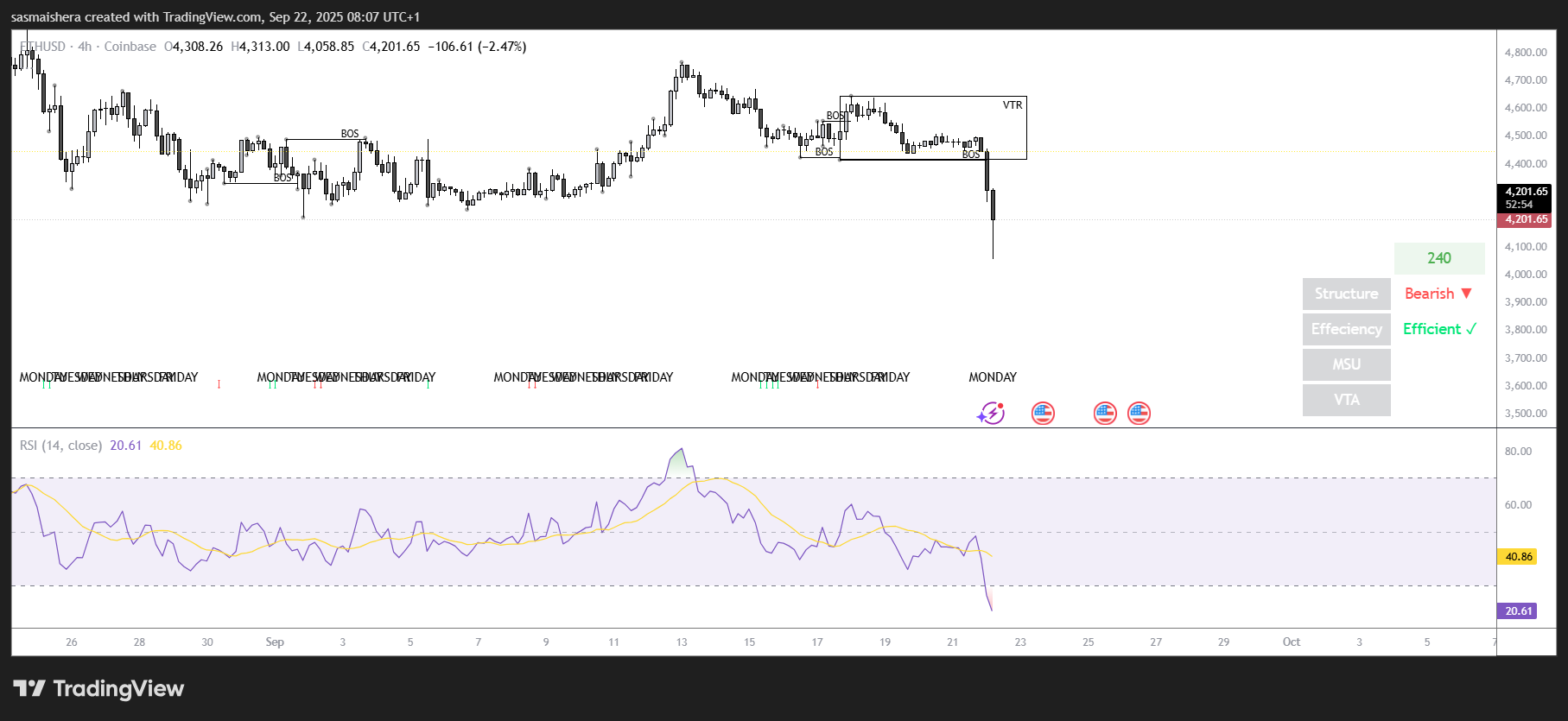

The recent Ether price dip has sent shockwaves through the cryptocurrency market, as Ethereum’s native token, ETH, fell to a staggering low of $1,927, reflecting a more than 60% decline from its all-time peak. This drop is not merely a number; it represents a significant stress-test for ETH holders, revealing shifting dynamics among various investor cohorts. Data indicates that while smaller holders are opting to sell, larger investors display confidence with continued accumulation amidst the turbulence. As analysts conduct Ethereum price analysis, it’s evident that the bear market Ether is currently experiencing could further affect ETH holder behavior in the short term. With rising crypto exchange inflows intensifying the price pressures, the question remains: can Ether recover its footing above the $2,000 mark?

In light of the recent downturn in Ethereum’s value, the topic of Ether’s price decline has garnered attention from investors and analysts alike. The current market landscape is being characterized by fluctuating holder confidence, especially among those heavily invested in this leading altcoin. While many smaller investors seem to be capitulating, larger fund holders are navigating the bear market Ether environment strategically, leading to increased accumulation. Observing the shifts in crypto exchange inflows and overall investor behavior, a comprehensive understanding of this situation is critical for anyone looking to engage with Ether’s evolving narrative in the blockchain realm.
| Key Point | Details |
|---|---|
| Ether Price Drop | ETH dropped to a year-to-date low of $1,927, over 60% down from its all-time high of $4,950. |
| Impact on Holders | Smaller holders are selling while larger holders accumulate, indicating a shift in market dynamics. |
| Mid-sized Holder Behavior | Mid-sized holders (100-10,000 ETH) reduced their holdings, suggesting capitulation. |
| Large Holder Accumulation | Large holders (10,000+ ETH) have increased exposure, absorbing sell pressures. |
| Realized Price | ETH is trading below the realized price for all cohorts, indicating potential losses for investors. |
| Market Sentiment | On-chain data suggests a change in behavior, indicating potential stress-test for holder conviction. |
| Exchange Inflows | Increasing inflows on exchanges suggest continued sell pressure and a possible bear market. |
Summary
The recent Ether price dip below $2,000 has raised concerns over holder confidence as market dynamics shift. With smaller holders capitulating and larger holders accumulating, the future trajectory of Ether remains uncertain. Market analysis suggests potential for ongoing pressure as exchange inflows increase, highlighting the necessity for investors to remain vigilant during this challenging period.
Current Ether Price Dynamics and Market Sentiment
As Ether (ETH) slips below the critical $2,000 threshold, market sentiment is shifting dramatically. The current price dip has raised concerns among investors, particularly smaller holders, who are increasingly selling off their positions in reaction to the bearish market. The significant price drop, down more than 60% from its all-time high, indicates a growing stress test for Ether holders, forcing many to reconsider their investment strategies amidst fears of a protracted bear market.
On the other hand, larger holders appear to be taking advantage of this decline by accumulating more Ether. Their buying activity suggests a divergence in trader behavior, with whales and institutional investors capitalizing on lower prices while smaller players capitulate. This imbalance raises critical questions about future ETH price movements and whether increased accumulation from large holders can counterbalance the bearish pressure exerted by selling from mid-sized investors.
Understanding Ethereum Holder Behavior During the Price Dip
Recent on-chain data reveals a striking shift in holder behavior amongst Ethereum investors. Smaller holders, especially those with between 100 to 10,000 ETH, are reducing their holdings significantly, indicative of a capitulation phase as they react to continuous losses. Conversely, wallets holding 10,000 ETH or more are ramping up their acquisition, absorbing the selling pressure and suggesting a bullish sentiment that contrasts sharply with the overall market sentiment.
This behavior highlights a critical factor for Ethereum’s price recovery. If larger holders continue their accumulation strategy, they could play a pivotal role in stabilizing Ether’s price. Analysts suggest that while smaller holders exit the market due to fear, the confidence of large holders might attract new buyers and eventually lead to a reversal of the current trend. The divergence in action among various holder groups underlines the multifaceted dynamics influencing Ethereum’s price trajectory.
The Impact of Crypto Exchange Inflows on Ether Pricing
Exchange inflows have become a significant focus for analysts observing the recent price drop in Ether. The continued inflow of ETH to platforms indicates heightened selling pressure, as more holders are looking to liquidate their assets rather than accumulate, thereby contributing to a bearish outlook. Crypto analysts, including experts from platforms like CryptoQuant, note that increasing inflows could signify an impending bear market phase that might prolong downward price action for Ether.
On exchanges like Binance, the influx of Ether correlates with a growing sell-off among the retail investor base, which is further exacerbated by unfavorable market conditions. The sell-pressure is reflected in market execution data, suggesting that as more ETH is traded at lower prices, the chances of a price rebound diminish. Investors should remain vigilant as these metrics suggest that the infusion of cryptocurrencies into exchanges could keep Ether’s price vulnerable to further declines in the immediate future.
Analyzing the Bear Market Phase for Ether
The current atmosphere surrounding Ethereum can be classified as a bear market, marked by a significant retracement in Ether’s price and a recorded dip below the $2,000 mark. During such market phases, investor psychology shifts towards caution, with many technical indicators pointing towards a sustained bearish trend. Analysts posit that identifying support levels and resistance points becomes critical for navigating trades safely in this environment.
Despite the prevailing negativity, the behavior of large ETH holders does offer a glimmer of hope. Their strategies of accumulation during downturns can serve as a form of market support, potentially laying the groundwork for a future price recovery. However, until a clear reversal pattern emerges, many crypto enthusiasts remain skeptical about Ethereum’s immediate recovery prospects, emphasizing the importance of monitoring inflow trends and holder activities closely.
Ethereum’s Price: Future Predictions After Recent Lows
As Ethereum’s price hovers around the $2,000 mark, many traders and investors are anxious about the future of ETH and its pricing trends. Analysts are exploring various price forecasts and employing technical analysis to discern potential recovery points amidst the prevailing bearish sentiment. These evaluations involve scrutinizing on-chain data coupled with historical price actions to anticipate how Ether might react in the coming weeks.
Concurrently, market adaptation by large holders and their continuous buying campaigns could potentially catalyze a reversal in market psychology. If this trend persists, it could result in stronger support levels at $2,000, providing a platform for potential upward momentum. However, uncertainty remains, and the price trajectory heavily relies on ongoing market developments and the reactions of mid-sized holders to changes in sentiment and price movements.
The Role of Accumulation in Shaping Ether’s Momentum
Despite the price pressures facing Ether, the pronounced accumulation by large-scale investors is a critical dynamic that cannot be overlooked. This concerted buying effort indicates that significant players in the market maintain a positive outlook on Ether despite recent declines. Their ability to absorb sell-off pressure demonstrates confidence inherent within the ecosystem, positioning it for potential recovery, provided that the broader market conditions stabilize.
Moreover, understanding the significance of accumulation strategies can provide insights into future price movements. If large holders continue increasing their portfolio sizes during this price slump, it may signal bullish trends as new buyers are encouraged to enter the market. Such strategic accumulation could rebound with the influx of confidence, thereby enhancing the stabilization of Ether’s price and potentially unlocking avenues for growth in a recovering market.
Crypto Market Trends Affecting Ether Performance
The overall crypto market dynamics heavily influence Ether’s performance, especially during moments of unpredictability like the current price dip below $2,000. Shifts in Bitcoin prices often set the tone for market sentiment across altcoins, including Ether, highlighting the interconnected nature of these cryptocurrencies. As Bitcoin experiences fluctuations, traders often react by reallocating their resources according to perceived risk, greatly affecting the price dynamics of Ethereum.
Additionally, external factors such as regulatory developments, macroeconomic climates, and technological advancements in blockchain also contribute to altering investor sentiment. Therefore, it is essential for Ether traders to stay updated with broader market narratives to navigate their investment more effectively. Awareness of these trends and their implications can significantly impact decision-making and help investors capitalize on potential recoveries in the Ethereum market.
The Importance of Realized Price in Ether Evaluation
Understanding the notion of realized price is crucial for evaluating Ether’s current market position. The realized price offers insights into the average cost basis at which ETH holders last moved their tokens. Given that ETH is trading below this metric for all holder cohorts, it reflects the broader sentiment of loss and capitulation currently pervasive in the market. Larger cohorts such as those holding over 100,000 ETH reveal an average realized price of around $2,120, emphasizing the heightened stress among smaller holders trapped in losing positions.
The implications of realized price extend beyond mere observation, as this metric can often indicate price support levels and potential price recovery points. Investors often look for signs of a reversal beyond these realized prices, making them critical for technical analysis and strategic planning. With ongoing bear market pressures, understanding realized price metrics becomes essential for stakeholders aiming to navigate the Ether landscape effectively during challenging times.
Investment Strategies for Navigating Ether’s Price Challenges
In light of the current price challenges faced by Ether, developing robust investment strategies is essential for both new and experienced cryptocurrency investors. A prudent approach includes diversifying portfolios to mitigate risks, assessing the accumulation patterns of larger holders, and staying agile in response to market fluctuations. Given the volatility of the crypto market, constant monitoring of market data, alongside understanding the timings for entering or exiting positions, is critical to maximizing investment potential.
Moreover, investors should educate themselves on market conditions, including sentiment analysis and on-chain metrics, to make informed decisions. Engaging with community discussions and expert analyses can lend valuable insights aimed at crafting effective trading strategies. As the Ether price exhibits fluctuations amid broader market sentiments, developing a keen understanding of market behavior will empower investors to navigate the challenging landscape more effectively and safeguard their investments against undue losses.
Frequently Asked Questions
What is causing the Ether price dip and how does it relate to Ethereum price analysis?
The recent Ether price dip below $2,000 is attributed to multiple factors, as indicated by Ethereum price analysis. Continued selling pressure from smaller holders, alongside a significant accumulation of Ether by larger investors, highlights market dynamics where smaller investors are capitulating while larger entities are absorbing this sell-off. Analysts suggest this behavior reflects broader market trends and may signify the start of a bear market.
How is ETH holder behavior influencing the current Ether price dip?
ETH holder behavior is crucial in understanding the current Ether price dip. Smaller holders, particularly those with 100–10,000 ETH, are reducing their holdings, indicating a loss of conviction. In contrast, larger holders (over 10,000 ETH) have been increasing their positions, suggesting they view the current pricing as an opportunity to accumulate. This divergence in ETH holder behavior indicates stress within the market, affecting overall Ether price stability.
Are the crypto exchange inflows contributing to the Ether price dip?
Yes, the increase in crypto exchange inflows is contributing to the Ether price dip. As more Ether is moved to exchanges, it often signals selling pressure, which can lead to negative price movements. Analysts have noted that the rising exchange inflows are maintaining elevated downside risks for Ether, further complicating the efforts of large holders trying to stabilize prices.
What is the impact of the bear market Ether trend on current prices?
The trend of bear market Ether is having a significant impact on current prices, with Ether recently falling below $2,000. Market conditions indicate a strong selling sentiment among mid-sized holders, while larger investors are accumulating. This dual behavior is characteristic of a bear market, where sentiment is low, and price recovery becomes uncertain, potentially leading to further declines.
What factors should ETH holders consider during this Ether price dip?
During the Ether price dip, ETH holders should consider several factors, including on-chain analytics showing changes in holder behavior, exchange inflows, and general market sentiment indicating a bear market phase. Understanding these elements can help holders make informed decisions about whether to accumulate more Ether during this dip or to hold off due to potential further declines.
Will Ether accumulation by large holders affect the price recovery during the current dip?
Large holders’ accumulation could potentially help stabilize Ether’s price during the current dip. Their increased exposure to Ether amid widespread selling by smaller holders suggests a belief in Ether’s long-term value. However, whether this accumulation will lead to a price recovery back above $2,000 depends on broader market conditions and continued demand for Ether.
Related: More from Market Analysis | WLFI Price Predicted: World Liberty Financial Proposes Governance Overhaul | XLM Bounces But Bears Control