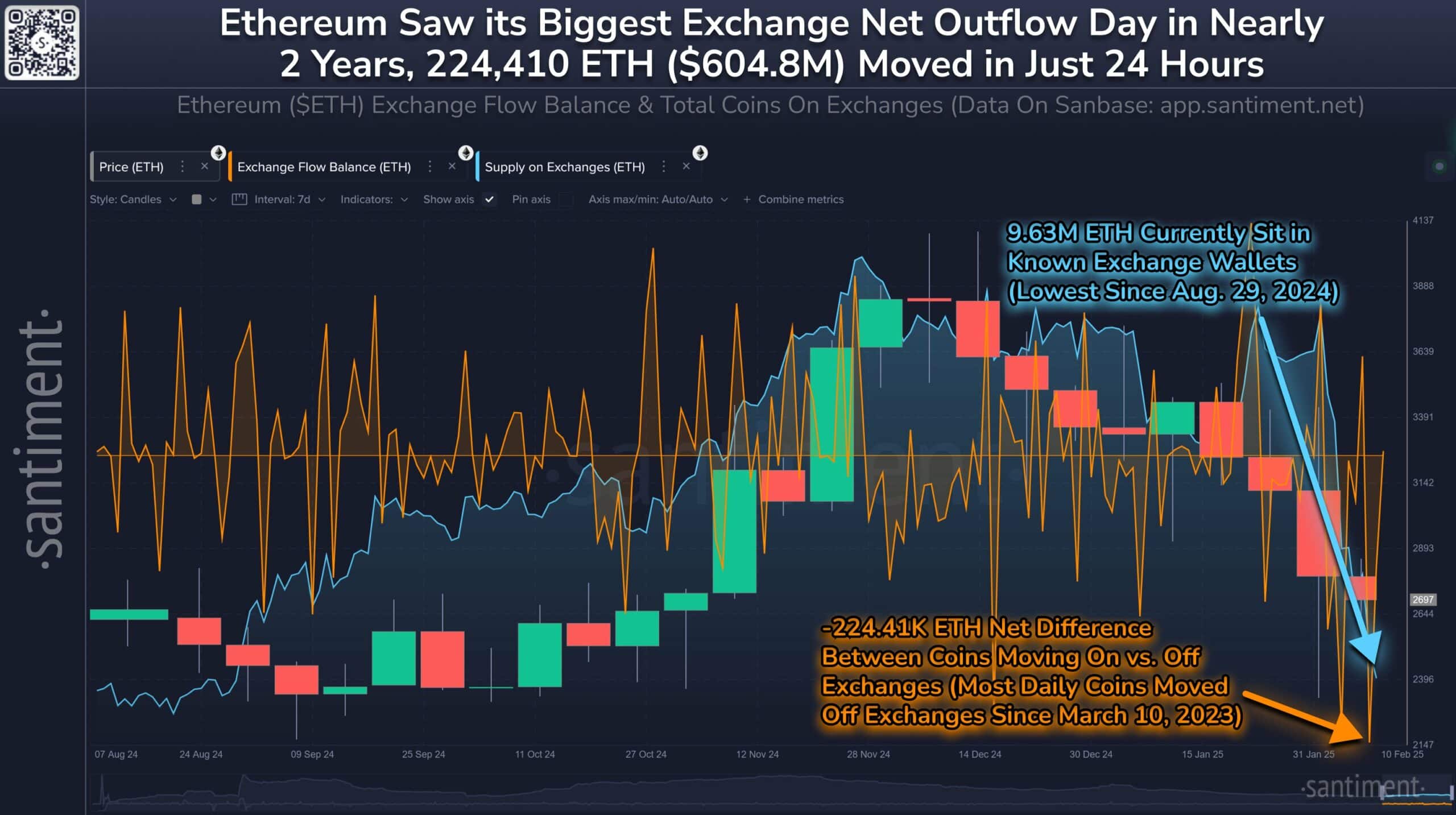

In the ever-evolving landscape of cryptocurrency, ETH net outflow has emerged as a pivotal metric reflecting market sentiment and trading behavior. Over the past 24 hours, there has been a significant net outflow of 184,500 Ethereum from centralized exchanges (CEX), according to Coinglass data. Major players like Binance and Kraken have seen substantial withdrawals, with Binance accounting for 90,000 ETH and Kraken contributing 79,400 ETH to the total. This trend of Ethereum withdrawals highlights the growing tendency for traders to move assets away from exchanges, potentially signaling a shift towards long-term holding strategies. Understanding the dynamics behind CEX net flow can offer valuable insights into the cryptocurrency landscape and the investing community’s confidence in assets like Ethereum.
The recent wave in the cryptocurrency sector, marked by significant assets moving away from trading platforms, highlights an intriguing phenomenon often referred to as Ethereum withdrawals. This development sees large volumes of Ethereum transferred from centralized exchanges (CEX), underlining the importance of monitoring cryptocurrency exchange outflow. Notable exchanges such as Binance and Kraken have reported considerable net withdrawals, prompting discussions among investors regarding market trends. Such movements not only reflect trader behavior but also indicate potential shifts in market dynamics as participants reassess their strategies. As these withdrawals escalate, understanding the implications of CEX net flow becomes increasingly essential for both seasoned investors and newcomers alike.
Understanding the Current Ethereum CEX Net Outflow Trends
The cryptocurrency market is experiencing significant shifts, with Ethereum (ETH) at the forefront of these changes. Over the past 24 hours, a staggering net outflow of 184,500 ETH has been reported from centralized exchanges (CEX). This trend indicates a broader movement within the crypto ecosystem, reflecting increased withdrawal activity as users appear to be transferring their assets to personal wallets or other platforms. The outflow figures provide insight into investor sentiment and the ongoing dynamics of the Ethereum market, as traders decide between holding their assets or moving them off exchanges.
Among the various exchanges observing significant withdrawals, Binance leads the pack with an outflow of 90,000 ETH, followed closely by Kraken which recorded 79,400 ETH. These figures highlight the importance of understanding exchange flows, as they can influence Ethereum’s market price and overall liquidity. It is crucial for traders and investors to monitor these activities as a decrease in CEX liquidity could lead to increased volatility in the Ethereum market.
The Impact of Binance and Kraken Withdrawals on Ethereum’s Market
The recent net outflows from exchanges like Binance and Kraken have raised questions about market liquidity and investor confidence in Ethereum. As these platforms witness substantial withdrawals—particularly with Binance’s 90,000 ETH outflow—traders are analyzing how this could affect market trends. Outflows can often indicate that investors are opting for long-term holding strategies, signaling a potential bullish outlook or, conversely, they could suggest apprehension about market conditions. In an environment what can appear unpredictable, these withdrawal trends merit close examination.
Furthermore, Kraken reported an outflow of 79,400 ETH, underscoring the significant role these exchanges play in the Ethereum ecosystem. With significant portions of liquidity being moved away from centralized exchanges, it is essential to understand how this may impact price stability and trading volumes. Observing such movements allows market participants to gauge trader sentiment, hinting at either consolidation before a resurgence or a strategic retreat from the market amidst uncertainty.
Ethereum Withdrawals: What Investors Should Watch For
Ethereum withdrawals from centralized exchanges have become a focal point for both seasoned investors and newcomers alike. The recent data indicates a cumulative net outflow that raises red flags for those keeping a close eye on the cryptocurrency markets. With 184,500 ETH having exited major platforms within just 24 hours, the trend could signal crucial shifts in market dynamics, urging investors to reassess their trading strategies.
Additionally, the patterns of withdrawals from exchanges like Binance and Kraken are not merely numbers; they represent a potential migration of assets out of the exchange ecosystem, which can affect price discovery and market efficiency. Investors should monitor these developments closely, as large-scale ETH withdrawals can lead to heightened price volatility, particularly if the market perceives these outflows as a precautionary measure by holders.
Analyzing the Reasons Behind Increased CEX Net Flows
The increase in CEX net outflows has sparked discussions regarding the reasons behind such movements. Factors contributing to the surge in Ethereum withdrawals may include changes in market sentiment, regulatory news, and widespread adoption among retail investors. As the cryptocurrency landscape evolves, the actions of traders, especially in terms of significant withdrawals from platforms like Binance and Kraken, offer insights into broader trends affecting Ethereum.
Additionally, the shift towards more decentralized finance options could also be influencing these withdrawals, with many users opting to secure their assets in personal wallets rather than keeping them on exchanges. This migration reflects a growing trend of prioritizing security and control over assets among Ethereum users, highlighting the importance of education on safe asset storage solutions.
The Role of Centralized Exchanges in Ethereum’s Eco-system
Centralized exchanges (CEX) serve as the backbone of the cryptocurrency trading infrastructure, facilitating the buying, selling, and storing of digital assets like Ethereum. However, the dynamics of these exchanges are continually evolving, especially as users become more educated about asset management strategies. The recent outflows indicate that traders are increasingly recognizing the risks associated with keeping large amounts of Ethereum on exchanges, leading to a defined shift towards withdrawal.
This trend poses interesting implications not just for individuals but for exchanges themselves. Centralized platforms must respond to the changing landscape by ensuring enhanced security measures and user trust. As CEX net outflow statistics reflect changing behaviors, these exchanges could see demand for more user control options, such as decentralized storage solutions and better withdrawal protocols.
Market Predictions Following High ETH Outflows
As Ethereum experiences significant net outflows, market analysts and traders are turning to predictions on how this will shape the future of ETH’s price movements. Understanding the landscape of withdrawals helps delineate the narratives that can lead to either upward or downward pressure on prices. High outflows may suggest a bullish sentiment among holders, yet they could also point to a cautious atmosphere among traders anticipating volatility.
Moreover, with Binance and Kraken leading the outflow charts, speculation surrounding market stability is reaching a fever pitch. Will ETH’s price rise as liquidity decreases, or will the fear of missing out drive holders back to exchanges? Engaging with these dynamics can offer keen insights into market forecasts, making it essential for investors to stay informed on ongoing withdrawal trends.
The Connection Between ETH Withdrawals and Market Sentiment
The recent uptick in Ethereum withdrawals is a significant indicator of market sentiment. When traders withdraw substantial amounts of ETH from centralized exchanges, it often reflects a changing narrative regarding their confidence in the asset’s future value. Additionally, as exchanges face heavy outflows, it can signal a shift away from centralized trading platforms, which may correlate with a broader sentiment towards decentralization among investors.
This connection between withdrawal activity and market sentiment is critical for understanding the future trajectory of Ethereum. While some see these moves as precautionary, others interpret them as a clear signal of growing investor acumen towards securing their assets. Keeping tabs on this sentiment analysis will provide traders with a clearer perspective as they navigate the complex Ethereum market.
Security Concerns Prompting ETH Withdrawals from Centralized Exchanges
Amid rising concerns regarding security, many Ethereum holders are prioritizing the safety of their assets by withdrawing from centralized exchanges. With high-profile hacks and regulatory scrutiny involving some exchanges, users are becoming increasingly aware of the risks associated with keeping digital assets on CEX platforms. Consequently, the recent CEX net outflow figures highlight a pronounced shift towards a security-conscious approach among Ethereum investors.
The decision to withdraw ETH from exchanges such as Binance and Kraken indicates an awareness of the importance of personal custody and asset protection. As more users opt for hardware wallets and other secure storage methods, the overall perception of centralized exchanges is shifting, leading to future growth opportunities within the decentralized finance (DeFi) sector.
Future Implications of Ethereum’s Current Withdrawal Trends
The current withdrawal trends from centralized exchanges could have far-reaching implications for the future of Ethereum. As significant amounts of ETH are withdrawn, it poses critical questions about market accessibility and liquidity. Investors are challenged to adapt to a potentially lower liquidity environment, which may lead to increased price volatility and new trading strategies aimed at managing greater risk.
Looking ahead, the evolution of Ethereum’s market dynamics due to these outflows can also spur innovation within the decentralized ecosystem. As users increasingly opt for decentralized exchanges and wallets, we can expect to see a shift in trading behaviors and an overall transformation of Ethereum’s marketplace, potentially paving the way for the next phase of cryptocurrency evolution.
Frequently Asked Questions
nn
What does the recent ETH net outflow signify for the Ethereum market?
The recent ETH net outflow of 184,500 Ethereum from centralized exchanges (CEX) indicates a growing trend of investors withdrawing their assets to hold them off exchanges, potentially signaling lower selling pressure and increased long-term confidence in Ethereum’s value.
nn
Which exchanges reported the highest Ethereum withdrawals in the recent CEX net flow data?
In the latest CEX net flow report, Binance topped the list with an outflow of 90,000 ETH, followed by Kraken with 79,400 ETH, and OKX with 17,100 ETH, highlighting significant withdrawals from these major platforms.
nn
How do cryptocurrency exchange outflows impact the price of Ethereum?
Cryptocurrency exchange outflows, particularly the recent ETH net outflow, can negatively correlate with price movements. As more ETH is withdrawn from exchanges, it may indicate reduced selling pressure, potentially leading to price stabilization or appreciation.
nn
What could the ETH net outflow trend tell investors about market sentiment?
The ETH net outflow trend, showing substantial withdrawals from centralized exchanges like Binance and Kraken, often reflects a bullish market sentiment, where investors prefer to hold their assets instead of trading them on platforms, anticipating future price increases.
nn
Why is tracking Ethereum withdrawals from exchanges important for investors?
Tracking Ethereum withdrawals, especially in the context of recent CEX net flows, allows investors to gauge market liquidity and sentiment. Higher withdrawal figures signify a potential increase in long-term holding and can serve as an essential indicator of investor confidence.
nn
What are the implications of a high Binance outflow for the Ethereum market?
A high Binance outflow, such as the 90,000 ETH recently reported, suggests that many users are moving their ETH assets to private wallets. This may indicate a preference for long-term holding strategies and could lead to price stability or upward pressure in the Ethereum market.
nn
How do Kraken ETH withdrawals contribute to the overall net outflow?
Kraken ETH withdrawals significantly contribute to the overall net outflow by reflecting user behavior trends where investors choose to withdraw their holdings instead of trading. The recent outflow of 79,400 ETH from Kraken underscores the ongoing shift of Ethereum assets from exchanges to personal wallets.
nn
Summary
ETH Net Outflow has reached significant levels, with a total of 184,500 ETH leaving centralized exchanges in just 24 hours. This outflow highlights a growing trend among investors showing a preference for holding Ethereum outside of CEXs, with Binance leading the outflow. Understanding these trends is crucial for investors and enthusiasts in the cryptocurrency market.
nn
Related: More from Market Analysis | Crypto Worries Over Iranian Oil Supply: Is It Overhyped? in Crypto Market | Insider Traders Profit $1.2M Before US Iran Strike in Crypto Market