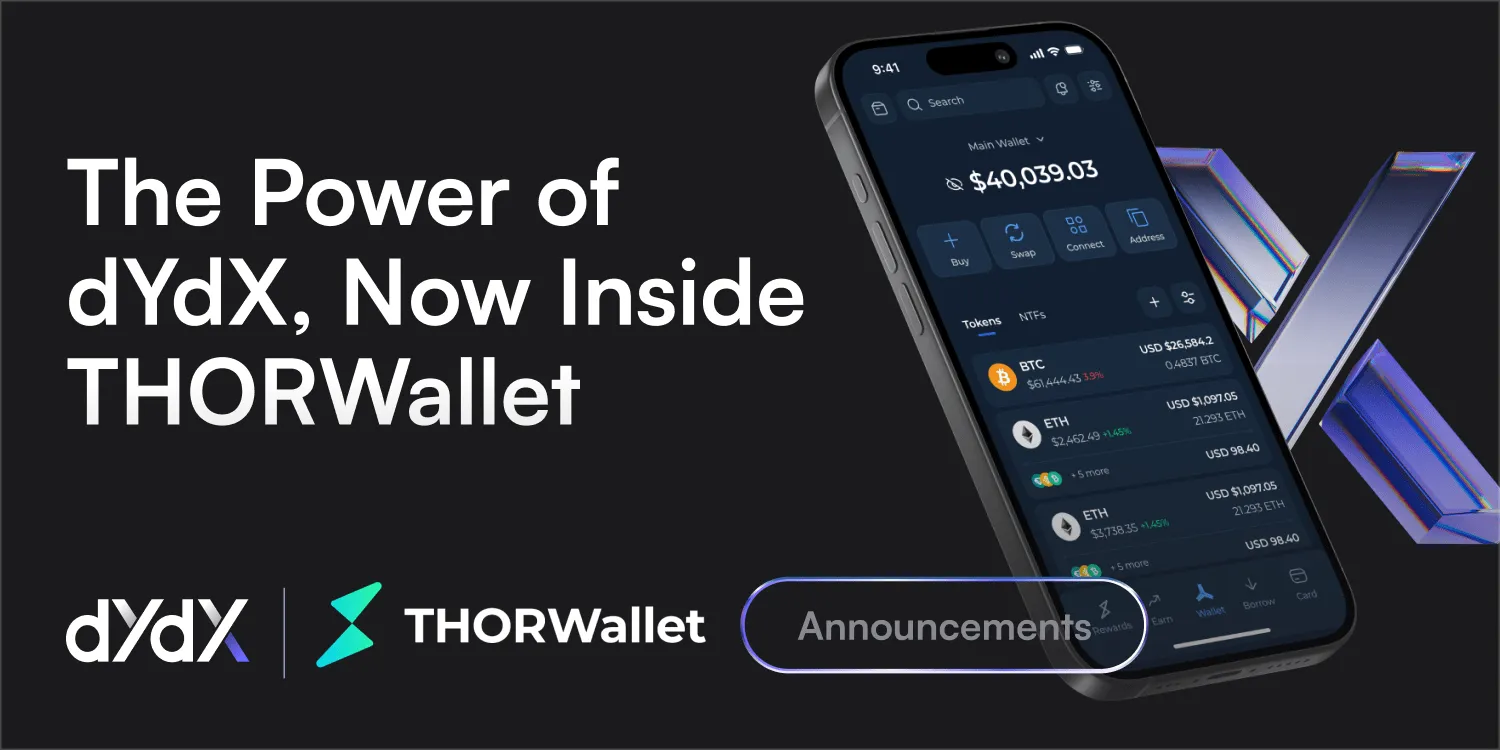

HORWallet Integrates dYdX to Enable On-Chain Perpetual Trading
In a significant move aimed at expanding its ecosystem and enhancing user capabilities, HORWallet, a prominent player in the decentralized wallet space, has announced the integration of dYdX, a leading decentralized exchange (DEX). This partnership marks a progressive step towards facilitating on-chain perpetual trading directly from the HORWallet interface, empowering users with more seamless and robust trading functionalities.

The Rise of Decentralized Finance (DeFi)
Decentralized Finance, or DeFi, has been transforming the financial landscape by enabling financial transactions and services, such as borrowing, lending, and trading, to occur without the need for traditional financial intermediaries. DeFi platforms use blockchain technology to ensure transparency, security, and fast processing of transactions. HORWallet, as a decentralized wallet, provides users a gateway to these DeFi services, ensuring users maintain control over their digital assets without relying on centralized authorities.
What Is dYdX?
dYdX operates as one of the most advanced cryptocurrency exchanges in the DeFi space, offering a fully decentralized platform where users can trade perpetual contracts with high leverage and low slippage. dYdX distinguishes itself with a layer-2 scaling solution that dramatically enhances transaction speed and reduces costs, utilizing starkWare’s zk-STARKs technology. This integration leverages cutting-edge innovations to provide efficient, secure, and accessible trading options for the growing crypto audience.
Benefits of HORWallet and dYdX Integration
The integration of dYdX into HORWallet brings several compelling advantages to users:
-
Direct Access to Perpetual Trading: Users can now enjoy the sophisticated trading tools of dYdX directly within their HORWallet app. This integration means that users can engage in perpetual trading without having to transfer funds between different platforms, streamlining the user experience and enhancing security.
-
Non-Custodial Trading: By ensuring that the trading occurs on-chain and within the secure confines of HORWallet’s non-custodial framework, users retain complete control over their private keys and, consequently, their assets. This setup significantly reduces the risks associated with centralized exchanges, such as asset mismanagement and hacks.
-
Optimized Transaction Speed and Costs: The use of dYdX’s layer-2 solution within HORWallet means transactions are not only faster but also cheaper, with reduced gas fees than traditional Ethereum transactions. This efficiency is critical, especially for traders who operate on thin margins and need to execute timely strategies.
- Enhanced Liquidity and Security: dYdX supports healthy liquidity pools and utilizes smart contracts for decentralized security that mitigate central points of failure. Traders on HORWallet can benefit from continuous market depths and reduced slippage even during high-stake trades.
Implications for the Future of DeFi
This integration between HORWallet and dYdX could be a bellwether for the future of decentralized trading. By combining secure, non-custodial wallets with powerful trading platforms, the DeFi world is increasingly encroaching on territories once dominated by traditional finance. This blend of accessibility, security, and advanced trading capabilities is likely to attract a broader segment of both seasoned traders and newcomers, potentially accelerating the adoption of DeFi solutions.
Final Thoughts
The partnership between HORWallet and dYdX represents a significant melding of utility and autonomy, providing a glimpse into the potential future of finance where flexibility and user empowerment are at the forefront. As more users flock to DeFi platforms to take advantage of these innovative solutions, we can expect the landscape of finance to continue evolving, with blockchain technology leading the charge toward a more decentralized and accessible world.
Both HORWallet and dYdX are well-positioned to play critical roles in this ongoing transformation, and their current integration is a pivotal step toward achieving these broader goals. With such developments, the question for many users is no longer why use DeFi, but why not?