


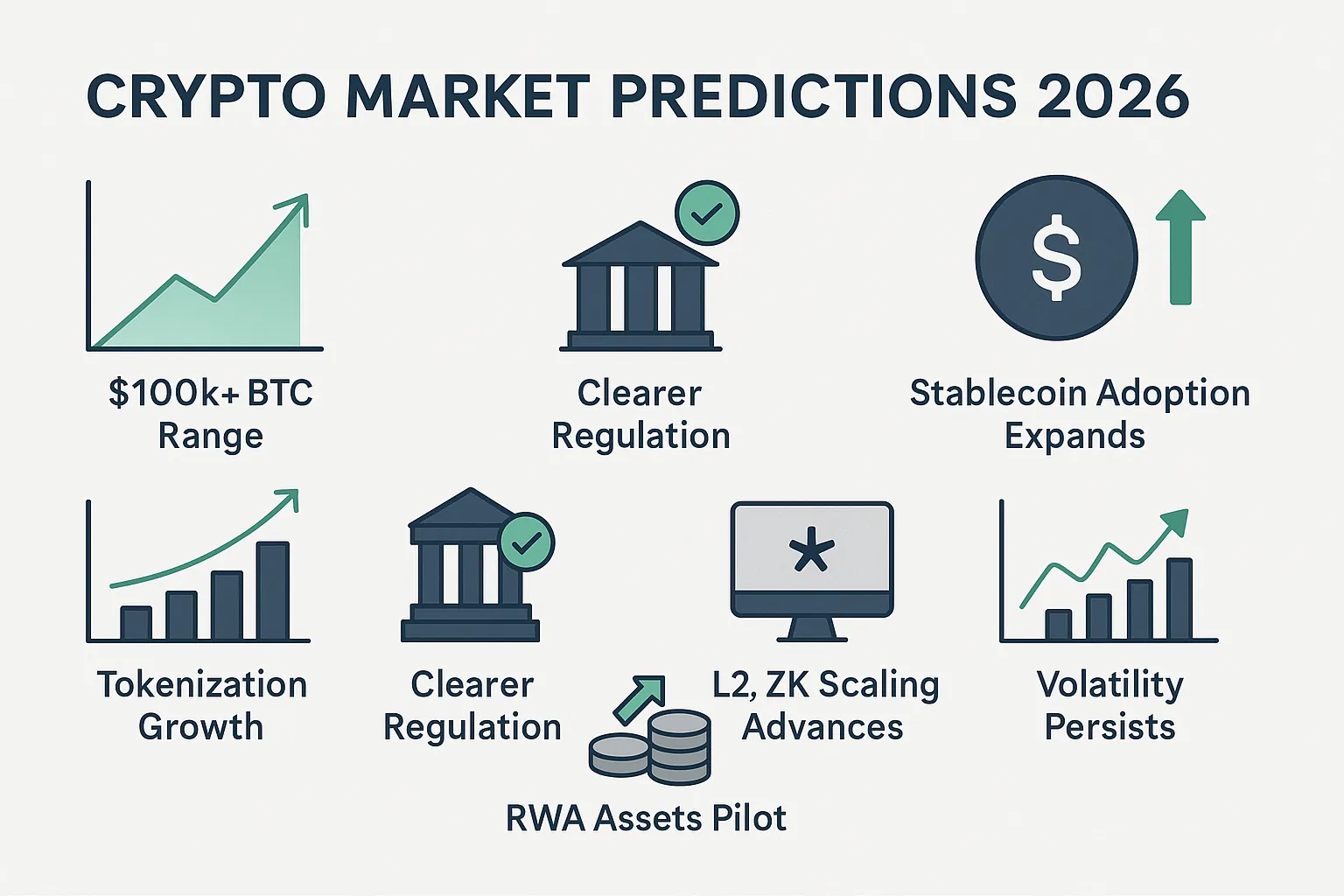

As we dive into 2026, understanding **crypto investment strategies 2026** is crucial for navigating this ever-evolving landscape. After a tumultuous 2025, characterized by unexpected market fluctuations and Bitcoin’s fluctuating fortunes, investors are looking for reliable indicators of future success. In this context, the significant trends of Bitcoin investment, stablecoin adoption, and the surge of tokenized assets are creating fresh opportunities. With a keen eye on crypto market predictions and a comprehensive 2026 cryptocurrency outlook, now is the time to develop strategies that leverage both traditional and innovative investment avenues. Equipped with this knowledge, investors can better position themselves to take advantage of the next wave of cryptocurrency evolution.

As we look ahead to strategies for investing in digital assets in 2026, it’s essential to explore the emerging themes reshaping the investment landscape. Following a year filled with surprises, the focus is shifting towards robust investment themes, especially in light of the latest Bitcoin dynamics, the rise of stablecoin infrastructure, and the growing prominence of tokenized physical assets. Understanding these evolving financial mechanisms will be key for investors as they navigate through the myriad of options available. The projections for the cryptocurrency market reveal an outlook that’s as lively as ever, with expectations of greater institutional engagement and innovations that could define the coming years. By harnessing insights from the latest trends and market predictions, investors can refine their strategies for sustainable growth in the ever-changing crypto environment.
Cryptocurrency Investment Strategies 2026: Preparing for Change
As we approach 2026, investors in the cryptocurrency space must rethink their strategies amid an evolving market landscape. The traditional approach of timing investments based on Bitcoin’s halving cycle may no longer apply, as recent trends suggest that institutional participation is altering the dynamics we’ve come to expect. The current market is characterized by a pervasive sense of caution, a sentiment that reflects the aftermath of a disappointing 2025 for many cryptocurrencies. Investors will need to embrace adaptability, focusing on the underlying fundamentals of projects rather than relying solely on historical price patterns.
In 2026, effective cryptocurrency investment strategies may center around areas demonstrating sustainable growth potential. This includes recognizing the emergence of new trends such as stablecoin adoption and tokenized assets, which signal broader shifts in the financial ecosystem. Adopting a long-term perspective can allow investors to avoid the pitfalls of short-lived speculative trading, leading to a more robust portfolio shielded against market volatility.
Bitcoin Investment Trends: Analyzing Past Cycles
Historically, Bitcoin has followed a predictable pattern where substantial price increases follow each halving event. For instance, after the October 2025 high, many speculate that Bitcoin’s performance will deviate from prior cycles due to the influence of institutional investors. The rise in institutional capital has introduced a new layer of complexity to Bitcoin’s price dynamics, and failure to appreciate this shift could lead to missed opportunities in the upcoming year. Understanding how institutional strategies differ from retail-driven trends will be crucial for investors looking to navigate Bitcoin investment in 2026.
Furthermore, analysts are starting to question whether Bitcoin will once again achieve an all-time high, or if a cycle break is imminent. Observing market responses to new regulatory frameworks and institutional investor strategies will provide insights into Bitcoin’s potential future performance. As the crypto landscape matures, discerning the trends of Bitcoin against a backdrop of traditional financial metrics could empower investors with actionable intelligence for their decision-making.
The Rise of Stablecoin Adoption in 2026
Stablecoins have emerged as a critical component of the cryptocurrency market, representing a more predictable and reliable asset class. Their usage has grown substantially, surpassing $300 billion, indicating a shift towards mainstream acceptance. Investors should pay close attention to stablecoin infrastructure developments, particularly with new regulations paving the way for enhanced functionality and integration into traditional financial systems. This evolution not only validates the stablecoin model but also positions it as a vital tool for cost-effective liquidity and transaction management.
In 2026, the focus will likely shift towards the operational frameworks surrounding stablecoins. Investors should consider the implications of the GENIUS Act, which aims to regulate stablecoin issuers. As the sector expects further innovation in cross-border payments and yield-bearing instruments, understanding the underlying technology and legal considerations will provide investors added insights into stablecoin market performance. Exploring the rise and application of stablecoins in various sectors will help mold investment strategies that leverage their growth potential.
Tokenized Assets: Bridging Traditional Finance and Crypto
The tokenization of real-world assets (RWAs) represents a paradigm shift within the financial landscape, moving from a conceptual phase to practical application. Major financial institutions are now incorporating tokenized products, providing more avenues for investors to engage with this innovative approach to asset management. By 2026, tokenization can potentially democratize access to previously exclusive asset classes, thereby attracting a larger investor base and increasing market liquidity. Therefore, staying informed about developments in this area should be a priority for those looking to capitalize on emerging trends.
With the continuous growth of tokenized RWA offerings, investors should evaluate platforms enabling this technology, as these could offer lucrative investment opportunities. On-chain assets, particularly in sectors like private credit and government bonds, showcase how tokenization addresses the need for efficiency and transparency. As more financial market players enter this space, the demand for blockchain-based solutions is expected to surge, making this an attractive area for forward-thinking investors in 2026.
Crypto Market Predictions: Key Trends to Watch
Looking ahead to 2026, market predictions suggest that the crypto ecosystem will undergo significant transformation driven primarily by institutional momentum and regulatory advancements. Unlike previous years, where speculative trading defined market activity, a more mature landscape characterized by sustained interest from traditional financial players will take precedence. This shift is likely to stabilize the market, leading to increased credibility and broader participation from both retail and institutional investors.
Investors should focus on specific sectors that show promise, particularly those related to Bitcoin investment trends, stablecoin infrastructure, and tokenized assets. With each of these areas gaining traction, the potential for diversification and improved risk management could enhance portfolio performance. By aligning investment strategies with the anticipated market landscape of 2026, investors can better capitalize on the evolving opportunities that could redefine the nature of cryptocurrency investments.
Institutional Capital: Driving the Crypto Market in 2026
The influx of institutional capital into the cryptocurrency market cannot be overstated as we enter 2026. This growing trend has led to the maturation of the cryptocurrency ecosystem, moving it away from its volatile past. As hedge funds, pension funds, and large asset managers engage more actively, their strategies tend to focus on long-term value creation rather than short-term gains, which can significantly impact market dynamics and investor behavior. Therefore, understanding institutional investment patterns will be essential for successful engagement in the crypto space.
Institutional players are particularly attentive to regulatory developments that could influence their exposure to crypto assets. As regulatory frameworks solidify, the influx of capital is expected to stabilize the market further, providing opportunities for retail investors as well. For individual investors, grasping how institutional strategies diverge from traditional investment practices in the crypto realm can illuminate pathways for smarter investment choices amidst the evolving landscape of finance.
The Future of Compliance in Cryptocurrency Investments
As the cryptocurrency market becomes more regulated, compliance is set to play a critical role in shaping investment strategies in 2026. Regulatory measures designed to protect investors will likely complicate transactions but ultimately provide a more secure environment for investment. Key pieces of legislation, like the GENIUS Act, aim to standardize the operational landscape, allowing for clearer guidelines around stablecoin issuance and regulatory oversight, which can build investor confidence in the space.
Investors will need to stay up-to-date with changing compliance requirements and how they affect tokenized assets and stablecoins. Preparedness for evolving regulatory landscapes will be paramount, as organizations that adapt quickly stand to gain significant advantages in the market. Consequently, an understanding of compliance not only allows for strategic positioning within the crypto market but also aids in mitigating risk as we move further into 2026.
Globalization of Cryptocurrency: Emerging Markets in 2026
As cryptocurrency spreads globally, emerging markets are likely to become focal points for investment. Regions with less established financial infrastructure stand to benefit immensely from the adoption of cryptocurrency as a means of financial inclusion. As access to blockchain technology becomes more widespread, the potential for growth in these regions is substantial, indicating a viable opportunity for savvy investors looking beyond traditional markets.
In 2026, emerging markets could present unique investment opportunities within the cryptocurrency sector, particularly around stablecoins and tokenized assets, as local currencies fluctuate and financial systems evolve. By recognizing and investing in local blockchain projects that aim to meet regional financial needs, investors could tap into an underrepresented growth potential while contributing to the advancement of global financial innovation.
Navigating Volatility in Cryptocurrency Investments
The inherent volatility of the cryptocurrency market presents both risks and rewards, especially as we approach 2026. While sudden price swings can dissuade risk-averse investors, understanding market cycles and the factors driving volatility can provide significant opportunities. By leveraging technical analysis and adhering to sound investment principles, investors can navigate unpredictable market conditions with greater confidence.
Investors must also be aware of the impacts that macroeconomic trends—such as interest rate changes and inflation pressures—can have on cryptocurrency prices. Establishing a flexible investment strategy that accommodates potential market fluctuations will be critical in maximizing returns while minimizing risks in this fast-paced environment. Thus, embracing volatility can lead to informed decision-making and potentially profitable investments in 2026.
Frequently Asked Questions
What are the main Bitcoin investment trends to watch in 2026?
In 2026, Bitcoin investment trends will likely be influenced by a potential break from the traditional four-year cycle, as analysts predict new all-time highs driven by institutional investment and favorable liquidity conditions. This shift may reflect Bitcoin’s evolving market dynamics, with institutional participation playing a critical role in price movements and market behavior.
How is stablecoin adoption expected to impact crypto investment strategies in 2026?
Stablecoin adoption in 2026 is anticipated to enhance crypto investment strategies by providing a reliable foundation for payments and settlement in the crypto space. The regulatory framework established by the GENIUS Act is expected to bolster trust in stablecoins, making them increasingly integral to financial transactions and investment infrastructure.
What role will tokenized assets play in the 2026 cryptocurrency outlook?
Tokenized assets are poised to significantly impact the 2026 cryptocurrency outlook by facilitating the tokenization of real-world assets (RWAs) like bonds and equities. With major financial players investing in tokenized funds, this trend could lead to more efficient settlements and broader investment access, reshaping traditional finance and increasing crypto’s relevance.
What are some effective crypto investment strategies for 2026 based on current market predictions?
Effective crypto investment strategies for 2026 will focus on diversifying across Bitcoin, stablecoins, and tokenized assets. Due to the maturation of Bitcoin’s market cycles, investors may prioritize long-term holds, leverage stablecoin liquidity for transactions, and target tokenized funds for exposure to traditional assets on blockchain platforms.
How can investors navigate the uncertainty of the crypto market in 2026?
Investors can navigate the uncertainty of the crypto market in 2026 by concentrating on sectors with long-term relevance, such as Bitcoin, stablecoins, and tokenized assets. Maintaining a diversified portfolio and monitoring regulatory advancements will also be crucial to capitalize on emerging opportunities and mitigate risks associated with market volatility.
What factors could influence the price of Bitcoin in 2026?
The price of Bitcoin in 2026 could be influenced by several factors including institutional investment patterns, macroeconomic developments such as potential interest rate cuts, and the innovation associated with spot Bitcoin ETFs. Additionally, emerging narratives around institutional adoption and evolving market dynamics may play a significant role in shaping Bitcoin’s price trajectory.
How will strong institutional interest affect the crypto market in 2026?
Strong institutional interest in 2026 is likely to enhance market stability and provide increased liquidity, further legitimizing cryptocurrencies as investment assets. As institutions adopt more blockchain-based solutions and enter the market with greater capital, this could lead to new investment vehicles and greater predictability in price trends.
What should investors know about stablecoin infrastructure in 2026?
Investors should recognize that stablecoin infrastructure will be critical in 2026, offering solutions for faster and more reliable payment systems. As stablecoin regulation solidifies its role within traditional finance, the underlying platforms and technologies facilitating stablecoin transactions could present viable investment opportunities for growth and innovation.
| Investment Theme | Key Insights |
|---|---|
| Bitcoin | Deep into its fourth halving epoch, historical patterns suggest a peak in 2026, but analysts debate potential breaks from traditional cycles. |
| Stablecoin Infrastructure | Stablecoins have become integral for payments and liquidity, aided by regulatory advances shaping a robust market. |
| Tokenized Real-World Assets (RWAs) | The tokenization trend is capturing institutional interest, allowing for faster settlements and broader accessibility to traditional assets. |
| Investment Themes Overview | |
Summary
Crypto investment strategies for 2026 pivot on three main themes: Bitcoin’s potential break from historical cycles, the expanding infrastructure and adoption of stablecoins, and the rising influence of tokenized real-world assets in the finance sector. As institutions converge on a unified approach to cryptocurrencies, investors are encouraged to look beyond immediate speculative opportunities and concentrate on sectors likely to deliver long-term relevance and sustainability.