

Copper rallies on electrification and AI buildout; Wall Street models $12,000–$14,000 per tonne

Copper’s bull run is accelerating as electrification, grid upgrades and power-hungry AI data centers tighten a market already hampered by supply constraints. Traders are leaning into the structural story, with several banks flagging a path toward five-figure prices well into 2026.
Market snapshot
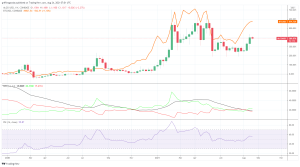
LME three-month copper has climbed about 30% year-to-date to roughly $11,189/t, while U.S. futures trade at a modest premium amid tariff uncertainty. Price action remains momentum-driven, yet positioning appears supported by a broad macro theme: decarbonization and digitalization require more copper than existing supply pipelines can reliably deliver.
What’s driving the move
Beyond traditional construction and electronics demand, copper is increasingly central to EV manufacturing, high-capacity grid interconnections and the next wave of AI data centers, which intensify the need for transmission hardware and power systems. On the supply side, tighter permitting, project delays and policy risks are reinforcing a deficit narrative. The result: firm dips, elevated volatility and a willingness among investors to pay up the curve for long-dated exposure.
Street price targets
- UBS projects copper at about $11,500/t in Q1, then rising to $12,000/t by June, $12,500/t by September and finishing the year near $13,000/t (2026 trajectory).
- Citi keeps a $12,000/t base case over the next 6–12 months, assigning a 40% probability to a bull-market scenario that reaches $14,000/t.
While a stronger U.S. dollar could intermittently cap rallies, the structural demand impulse has kept dips shallow, with pullbacks more a function of positioning and macro risk appetite than deteriorating fundamentals.
Trading implications
If the consensus glide path toward $13,000–$14,000/t materializes, miners with copper leverage and copper-linked ETFs stand to benefit. For FX desks, pro-risk copper surges often coincide with commodity FX strength, though tariff headlines and yield swings can inject two-way volatility. Liquidity remains decent, but sharp moves around macro prints and policy updates argue for disciplined risk management.
Key Points
- Copper is up about 30% this year, near $11,189/t on the LME; U.S. prices trade slightly higher amid tariff noise.
- Demand tailwinds: EV rollout, grid modernization and AI data-center construction.
- Supply constraints and policy uncertainty keep the market tight and price risks skewed to the upside.
- UBS sees a path toward $13,000/t by year-end 2026; Citi assigns 40% odds to $14,000/t.
- Mining equities and copper-focused ETFs could outperform if forecasts hold.
Outlook and risks
With electrification and AI infrastructure demands broadening, copper retains a constructive medium-term setup. The principal risks: a sharper global slowdown, faster-than-expected mine restarts or expansions, and policy shifts that alter trade flows. For now, the balance of probabilities supports a high-price regime, albeit with episodic drawdowns in sync with macro data and rates volatility, BPayNews notes.
FAQ
Why is copper rallying now?
Electrification trends—EV adoption, grid upgrades and AI data centers—are lifting structural demand, while supply growth remains constrained by project delays and regulatory hurdles.
Where do major banks see prices heading?
UBS maps a rise toward roughly $13,000/t by end-2026, starting near $11,500/t in Q1. Citi’s base case is $12,000/t over 6–12 months, with a 40% chance of a bull case up to $14,000/t.
How do tariffs and the U.S. dollar affect copper?
Tariff uncertainty can widen regional price differentials and disrupt trade flows. A stronger dollar typically weighs on dollar-denominated commodities, though strong fundamentals can offset currency headwinds.
Which assets could benefit if copper climbs?
Producers with high copper exposure and copper-focused ETFs could see upside. Some commodity-sensitive currencies might also gain if risk appetite broadens.
What could derail the bullish scenario?
A pronounced global growth slowdown, quicker-than-expected mine supply additions, or policy shifts that ease bottlenecks could temper or reverse the rally.