


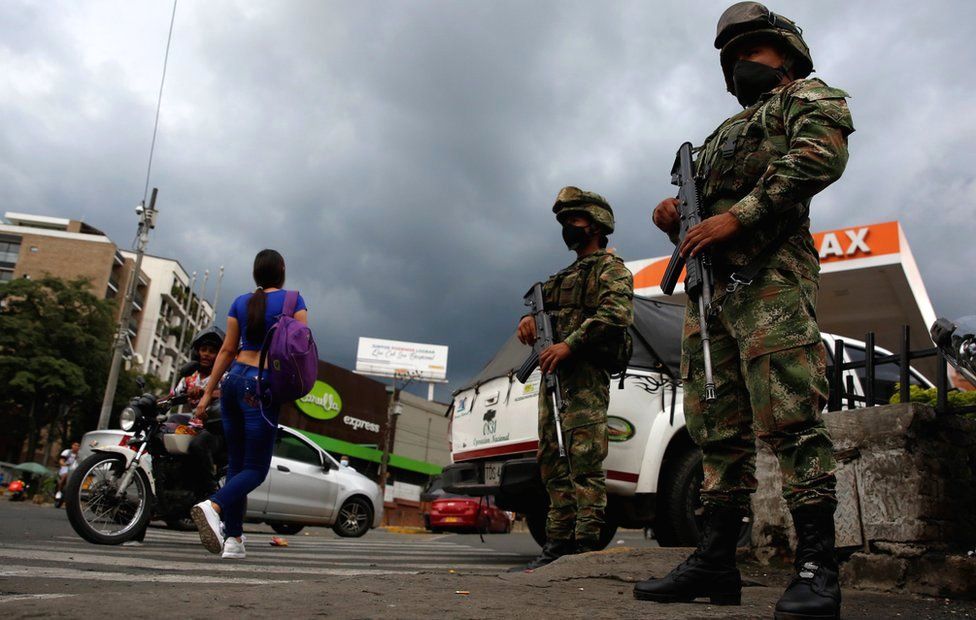

The prospect of Colombia military intervention has captured the attention of geopolitical analysts and policymakers alike as US President Donald Trump hints at escalating military action in Latin America. Following the recent capture of Venezuelan President Nicolás Maduro, Trump expressed concerns over the flow of cocaine from Colombia into the United States, raising alarms about Colombia’s leadership under President Gustavo Petro. This situation brings to light the pressing issue of drug trafficking while intertwining with the broader implications of US military intervention in Colombia and other neighboring nations. As the Trump administration explores potential military options, the already unstable dynamics in the region—particularly with Mexico military action on the table—fuel questions about the future of US involvement. With ongoing geopolitical uncertainty, the possibility of a Venezuela military operation further complicates the landscape, leaving many to speculate on the ramifications of these decisive actions.

The discussions surrounding military engagement in Colombia are part of a larger narrative regarding interventionist policies in the region. The unfolding dynamics reflect a potential shift in US foreign policy as attention pivots from Venezuela to Colombia, where issues related to narcotics and governance pose significant challenges. As military strategies are reconsidered, the implications reverberate not only in Colombia but also in neighboring territories like Mexico, where the US has also shown interest in direct action against cartels. This interconnected web of geopolitical maneuvers, coupled with the heightened focus on drug-related violence, underscores the urgency of addressing these issues, particularly given the potential repercussions for regional stability. Indeed, the specter of Colombia military involvement represents more than a tactical consideration; it signifies a broader engagement with Latin America’s political and social fabric.
Implications of US Military Intervention in Colombia
The potential for US military intervention in Colombia raises significant implications for the region, particularly in light of President Trump’s recent comments. Colombia has long been recognized as a crucial player in the global cocaine trade, and Trump’s labeling of President Gustavo Petro as ‘sick’ due to his connection with the narcotics industry highlights the US government’s aggressive stance. Should the US decide to pursue military action in Colombia, it could exacerbate existing tensions not only within Colombia but also with neighboring nations and anti-drug efforts across the Americas.
Moreover, any intervention could have ripple effects on areas such as trade, immigration, and political stability. Historical precedents indicate that military actions often lead to increased instability, potentially creating a power vacuum that could further empower drug cartels and insurgent groups. This unpredictable outcome underscores the complex dynamics of US involvement, especially when combined with the backdrop of geopolitical uncertainty stemming from Venezuela’s recent military operation.
The Reality of Cocaine Trade and Military Action
The cocaine trade has been a persistent issue for Colombia and the broader region, making military intervention a subject of ongoing debate. The narrative surrounding Trump’s assertion that Colombia must be held accountable for its role as a leading cocaine producer resonates with an audience increasingly concerned about drug trafficking’s impact on US society. With drug overdoses skyrocketing in the US, the administration may feel compelled to take drastic measures such as military intervention to combat this crisis, even if it risks escalating conflicts in South America.
Additionally, the relationship between US policies and the narcotics trade poses a challenge. Historical interventions have often been justified under the guise of counter-narcotics, yet they have frequently led to increased violence and instability. Understanding the intricacies of Colombia’s socio-political environment is crucial for future US strategies; hastily implemented military action could undermine efforts to foster long-term peace and democratic governance.
Comparative Analysis: Military Strategies in Colombia and Mexico
Comparing military strategies between Colombia and Mexico highlights the challenges faced by the US in addressing drug cartels and organized crime. While Colombia has been the focal point of US military aid programs aimed at counter-narcotics, Mexico’s situation presents a different set of complexities. President Trump’s remarks about Mexico indicate a sense of urgency to confront drug cartels; however, the Mexican government under President Sheinbaum has been hesitant to invite US military intervention. This difference in approaches underscores the unique sociopolitical landscapes and governance issues in each country.
Moreover, the dynamics of US involvement in Mexico—where there is growing reluctance for military action—point to differing strategic options. The withdrawal of US intervention could potentially afford Mexico a chance to develop an independent approach towards its cartel issues, whereas Colombia’s longstanding military partnership with the US may yield further interventionist measures. Analyzing the contrasts between these two nations offers critical insights into US foreign policy and its effectiveness in combating drug-related violence.
Geopolitical Implications of Military Actions in South America
The geopolitical implications of potential military actions in South America, particularly in Colombia, cannot be overstated. Such interventions could reshape diplomatic relations not only in the region but also with key global players. With nations like Venezuela under scrutiny and the US grappling with the consequences of its foreign policies, any military operation could lead to a backlash from allies and adversaries alike. The situation becomes even more fraught considering the delicate balance of power among South American countries and their varying postures toward US involvement.
In this context, the US must carefully consider its military strategy towards Colombia, especially as it relates to its dealings with other nations such as Cuba and Venezuela. Engaging in military operations could alienate nations that might perceive the US as an imperialist force rather than a partner in overcoming shared challenges. Lindering geopolitical uncertainty, the US must tread cautiously, weighing the potential benefits against the ramifications of destabilizing an already delicate political climate.
Economic Ramifications of Military Intervention in Colombia
The economic ramifications of US military intervention in Colombia can be profound and multifaceted. Should the US decide to engage militarily, it could disrupt local economies, especially those dependent on agriculture and tourism. The fear and uncertainty generated by military actions may deter foreign investment, further exacerbating an already shaky economy. Even with the promise of aid and reconstruction, the short-term impact of military presence can lead to inflation and economic destabilization.
Furthermore, Colombia’s cocaine production is a substantial part of its economy, intertwining with various social and economic factors. The impact of aggressive US counter-narcotic initiatives might motivate immediate growth in illicit drug activities as cartels respond to military pressure. Understanding the fine line between military intervention and economic development is crucial; otherwise, the US could find itself entangled in a cycle of violence and poverty that extends beyond mere drug enforcement.
Public Perception of Military Action Against Colombia
Public perception plays a critical role in shaping the narrative around military action against Colombia. The American public is increasingly skeptical about foreign military engagements, particularly those that resemble previous conflicts resulting in prolonged US involvement and unintended consequences. Trump’s rhetoric surrounding Colombia suggests a populist appeal, framing military intervention as a necessary step to protect American borders from the tide of cocaine flooding in from South America, which could resonate with his base.
However, public backlash regarding military intervention could also stem from the awareness of historical misadventures in foreign interventions, particularly in Latin America. As voters become more informed about the complexities and possible fallout of military actions, they may push back against the notion of further destabilizing an already fraught region. Thus, navigating public sentiment becomes a strategic element in the decision-making process for any military initiative proposed concerning Colombia.
Impact of Bitcoin on Regional Conflicts and Military Economies
The impact of Bitcoin and other cryptocurrencies on regional conflicts and military economies adds an intriguing layer to discussions of military intervention. Particularly following the capture of Nicolás Maduro, Bitcoin has emerged as a pivotal asset in a fluctuating global economy. As cryptocurrencies gain traction, their role in facilitating illicit trade, including narcotics, cannot be dismissed. This emergence of digital currencies could potentially interfere with traditional economic and military strategies, blurring the lines of financial accountability.
Furthermore, Bitcoin’s recent surge could signify a new avenue for financing military operations or insurgent groups within Colombia and Venezuela. As US interventions often grapple with navigating traditional funding channels for illegal trades, understanding the implications of cryptocurrency becomes essential. This dimension raises questions about future military strategies: are traditional economic deterrents still effective in an age where virtual currencies redefine marketplace dynamics?
US Military Focus: The Case of Venezuela and Colombia
The US military’s focus on Venezuela and its implications for Colombia brings forth crucial issues regarding strategy and regional stability. The recent Venezuelan military operation highlights the complexity of US foreign policy, suggesting that Colombia could very well be next if the US determines further intervention is necessary in response to drug trafficking and security threats. This increased focus could create a perception of a regional dominance strategy aimed at reshaping control over drug-producing nations.
However, this approach may overlook the nuanced realities on the ground. The relationship between Colombia and Venezuela, once more communal, has deteriorated over time, now overlapping with US interests. It raises questions regarding whether military action in one country might yield unintended consequences in the other, potentially igniting regional conflicts that are difficult to control. As the situation evolves, the need for a coherent and consistent strategy becomes essential to mitigate risks associated with two nations deeply entwined in issues of drugs, security, and geopolitical tensions.
US Strategies Against Drug Trafficking: A Historical Perspective
To fully grasp the current discourse on military intervention in Colombia and Mexico, it’s crucial to explore US strategies against drug trafficking from a historical perspective. Over the decades, the US has engaged in various military and non-military efforts to address the multifaceted issue of illegal drug production and trafficking, often using substantial military aid and tactical support to bolster local governments. The rhetoric from Trump reflects a continuity of the militarized approach to drug-related issues.
However, analyzing the effectiveness of these strategies reveals a troubling pattern: military interventions, while aimed at dismantling drug networks, can inadvertently empower criminal organizations and create an environment ripe for violence. Historical contexts introduce lessons that should inform current debates on intervention in Colombia and Mexico, emphasizing the necessity to integrate diplomatic, economic, and social tactics for a comprehensive approach that extends beyond military solutions.
Frequently Asked Questions
What does US military intervention in Colombia mean in the context of recent events?
US military intervention in Colombia could refer to potential military actions or support from the United States aimed at combating drug trafficking and stabilizing the region, especially following Trump’s comments regarding Colombian President Gustavo Petro and concerns over cocaine production.
How has Trump’s stance on Colombia military intervention affected geopolitical uncertainty in the region?
Trump’s remarks on Colombia military intervention have heightened geopolitical uncertainty, as they signal a possible shift in US foreign policy, particularly in Latin America, which could lead to increased tensions and military readiness.
What implications would military action in Colombia have for drug trafficking?
Military action in Colombia could disrupt the cocaine supply chain to the US, targeting drug cartels directly. However, it may also escalate violence and lead to unintended consequences for civilians and the local economy.
Is military intervention in Colombia comparable to past US military actions in Mexico?
While there are parallels in the fight against drug cartels, military intervention in Colombia may differ due to Colombia’s long-standing issues with cocaine production and its relationship with the US compared to Mexico’s current governmental strategy.
What triggers the discussion of military operations in Colombia regarding the Venezuelan crisis?
The capture of Venezuelan President Nicolás Maduro has prompted discussions of military operations in Colombia as a means to address the drug flow and destabilization that could arise from a power vacuum in Venezuela.
How does the current military intervention rhetoric affect Bitcoin and financial markets?
The rhetoric surrounding potential military interventions can create market volatility, but as seen with Bitcoin’s recent surge, the market often reacts based on speculative analysis rather than immediate impacts from military operations.
Could Colombia’s military intervention lead to a broader conflict involving Venezuela?
Yes, military intervention in Colombia could escalate tensions in the region, potentially drawing Venezuela into a larger conflict, especially given the noted geopolitical ties between Colombia and Venezuela.
| Key Point | Details |
|---|---|
| Potential Targets for Military Intervention | Colombia and Mexico may face US military intervention following events in Venezuela. |
| Trump’s Comments on Colombia | Trump expressed concerns over cocaine production and suggested military action against Colombian President Gustavo Petro. |
| Military Action Statements | When asked about military action, Trump said, ‘That sounds good to me.’ |
| Relationship with Mexico | Despite a friendlier stance, Trump remarked on the need for US intervention against Mexican cartels. |
| Geopolitical Uncertainty | Trump views Greenland as critical for US security, urging Denmark and Norway to reconsider their stance. |
| Bitcoin’s Market Reaction | Post-capture of Maduro, Bitcoin surged, indicating a limited market disruption due to quick resolution. |
Summary
The topic of Colombia military intervention has gained traction as US President Trump indicates that Colombia could be among the next targets for US military action, similar to recent developments in Venezuela. With concerns surrounding drug trafficking and leadership, this potential move adds to the geopolitical tensions in the region. As Trump considers military responses towards Colombia and its President Gustavo Petro, the tied-up dynamics of US relations with Mexico and uncertainties in the cryptocurrency markets also come into play, reflecting how far-reaching these intervention strategies can be in shaping regional stability.
Related: More from Market Analysis | Kaspa KAS Price Forecast: Why $0.03 Crucial for Bulls | Barclays Looks at Blockchain for Payments, Deposits