


Physics vs. Code: Why Google’s ‘Quantum Money’ Could Make Blockchain Obsolete

In the fast-evolving world of technology, cutting-edge advancements often disrupt existing frameworks, significantly transforming industries. One such potential disruptor is Google’s concept of “quantum money,” a novel idea rooted deeply in quantum physics, which might challenge the currently predominant blockchain technology.
Understanding Quantum Money
Quantum money harnesses the principles of quantum mechanics to create a secure, unforgeable currency system. The concept relies on the principle of quantum superposition and entanglement, where particles exist simultaneously in multiple states and are interdependent. This creates a scenario where quantum bits (qubits) can store and transmit information in ways impossible for classical bits.
The security of quantum money arises from a cornerstone of quantum mechanics known as the no-cloning theorem, which states that it is impossible to copy unknown quantum states. Essentially, this means quantum money cannot be counterfeited – a key benefit that overshadows many modern digital currencies.
Traditional Blockchain Technology
Blockchain, the backbone of cryptocurrencies like Bitcoin, is a digital ledger technology where transactions are recorded with an immutable cryptographic signature called a hash. However, this system, while secure against many conventional attacks, has vulnerabilities in scalability, speed, and energy efficiency. Also, it potentially faces a significant threat from quantum computing; if quantum computers reach a certain level of sophistication, they could break the cryptographic secureness that protects current blockchain systems.
Google’s Quantum Money: A Potential Blockchain Killer?
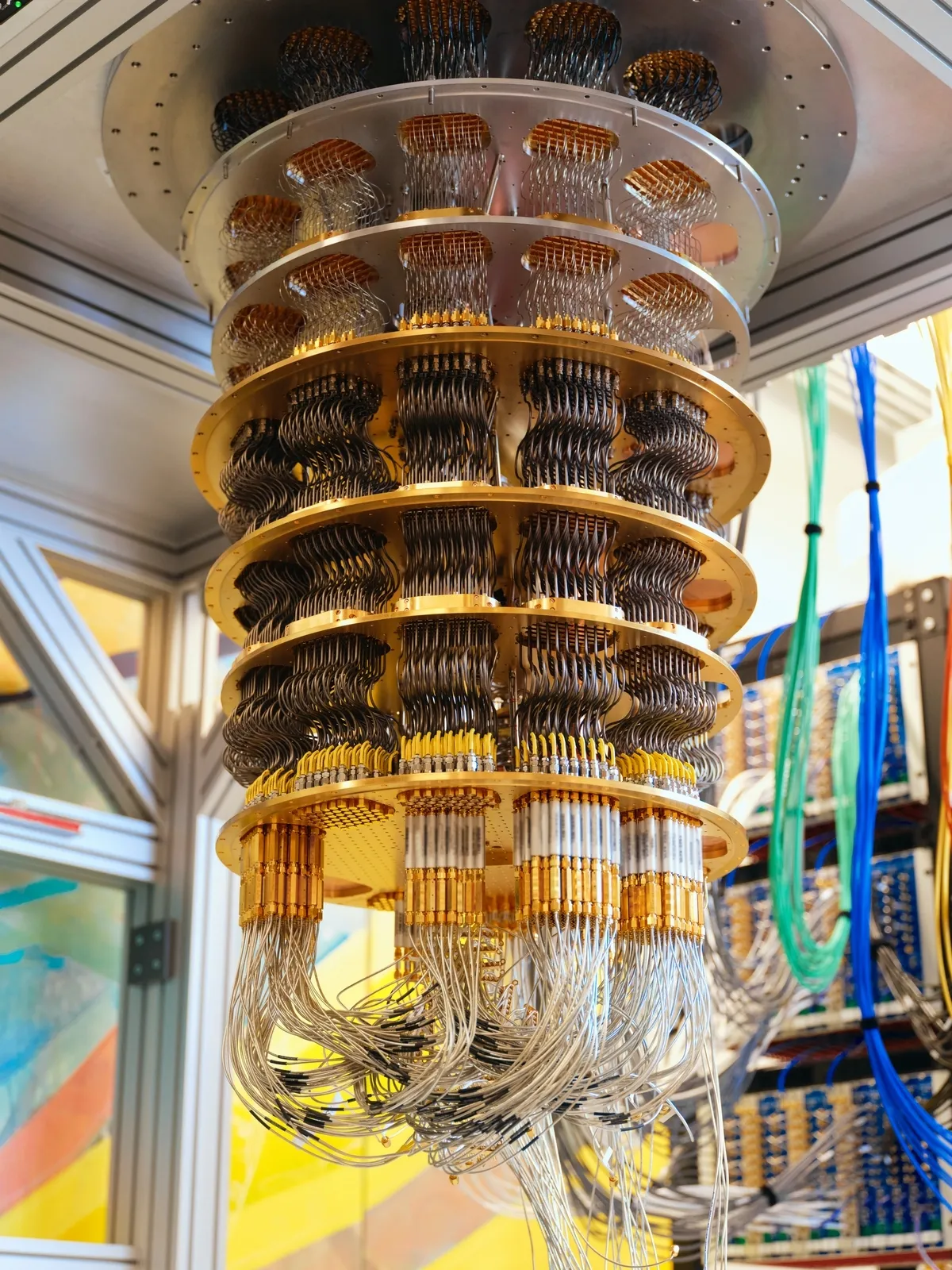
Google’s exploration into quantum money aims to leverage quantum bits to establish a financial system that’s not just secure from fraud but also intrinsically protects against the power of quantum computing threats. The company’s quantum processors would theoretically generate quantum public and private keys, where the public key may be observed without measuring it, thereby not disturbing its state, but copying it would remain impossible due to the no-cloning theorem.
Advantages Over Blockchain
-
Security: Quantum money offers top-tier security thanks to the no-cloning theorem, making the ‘minting’ of new quantum money secure against duplication or misrepresentation.
-
Quantum-proof: While blockchain’s cryptographic methods might eventually succumb to quantum decryption methods, quantum money inherently resists attacks from quantum computers.
- Energy Efficiency: Quantum computing could theoretically perform multiple operations simultaneously, reducing the time and energy required compared to the exhaustive computational processes in blockchain.
Economic and Technological Implications
The implications of quantum money are profound. Economically, this could offer a state-secured form of digital currency that would streamline transactions and enhance financial privacy due to its untraceability. Technologically, introducing quantum money might catalyze a complete overhaul of financial infrastructures, necessitating new systems for transaction and storage.
Challenges and Considerations
Despite the potential, several challenges remain. Quantum technology is still in its infancy, and widespread implementation of quantum computers and quantum money systems will require overcoming significant technical hurdles, including error rates and qubit coherence times.
Furthermore, there is an ongoing debate regarding centralization vs. decentralization. Quantum money, as proposed, could centralize financial power significantly, contrasting with the decentralized ethos of blockchain technologies like Ethereum or Bitcoin.
Conclusion
Google’s exploration of quantum money represents a fascinating intersection of physics and financial technology. While it might seem like a distant future concept, its impact could be revolutionary, making blockchain obsolete or forcing it to adapt fundamentally. As with all such advancements, continued research, practical developments, and societal discussions will shape the trajectory of these emerging technologies.