

China’s ‘Nvidia’ Moore Threads rockets 400% on Shanghai debut as AI-chip demand outstrips supply

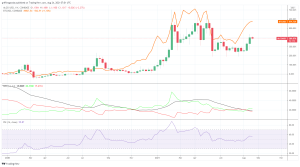
A blockbuster IPO pop for Beijing-based GPU designer Moore Threads lit up China’s equity screens, with shares vaulting more than 400% on debut after a $1.1 billion raise—signaling deep domestic capital support for homegrown AI-compute and intensifying the global race to replace restricted Nvidia hardware.
IPO pop underscores Beijing’s push for chip self-reliance
Moore Threads, often branded “China’s Nvidia,” opened to frenzied buying, jumping to 584.98 yuan versus an offer price of 114.28 yuan. The surge highlights how U.S. export controls are redirecting AI infrastructure spending inside China, accelerating approvals and funding for local GPU and AI-accelerator developers. Peers such as Enflame and Biren are also vying to fill the gap created by constraints on high-end Nvidia shipments, particularly for training large language models and data-center workloads.
Why traders care: equity flows, FX sentiment, and the AI-compute supply chain
– The outsized debut reinforces risk appetite in China’s onshore tech complex, potentially catalyzing follow-on issuance and secondary placements in semiconductors and server supply chains.
– For FX, a stronger pipeline of tech listings and improving equity sentiment can translate into steadier onshore and offshore yuan through portfolio inflows, even as macro headwinds linger.
– Globally, the AI-compute market remains supply-constrained. China’s domestic GPU buildout could soften—but not eliminate—its dependence on foreign technology, reshaping procurement and pricing dynamics for accelerators, HBM memory, and data-center components.
Global AI race: competitive pressure rises
Moore Threads’ rally telegraphs sustained investor belief that alternative GPU stacks—paired with local software tooling and ecosystem support—can capture meaningful domestic share. While performance parity with Nvidia’s top-tier accelerators remains a stretch near term, expanding addressable markets in inference, cloud gaming, and visualization may support revenue ramps for Chinese chip designers, system integrators, and hyperscalers.
Risks to the bull case
– Export controls and secondary sanctions risks can complicate supply chains for design tools, IP, and advanced packaging.
– Execution risk: scaling drivers, software frameworks, and developer adoption is capital- and time-intensive.
– Profitability timelines may be elongated by fast product cycles and heavy R&D needs, leaving valuations sensitive to delivery milestones and policy signals.
Key points
- Moore Threads surged over 400% on Shanghai debut after raising $1.1 billion, opening at 584.98 yuan vs. 114.28 yuan offer.
- IPO momentum reflects strong demand for domestic GPU alternatives as U.S. controls limit access to Nvidia’s high-end chips.
- Sentiment lift could spill over to China’s semiconductor complex and related supply-chain equities.
- FX angle: improved equity risk appetite may support yuan stability via portfolio inflows, though macro headwinds persist.
- Watch policy, export rules, and ecosystem execution—key drivers for valuations and competitive positioning in AI compute.
Market outlook
Traders will eye follow-through across A-share semis, secondary-market liquidity, and whether upcoming chip IPOs can replicate Moore Threads’ day-one momentum. Global investors will also monitor how quickly domestic GPU vendors convert hype into shipments, software ecosystem traction, and recurring revenue—key catalysts that could recalibrate expectations for AI-capex allocation in Asia versus the U.S.
FAQ
What triggered Moore Threads’ 400% surge?
Strong domestic demand for AI-compute exposure, policy-driven support for local chipmakers, and scarcity of investable GPU proxies in China combined to fuel the rally.
How do U.S. export controls factor in?
Restrictions on advanced Nvidia chip shipments to China have redirected capital and demand toward local GPU and AI-accelerator firms, accelerating their funding and market opportunity.
What are the implications for the yuan?
Improved equity sentiment and potential portfolio inflows from tech listings can be marginally supportive for the yuan, though broader macro drivers—growth, rates, and policy—remain decisive.
Will Chinese GPUs match Nvidia’s performance soon?
Near-term parity at the very high end is unlikely. However, domestic chips can target specific workloads (inference, visualization, gaming, some training) and capture meaningful share if software ecosystems and developer tools mature.
Which sectors stand to benefit?
Semiconductor design, AI servers, networking, advanced packaging, cooling, and memory supply chains could see improved order visibility as domestic compute capacity scales.
What should investors watch next?
Shipment milestones, software stack adoption, margin progression, and any changes in export policy. Additional chip IPOs and secondary offerings will also test market depth and risk appetite.
Is this a buy signal for global AI hardware?
It reinforces the structural demand story for compute but heightens competitive dynamics. Valuation discipline is key: monitor execution and policy risk before extrapolating today’s pop to long-term earnings.
Reporting by BPayNews.