


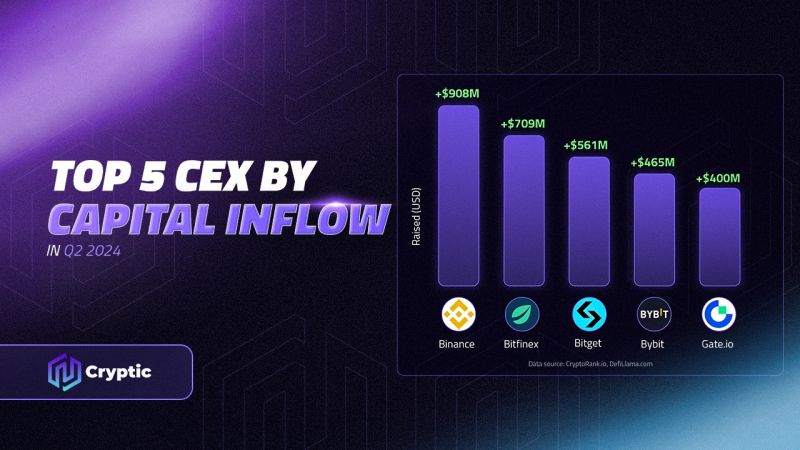

In the world of cryptocurrency, CEX capital inflow plays a pivotal role in determining the vitality and liquidity of trading platforms. Recently, leading exchanges like Binance, Bitget, and Bitfinex have surged ahead, showcasing impressive net capital inflows over the past 24 hours. According to reports from Odaily Planet Daily, Binance topped the chart with a staggering $508 million, followed by Bitget with $90.72 million and Bitfinex at $47.46 million. These figures highlight not only the dominant position of these platforms but also the growing confidence of investors in centralized exchanges. Understanding the dynamics of CEX capital inflow can provide valuable insights for traders and investors navigating the fast-paced crypto landscape.

The influx of funds into centralized exchanges (CEX) represents a crucial indicator of market performance and investor sentiment. Prominent platforms such as Binance, Bitget, and Bitfinex have emerged as frontrunners in attracting significant capital, reflecting a broader trend of increasing trading activity. As these leading exchanges report substantial net capital inflows, they become focal points for crypto enthusiasts looking to maximize their trading strategies. The continuous monitoring of trading volume and capital flow offers a window into the evolving dynamics of the crypto market landscape. By analyzing these trends, traders can position themselves advantageously in a rapidly changing environment.
Understanding CEX Capital Inflow
CEX capital inflow refers to the amount of capital that flows into centralized exchanges (CEXs) from traders and investors over a specific period. Tracking this metric is vital for analyzing the popularity and liquidity of various trading platforms, giving insight into market sentiment. The latest data reveals significant capital flows, highlighting which platforms are gaining traction among users. For instance, Binance has reported an impressive net inflow of $508 million in just the past 24 hours.
Analyzing the capital inflow trends can provide valuable insights for traders and investors alike. High capital inflows indicate growing interest in certain platforms and the potential for increased trading activity. Platforms like Bitget and Bitfinex, which reported net inflows of $90.72 million and $47.46 million respectively, show that there is competitive interest even among platforms with lower inflow figures compared to Binance. This information can assist traders in making informed decisions about where to conduct their trades.
The Rise of Binance as a Leading CEX
Binance, the world’s largest cryptocurrency exchange, continues to dominate the market with its unparalleled capital inflow. In the last 24 hours, Binance recorded a net capital inflow of $508 million, solidifying its position as a preferred platform among crypto traders. This surge can be attributed to several factors, including its robust trading features, the variety of cryptocurrencies available, and its transition into various markets worldwide.
Additionally, Binance’s ongoing efforts to enhance user experience, such as implementing innovative trading tools and promoting security measures, have contributed to its rising popularity. As a result, traders are increasingly choosing Binance over other crypto trading platforms to execute their transactions, thereby reflecting a strong belief in Binance’s reliability and efficiency in managing trades.
Analyzing Bitget’s Market Position
Bitget has emerged as a formidable player in the crypto trading arena, notable for its impressive net capital inflow of $90.72 million within the last 24 hours. This substantial inflow signifies growing trust and increased trading engagement from users. Bitget’s features, such as futures trading and low fees, cater to a wide range of traders, including those new to cryptocurrency.
The strategic positioning of Bitget as a user-friendly exchange helps expedite its growth and capital inflow. As more traders seek platforms that offer a seamless experience, Bitget is capitalizing on this trend by optimizing its services and expanding its cryptocurrency listings. Consequently, it is garnering significant attention from both retail and institutional traders.
Bitfinex: A Strategic Player in CEX Capital Inflows
Bitfinex continues to hold its ground in the competitive landscape of centralized exchanges, recording a net capital inflow of $47.46 million over the past 24 hours. The platform’s advanced trading features, such as margin trading and lending options, attract more sophisticated investors seeking to leverage their positions. This trend indicates that despite facing stiff competition from larger exchanges like Binance and emerging players like Bitget, Bitfinex maintains a loyal user base.
The inflow figures for Bitfinex not only reflect user trust but also suggest a stable trading environment for cryptocurrencies. With careful management of liquidity and continued development of trading tools, Bitfinex is likely to sustain its position in the market and potentially increase its capital inflows in future trading periods.
Comparing CEX Performance: Binance, Bitget, and Bitfinex
When comparing the performance of the leading centralized exchanges—Binance, Bitget, and Bitfinex—it becomes clear that there are distinct trends influencing net capital inflows. Binance outpaces its competitors significantly, attracting an astonishing $508 million, whereas Bitget and Bitfinex, with their inflows of $90.72 million and $47.46 million respectively, continue to establish their presence in the marketplace.
This disparity in capital inflow reflects different strategies and user engagement on each platform. Binance’s extensive marketing efforts and diverse features have resulted in a broad appeal, while Bitget and Bitfinex are tailoring their offerings to accommodate specific segments of the trading population. This competitive landscape encourages continuous improvement and innovation across all platforms.
Market Sentiment Reflected in CEX Capital Inflows
Market sentiment plays a crucial role in influencing capital inflows into centralized exchanges. Fluctuations in cryptocurrency prices, regulatory developments, and technological advancements can lead to significant changes in investor behavior. The current data suggests a robust interest in Binance, Bitget, and Bitfinex, showcasing the dynamics of investor confidence and trading activity amid a volatile market.
As traders react to market conditions, the inflow patterns on these platforms will continue evolving. Understanding these trends offers critical insights for traders and investors looking to gauge the market’s direction. By monitoring capital inflows, one can better predict potential price movements and trading opportunities.
The Impact of Regulatory Changes on CEX Capital Inflows
Regulatory changes in the cryptocurrency space significantly impact capital inflows into centralized exchanges. As governments around the world establish clearer guidelines, platforms like Binance, Bitget, and Bitfinex are positioned to adapt and thrive, thereby attracting greater net capital inflow. Investors often seek to invest in platforms that exhibit a stable regulatory environment, decreasing their overall risk exposure.
This regulatory adaptability is crucial for sustaining growth and increasing user trust. For instance, as Binance navigates through various legal challenges while enhancing its compliance measures, it has managed to retain a significant capital inflow. Similarly, Bitget and Bitfinex are also aligned with regulatory requirements, which aids their acceptance among traders looking for compliance-focused environments.
Performance Metrics: Evaluating CEX Capital Inflows
To effectively evaluate the performance of centralized exchanges, analyzing capital inflows serves as a key metric. The latest figures illustrate a marked disparity between platforms, with Binance leading with an inflow of $508 million. This indicates not just user preference but also the platform’s ability to adapt to market demands and investor needs, creating a cycle of growth that few competitors can match.
Analyzing the factors contributing to these inflows—including user experience, security, trading fees, and asset diversity—provides valuable insights for other crypto trading platforms aiming to optimize their offerings. Such evaluations can also highlight potential areas for improvement, ensuring that exchanges like Bitget and Bitfinex can develop strategies to boost their attractiveness to potential traders.
The Future of CEXs and Capital Inflows
The future landscape for centralized exchanges (CEXs) appears promising, with evolving technologies and increasing institutional interest likely driving capital inflows. Binance, Bitget, and Bitfinex have established a foundation that suggests strong resilience and adaptability in the face of ongoing market changes. As more investors explore cryptocurrencies, CEXs will need to innovate continuously to cater to growing user expectations.
Furthermore, the rise of decentralized finance (DeFi) offers an interesting contrast to the CEX structure; however, many traders still prefer the security and features offered by centralized platforms. Therefore, even as hybrid models emerge, centralized exchanges will continue to play a crucial role in the overall cryptocurrency ecosystem, influencing capital inflows through their strategic enhancements and user engagement initiatives.
Frequently Asked Questions
What is CEX capital inflow and why is it important for trading platforms like Binance, Bitget, and Bitfinex?
CEX capital inflow refers to the net amount of capital entering centralized exchanges like Binance, Bitget, and Bitfinex. It’s important because high inflows indicate increased trading activity and investor confidence, which can lead to higher liquidity and more robust market conditions.
How do Binance, Bitget, and Bitfinex compare in terms of net capital inflow?
According to recent DeFiLlama data, Binance leads with a net capital inflow of $508 million in the last 24 hours, followed by Bitget at $90.72 million and Bitfinex at $47.46 million. This highlights Binance’s dominant position in attracting capital.
What factors influence the net capital inflow of CEX platforms like Binance, Bitget, and Bitfinex?
Factors influencing net capital inflow to CEX platforms include market sentiment, trading volume, regulatory news, and the introduction of new trading features. Promotions and security measures also play significant roles in attracting traders and capital.
Can high CEX capital inflow indicate a potential price increase in cryptocurrencies on platforms like Binance, Bitget, and Bitfinex?
Yes, high CEX capital inflow is often associated with rising demand for cryptocurrencies, which can lead to price increases. Platforms like Binance, Bitget, and Bitfinex benefit from increased trading volumes, often resulting in upward price trends.
How does the performance of CEX capital inflow impact user experience on trading platforms like Binance, Bitget, and Bitfinex?
Higher CEX capital inflow enhances user experience on trading platforms by providing better liquidity and faster trade execution. This allows traders on Binance, Bitget, and Bitfinex to make more efficient trades without significant slippage.
What should I watch for in future CEX capital inflow trends on Binance, Bitget, and Bitfinex?
To gauge future trends in CEX capital inflow for Binance, Bitget, and Bitfinex, monitor market news, trading volume spikes, and changes in user engagement. Additionally, analyzing overall market sentiment and institutional investment can provide insights into potential inflow increases.
| Centralized Exchange (CEX) | Net Capital Inflow (Last 24 Hours) |
|---|---|
| Binance | $508 million |
| Bitget | $90.72 million |
| Bitfinex | $47.46 million |
Summary
CEX capital inflow indicates the growing interest and activity in trading platforms like Binance, Bitget, and Bitfinex, which have reported substantial net capital inflows in the past 24 hours. With Binance leading at a remarkable $508 million, followed by Bitget and Bitfinex, this data underscores the dynamic nature of the cryptocurrency market and highlights investor confidence in these centralized exchanges.