
Can Solana Handle 100 Million Western Union Users Sending Dollar Tokens Worldwide?
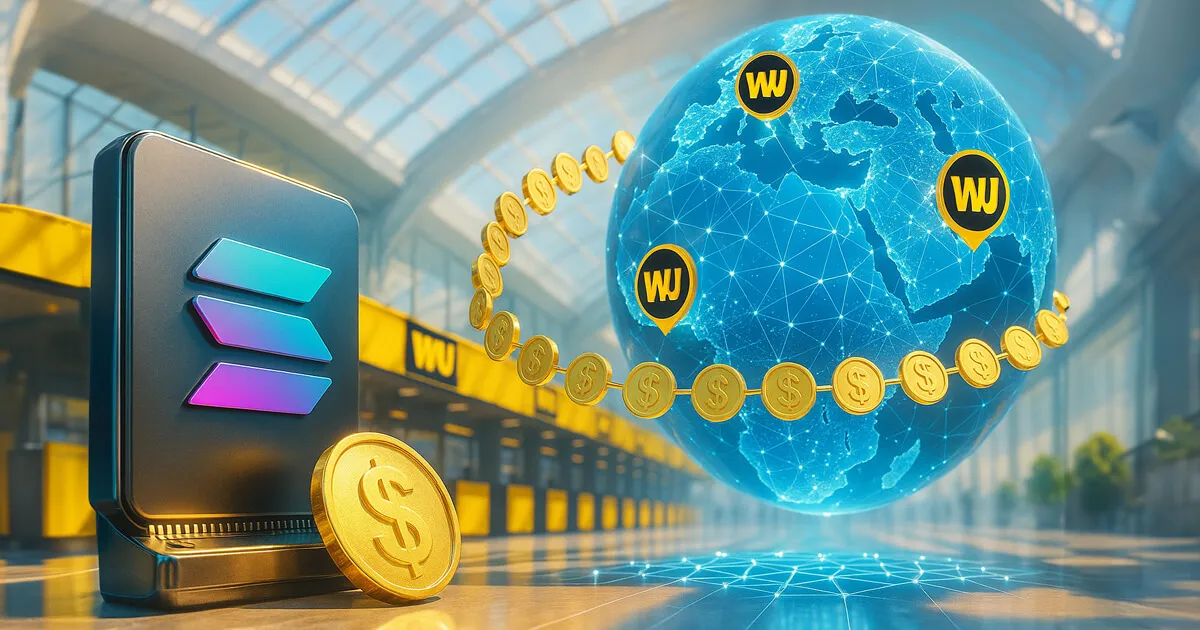
The global remittance market, characterized by millions of financial transactions crossing international borders every day, has long been dominated by traditional players like Western Union. However, the rise of blockchain technology is poised to revolutionize this landscape, with platforms like Solana emerging as potential game-changers. The question that comes to the fore is: Can Solana handle the colossal volume of 100 million Western Union users transferring dollar tokens worldwide?
Key Takeaways
Understanding Solana's Capacity
At its core, Solana is a highly efficient blockchain platform known for its exceptional speed and throughput capabilities. The blockchain prides itself on its ability to process an astonishing 65,000 transactions per second (TPS), with a block time of 400 milliseconds. This technical prowess is largely due to its unique consensus mechanism known as Proof of History (PoH), combined with the traditional Proof of Stake (PoS) model. This hybrid consensus dramatically enhances processing speed and scalability, which is crucial for handling large volumes of transactions.
Scalability Challenges and Real-World Adaptation
Handling 100 million users, particularly from a giant like Western Union venturing into dollar token transactions, poses significant challenges. The primary concern is scalability, particularly when these users are actively transacting. Will Solana’s infrastructure support sudden surges typically associated with remittance flows, especially during festive seasons or economic crises?
From a technical standpoint, Solana has demonstrated robust capabilities with its TPS. However, the real-world application might present unforeseen challenges. These can relate to network congestion, transaction delays, and potential downtimes, which have historically affected even the most capable blockchains.
Infrastructure and Implementation on Solana
The transition of Western Union’s user base to Solana would require not only an adept handling of transaction volume but also a sturdy infrastructure to manage the secure and seamless movement of dollar tokens. This would involve:
- Wallet Services: Robust, user-friendly digital wallets capable of handling high transaction volumes.
- Currency Conversion: Efficient systems for the quick conversion between fiat and digital currencies.
- Regulatory Compliance: Mechanisms to address anti-money laundering (AML), and combating the financing of terrorism (CFT) regulations, alongside robust KYC (Know Your Customer) processes.
- Integration with Existing Systems: Seamless integration with Western Union’s current mechanisms and networks to ensure continued service delivery without hitches.
Potential Roadblocks
Beyond technical challenges, there may be regulatory and operational hurdles. Each country has its own regulatory framework regarding digital currencies, which could complicate the widespread adoption of Solana for such purposes. Additionally, should there be network failures or security breaches, the impact could be significant, considering the scale of Western Union’s operations.
Conclusion: A Promising Yet Uncertain Future
In conclusion, while Solana has the theoretical capability to handle 100 million Western Union users sending dollar tokens worldwide, whether it can manage such a scale operationally and legally remains to be seen. The platform’s advanced architecture provides a strong foundation, but substantial work and rigorous testing would be imperative before such an initiative could be fully implemented.
The infusion of blockchain technology, like that powering Solana, into mainstream financial systems like Western Union could herald a new era of efficient, transparent, and cost-effective global transactions. However, crossing the bridge from theoretical capability to real-world usability will require collaboration, innovation, and perhaps most crucially, regulatory navigations across the globe. The world will be keenly watching how these dynamics unfold in the near future.
Related: More from Altcoin News | Byreal Launches AI Copy Farming Skillset for Solana DEX Agents in Altcoin | Dogecoin Bounces Back After Iran War Hit in Altcoin