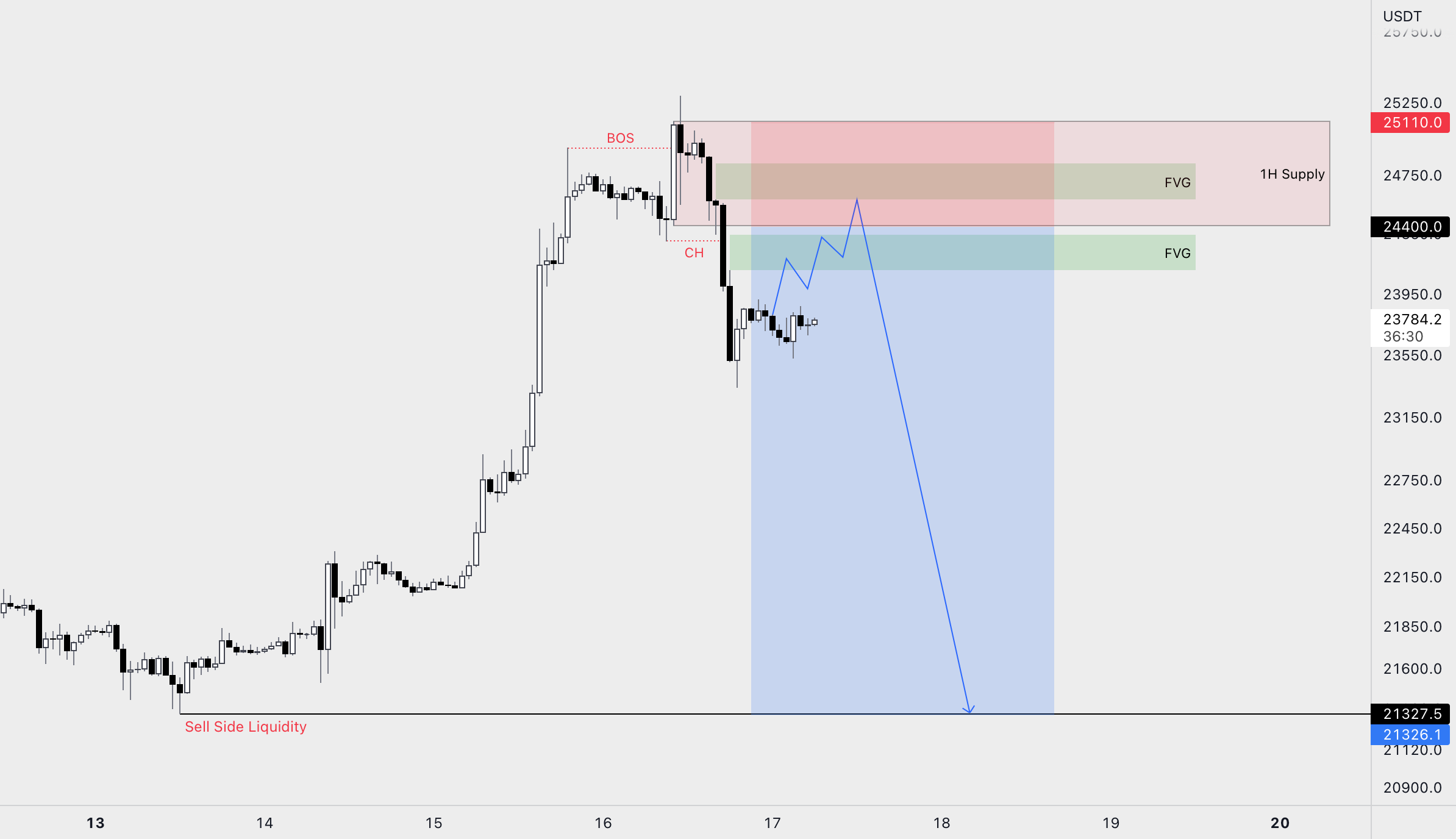

The concept of a BTC short position has become increasingly vital in the world of cryptocurrency trading, especially as traders look to capitalize on market fluctuations. With Bitcoin‘s price volatility, short selling Bitcoin has emerged as a popular strategy, allowing investors to profit when the asset’s value declines. Recently, a prominent crypto whale demonstrated the power of leverage trading BTC, executing a staggering 20x leveraged position that now boasts a floating profit exceeding $20 million. This particular whale has successfully shorted BTC multiple times, currently holding about 860 BTC, with a liquidation price set at an astonishing $101,746. As the market shifts, understanding BTC short positions and related strategies becomes essential for both seasoned traders and newcomers alike.
Navigating the intricacies of Bitcoin trading often leads investors toward engaging in short-selling tactics, particularly for those looking to hedge against market downturns or boost their profits. Leveraging positions to maximize returns, traders delve into strategies such as Bitcoin short trading, which can significantly impact their portfolio during bearish trends. In this high-stakes environment, notable figures within the crypto space, often referred to as ‘whales’, utilize sophisticated techniques and substantial leverage to manage risks effectively. One illustrative case involves a trader holding a massive position with a liquidation threshold that highlights the importance of price awareness in leveraged trades. By exploring these alternative strategies, investors can gain valuable insights into the dynamics of digital asset trading.
Understanding BTC Short Selling Strategies
BTC short selling strategies have become increasingly popular among traders looking to capitalize on market downturns. These strategies involve borrowing Bitcoin to sell at current prices, anticipating that the value will drop. When the price falls, traders can buy back the asset at the reduced cost to return it to the lender, pocketing the difference. This method is particularly appealing in volatile markets, where price fluctuations create multiple opportunities for profit.
Short trading in Bitcoin allows traders to use leverage, enhancing their potential gains, as seen in the case of a noteworthy ‘hard-core short’ whale who managed a 20x leveraged position. Utilizing such leverage implies that minor price movements can lead to significant profit or loss, making it a double-edged sword. However, navigating leveraged trading requires a deep understanding of market dynamics and a strong risk management approach to avoid liquidation.
The Impact of Crypto Whales on Market Dynamics
Crypto whales, such as the trader holding a significant 860 BTC short position, play a crucial role in market dynamics. These individuals or entities typically hold large amounts of cryptocurrency, and their trading decisions can influence overall market sentiment. When a whale enters or exits a position, it can lead to increased volatility, even causing price drops or spikes in the cryptocurrency market.
The aforementioned whale’s short position, which now exceeds a $20 million floating profit due to Bitcoin’s temporary price decline, exemplifies how their leverage trading tactics can impact not only their portfolio but also the broader market. If this whale were to liquidate or adjust their position significantly, it could create a cascading effect on Bitcoin’s price, highlighting the interconnected nature of short selling and market movements.
Analyzing the Risks of Leverage Trading BTC
Leverage trading BTC can amplify profits, but it also magnifies risks significantly. Traders who employ high leverage, such as the 20x leverage used by the ‘hard-core short’ whale, face the potential for liquidation if the market moves against them. Understanding the liquidation price—$101,746 in this case—is crucial, as it represents the point at which the trader’s collateral is sold to cover the margin. This knowledge helps traders manage their position more effectively and avoid substantial losses.
Moreover, the risks associated with leveraged trading are not just limited to individual traders. A sudden shift, such as a price rally, can trigger a wave of liquidations among various leveraged positions, inducing a sharp market correction. This possibility means that while short selling can be profitable, it requires careful monitoring of not just one’s own position but also general market sentiment and potential movements.
Shorting Bitcoin: A Case Study of a Successful Trader
Examining the ‘hard-core short’ whale provides insight into successful Bitcoin shorting strategies. This trader’s approach, marked by four consecutive short positions, demonstrates a calculated method of staying ahead of market trends. By analyzing market data and utilizing advanced trading techniques, such as high leverage, they have managed to achieve a staggering floating profit exceeding $20 million.
This case illustrates how successful short selling relies on meticulous research and timing. Traders seeking to emulate such success should focus on understanding technical indicators, market sentiment, and the implications of short-selling on overall pricing strategies. A disciplined risk management plan is equally important, especially when using leverage, to safeguard against the volatile nature of the crypto market.
Market Volatility and Its Influence on BTC Short Trading
Market volatility greatly influences BTC short trading opportunities. When Bitcoin experiences drastic price swings, traders can find lucrative entry points for short positions, particularly if they anticipate continued declines. The fluctuating nature of the crypto market means that responsive trading strategies are essential for taking advantage of these conditions. Traders should keep an eye on key market indicators, as they can signal potential shifts in price that may favor short positions.
For instance, during recent drops in Bitcoin’s price, traders like the noted whale have successfully leveraged short-selling opportunities to lock in substantial profits. Monitoring factors such as trading volume, order book changes, and broader economic conditions can provide valuable insights into potential market movements. This vigilance equips short sellers with the data they need to make informed trading decisions.
The Role of Technical Analysis in Short Selling Bitcoin
Technical analysis is a fundamental component of short selling Bitcoin effectively. Traders analyze charts, trends, and patterns to predict future price movements and make informed decisions about when to enter or exit their positions. In the case of a successful short seller, recognizing bearish trends and signals can enable them to time their trades effectively and capitalize on market downturns.
For example, using technical indicators like moving averages or relative strength indexes can help traders gauge market momentum. A ‘hard-core short’ whale employs such techniques to identify the optimal timeframe for short selling, ensuring they can maximize their returns while minimizing risk. A disciplined approach to technical analysis not only enhances trading strategies but also prepares traders for various market scenarios.
Understanding Liquidation Prices in Leverage Trading
In the realm of leverage trading, understanding liquidation prices is crucial for traders. The liquidation price represents the price point at which a trader’s position is automatically closed to prevent further losses. For instance, the noted whale holds a BTC short position with a liquidation price of $101,746, highlighting the necessity for traders to remain well-informed about how their leverage impacts their risk exposure.
When traders utilize high leverage, even minor price fluctuations can lead to significant impacts on their positions. Knowing one’s liquidation price enables traders to implement effective strategies to avoid hitting that threshold. In the face of market volatility, maintaining awareness of these numbers can make the difference between a successful trade and a disastrous loss.
Impact of Market Sentiment on BTC Short Trading
Market sentiment plays a vital role in determining the effectiveness of BTC short trading strategies. When sentiment is bearish, traders are more likely to find opportunities to short sell Bitcoin, as they anticipate declining prices. Conversely, a strong bullish sentiment could indicate that short-selling positions may lead to losses. Understanding market psychology is therefore essential for traders looking to navigate the complexities of cryptocurrency trading.
Moreover, the presence of crypto whales can also influence market sentiment significantly. Their trading activity, such as the whale with a 20x leveraged short position, can sway other traders’ perceptions, leading them to either follow suit or hesitate to enter the market. By analyzing sentiment data alongside trading indicators, traders can develop a more comprehensive understanding of market conditions, ultimately refining their short trading strategies.
Strategies for Managing Risks in BTC Short Selling
Risk management is paramount in BTC short selling, especially when traders engage in high-leverage positions. Strategies such as setting stop-loss orders and diversifying trading portfolios can help mitigate risks and safeguard against potentially devastating losses. For instance, a trader may set a stop-loss order just above their planned liquidation price to minimize losses if the market moves against them.
Additionally, staying informed about external market factors, such as regulatory news or economic trends, can also play a critical role in managing risks. By incorporating this information into their trading strategies, traders can prepare for potential market movements and adjust their positions accordingly. Ultimately, effective risk management enables traders to take calculated risks while maximizing their chances of success in the competitive world of Bitcoin trading.
Frequently Asked Questions
What is a BTC short position and how does it work in leverage trading BTC?
A BTC short position involves selling Bitcoin with the intention of repurchasing it at a lower price. In leverage trading BTC, traders can borrow funds to increase their investment size. This strategy allows them to profit from price declines. If Bitcoin’s price falls, the trader can close their short position for a profit.
How can short selling Bitcoin lead to massive profits as seen with crypto whales?
Short selling Bitcoin can be highly profitable, particularly for crypto whales who can leverage significant amounts. For instance, a hard-core short seller using a 20x leverage might see profits soar when Bitcoin’s price decreases, as evidenced by the whale with a $20 million floating profit on their BTC short position. This is due to their ability to control large amounts of Bitcoin while risking only a portion of their capital.
What risk factors should traders consider when taking a BTC short position?
When taking a BTC short position, traders should consider several risk factors, including the volatility of Bitcoin’s price, potential market manipulation by crypto whales, and the liquidation price of their leveraged position. If Bitcoin’s price moves against the position, it can lead to significant losses if the liquidation price is breached.
How does a BTC liquidation price affect short selling Bitcoin strategies?
A BTC liquidation price is the price point at which a trader’s leveraged position could be automatically closed to prevent further losses. For short selling Bitcoin, if the market price rises above this level, the trader may face liquidation, losing their invested capital. Understanding and monitoring the liquidation price is crucial for effective risk management in short trading strategies.
What does it mean to be a ‘hard-core short whale’ in the context of BTC short positions?
A ‘hard-core short whale’ refers to a large investor or trader who heavily short sells Bitcoin, often utilizing high leverage. This individual aims to capitalize on bearish market conditions. Their actions can significantly impact market sentiment, especially during price drops, and they often hold substantial positions that garner attention in the trading community.
| Key Point | Details |
|---|---|
| Whale’s Short Position | The whale holds a 20x leveraged BTC short position worth over $20 million. |
| Floating Profit | Currently, the whale’s floating profit exceeds $20 million. |
| Bitcoin Holdings | The whale holds approximately 860 BTC. |
| Liquidation Price | The liquidation price for the position is set at $101,746. |
| Short Position Frequency | This is the fourth time the whale has shorted BTC consecutively. |
Summary
In the cryptocurrency market, engaging in a BTC short position can lead to significant profits when the market trends downwards. A notable example of this is a hard-core short whale who has utilized a 20x leveraged BTC short position, achieving a floating profit of over $20 million as Bitcoin prices dipped. This strategic approach not only showcases the potential profitability of short selling BTC but also highlights the importance of market timing and leverage in trading strategies.
Related: More from Bitcoin News | Bitcoin Falls Below $63K Amid US | Bitcoin Drops Below $65K, Other Coins Fall 6%