


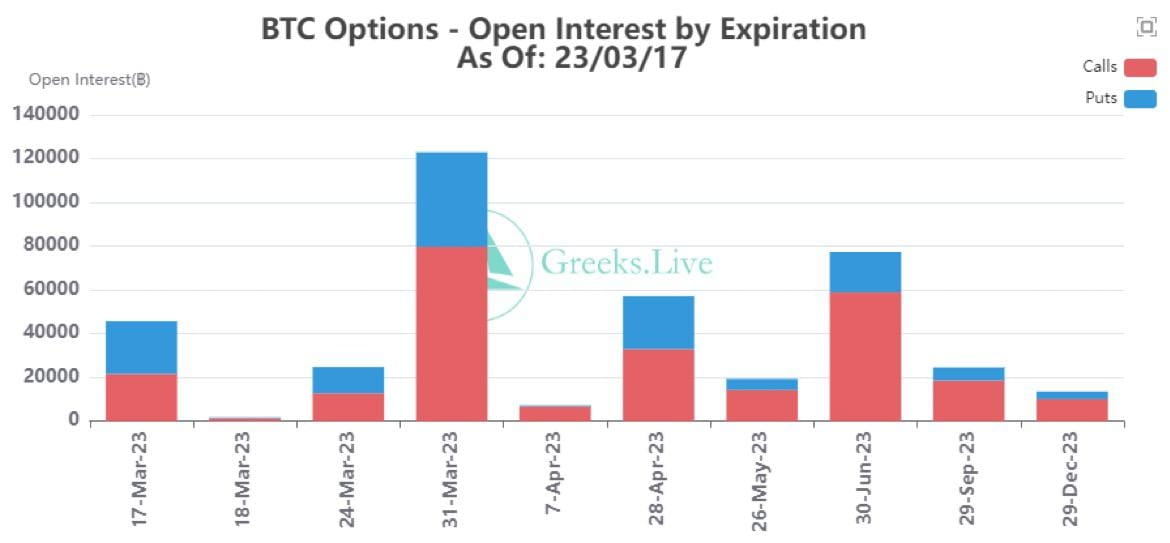

BTC options expiration is a critical event for crypto traders as it marks the end of a designated trading cycle for Bitcoin options. Today, a staggering 21,000 BTC options alongside 126,000 ETH options are set to expire, with approximately $2.3 billion on the line. As the market navigates this expiration, the Put-Call Ratio stands at 1.07 for BTC, indicating a balanced sentiment among traders and investors. Additionally, the implied volatility for Bitcoin remains steady, creating a dynamic atmosphere for crypto trading. Understanding the nuances surrounding BTC options expiration is essential for traders looking to leverage these market conditions for potential gains.

When we talk about the expiration of Bitcoin options, we’re referencing a pivotal moment in the cryptocurrency derivatives market that can sway prices significantly. Today sees the closure of 21,000 Bitcoin options and an impressive 126,000 Ethereum options, showcasing a combined notional value of around $2.3 billion. The balance of bullish and bearish sentiment is encapsulated in the Put-Call Ratio and reflects the traders’ expectations. As such, the implied volatility can offer insights into potential price movements. In this vibrant landscape of crypto trading, understanding these expirations becomes vital for making informed trading decisions.
Understanding BTC Options Expiration
Today marks a significant date in the crypto trading calendar as 21,000 BTC options and 126,000 ETH options are set to expire, with a staggering notional value approaching $2.3 billion. This expiration is crucial as it can influence market dynamics significantly. Traders closely monitor these events not just for the immediate implications, but also for insights into future trends. Particularly, the Put-Call Ratio of BTC stands at 1.07, indicating a slight leaning towards bearish sentiment among investors, while the ETH options show a lower ratio of 0.88, hinting at a prevailing bullish outlook.
The importance of BTC options expiration can’t be overstated, as it often leads to increased volatility in the market. When such a high volume of options expires, traders may adjust their positions swiftly, resulting in pronounced price movements. With BTC’s maximum pain point set at $90,000, any shifts in the market could reflect traders’ strategies and their forecasts about BTC’s price trajectory. Such scenarios are vital for investors to gauge overall market sentiment and make informed decisions.
The Impact of Put-Call Ratio on Crypto Trading
The Put-Call Ratio is a key metric that analysts and traders frequently utilize to understand the market sentiment in crypto trading. In today’s context, the BTC Put-Call Ratio at 1.07 suggests that there are more put options being traded relative to call options. This metric serves as a barometer for measuring investor sentiment, where a ratio above 1 typically indicates bearish expectations. Conversely, ETH’s ratio of 0.88 suggests a dominating bullish sentiment, allowing traders to assess sentiment divergence in these prominent cryptocurrencies.
Such differences in the Put-Call Ratios for BTC and ETH can lead to diversified trading strategies among speculative traders. For instance, the bearish undertone in BTC options may lead some traders to hedge their positions or seek profitable opportunities through selling calls or buying puts. With the crypto market’s inherent volatility, traders must continuously analyze these ratios in conjunction with other metrics like implied volatility and overall trading volume to make sound trading decisions.
Implied Volatility Trends in BTC and ETH
Implied volatility (IV) plays a critical role in the pricing of options in the crypto market. As of today, BTC’s implied volatility remains relatively flat, averaging around 40%, compared to pre-Christmas levels. This stability could indicate that investors are expecting less dramatic price movements in the upcoming weeks. In contrast, the ETH market reflects a higher level of implied volatility at 55%, suggesting traders anticipate more significant price fluctuations. Such disparities in IV between BTC and ETH options can offer insights into how traders view each cryptocurrency’s risk factors.
As options expiration approaches, shifts in implied volatility can drastically alter trading strategies. For BTC, with stable implied volatility, traders might be more inclined to take long positions or write options, while the elevated IV in ETH could motivate a more cautious approach such as hedging against potential downward movements. Understanding these trends is essential for traders, as they not only provide context to market behavior but also assist in making informed decisions.
High Volume of Block Trades and Market Sentiment
Recent trading activity reveals that block trades accounted for over 70% of today’s total trading volume, reaching new peaks not observed in several months. This statistic alone suggests a strong commitment from institutional investors and large traders, primarily focusing on BTC options as bullish, while expressing bearish sentiments through ETH options. These block trades often reflect strategic repositioning ahead of significant events, such as the current options expiration, and can lead to stark price movements in the short-term.
The dominance of such trades signifies a shift in market sentiment and can build momentum in the underlying assets. As the expiration of 21,000 BTC options and 126,000 ETH options looms, observers are keen on how this influx of activity influences price movements across the market. The implications for BTC and ETH trading are profound, as decisions made by these large players can sway overall market direction and affect smaller traders’ strategies.
Strategies for Traders During Options Expiration
With $2.3 billion worth of BTC and ETH options set to expire today, traders must devise strategies to navigate the potential volatility that follows such large-scale options expirations. Investors might consider employing protective measures, such as placing stop-loss orders or diversifying their positions between BTC and ETH to mitigate risk. Additionally, traders can utilize the current Put-Call Ratios to inform their strategies, opting to buy or sell options based on prevailing sentiments.
Moreover, the behavior of implied volatility during this period can guide trading approaches. If BTC’s IV remains steady or rises, traders might look for opportunities to enter positions that capitalize on price movement following the expiration, particularly if market sentiment shifts. Conversely, the heightened IV in ETH could present riskier conditions, leading traders to adopt a more conservative stance in trading decisions.
Market Reactions After Large Options Expiration
Historically, the expiration of a significant volume of BTC and ETH options leads to pronounced market reactions. Traders will often react to these expirations with heightened activity, adjusting their positions based on not just the current market conditions, but also on their forecasts for the assets post-expiration. This behavior reflects an anticipation of volatility, offering both risks and potential rewards for those trading these cryptocurrencies.
Following the expiration, it’s common to observe price corrections as the market adjusts to the new open interest levels. Given the current metrics, including the Put-Call Ratios and implied volatility, traders must remain vigilant and responsive to any shifts that occur. Understanding market reactions based on past expirations offers traders valuable insights into potential future price movements and helps refine their trading strategies.
Analyzing BTC and ETH Correlations
The correlation between BTC and ETH prices has significant implications for traders, especially during events such as options expirations. This week, the noticeable decline in ETH’s Put-Call Ratio amidst bullish BTC options highlights a differentiated market sentiment. As Bitcoin leads the charge in many market movements, ETH often mirrors these trends but at varying degrees, making it essential for traders to analyze these correlations closely.
Given the varying implied volatilities and the specific metrics observed during this expiration period, traders might look to BTC and ETH prices to ascertain potential trading strategies. For example, if BTC shows resilience post-expiration while ETH reacts more dramatically, traders can capitalize on the spread by implementing short or long strategies effectively. Understanding the interplay between these assets can enhance prediction models and improve trading outcomes.
Trader Psychology and Market Sentiment
In the realm of crypto trading, especially during pivotal moments like options expirations, trader psychology heavily influences market sentiment. The collective sentiment captured in metrics like the Put-Call Ratio reflects the biases and expectations of traders, which can lead to both irrational exuberance and fear-driven decisions. During such expiration events, the line between rational trading and emotional response often blurs.
Understanding trader psychology can offer significant advantages in crafting effective trading strategies. If traders perceive the high BTC Put-Call Ratio as a bearish indicator, it may foster a self-fulfilling prophecy as traders position themselves in anticipation of price declines. Conversely, a strong bullish sentiment, as indicated by ETH’s lower ratio, can drive price surges. Being attuned to these psychological dynamics can empower traders to anticipate market movements better and adapt their strategies accordingly.
Future Outlook for BTC and ETH Post-Expiration
As today’s expiration of 21,000 BTC options and 126,000 ETH options unfolds, the future outlook for these cryptocurrencies remains uncertain yet potentially lucrative. Analysts suggest that BTC’s maximum pain point coupled with its recent Put-Call Ratio indicates possible price stabilization post-expiration. However, given the volatile nature of the crypto market, scenarios for sudden price movements cannot be dismissed. Traders should remain agile, adjusting their strategies as market dynamics shift.
On the other hand, ETH’s current landscape, shaped by its climbing implied volatility, might compel traders to adopt either defensive or aggressive tactics following expiration. Whether traders look to capitalize on bullish movements or hedge against bearish pressures will largely depend on how the market reacts immediately post-expiration. Overall, staying informed and responsive will be key for traders navigating the evolving terrains of BTC and ETH.
Frequently Asked Questions
What is BTC options expiration and why is it important?
BTC options expiration refers to the date when Bitcoin options contracts become void and holders must exercise their rights. It is important because it can significantly impact the price of BTC due to market activity leading up to the expiration, affecting traders’ strategies in crypto trading.
How does the Put-Call Ratio affect BTC options expiration?
The Put-Call Ratio is a measure of sentiment in the options market, indicating whether traders are more bullish or bearish. A Put-Call Ratio of 1.07 for BTC options today suggests a slightly bullish sentiment, which can influence market behavior as expiration approaches.
What is meant by the maximum pain point in BTC options expiration?
The maximum pain point in BTC options expiration is the price level where the largest number of options contracts will expire worthless, causing the most financial loss to option holders. Today’s maximum pain point for BTC options is $90,000.
How does implied volatility affect BTC options expiration?
Implied volatility (IV) reflects the market’s expectations for future price fluctuations. For BTC options expiration, a flat IV of around 40% indicates market stability, affecting option pricing and traders’ strategies.
What trends are observed in BTC and ETH options leading up to expiration?
As observed today, a majority of trading volume is focused on bullish BTC options and bearish ETH options, highlighting a divergence in market sentiment which can impact the overall crypto trading landscape around options expiration.
How much notional value is associated with BTC options expiring today?
The notional value of the 21,000 BTC options expiring today is approximately $1.9 billion, which accounts for a significant portion of the market’s open interest.
What was the total notional value of options expiring this week?
This week, nearly $2.4 billion in options are expiring, accounting for about 7% of the total open interest in the market, which indicates substantial market activity.
How do block trades influence BTC options expiration?
Block trades, which constituted over 70% of total trading volume today, can lead to increased price volatility and may influence the direction of BTC options expiration by creating liquidity and reflecting traders’ sentiments.
What are the implications of BTC options expiration for crypto traders?
BTC options expiration can create strategic opportunities and risks for crypto traders as price volatility often increases, risking potential losses or gains based on market reactions to the expiration events.
Why should traders pay attention to both BTC and ETH options expiration?
Traders should monitor both BTC and ETH options expiration due to their intertwined market dynamics and the potential for significant price movements, affecting overall market sentiment and trading strategies.
| Key Metric | BTC Options | ETH Options |
|---|---|---|
| Options Expiring | 21,000 | 126,000 |
| Notional Value | $1.9 Billion | $390 Million |
| Put-Call Ratio | 1.07 | 0.88 |
| Maximum Pain Point | $90,000 | $3,100 |
| Total Options Expiring This Week | $2.4 Billion | 7% of Total Open Interest |
| Implied Volatility | 40% Flat | Decreased to 55% |
| Block Trades Volume | > 70% total volume | Focused on bearish options |
Summary
BTC options expiration is a significant event in the cryptocurrency market, with 21,000 BTC options and 126,000 ETH options set to expire today. The total notional value is approximately $2.3 billion, indicating a robust trading environment. Analysts suggest that these expirations may affect market volatility, especially given the varying put-call ratios and implied volatility levels across BTC and ETH options. This week marks a point of interest as nearly $2.4 billion in options are expiring, representing 7% of total open interest, which could lead to substantial movements in the prices of these cryptocurrencies.
Related: More from Bitcoin News | Stablecoin Strength Pressures Bitcoin Treasury | Analysts: No Evidence of Jane Street Bitcoin Manipulation, ETF Demand Soars