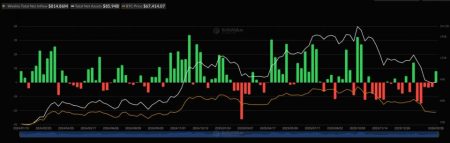



Bitcoin whales play a critical role in shaping the cryptocurrency market landscape, yet recent speculation about their massive accumulation efforts has been largely exaggerated. On-chain data reveals that the substantial presence of these large holders does not equate to a definitive reaccumulation phase. Instead, experts like Julio Moreno from CryptoQuant suggest that the so-called whale accumulation narratives can often misrepresent reality due to distortions caused by exchange activities. This leads to a common misconception that Bitcoin holders with large balances are actively buying when, in fact, many are distributing their assets. Understanding the intricacies of whale behavior is essential, especially as they influence the overall Bitcoin market structure and the dynamics of cryptocurrency outflows.

In the realm of cryptocurrency, the term “large Bitcoin holders” often refers to those with significant holdings of BTC, also known as Bitcoin whales. These major stakeholders are pivotal in determining market trends, yet the narrative around their activity may not always tell the full story. While there have been indications of whale accumulation, recent research points to a more complex scenario where such movements could be influenced by external factors such as consolidation practices of exchanges. This complicates the true picture of how long-term holders are engaging with their investments. Additionally, as Bitcoin ETFs continue to claim substantial amounts of the total supply, the traditional market dynamics shift, prompting both new strategies and evaluations within the cryptocurrency space.
Understanding Bitcoin Whales and Market Dynamics
Bitcoin whales, defined as individuals or entities holding large amounts of Bitcoin, play a crucial role in the market dynamics of cryptocurrencies. Their actions can significantly influence Bitcoin’s price movements due to the sheer volume of assets they control. Recent discussions have suggested that these whales are entering a reaccumulation phase, but this view may be misleading. According to on-chain data from CryptoQuant, much of the perceived whale accumulation is attributed to exchanges consolidating smaller wallets, thereby distorting the actual behavior of long-term holders.
This manipulation of data leads to a misconception about how Bitcoin whales interact with the market. Instead of accumulating more assets, analysis shows that large holders are distributing their holdings. This trend indicates that while whales might seem active, the reality is a gradual decrease in their total Bitcoin balances as they may be responding to changes in market structure shaped by broader economic factors and emerging investment vehicles like Bitcoin ETFs.
Impact of Bitcoin ETFs on Whale Accumulation
The introduction of US spot Bitcoin ETFs has substantially altered the landscape for both small and large investors in the Bitcoin market. These ETFs have accumulated approximately 1.3 million BTC, which accounts for 6.2% of Bitcoin’s total supply, thereby creating a new class of holders in the market. This shift in ownership structure raises questions about the traditional narratives of whale accumulation, as the influx of Bitcoin into these ETFs may lead to a decline in activity among individual whales who might feel less incentive to accumulate amidst institutional buying pressure.
Furthermore, the reality of ETF holdings suggests that liquidity is now being directed away from retail whale holders and towards institutional investments. This influx could contribute to a more stable market, potentially reducing volatility stemming from large transactions by individual whales. Instead of accumulation, whales may need to adjust their strategies in response to the institutional narrative, leading some to believe that the market’s fundamental structure is not as prone to manipulation as it might have been previously.
The Shift Towards Long-term Holders in Bitcoin Markets
Amidst the confusion surrounding whale behavior, another trend is emerging within the Bitcoin ecosystem: long-term holders are starting to reaccumulate. Data indicates that this group has transitioned from a significant selling phase to becoming net accumulators over the past month. This shift is noteworthy, especially considering it follows the most substantial selling event these long-term holders have witnessed since 2019, suggesting a potential stabilization in market sentiment and a renewed confidence in Bitcoin’s future price trajectory.
The actions of long-term holders are essential to understand as they often reflect the underlying strength or weakness of a cryptocurrency. Their decision to shift towards accumulation implies that they see value in holding Bitcoin at current levels, which may create a buffer against continued outflows precipitated by speculative trading or external market pressures. As these holders increase their positions, it may counterbalance any selling pressure from whales, thereby fostering a more resilient market structure.
Analyzing Cryptocurrency Outflows and Their Implications
Cryptocurrency outflows have become an increasingly significant factor for understanding market dynamics, particularly as they relate to Bitcoin’s price movements. When large amounts of Bitcoin leave exchanges, it often signals a potential price increase as investors move their assets to cold storage for long-term holding. Periods of increased outflows can lead to heightened demand and thus, upward pressures on the price. Over the past few weeks, data showing decreased balances among whale wallets aligns with increased outflows, suggesting that the typical market behavior associated with whale selling may be at play.
Moreover, the relationship between outflows and price stabilization plays a critical role in market sentiment. With long-term holders turning to accumulation and whales appearing to distribute, the net outflow from exchanges indicates a cooling-off period which can help in establishing a more stable price floor. This stability can be critical in instilling investor confidence as the market transitions from an accumulation phase into a potential recovery phase, particularly with the backdrop of increased institutional interest highlighted by the ETF launches.
Market Sentiment and Bitcoin’s Volatile Nature
The sentiment within the Bitcoin community is often influenced by the visible activity of its whales and the fluctuations in market conditions. While whales can create waves of volatility, the storage behaviors of retail and institutional investors provide insights into broader trends. The current environment suggests a divergence in sentiment, where long-term holders appear more optimistic about Bitcoin’s value proposition, contrasting with the caution from some large holders who may be reacting to the market’s structural changes.
Understanding these dynamics is essential as the market navigates periods of uncertainty. Bitcoin’s volatile nature can be unsettling, but a clearer picture of who is holding or selling the cryptocurrency — whether it be whales or long-term investors — can help upcoming traders make better-informed decisions. Until a more sustained recovery is witnessed, discerning the market’s underlying sentiment is crucial to predicting future movements in prices.
The Role of On-Chain Data in Assessing Whale Behavior
On-chain data offers substantial insights into the behavioral patterns of Bitcoin whales and the overall market structure. By analyzing transaction flows, wallet distributions, and accumulation patterns, researchers can formulate hypotheses about investor sentiment and market trends. For instance, the misunderstandings surrounding whale accumulation stem from misleading data that does not account for the impacts of exchange-related activities, as emphasized by experts at CryptoQuant. Accurate interpretation of this data can aid in making robust investment decisions.
As the landscape continues to evolve, leveraging on-chain data can provide a competitive advantage for investors looking to navigate the cryptocurrency market. Understanding how accumulation and distribution patterns play out helps in peering beneath the surface-level analysis typically associated with price movements. For those keen on capitalizing on potential market shifts, following these trends closely can illuminate possible strategies for success in the ever-changing realm of digital assets.
Institutional Influence on Bitcoin’s Market Structure
The increasing role of institutional investors, particularly through channels like Bitcoin ETFs, has begun to redefine the market structure historically dominated by individual traders and whales. Institutions, with their vast resources, are not just responding to market demands but are also actively shaping them by holding significant quantities of Bitcoin. This institutional presence has implications for market stability and liquidity, possibly decreasing the volatility typically associated with large individual transactions.
As the influence of institutions grows, the strategies of traditional whale investors may need to adapt. Instead of competing for market dominance, the focus may shift toward cooperation or coexistence among different types of investors. For instance, while whales might face pressure to adjust their accumulation strategies, institutional holders can provide a stabilizing effect by holding onto their investments longer, which may in turn benefit the overall market by providing price support during downturns.
The Future of Bitcoin Pricing with Whale Activity
The ongoing activities of Bitcoin whales will continue to be a keen focus for market analysts and investors alike. Their unique position in the market allows them to exert significant influence over price movements, particularly as they engage in or avoid accumulation. The current landscape, characterized by decreasing balances among large holders, may lead to a more blurred notion of price discovery, making the future trajectory of Bitcoin prices more complex and nuanced.
As factors such as ETF developments and shifts in long-term holder sentiment come into play, the behavior of whales will need to be closely monitored. Seasonal trends, regulatory shifts, and macroeconomic factors will also shape how whale activities influence Bitcoin’s pricing. The next few months could be pivotal in determining how whale accumulation—or lack thereof—affects the broader market and what that means for individuals looking to invest in the cryptocurrency space.
Navigating the Complexities of Bitcoin Investment
Investing in Bitcoin necessitates a solid understanding of the complex factors at play, including the behaviors of both whales and long-term holders. Potential investors should educate themselves on the nuances of whale movements, market volatility, and the implications of emerging financial instruments such as Bitcoin ETFs. This knowledge equips them to navigate the often unpredictable landscape of cryptocurrency investment with greater confidence.
Moreover, recognizing the shifts in market sentiment among various holder categories can lead to more informed decision-making. As institutional investors continue to reshape the market dynamics, both individual and professional investors must remain agile, adapting their strategies to respond to the evolving narrative. By keeping abreast of market trends and the activities of whales and long-term holders, investors can position themselves strategically to capitalize on potential price movements in the Bitcoin sphere.
Frequently Asked Questions
What are Bitcoin whales, and how do they impact market structure?
Bitcoin whales are individuals or entities that hold large amounts of Bitcoin, often exceeding 1,000 BTC. Their trading activities can significantly impact the market structure by causing substantial price movements when they buy or sell. As large holders, their decisions are closely monitored, as they can influence the overall sentiment and volatility in the cryptocurrency markets.
Is whale accumulation still occurring in the Bitcoin market?
Recent analyses suggest that the narrative around whale accumulation in the Bitcoin market may be overstated. Instead of aggressively buying, large holders are reportedly distributing Bitcoin. This trend indicates that defining whale activity simply by observing large wallet transfers may be misleading due to distortions from exchange practices.
What role do cryptocurrency ETFs play in Bitcoin whale behavior?
Cryptocurrency ETFs, particularly the newly launched US spot Bitcoin ETFs, have emerged as significant holders of Bitcoin, accumulating nearly 1.3 million BTC. This accumulation by ETFs alters traditional whale dynamics as they represent large holdings independent of individual whales, thus reshaping the market structure for Bitcoin.
How are long-term holders responding after the recent sell-off in Bitcoin?
Long-term holders, who generally maintain their Bitcoin holdings over extended periods, have recently shifted to net accumulation over the past 30 days. This change in behavior signifies a reduction in selling pressure from this cohort, highlighting a potential stabilizing factor for Bitcoin’s price as fewer long-term holders distribute their assets.
What evidence suggests that Bitcoin whales are not accumulating?
On-chain data indicates that after filtering out exchange-related distortions, Bitcoin whales, defined as addresses holding 100 to 1,000 BTC, are actually experiencing declines in their balances. This suggests that, contrary to the idea of whale accumulation, many large holders are engaged in selling rather than buying at this time.
Can large transactions by Bitcoin whales influence market volatility?
Yes, large transactions by Bitcoin whales can cause significant fluctuations in the market price of Bitcoin. When whales execute large buys or sells, it can lead to abrupt changes in market sentiment and increased volatility, highlighting their influential role in the cryptocurrency ecosystem.
How do exchange practices affect the perception of whale accumulation in Bitcoin?
Cryptocurrency exchanges often consolidate funds from smaller wallets into larger ones for operational efficiency. This practice can create a misleading appearance of whale accumulation when, in fact, it is merely a result of internal transfers within exchanges. Such distortions complicate the true understanding of whale activities.
What is the significance of Bitcoin’s market structure post-ETFs launch?
The launch of US spot Bitcoin ETFs has changed the market structure by introducing a new category of large holders. These ETFs hold a substantial amount of Bitcoin, which may affect whale behavior and overall market dynamics. Their presence can lead to increased institutional interest and affect long-term price trends.
| Key Point | Details |
|---|---|
| Overstated Speculation | The claim that Bitcoin whales are in a reaccumulation phase is overstated and not supported by on-chain data. |
| Misleading Narratives | The narrative that large holders are buying Bitcoin aggressively is misleading according to Julio Moreno from CryptoQuant. |
| Exchange Influence | Activities of exchanges distort whale accumulation data, leading to misclassification of investment behavior. |
| Large Holder Distribution | The data shows that large holders are actually distributing Bitcoin, with overall whale balances declining. |
| ETFs as New Holders | US spot Bitcoin ETFs hold about 1.3 million BTC, representing a significant share of Bitcoin’s supply. |
| Long-term Holder Accumulation | Despite debates on whale activity, long-term holders have shifted to net accumulation after major selling events. |
Summary
Bitcoin whales are often perceived as major market movers, but recent analyses indicate a more complex picture. The speculation surrounding their massive reaccumulation phase has been largely exaggerated, primarily due to misleading narratives and the influence of exchanges. While large holders appear to be distributing their Bitcoin, the rise of US spot ETFs has emerged as a significant factor in the market, representing a shift in holding patterns. Long-term holders, however, are starting to accumulate again, suggesting that while whales may not be active buyers at the moment, a solid foundation among dedicated investors could stabilize the market moving forward.